Vietnam packing plywood specs for export: face grades, core species, thickness matrix, moisture content, ply count, and 40HC container loading data.
Specifying packing plywood incorrectly wastes money at two points: ordering a higher grade than the application needs, or ordering an insufficient spec that causes packaging failures in transit. This guide covers every specification parameter for Vietnam packing plywood — face veneer grade, core species, glue type, emission standard, thickness matrix, ply count, moisture content, size options, ISPM 15 compliance, and 40HC container loading data — drawn from verified production records and export documentation standards as of 2026.
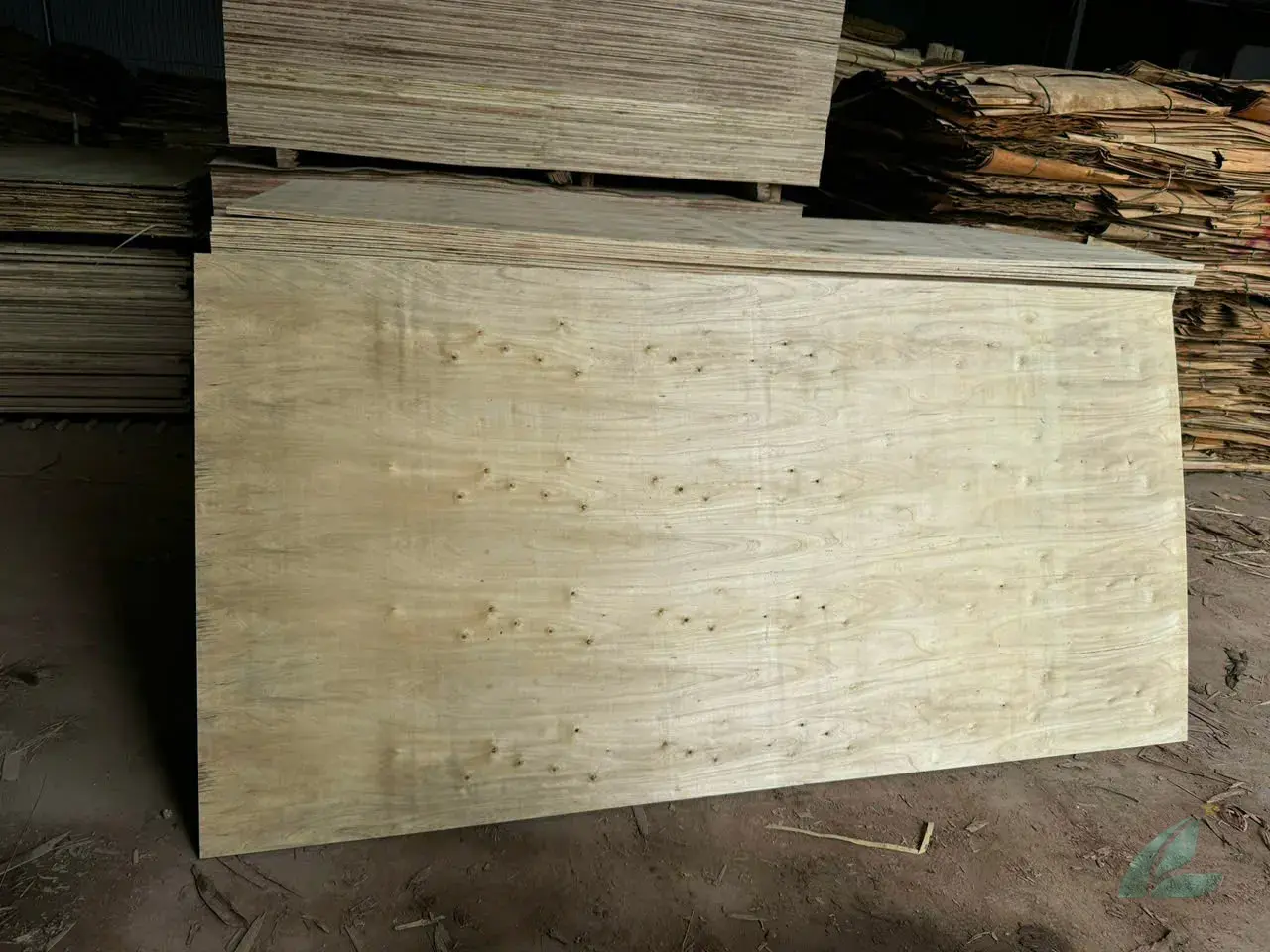
Packing plywood from Vietnam is produced at commercial facilities in Ha Hoa District, Phu Tho Province, Northern Vietnam. These facilities produce exclusively for packaging and commercial applications — separate from furniture-grade and film-faced production lines.
📋 Packing Plywood Specifications — Full Parameter Table
The table below reflects standard production specifications for packing grade plywood from Vietnam. Custom parameters — alternate sizes, specific core combinations, higher emission standards — are available with the same minimum order of 1 × 40HC container.
| Parameter | Standard Value | Custom Options |
|---|---|---|
| Face veneer | Bintangor C/D or Poplar | Bintangor B on request |
| Back veneer | Bintangor C/D or Poplar | Same as face |
| Core species | Acacia (~580 kg/m³) | Styrax (480–500 kg/m³) |
| Glue type | Melamine (MR) | — |
| Emission standard | E2 | E1 on request (+cost) |
| Thickness range | 4–18mm | Up to 25mm on request |
| Common thicknesses | 4, 6, 9, 12, 15, 18mm | Any within 4–25mm |
| Thickness tolerance | ±0.5mm | — |
| Panel sizes | 1220×2440mm, 1220×1830mm, 915×1830mm | Custom cut available |
| Moisture content | ≤14% | — |
| Surface finish | Unsanded | — |
| Edge treatment | Saw-cut, untrimmed | Edge-banded on request |
| ISPM 15 treatment | Heat Treatment (HT) | Included in FOB price |
| MOQ | 1 × 40HC container | Mixed specs accepted |
| Lead time | 10–15 working days | — |
| Port | FOB Hai Phong | CIF available |
| Price reference | From USD 220/CBM FOB (2026; subject to change) | — |
This specification set covers the majority of industrial packaging applications. The single most common buyer request outside this table is Bintangor B face (cleaner surface for branded outer packaging) — available at approximately USD 5–8/CBM premium over standard C/D grade.
Request your packing plywood specifications and FOB quote →
🪵 Face Veneer Grade — What C/D Actually Means
Packing plywood face veneer is graded by the International Tropical Timber Organization (ITTO) grading conventions used across Vietnamese export mills. Understanding the grade designations prevents specification errors on purchase orders.
Grade A/B — virtually defect-free face. Used in furniture and cabinet plywood. NOT standard for packing grade.
Grade B/C — minor defects permitted, sound surface. Used in commercial plywood where the face may be visible. Available at commercial price point, not packing price.
Grade C/D — the standard packing plywood face. Permitted defects include:
- Natural wood repairs (oval patches or sled patches) up to specified size limits
- Small tight knots within diameter limits
- Minor splits sealed with filler
- Color variation between panels (cosmetically irrelevant for packaging)
All defects in C/D grade are structurally sound — the face veneer holds its bond and structural integrity. Surface appearance is simply not a quality criterion for packing applications.
Poplar face is the alternative to Bintangor C/D. Poplar face veneer is lighter in color (pale cream to white), lighter in density, and carries a marginally lower price. It is preferred in applications where total panel weight matters — lightweight produce boxes, flower crates, and small electronics packaging where the panel weight is a component of the unit shipping cost.
⚠️ Important: Packing grade face veneer (C/D or Poplar) cannot be upgraded by sanding. The E2 emission standard used in packing plywood also means these panels are not suitable for interior residential use or export to markets requiring E0/E1/CARB P2 compliance. For interior applications, see bintangor plywood vietnam at commercial grade with E1 emission.
🌳 Core Species — Acacia vs. Styrax for Packaging
The core species decision is the primary engineering specification for packing plywood buyers. It determines panel weight, container loading efficiency, and structural performance under compression and forklift handling.
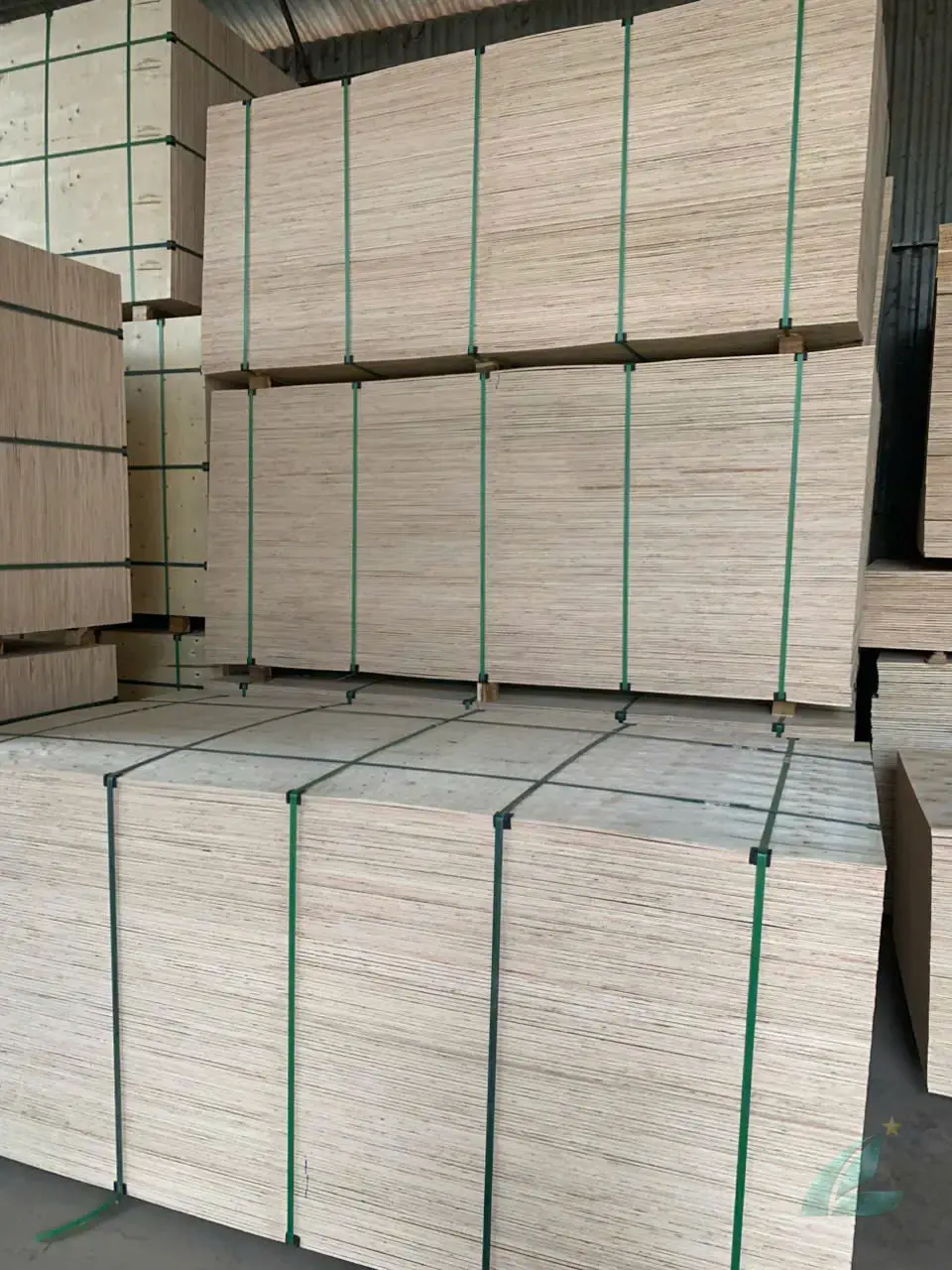
Acacia core (~580 kg/m³) — the standard choice for heavy-duty packing applications. Acacia plantation wood from Northern Vietnam’s Phu Tho and Yen Bai provinces has a denser cellular structure than styrax, producing higher compressive strength per unit of panel thickness. For heavy machinery crates, industrial goods pallets, and applications where panels must resist forklift tine puncture or high stacking pressure, acacia core performs reliably.
The density trade-off: at 580 kg/m³, acacia loads fewer panels per 40HC container than styrax. A standard 1220×2440mm panel at 18mm thickness with acacia core weighs approximately 13.4 kg/sheet. This weight accumulates across 16 pallets (1,328 sheets for 12mm, fewer for thicker panels), bringing the payload close to the 28.5 MT 40HC payload limit.
Styrax core (480–500 kg/m³) — Northern Vietnam’s lightweight plantation species, grown exclusively in Phu Tho, Yen Bai, Tuyen Quang, and Hoa Binh provinces. Styrax is not available from Southern Vietnam factories. Its lower density means more panels per container at the same freight cost — 18 pallets per 40HC versus 16 for acacia. For light-duty crates, produce boxes, flower packaging, and any application where panel count per container matters more than compressive strength, styrax core is the cost-optimized choice.
“Packing buyers who switch from acacia to styrax core consistently see lower landed cost per panel — more sheets per container, lower weight per piece, same structural adequacy for non-heavy applications. The decision is made at the specification stage, not after loading.” — Jay, International Sales Manager, Mika Plywood
Both core species are Northern Vietnam plantation-grown, sourced directly from Phu Tho Province suppliers. Neither is “mixed tropical hardwood” — a term that signals uncontrolled density variation across shipments from unspecified species.
📐 Thickness Matrix and Ply Count
Packing plywood ply count follows Vietnamese factory convention: panels are always built with an odd number of plies for dimensional stability. Each ply layer is cross-grain to the adjacent layer — this cross-grain lamination is what gives plywood its resistance to warping and splitting that solid wood lacks.
| Thickness | Ply Count | Sheets per Pallet (1000mm stack) | Common Application |
|---|---|---|---|
| 4mm | 3-ply | 250 sheets | Light inner packaging, box liners |
| 6mm | 3-ply | 166 sheets | Crate sides, light duty boxes |
| 9mm | 5-ply | 111 sheets | Standard crate panels, medium pallets |
| 12mm | 5-ply | 83 sheets | Heavy crate bases, standard pallets |
| 15mm | 7-ply | 66 sheets | Heavy-duty pallet top boards |
| 18mm | 7-ply | 55 sheets | Machinery crates, industrial skids |
Pallet stack height is fixed at 1000mm — the maximum for forklift-safe handling and container loading stability. The sheets-per-pallet figure is calculated as ROUNDDOWN(1000 ÷ thickness_mm), which is the standard formula applied across Vietnamese factory loading operations.
The 9mm and 12mm thicknesses cover approximately 70% of packing plywood orders by volume. The 4mm and 6mm thicknesses are ordered primarily for inner packaging components — panel inserts, corner boards, and box liners — rather than structural pallet or crate frames.
For detailed 40HC container loading tables across all thickness and core combinations, see the plywood container packing calculation guide.
📦 Container Loading — 40HC Specification by Core and Thickness
Container loading figures for packing plywood depend on three variables: core species (density), panel thickness, and panel size. The following tables reflect factory-executed configurations — not theoretical CBM calculations.
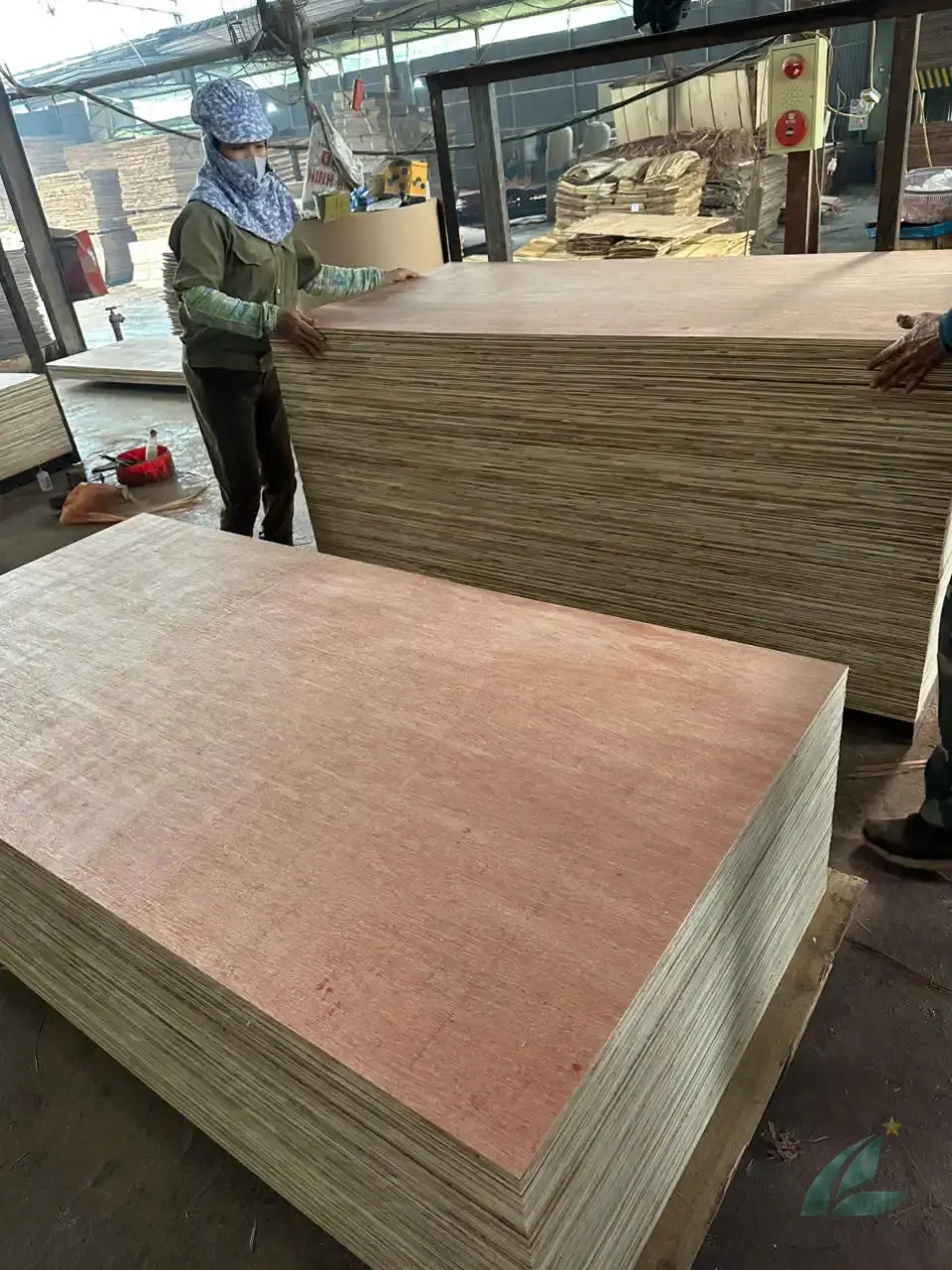
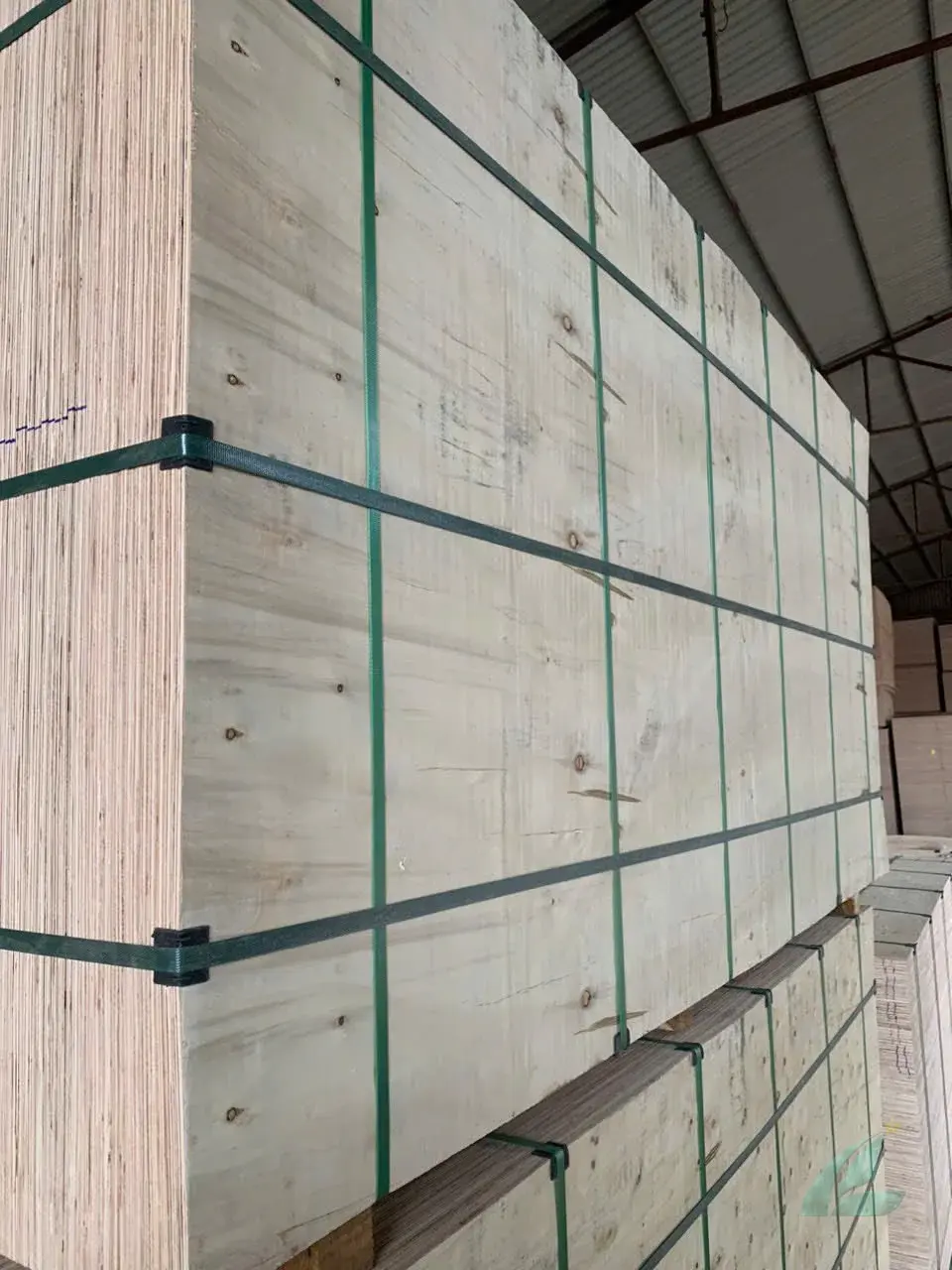
Acacia Core — 16 Pallets per 40HC (1220×2440mm)
| Thickness | Sheets/Pallet | Total Sheets | Volume (CBM) | Net Weight (MT) |
|---|---|---|---|---|
| 9mm | 111 | 1,776 | ~47.5 | ~26.1 |
| 12mm | 83 | 1,328 | ~47.5 | ~26.1 |
| 15mm | 66 | 1,056 | ~47.3 | ~26.0 |
| 18mm | 55 | 880 | ~47.3 | ~26.0 |
Styrax Core — 18 Pallets per 40HC (1220×2440mm)
| Thickness | Sheets/Pallet | Total Sheets | Volume (CBM) | Net Weight (MT) |
|---|---|---|---|---|
| 9mm | 111 | 1,998 | ~53.2 | ~26.6 |
| 12mm | 83 | 1,494 | ~53.0 | ~26.5 |
| 15mm | 66 | 1,188 | ~53.1 | ~26.5 |
| 18mm | 55 | 990 | ~53.1 | ~26.6 |
All figures calculated using the standard formula: Sheets/Pallet = ROUNDDOWN(1000 ÷ Thickness_mm). Volume and weight within 40HC payload limit of 28.5 MT.
Key finding: Styrax core delivers 11.8% more panels per container at 12mm thickness (1,494 vs 1,328 sheets) at the same freight cost. For packing plywood buyers with light-to-medium duty applications, this difference directly reduces landed cost per panel.
Mixed-thickness containers are accepted — combining 9mm, 12mm, and 18mm panels in a single 40HC. The factory recalculates weight and CBM for mixed-spec loads before confirming the loading plan. See the packing plywood product page for ordering details.
💧 Glue, Emission, and Moisture Specifications
Glue Type: Melamine (MR)
Packing plywood uses Melamine (MR) glue — not Phenolic (WBP). This is the correct choice for dry-storage industrial packaging. MR glue passes a 12-hour boiling test (versus 72 hours for WBP), which is more than adequate for packaging applications that are not continuously exposed to outdoor moisture or immersion.
⚠️ Note: Glue type and emission standard are two separate specifications. “MR” describes the adhesive chemistry. “E2” describes the formaldehyde emission class. These must not be combined into one field on a purchase order — they are different parameters.
For applications requiring outdoor or marine moisture resistance, Film Faced Plywood Vietnam with Phenolic (WBP) glue is the appropriate product.
Emission Standard: E2
E2 emission class (≤5.0 mg/L formaldehyde by perforator method) is the correct standard for industrial packaging plywood. The Vietnamese Standard TCVN 7756:2007 and JIS A 5908 F3/F2 equivalent cover this classification (ITTO, 2024).
E2 is not suitable for:
- Residential interior applications (E1 minimum required)
- US market furniture/cabinets (CARB P2 / E0 required)
- European interior products (E1 required for EN 13986)
- Japanese market (F4-star / E0 required)
For packaging applications — pallets, crates, shipping boxes, dunnage — E2 is correct and cost-appropriate. Upgrading to E1 adds manufacturing cost (different adhesive formulation and pressing parameters) with no functional benefit for packaging end use.
Moisture Content: ≤14%
All packing plywood should be tested with a calibrated digital moisture meter before loading. The ≤14% moisture content specification is measured at board level — not ambient humidity, which varies by storage condition. Panels exceeding 14% moisture are held for re-drying before release for loading.
Panels shipped at correct moisture content arrive at destination with minimal dimensional movement during transit — critical for crate panels that must hold fastener positions and dimensional fit after 14–30 day sea transit.
🌿 ISPM 15 Compliance — Technical Requirements
ISPM 15 (International Standards for Phytosanitary Measures No. 15) is published by the International Plant Protection Convention (IPPC) and is mandatory for all wood packaging materials in international trade — including plywood used for pallets, crates, and boxes (IPPC, 2024). 185+ countries enforce ISPM 15 at point of import.
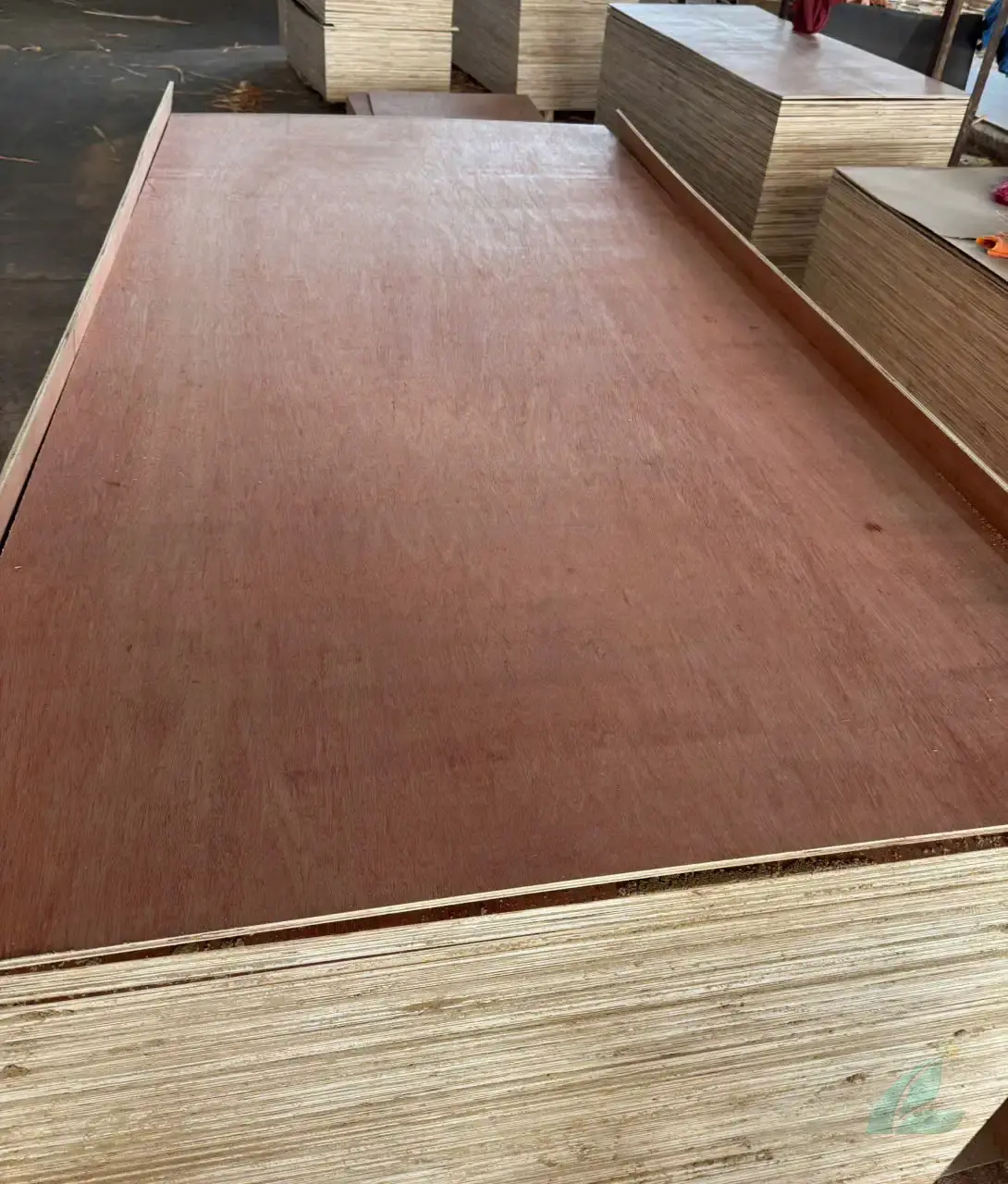
Heat Treatment (HT) is the standard ISPM 15 compliance method for packing plywood shipments. The HT method requires the wood core temperature to reach a minimum of 56°C sustained for 30 continuous minutes — killing all life stages of regulated wood pests including the pine wood nematode (Bursaphelenchus xylophilus) and wood-boring beetles. Methyl bromide (MB) fumigation, the alternative ISPM 15 method, is being phased out under the Montreal Protocol.
Documentation included with every compliant packing plywood shipment:
- Phytosanitary Certificate — issued by Vietnam’s Plant Protection Department (PPD), referencing ISPM 15 HT compliance
- ISPM 15 bundle marking — wheat symbol + VN country code + HT treatment code + producer registration number
- Certificate of Origin (CO) — Form D for ASEAN FTA benefit where applicable, or standard Vietnamese CO
- Commercial Invoice, Packing List, Bill of Lading
The ISPM 15 wheat-symbol marking appears on each bundle, not each sheet. Customs inspectors at Indian, African, European, and Southeast Asian ports verify bundle markings during container examination. All documentation costs should be included in the quoted FOB price — no separate certification surcharge.
📏 Panel Sizes — Cutting Yield by Application
Panel size selection affects cutting yield in your packaging operation and determines how efficiently the sheets fit your crate or pallet design. Vietnamese factories produce three standard sizes that cover the majority of industrial packaging applications.
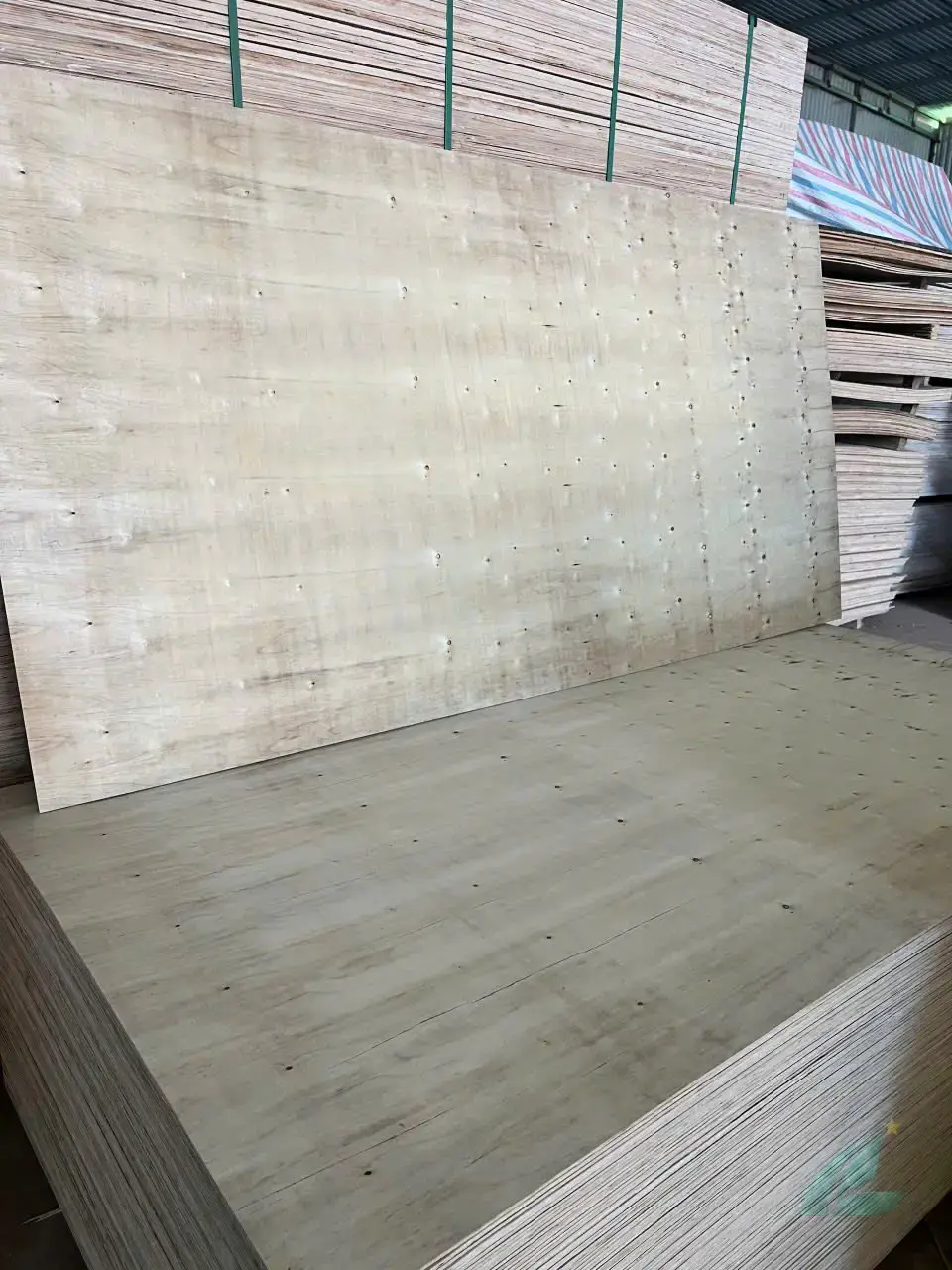
| Panel Size | Dimensions | Primary Use | Container Layout |
|---|---|---|---|
| 1220×2440mm | 4×8 ft | Standard pallets, most crate designs | Most common |
| 1220×1830mm | 4×6 ft | Shorter crate panels, reduce waste for 6ft designs | Same pallet count |
| 915×1830mm | 3×6 ft | Small crates, corner boards, agricultural packaging | Same pallet count |
The 1220×2440mm (4×8ft) panel is the global standard and provides maximum cutting flexibility. Most pallet board dimensions (600mm, 800mm, 1000mm, 1200mm) nest efficiently into the 2440mm length with minimal off-cut.
Custom cutting is available with 1 × 40HC MOQ. Buyers with specific pallet templates or crate cut lists can provide dimensions and the factory will optimize the panel size for your production line. Custom-cut panels typically reduce waste in your assembly operation — particularly for crate designs that produce significant off-cuts from standard 4×8ft sheets.
For buyers ordering the 1250×2500mm metric format (European pallet standard: 1200mm pallet requires 2400mm board length with 100mm overhang each end), this size is available on request. Container loading for 1250×2500mm is approximately the same pallet count as 1220×2440mm, with total CBM approximately 5% higher due to the larger panel area.
🔍 Packing Plywood Grade Comparison — By Application
Not all packing applications require the same specification. This table maps application types to the correct specification, based on export data across 20+ country markets.
| Application | Thickness | Core | Face | Key Requirement |
|---|---|---|---|---|
| Produce/flower crates | 4–6mm | Styrax | Poplar or Bintangor C/D | Lightweight, ≤14% MC |
| Standard export pallets | 9–12mm | Acacia or Styrax | Bintangor C/D | Bond strength, ±0.5mm tolerance |
| Heavy machinery crates | 15–18mm | Acacia | Bintangor C/D | Compressive strength |
| Electronics outer boxes | 6–9mm | Styrax | Poplar | Low weight, clean face option |
| Branded outer packaging | 9–12mm | Styrax | Bintangor B | Cleaner appearance |
| Budget concrete formwork | 12–18mm | Acacia | Bintangor C/D | MR glue adequate for 1–3 pours |
The single specification error most frequently corrected in buyer RFQs: ordering unsanded Bintangor C/D at E2 emission for an application that actually requires E1 (for import compliance in certain markets) or ordering commercial B-grade plywood (with E1 and sanding) for a pure packaging application. The packing plywood vs commercial plywood comparison guide covers this distinction in detail.
Contact us for a specification-matched packing plywood quotation →
🏭 Production Standards and quality control
A well-managed commercial production facility applies a three-stage inspection process to packing plywood before release for shipment:
Stage 1 — After hot pressing: Panel thickness is checked at four corner points and center using a calibrated digital gauge. Panels outside ±0.5mm tolerance are rejected. Glue bond is visually inspected; delamination at edges or face veneer lifting fails inspection at this stage.
Stage 2 — After stacking and bundling: Moisture meter readings taken from 5% of panels per bundle. Moisture ≤14% confirmed before PE wrapping. Bundle dimensions verified against purchase order.
Stage 3 — Pre-loading inspection: The QC team inspects bundles before they enter the container. Loading photos and video documentation provided to buyer upon request. Markings — ISPM 15 wheat symbol, bundle number, specification label — verified against shipping documents.
For buyers who want third-party pre-shipment inspection (PSI), reputable factories accommodate inspection access by Bureau Veritas, SGS, or equivalent inspection bodies. PSI findings are incorporated into the final packing list and documentation package.
✅ Specification Checklist — What to Confirm Before Ordering
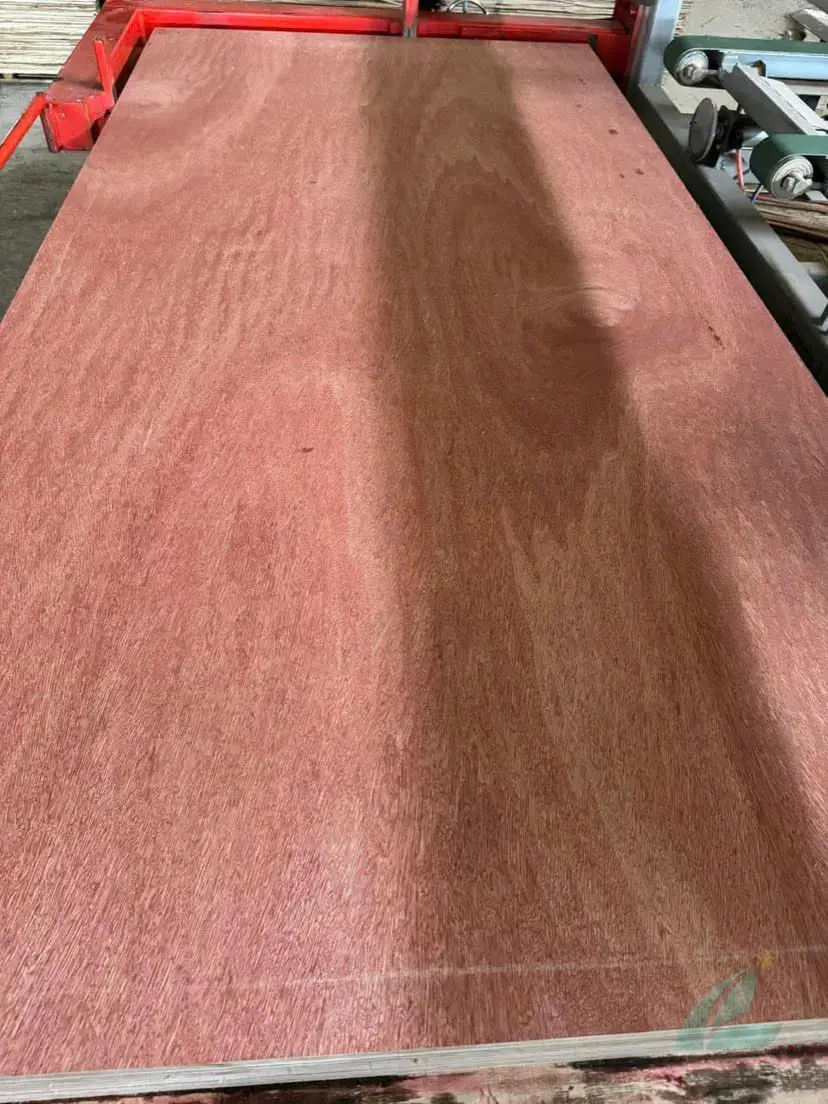
Before confirming a packing plywood purchase order with any Vietnam supplier, verify these specification points explicitly in writing:
- Face veneer grade — C/D or Poplar? Or B-grade for cleaner face?
- Core species — Acacia (~580 kg/m³) or Styrax (480–500 kg/m³)?
- Glue type — Melamine (MR) is standard. WBP not required for packaging.
- Emission standard — E2 for packaging. E1 only if your destination market requires it.
- Thickness — nominal thickness and ±0.5mm tolerance confirmed?
- Panel size — 1220×2440mm standard, or custom cut?
- Moisture content — ≤14% at point of shipment?
- ISPM 15 — HT certification included? Phytosanitary certificate provided?
- Mixed specs — if combining thicknesses in one container, request recalculated weight/CBM
- Payment terms — 30% T/T deposit, 70% before loading is standard
This checklist prevents the most common post-shipment disputes: thickness out of tolerance, wrong glue type, missing ISPM 15 documentation, and moisture-related warping after container transit.
For container loading specifics by thickness and core combination, refer to the factory-level data in the 40HC container packing calculation guide — the same tables used by factory export operations teams.
Submit your specification requirements for a factory-direct packing plywood quote →
📊 Summary: Vietnam Packing Plywood Specification at a Glance
Vietnam packing plywood is specified for one purpose: maximum structural performance for industrial packaging at the lowest cost per panel. The correct specification — Bintangor C/D or Poplar face, acacia or styrax core, Melamine (MR) glue, E2 emission, ≤14% moisture, unsanded, ISPM 15 HT certified — covers pallets, crates, shipping boxes, dunnage boards, and budget single-use formwork applications across 50+ export markets.
Styrax core optimizes panel count per container (18 pallets, ~53 CBM per 40HC). Acacia core optimizes compressive strength for heavy-duty crate applications (16 pallets, ~47.5 CBM per 40HC). Both deliver full ISPM 15 compliance and complete export documentation.
For buyers who need specifications outside these parameters — higher emission standard, sanded face for visible surfaces, or specific cut sizes — contact our export team to confirm availability and receive revised pricing within 12 hours.
For related product specifications, see packing plywood vietnam product page and the types of plywood classification guide.
Disclosure: This article is published by Mika Plywood, a Vietnam-based plywood manufacturer and export operator. While we aim to provide objective industry guidance, readers should consider our perspective as a market participant when evaluating recommendations.
Get a free packing plywood specification quote — we respond within 12 hours →
Frequently Asked Questions
What face veneer grades are used in Vietnam packing plywood?Vietnam packing plywood uses Bintangor C/D grade or Poplar face veneer. Bintangor C/D allows natural repairs, small knots, and minor splits within permitted limits — acceptable for packaging where surface appearance is irrelevant. Some buyers request Bintangor B grade for slightly cleaner face at a small price premium.What are standard thickness options for packing plywood Vietnam?Standard thicknesses are 4mm, 6mm, 9mm, 12mm, 15mm, and 18mm. The most ordered sizes for pallets and crates are 9mm and 12mm. Thickness tolerance is ±0.5mm across the full range.What is the moisture content specification for packing plywood?Moisture content is ≤14% at point of shipment, measured with a calibrated moisture meter before loading. This level is appropriate for dry-stored industrial packaging. For furniture or cabinet applications requiring E0/E1 emission, different moisture targets apply.How many panels fit in a 40HC container of 12mm packing plywood?For 12mm packing plywood with acacia core: 16 pallets per 40HC, each pallet holds 83 sheets (ROUNDDOWN(1000÷12)), giving 1,328 sheets total at ~47.5 CBM. With styrax core: 18 pallets, 83 sheets per pallet, 1,494 sheets at ~53 CBM. Exact figures recalculated for every order.Does your packing plywood meet ISPM 15 requirements?Yes. All packing plywood shipments include heat treatment (HT) certification to ISPM 15 standard — core must reach 56°C for 30 continuous minutes. Each bundle carries the ISPM 15 wheat-symbol marking. A phytosanitary certificate is issued by Vietnam's Plant Protection Department (PPD) for each shipment.
Ready to order?
Get packing plywood specifications and FOB quote

Written by
David
Export Project Leader
Content contributor at Vietnam Plywood.
On this page
- 📋 Packing Plywood Specifications — Full Parameter Table
- 🪵 Face Veneer Grade — What C/D Actually Means
- 🌳 Core Species — Acacia vs. Styrax for Packaging
- 📐 Thickness Matrix and Ply Count
- 📦 Container Loading — 40HC Specification by Core and Thickness
- Acacia Core — 16 Pallets per 40HC (1220×2440mm)
- Styrax Core — 18 Pallets per 40HC (1220×2440mm)
- 💧 Glue, Emission, and Moisture Specifications
- Glue Type: Melamine (MR)
- 🌿 ISPM 15 Compliance — Technical Requirements
- 📏 Panel Sizes — Cutting Yield by Application
- 🔍 Packing Plywood Grade Comparison — By Application
- 🏭 Production Standards and quality control
- ✅ Specification Checklist — What to Confirm Before Ordering
- 📊 Summary: Vietnam Packing Plywood Specification at a Glance
On this page
- 📋 Packing Plywood Specifications — Full Parameter Table
- 🪵 Face Veneer Grade — What C/D Actually Means
- 🌳 Core Species — Acacia vs. Styrax for Packaging
- 📐 Thickness Matrix and Ply Count
- 📦 Container Loading — 40HC Specification by Core and Thickness
- Acacia Core — 16 Pallets per 40HC (1220×2440mm)
- Styrax Core — 18 Pallets per 40HC (1220×2440mm)
- 💧 Glue, Emission, and Moisture Specifications
- Glue Type: Melamine (MR)
- 🌿 ISPM 15 Compliance — Technical Requirements
- 📏 Panel Sizes — Cutting Yield by Application
- 🔍 Packing Plywood Grade Comparison — By Application
- 🏭 Production Standards and quality control
- ✅ Specification Checklist — What to Confirm Before Ordering
- 📊 Summary: Vietnam Packing Plywood Specification at a Glance
Industry Newsletter
Stay Updated with
Plywood Industry Insights
Factory prices, spec guides, market trends and export tips — delivered weekly to B2B buyers and importers in 20+ countries.