Unsanded plywood saves USD 3–7/CBM for packing crates, pallets, and formwork. Specs, face veneer grades, and ordering guide from Vietnam factory.
Sanding is the most expensive surface treatment in plywood production — wide-belt sanders run abrasive passes at high cost, calibrate thickness to ±0.3mm, and add 20–40 minutes per production cycle. For furniture and cabinet-grade panels, that cost is justified. For construction formwork and packaging crates, it is wasted money.
Unsanded plywood delivers full structural performance for packing and construction applications at a meaningfully lower production cost. Understanding which applications require sanded surfaces and which do not is one of the most practical specification decisions an importer can make. As of 2026, Mika Plywood ships unsanded packing and construction-grade panels to buyers in the Middle East, Southeast Asia, India, and Africa — markets where cost efficiency drives volume.
📊 TL;DR: When Unsanded Is Correct
Key Insight: Surface finish is an application decision, not a quality decision. Unsanded does not mean inferior — it means appropriate for structural and industrial use where smoothness adds no value.
| Application | Sanded? | Face Veneer | Core | Glue |
|---|---|---|---|---|
| Furniture / cabinets | Yes (S2S) | Birch, Okoume, EV | Styrax, Eucalyptus | MR / E0 |
| Film-faced formwork | No | Phenolic/melamine film | Acacia, Eucalyptus | WBP |
| Anti-slip scaffold | No | AICA anti-slip film 220gsm | Acacia, Eucalyptus | WBP |
| Packing crates/pallets (packaging plywood) | No | Bintangor C/D, Poplar | Acacia, Styrax | MR / E2 |
| Commercial packaging | No | Bintangor B, Poplar | Acacia, Styrax | MR / E1 |
| Subfloor sheathing | No | Mixed or Bintangor | Acacia | MR / E2 |
Specification shortcut: If the panel will be covered, buried, fastened, or coated — specify unsanded.
📦 What Is Unsanded Plywood?
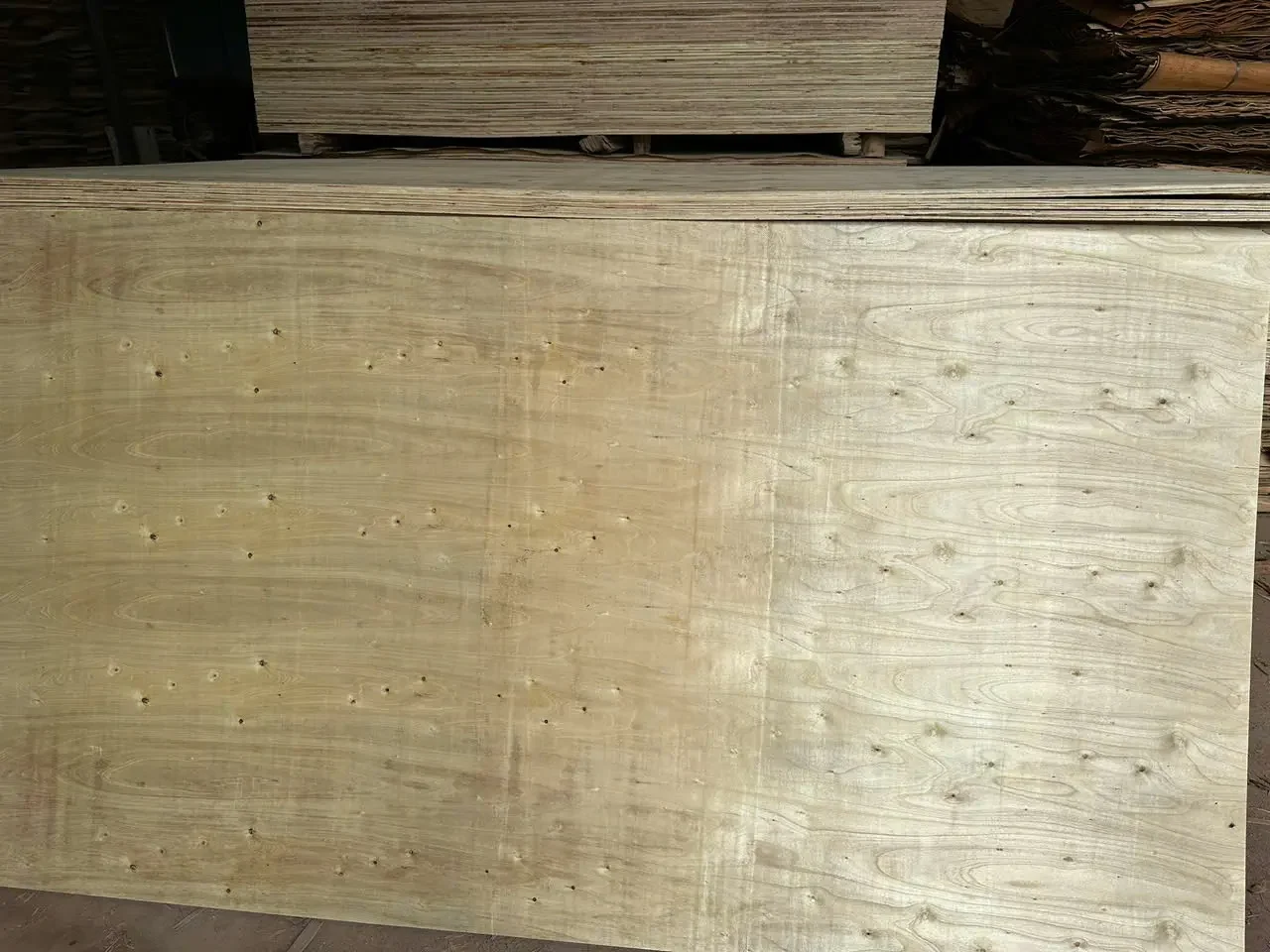
Unsanded plywood is a panel that exits the hot press and edge trim process without passing through the wide-belt sander. The surface retains the natural texture of the face veneer — slightly fibrous, uneven at the micro level, and with visible press marks.
“Sanding is where furniture-grade plywood is made or broken. Our factory runs a 4-stage grit sequence — 80, 120, 150, 180 — on calibrated drum sanders. Skip a stage or run at the wrong speed, and you get waviness that only shows up after lacquer application.” — David, Export Project Leader, Mika Plywood
This is not a defect. Unsanded panels pass the same core construction, glue bonding, and moisture content standards as sanded grades. The only difference is surface finish — which matters for furniture adhesion and paint application, but has zero relevance for structural crates, concrete molds, or roofing sheathing. See construction plywood for formwork and structural panel specifications.
“The sanding step is about calibration and aesthetics — furniture factories need both,” says Jay, International Sales Manager at Mika Plywood with 6+ years in Vietnam plywood export. “Packaging and construction buyers are paying for structural wood, not mirror-smooth veneer. Specifying sanded panels for crating applications is like ordering a coated steel beam for interior decoration.”
Unsanded plywood is produced at Mika Plywood’s commercial and packing-segment production facility — purpose-built for high-volume, cost-optimized panel production with acacia or styrax cores.
🏗️ Unsanded Plywood for Construction
📌 Film-Faced Formwork Plywood
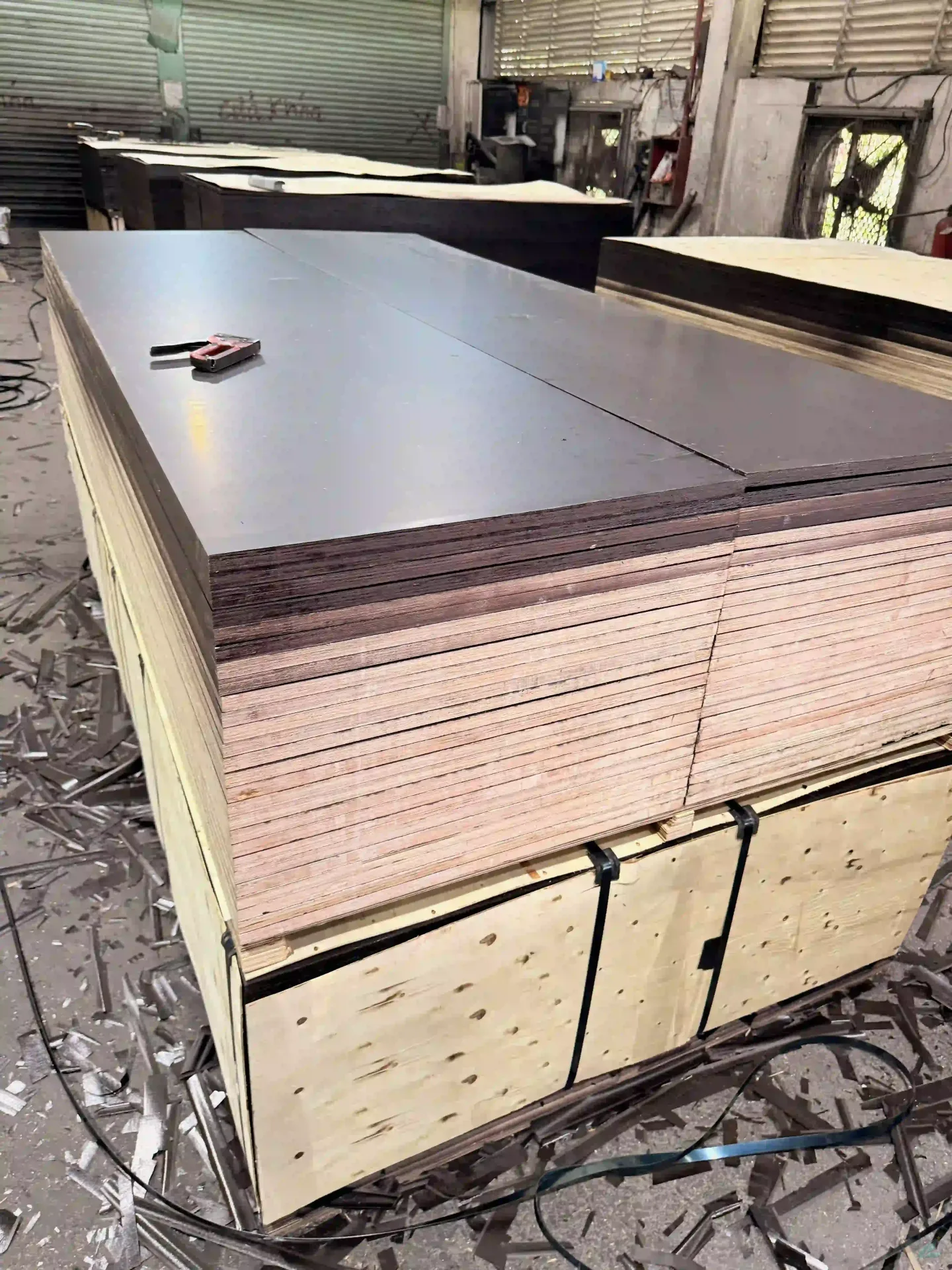
Film-faced plywood is the primary construction-grade panel — phenolic or melamine film bonded directly to the raw panel surface. Sanding the core panel before film application would damage the surface layer needed for film adhesion. All film-faced panels are produced unsanded as standard.
Mika Plywood’s premium film-faced panels use AICA film (minimum 135 gsm) bonded with phenolic WBP glue, achieving 15+ reuses per panel (APA – The Engineered Wood Association, 2024). The unsanded core panel is acacia or eucalyptus grade A, with stitched or edge-jointed construction depending on application.
Thickness range: 12–21mm. Standard sizes: 1220×2440mm and 1250×2500mm.
📌 Anti-Slip Scaffold Plywood
Anti-slip plywood bonds AICA 220gsm anti-slip film to the raw panel surface — the same logic applies. The rough, textured anti-slip surface is created by the film itself, not by the base panel. Sanding the base before bonding would reduce film adhesion and create delamination risk under load.
Applications: truck floors, mobile scaffolding decks, loading ramps, marine walkways. Core: acacia or eucalyptus. Glue: phenolic WBP. All panels unsanded. See full specs at anti-slip plywood from Vietnam.
📌 Structural Sheathing
For markets using plywood as subfloor, wall, or roof sheathing — common in Australia, the US, and Southeast Asian construction markets — unsanded panels are standard specification. The rough surface actually improves mechanical fastener grip and adhesive bonding with concrete subfloor compounds (APA The Engineered Wood Association, Technical Note E30Y, 2023).
📦 Unsanded Plywood for Packaging
📌 Packing Crates and Industrial Boxes
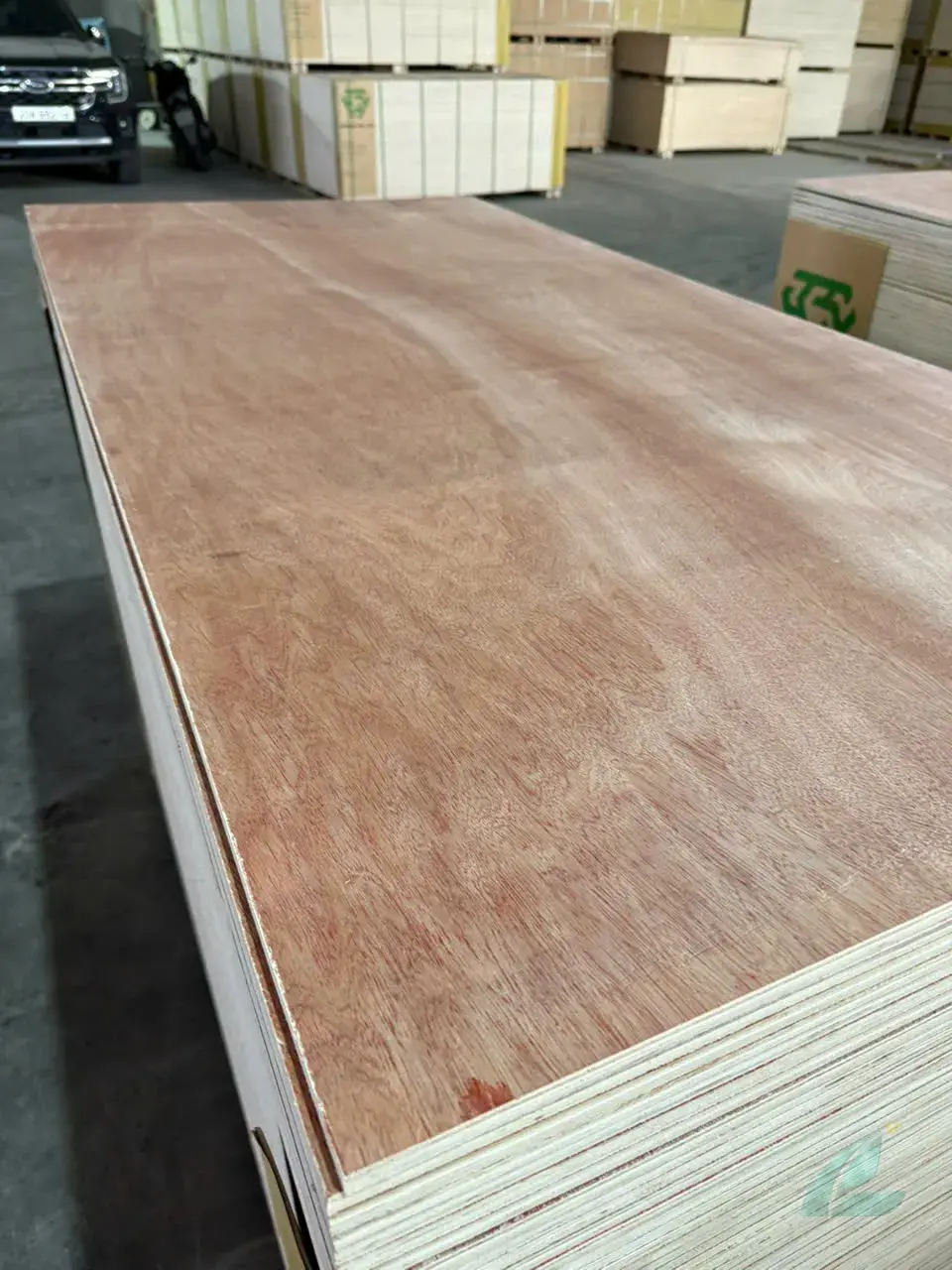
Packing crates for machinery, electronics, heavy equipment, and industrial shipments are built from packing-grade unsanded plywood. The panel needs structural integrity and nail-holding capacity — not surface smoothness. Buyers in the automotive parts, machinery, and industrial sectors are the largest volume purchasers of packing plywood from Vietnam.
Standard packing plywood specification from Mika Plywood:
| Parameter | Specification |
|---|---|
| Face veneer | Bintangor C/D or Poplar |
| Core species | Acacia or Styrax |
| Glue | Melamine MR |
| Emission | E2 (standard) / E1 (available) |
| Surface | Unsanded |
| Thickness | 4mm, 5mm, 9mm, 12mm, 15mm, 18mm |
| Sheet size | 1220×2440mm (4×8 ft), 1250×2500mm |
| Tolerance | ±0.5mm thickness, ±2mm length/width |
⚠️ Important: Packing plywood with E2 emission is not suitable for enclosed indoor spaces in EU, US, or Japanese markets. Specify E1 for packing applications that enter finished goods into these markets.
📌 Shipping Pallets
Plywood pallets are a growing alternative to solid wood pallets in markets requiring ISPM 15 phytosanitary compliance — plywood is exempt from heat treatment requirements under ISPM 15 because the manufacturing process (veneer peeling + hot pressing at 100–130°C) already eliminates pest risk (IPPC/FAO, ISPM Standard 15, revised 2019).
Pallet plywood from Mika Plywood: 9mm or 12mm thickness, acacia or styrax core, bintangor C/D face, unsanded, fumigation certificate available. Standard container load for 12mm acacia-core packing plywood: 16 pallets per 40HC, approximately 47.5 CBM (Mika Plywood production data, 2026).
📌 Cable Reels and Drums
Cable manufacturers and wire producers use plywood drums as structural components. Unsanded panels are standard — the drum’s structural layers require consistent density and bonding, not surface smoothness. Birch (D/E grade) or bintangor panels are common for high-tension applications, while bintangor C/D is sufficient for lower-specification drums.
💰 Cost Impact: What Skipping Sanding Saves
Wide-belt sanding adds USD 3–7 per CBM to production cost, based on Mika Plywood’s internal production accounting (2026). The range depends on:
- Panel thickness: Thicker panels take more sanding passes. An 18mm panel requires more material removal than a 9mm panel to reach ±0.3mm calibration.
- Abrasive grade: Furniture-grade sanding uses finer abrasives (120+ grit) after calibration. Lighter passes use coarser grades at lower cost.
- Surface requirement: Single-sided (S1S) vs. double-sided (S2S) sanding doubles abrasive cost.
For a full 40HC container of 12mm acacia-core packing plywood (~47.5 CBM), skipping sanding saves:
- At USD 3/CBM: USD 142.50 per container
- At USD 7/CBM: USD 332.50 per container
For buyers with 10 containers per month, this is USD 1,425–3,325 per month in avoided cost — at no reduction in structural performance.
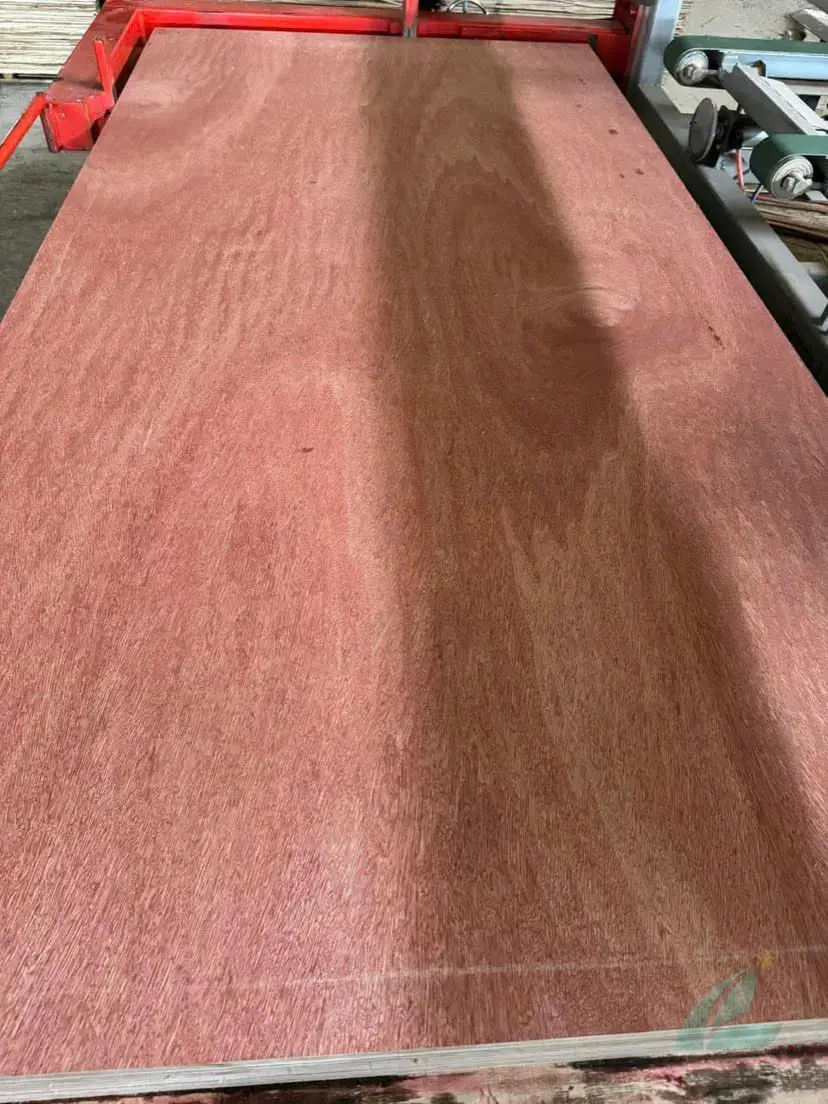
Key Insight: Unsanded packing plywood from Vietnam typically costs USD 15–25 per CBM less than furniture-grade sanded panels of similar thickness — the savings come from both the sanding step and the lower-grade face veneer specification.
📐 How to Specify Unsanded Plywood Correctly
Accurate specification avoids rejection at destination and prevents costly replacement orders. Include these fields in every purchase order for unsanded panels:
For packing plywood:
Face: Bintangor C/D (or Poplar)
Core: Acacia (or Styrax — specify if weight-sensitive)
Glue: Melamine MR
Emission: E2 (or E1 if required)
Surface: Unsanded (both sides)
Thickness: [X]mm ±0.5mm
Size: 1220×2440mm (or 1250×2500mm)
Grade: Packing grade
For film-faced construction plywood:
Face: Phenolic film (brown) or Melamine film (black)
Core: Acacia or Eucalyptus
Glue: Phenolic WBP
Film weight: 135gsm (standard) or 180gsm (premium)
Surface: Film-faced both sides
Thickness: [12/15/18/21]mm ±0.5mm
Reuse rating: 10+ (standard) or 15+ (AICA film)
💡 Tip: Always confirm emission standard separately from glue type. These are two different specifications. Melamine (MR) glue with E2 emission is standard packing grade. If your buyer’s destination market has indoor air quality regulations — specify E1 or E0 even on unsanded panels.
For internal linking to specification resources:
- Full glue and emission guide: Plywood Glue Types & Emission Standards
- Thickness and size specifications: Plywood Sizes & Thickness Guide
- When sanded panels are required: Sanded vs Unsanded Plywood — Decision Guide
🏭 Production Segment for Unsanded Plywood in Vietnam
This segment does not produce furniture-grade sanded panels. The QC focus at this facility is on bonding strength, moisture content (target ≤12%), and dimensional accuracy — the three factors that determine structural performance of packing and construction panels.
Key certifications available on packing-grade unsanded plywood from Mika Plywood: Phytosanitary Certificate, Fumigation Certificate, Bill of Lading, CO (Certificate of Origin). FSC certification is available on request for buyers requiring chain-of-custody documentation.
For buyers considering packing plywood from Vietnam, the factory-direct model at Mika Plywood eliminates VAT overhead and intermediary markups — pricing reflects production cost directly.
Disclosure: This article is published by Mika Plywood, a Vietnam-based plywood manufacturer and export operator. While we aim to provide objective industry guidance, readers should consider our perspective as a market participant when evaluating recommendations.
🔗 Related Articles
- Types of Plywood — Complete Classification Guide — How construction, packing, and furniture grades differ structurally
- Plywood Face Veneer Types — Complete Buyer Guide — Bintangor, poplar, and other face species used in packing grade
- Plywood Core Types — Acacia vs Eucalyptus vs Styrax — Why acacia is the standard packing core and when styrax is preferred
- Vietnam Plywood Manufacturing Process — How the sanding step fits into production flow
✅ Key Takeaways
Unsanded plywood is the correct specification — not the budget compromise — for construction formwork, anti-slip scaffold decking, packing crates, shipping pallets, and industrial packaging. Sanding adds cost that these applications cannot justify or use.
The practical savings are USD 3–7 per CBM in production cost, compounding to USD 142–333 per 40HC container on packing plywood orders. For regular importers, the annual savings are significant.
Get a confirmed price for unsanded packing or construction plywood from Mika Plywood with your exact thickness, size, and volume: Request Unsanded Plywood Pricing.
No commitment required. Sample order available.
Frequently Asked Questions
What is unsanded plywood used for?Unsanded plywood is used for applications where surface smoothness is not required — primarily packing crates, shipping pallets, industrial packaging, concrete formwork, subfloor sheathing, and roofing. The rough surface has no impact on structural performance and skipping sanding reduces cost by USD 3–7 per CBM compared to furniture-grade sanded panels.Is construction plywood sanded or unsanded?Construction plywood — formwork, sheathing, and anti-slip scaffold decking — is always unsanded. Film-faced plywood receives a phenolic or melamine film directly onto the raw panel surface; sanding before film application would destroy the adhesion layer. Anti-slip AICA film follows the same logic. Structural sheathing used for subfloors and roof decking is also unsanded — the rough surface improves mechanical fastener grip.What face veneer does unsanded packing plywood use?Packing plywood from Vietnam uses bintangor C/D or poplar face veneer — the lowest-cost face options. Neither species benefits from sanding at the grade levels used for packing. Core species are acacia or styrax. The typical specification is: bintangor C/D face, acacia core, MR glue, E2 emission, unsanded, 4–18mm thickness.How much does skipping sanding save per container?Skipping sanding saves USD 3–7 per CBM in production cost. For a 40HC container of acacia-core packing plywood (~47.5 CBM), that is USD 142–333 saved per container. For buyers ordering regular volumes, this adds up quickly. The saving is applied automatically when you specify unsanded — no need to negotiate separately.Can I mix sanded and unsanded panels in one 40HC container?Yes. Mika Plywood supports mixed specifications within one 40HC container. You can combine furniture-grade sanded panels and packing-grade unsanded panels in a single shipment. Each pallet is clearly labeled. The total weight and CBM calculation must be checked against the 28.5 MT payload limit, since sanded panels (typically styrax or eucalyptus core) and unsanded packing panels (acacia core) have different densities.
Ready to order?
Get Unsanded Plywood Pricing

Written by
David
Export Project Leader
Content contributor at Vietnam Plywood.
On this page
- 📊 TL;DR: When Unsanded Is Correct
- 📦 What Is Unsanded Plywood?
- 🏗️ Unsanded Plywood for Construction
- 📌 Film-Faced Formwork Plywood
- 📌 Anti-Slip Scaffold Plywood
- 📌 Structural Sheathing
- 📦 Unsanded Plywood for Packaging
- 📌 Packing Crates and Industrial Boxes
- 📌 Shipping Pallets
- 📌 Cable Reels and Drums
- 💰 Cost Impact: What Skipping Sanding Saves
- 📐 How to Specify Unsanded Plywood Correctly
- 🏭 Production Segment for Unsanded Plywood in Vietnam
- 🔗 Related Articles
- ✅ Key Takeaways
On this page
- 📊 TL;DR: When Unsanded Is Correct
- 📦 What Is Unsanded Plywood?
- 🏗️ Unsanded Plywood for Construction
- 📌 Film-Faced Formwork Plywood
- 📌 Anti-Slip Scaffold Plywood
- 📌 Structural Sheathing
- 📦 Unsanded Plywood for Packaging
- 📌 Packing Crates and Industrial Boxes
- 📌 Shipping Pallets
- 📌 Cable Reels and Drums
- 💰 Cost Impact: What Skipping Sanding Saves
- 📐 How to Specify Unsanded Plywood Correctly
- 🏭 Production Segment for Unsanded Plywood in Vietnam
- 🔗 Related Articles
- ✅ Key Takeaways
Industry Newsletter
Stay Updated with
Plywood Industry Insights
Factory prices, spec guides, market trends and export tips — delivered weekly to B2B buyers and importers in 20+ countries.