Hardwood vs softwood plywood from Vietnam — core species, density, glue options, and which grade fits your application. Factory-direct from Mika Plywood.
Buyers ordering plywood from Vietnam often ask one question early in the sourcing process: am I getting hardwood or softwood plywood — and does it matter for my application?
The short answer: hardwood vs softwood plywood from Vietnam is primarily determined by the core species, not the face veneer. Vietnam produces three commercially significant core species — acacia, eucalyptus, and styrax — each with distinct density ranges, strength profiles, and applications. Understanding these key differences prevents costly spec mismatches when containers arrive at port.
This guide explains exactly how Vietnamese manufacturers classify hardwood and softwood plywood, which specs apply to which end use, and how to order correctly from a Vietnam factory.
📋 What “Hardwood” and “Softwood” Mean in Vietnam’s Plywood Industry
The conventional botanical distinction — angiosperms (hardwood) vs. conifers (softwood) — has limited practical meaning when ordering plywood from Vietnam. Vietnam’s plantation forestry does not produce commercial quantities of pine, spruce, or fir for plywood cores. Instead, the country relies almost entirely on fast-growing tropical plantation species.
In Vietnam’s export plywood context, the working classification is:
- Hardwood core — acacia and eucalyptus, both dense plantation species with 580–750 kg/m³ density range
- Softwood-equivalent core — styrax (bồ đề), a light, white-fiber plantation species at 480–500 kg/m³, used as the industry substitute for birch core
This distinction matters because density drives panel weight, strength, and container payload, not the biological taxonomy of the tree.
💡 Key Insight: Vietnamese factories do not import European softwood (pine/spruce) for cores. Styrax is the closest lightweight core available from Northern Vietnam plantation sources — it is not a conifer, but functions like one for plywood purposes.
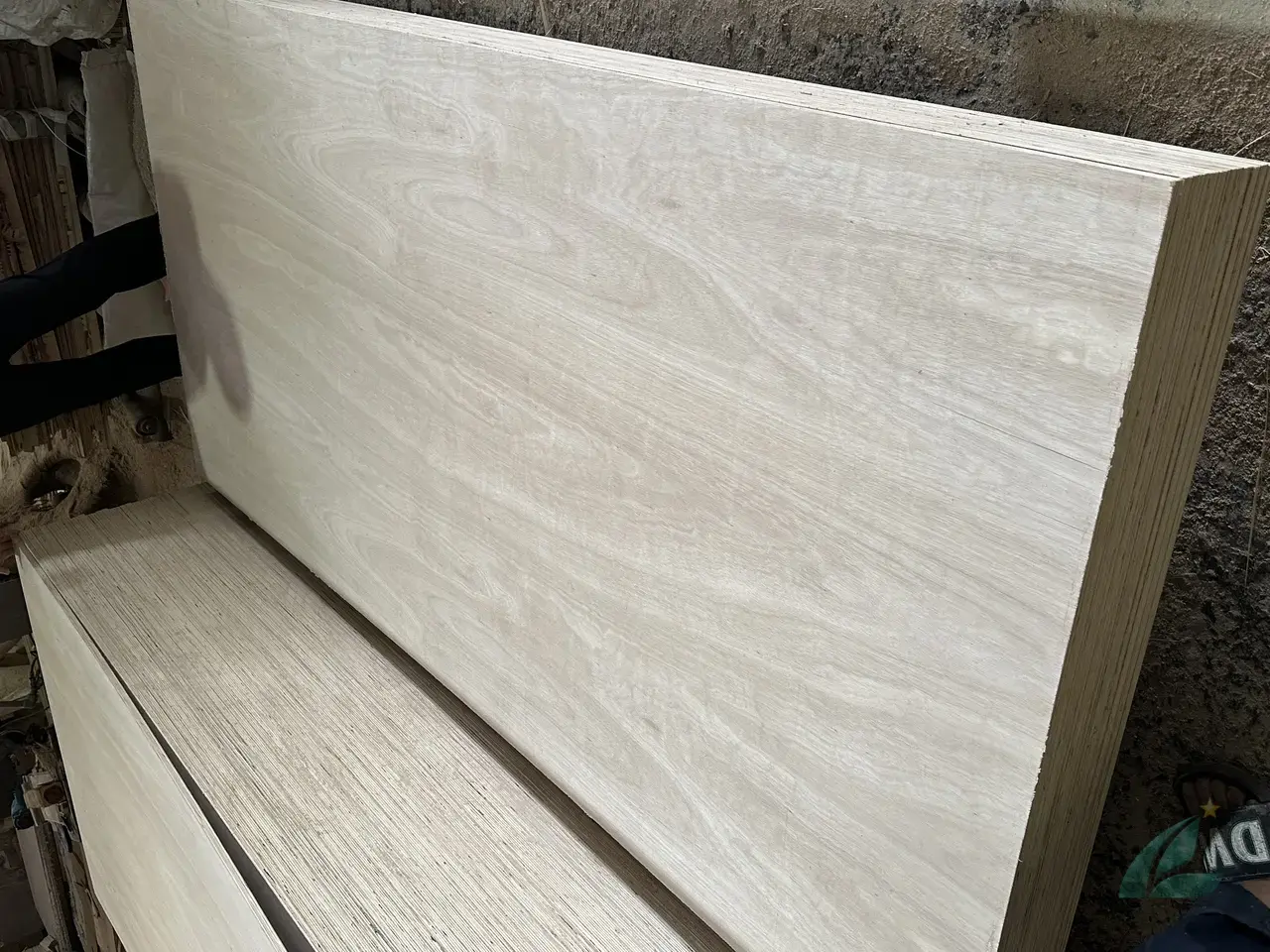
📊 Core Species Comparison: The Three Options from Vietnam
| Core Species | Density | Price | Best For |
|---|---|---|---|
| Acacia (keo) | ~580 kg/m³ | Lowest | Commercial, packing, budget furniture |
| Eucalyptus (bạch đàn) | 650–750 kg/m³ | Highest | Construction, flooring, heavy-duty |
| Styrax (bồ đề) | 480–500 kg/m³ | Mid-range | Premium furniture, lightweight interior panels |
“The core species is the single biggest variable in plywood performance. Two panels can look identical on the surface — same face veneer, same thickness — but behave completely differently under load because one uses eucalyptus core at 650 kg/m³ and the other uses styrax at 500 kg/m³.” — David, Export Project Leader, Mika Plywood
(Mika Plywood production data, 2026)
📌 Acacia Core — Budget Hardwood
Acacia is the most widely used core species in Vietnamese commercial plywood. At approximately 580 kg/m³, it falls solidly in the hardwood density range. The wood is dark in color, which can show through thin face veneers on lower-grade panels.
Acacia core handles MR melamine glue effectively for indoor furniture and commercial applications. For export markets requiring E0 emission standards — EU, US, Japan — acacia core paired with phenolic WBP glue meets construction and industrial specifications. It is the standard core for packing plywood, commercial bintangor panels, and film-faced shuttering boards sold to price-sensitive markets.
A 40HC container loaded with 18mm acacia-core plywood carries approximately 16 pallets, yielding around 47.5 CBM (Mika Plywood container data, 2026). For buyers concerned about the dark color of acacia core showing through thin face veneers, proven factory workarounds exist.
📌 Eucalyptus Core — Premium Hardwood
Eucalyptus is Vietnam’s densest commercially available core, ranging from 650 to 750 kg/m³. This density makes it the strongest panel per millimeter of thickness — well suited for flooring underlayment, structural shuttering, and load-bearing furniture carcasses.
The tradeoff is weight. A 40HC loaded with eucalyptus-core plywood carries only 15 pallets before approaching the 28.5 MT payload limit (Mika Plywood logistics data, 2026). Buyers in Australia, South Korea, and Japan who specify eucalyptus core for structural applications must account for lower sheet counts per container.
Eucalyptus is the go-to core for premium film-faced construction plywood with 15+ reuse cycles, and for high-density flooring underlayment applications. See our detailed eucalyptus core cost-vs-strength analysis for a full breakdown of when the premium is justified.
📌 Styrax Core — Lightweight Alternative
Styrax (bồ đề) is Northern Vietnam’s answer to birch core. At 480–500 kg/m³, it is the lightest core available from Vietnamese factories — comparable in density to European spruce, which is why buyers seeking “softwood equivalent” specifications frequently specify styrax.
Critically, Vietnam does not produce birch core. Factories in Europe and China that market “birch-core plywood from Vietnam” are either misrepresenting the product or importing birch veneer for face layers only. Vietnamese manufacturers use styrax as the direct substitute — lighter weight, white fiber, and structurally appropriate for furniture panels that will be routed, dowelled, or used in precision cabinet making.
Premium furniture plywood with birch, okoume, or EV face veneer, E0 emission, and full stitched core construction almost always uses styrax core in Northern Vietnam. For a direct comparison of styrax core density versus birch core, see our technical benchmark. A 40HC loaded with styrax-core plywood accommodates 18 pallets and approximately 53 CBM — the most space-efficient core option (Mika Plywood container data, 2026).
Request a styrax-core sample →
🔧 How Face Veneer Changes the Classification
The face veneer you specify is independent of the core species but determines the panel’s visual grade, application, and market classification. Vietnamese plywood is named by its face veneer — not its core.
“Birch plywood from Vietnam” means birch face veneer on a Vietnamese core (almost always styrax). It does not mean birch core, which does not exist in Vietnam’s supply chain.
Common face veneers and their hardwood/softwood classification:
| Face Veneer | Wood Type | Thickness | Market |
|---|---|---|---|
| Birch | Hardwood (imported) | 0.2–0.4mm | EU, US, Korea |
| Gurjan | Hardwood (tropical) | 0.2–0.4mm | India, South Asia |
| Okoume | Hardwood (tropical) | 0.2–0.4mm | EU, Middle East |
| Bintangor | Hardwood (tropical) | 0.2–0.4mm | Asia, Middle East |
| Eucalyptus | Hardwood (plantation) | 0.2–0.4mm | Asia, Australia |
| Pine | Softwood (plantation) | 0.2–0.4mm | Europe, Australia |
| Poplar | Softwood (plantation) | 0.2–0.4mm | EU, packaging |
⚠️ Important: Face veneer thickness from Vietnam is standardized at 0.2–0.4mm for most export grades. Thicker face layers (0.5–1.0mm) exist but must be specifically requested. Face thickness affects surface durability but does not change the structural classification of the panel.
For a full breakdown of face options and which markets they serve, see the complete face veneer types guide.
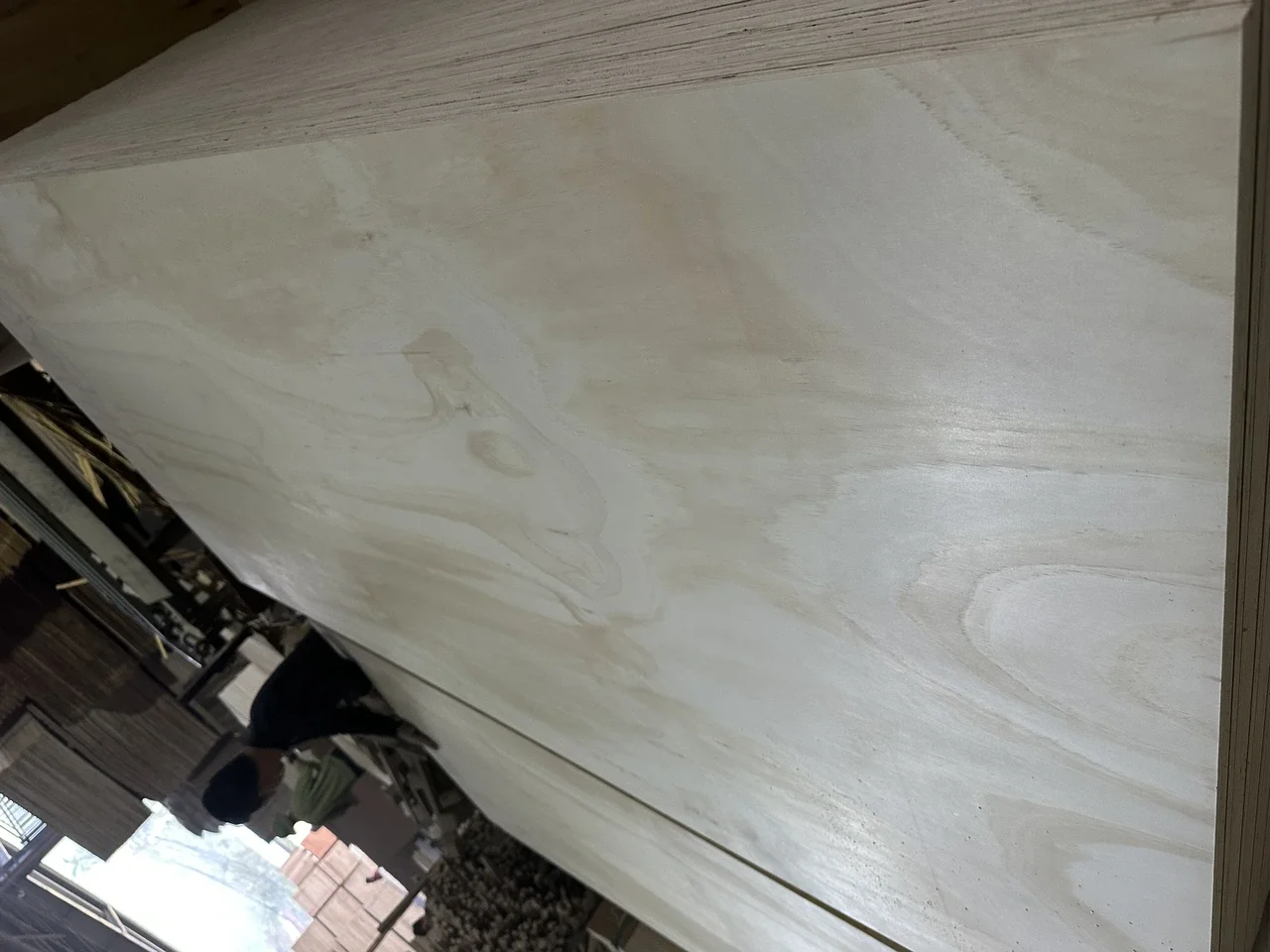
📦 Application Matching: Which Core for Which Use
Selecting the right core for your application prevents delamination complaints, weight overages, and quality disputes after delivery. Here is the factory-level recommendation matrix used by Mika Plywood’s export team.
| Application | Recommended Core | Glue | Emission | Sanding |
|---|---|---|---|---|
| Premium furniture / cabinets | Styrax or Eucalyptus | Melamine (MR) | E0 | Yes |
| Commercial interior fitout | Acacia | Melamine (MR) | E1 | Light |
| Concrete formwork shuttering | Eucalyptus or Acacia | Phenolic (WBP) | N/A | No |
| Flooring underlayment | Eucalyptus | Phenolic (WBP) | E1/E0 | Yes |
| Industrial packing / crates | Acacia | Melamine (MR) | E2 | No |
| Marine applications | Eucalyptus | Phenolic (WBP) | N/A | No |
| Lightweight interior panels | Styrax | Melamine (MR) | E0 | Yes |
“We always recommend buyers state their end use first, not just a species name,” says Jay, International Sales Manager at Mika Plywood with 6+ years in Vietnam plywood export. “A buyer who asks for ‘hardwood plywood’ without specifying application could receive acacia commercial grade when they needed eucalyptus structural grade. The spec sheet prevents that mismatch.”
For the technical decision framework on plywood core types and how density affects panel performance, see our dedicated core guide.
⚙️ Glue Types: Independent of Hardwood vs Softwood
One of the most common misconceptions when ordering hardwood vs softwood plywood from Vietnam is the assumption that hardwood panels automatically come with stronger glue. Glue type is a separate specification from core species.
Vietnam factories produce two main glue types:
Melamine (MR) — Moisture Resistant
- Passes 12-hour boiling test
- Suitable for interior and furniture applications
- Available with E0, E1, or E2 emission standards
- Used across all three core species
Phenolic (WBP) — Weather and Boil-Proof
- Passes 72-hour boiling test
- Required for construction, marine, and outdoor applications
- Emission classification not applicable (structural use)
- Most common with eucalyptus and acacia cores for film-faced shuttering
⚠️ Note: E0, E1, and E2 are emission standards (formaldehyde off-gassing), not glue types. Many buyers confuse “E0 glue” — this does not exist. A panel can be MR glue + E0 emission, or WBP glue with no emission classification. Specify both separately. Full breakdown: plywood glue types and emission standards explained.
🏭 Factory Segments and What They Produce
Understanding which factory segment makes which product type prevents quality surprises. Vietnam’s plywood industry separates into distinct factory segments — a premium furniture factory cannot efficiently produce low-cost commercial packing panels, and vice versa (Mika Plywood production analysis, 2026).
Premium furniture factories (Northern Vietnam):
- Core: styrax or eucalyptus Grade A
- Construction: full stitched core (no gaps, no overlaps)
- Emission: E0/E1, FSC/CARB P2 certified
- Markets: EU, US, Japan, South Korea, Australia
Commercial/packing factories:
- Core: acacia (predominantly)
- Construction: loose-lay or edge-jointed
- Emission: E1/E2
- Markets: Southeast Asia, Middle East, India (commercial segment)
High-grade film-faced factories:
- Core: eucalyptus or acacia Grade A
- Film: AICA-grade 135+ gsm phenolic film
- Reuse: 15–20 cycles (construction grade)
- Markets: EU, Korea, Japan, Australia
📐 Ordering Correctly: Checklist for Buyers
When requesting a quote for hardwood or softwood-equivalent plywood from Vietnam, provide these specifications to avoid specification mismatches:
- Core species — acacia / eucalyptus / styrax (state which one, not “hardwood”)
- Face veneer — birch / okoume / bintangor / gurjan / eucalyptus / pine, etc.
- Thickness — in mm (3, 5, 9, 12, 15, 18, 21, 25mm most common)
- Sheet size — 1220×2440mm (4×8ft) or 1250×2500mm (metric)
- Glue type — Melamine (MR) for interior, Phenolic (WBP) for construction/marine
- Emission standard — E0 / E1 / E2 (state which market the panels enter)
- Sanding — yes (furniture/cabinets) or no (construction/packing)
- Core construction — full stitched / edge-jointed / loose-lay (quality affects price)
- Certifications needed — FSC / CARB P2 / CE / EUDR (state destination market)
- Quantity — in CBM or number of 40HC containers
For a complete pre-quote specification framework, see the plywood quotation guide for importers.
✅ Conclusion: Hardwood or Softwood — Specify by Core, Not by Name
The hardwood vs softwood distinction in Vietnamese plywood export comes down to three core species: eucalyptus (heaviest, strongest), acacia (most affordable hardwood), and styrax (lightweight, furniture-grade alternative). Each delivers different density, container yield, and structural performance.
Specifying “hardwood plywood” without naming the core species leaves room for substitution. Specifying “18mm eucalyptus-core okoume face, MR E0, full stitched, sanded” leaves no room for error.
Mika Plywood’s export team handles both specification and sampling from all three production segments. Get a Free Quote →
Disclosure: This article is published by Mika Plywood, a Vietnam-based plywood manufacturer and export operator. While we aim to provide objective industry guidance, readers should consider our perspective as a market participant when evaluating recommendations.
🔗 Related Articles
- Plywood Core Types — Acacia vs Eucalyptus vs Styrax from Vietnam Factory
- Plywood Face Veneer Types — Complete Buyer Guide from Vietnam Factory
- Plywood Glue Types & Emission Standards — Melamine vs Phenolic Explained
- Types of Plywood — Complete Classification Guide by Vietnam Manufacturer
- Vietnam Plywood Factory Types — Industry Segmentation Guide
- Core Veneer Vietnam — Eucalyptus & Acacia Raw Sheets
Frequently Asked Questions
What is the difference between hardwood and softwood plywood from Vietnam?In Vietnam's plywood industry, hardwood refers to species like acacia, eucalyptus, and gurjan — dense, heavy, high-strength panels. Softwood alternatives like styrax (480–500 kg/m³) are lighter and used as birch-core substitutes for premium furniture. The core species determines density; the face veneer determines grade and application.Which Vietnamese plywood core is considered hardwood?Acacia (~580 kg/m³) and eucalyptus (650–750 kg/m³) are the primary hardwood core species used in Vietnam. Eucalyptus is the heaviest and strongest — ideal for construction, flooring, and structural applications. Acacia is the most affordable hardwood core option.Is styrax a softwood or hardwood core for plywood?Styrax (bồ đề) is a light-density species at 480–500 kg/m³, behaving as a softwood-equivalent core in Vietnam's plywood industry. It serves as the primary birch-core substitute for premium furniture manufacturing in Northern Vietnam.Which hardwood plywood from Vietnam is best for furniture?For furniture, the best combination is a eucalyptus or styrax core with a birch, okoume, or EV face veneer, E0 emission grade, and full stitched core construction. Eucalyptus core adds rigidity for cabinet carcasses; styrax core reduces weight for interior panels.Can I order mixed hardwood and softwood plywood in one container?Yes. Mika Plywood ships mixed specifications in a single 40HC container. However, weight must be recalculated per core type — eucalyptus containers approach the 28.5 MT payload limit faster than styrax. Contact us with your mix to verify.
Ready to order?
Get a Free Quote for Hardwood or Softwood Plywood

Written by
David
Export Project Leader
Content contributor at Vietnam Plywood.
On this page
- 📋 What “Hardwood” and “Softwood” Mean in Vietnam’s Plywood Industry
- 📊 Core Species Comparison: The Three Options from Vietnam
- 📌 Acacia Core — Budget Hardwood
- 📌 Eucalyptus Core — Premium Hardwood
- 📌 Styrax Core — Lightweight Alternative
- 🔧 How Face Veneer Changes the Classification
- 📦 Application Matching: Which Core for Which Use
- ⚙️ Glue Types: Independent of Hardwood vs Softwood
- 🏭 Factory Segments and What They Produce
- 📐 Ordering Correctly: Checklist for Buyers
- ✅ Conclusion: Hardwood or Softwood — Specify by Core, Not by Name
- 🔗 Related Articles
On this page
- 📋 What “Hardwood” and “Softwood” Mean in Vietnam’s Plywood Industry
- 📊 Core Species Comparison: The Three Options from Vietnam
- 📌 Acacia Core — Budget Hardwood
- 📌 Eucalyptus Core — Premium Hardwood
- 📌 Styrax Core — Lightweight Alternative
- 🔧 How Face Veneer Changes the Classification
- 📦 Application Matching: Which Core for Which Use
- ⚙️ Glue Types: Independent of Hardwood vs Softwood
- 🏭 Factory Segments and What They Produce
- 📐 Ordering Correctly: Checklist for Buyers
- ✅ Conclusion: Hardwood or Softwood — Specify by Core, Not by Name
- 🔗 Related Articles
Industry Newsletter
Stay Updated with
Plywood Industry Insights
Factory prices, spec guides, market trends and export tips — delivered weekly to B2B buyers and importers in 20+ countries.