Vietnam eucalyptus core plywood: 650-750 kg/m³ density, highest strength in VN. Real cost tradeoffs, shipping math, and application guide.
Eucalyptus core is the strongest plywood core produced in Vietnam — and the most expensive to ship. At 650–750 kg/m³, it delivers genuine structural performance, but that density comes with a shipping penalty buyers often underestimate: a 40HC container fits only 15 pallets of eucalyptus core plywood versus 18 pallets for styrax. That difference alone can push your landed cost above any price advantage from choosing the cheaper acacia alternative.
This guide breaks down the real cost-versus-strength tradeoff for Vietnam eucalyptus core plywood: what makes eucalyptus core genuinely superior, where that superiority matters for your application, and where you are paying for strength you do not actually need.
📊 Eucalyptus Core at a Glance: The Key Numbers
Eucalyptus core (bạch đàn in Vietnamese) is one of only three core species produced commercially in Vietnam. The other two are acacia (~580 kg/m³) and styrax (480–500 kg/m³). Vietnam does not produce birch core or hopea core — these are common misconceptions among first-time buyers.
| Property | Eucalyptus Core | Acacia Core | Styrax Core |
|---|---|---|---|
| Density | 650–750 kg/m³ | ~580 kg/m³ | 480–500 kg/m³ |
| Color | Light yellow | Dark brown | White/cream |
| Strength | Highest | Medium | Lowest |
| Weight per sheet | Heaviest | Medium | Lightest |
| Price (FOB) | Highest | Lowest | Mid-range |
| Pallets per 40HC | 15 | 16 | 18 |
(Mika Plywood production data, 2026)
The density range for eucalyptus (650–750 kg/m³) is not a single fixed number because plantation eucalyptus varies by tree age, growing region, and moisture content at time of peeling. Older growth typically produces denser veneer; younger plantation material falls toward the lower end of the range.
Key Insight: Density in Vietnamese plywood is determined by the core species, not the face veneer. A eucalyptus-core panel with a bintangor face still runs 650–750 kg/m³. Many buyers incorrectly assume that a “eucalyptus plywood” refers to a specific face species — it usually means eucalyptus core or a combination of eucalyptus face and core.
💪 Where Eucalyptus Core Strength Delivers Real Value
High density translates to measurable eucalyptus core strength advantages in three areas: bending resistance, screw-holding capacity, and dimensional stability under load. Eucalyptus plywood density — at 650–750 kg/m³ — is the primary reason builders and flooring importers choose this core over lighter alternatives.
“The most common mistake new buyers make is comparing price without checking the core species. Styrax and eucalyptus cores produce very different panels at very different price points.” — Jay, International Sales Manager, Mika Plywood
📌 Construction and Formwork Applications
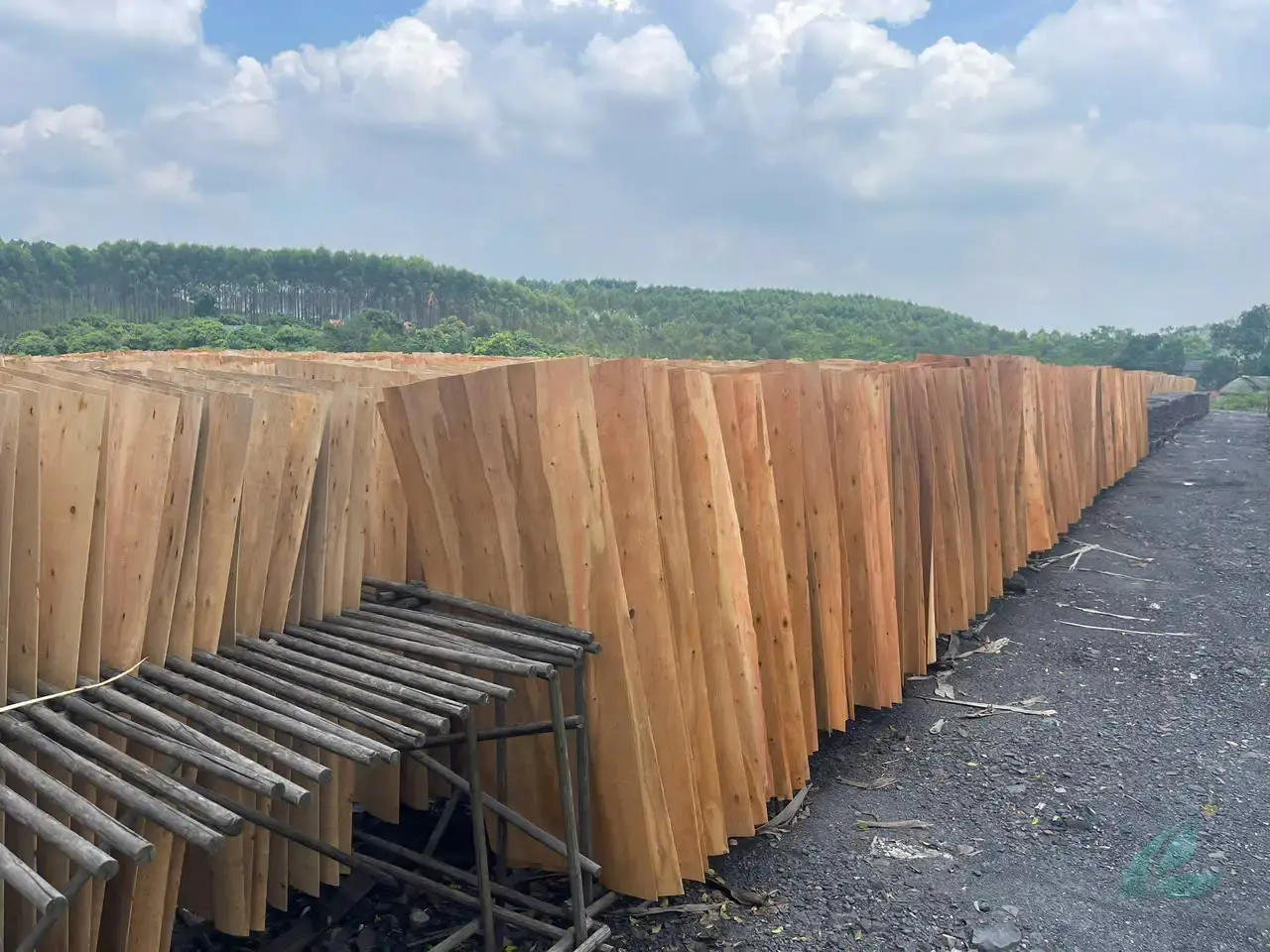
Film-faced plywood for concrete formwork performs better with dense core. The core provides the panel’s resistance to deflection under concrete pressure. Mika Plywood’s film-faced line uses eucalyptus or acacia core depending on reuse specification: higher reuse ratings (15+ times) pair with denser cores to maintain flatness through repeated cycles.
Construction contractors in Korea and Australia regularly specify eucalyptus core for concrete formwork projects because the local regulatory environment and project specifications require it (Australian Standard AS/NZS 2269 references structural performance characteristics that dense cores support). For these applications, the weight premium is absorbed by project requirements, not optional.
📌 Flooring Substrates
Flooring underlayment panels need dimensional stability — the ability to resist swelling, warping, or compression under foot traffic loads over time. Eucalyptus core’s higher density means lower void ratio in the veneer layers, which directly translates to better long-term dimensional stability.
European flooring importers sourcing underlayment panels from Vietnam commonly specify eucalyptus core with phenolic WBP glue for moisture resistance in below-grade installations. The glue and core work together: WBP phenolic handles the moisture exposure, and the dense eucalyptus core handles the mechanical load.
📌 Heavy-Duty Shelving and Industrial Furniture
For shelving systems carrying significant static loads — warehouse racking facings, retail fixture panels, industrial workbench tops — eucalyptus core provides measurably better sag resistance over long spans. A 25mm eucalyptus core panel spanning 900mm under a consistent 50kg load will deflect less than an equivalent acacia or styrax panel. For buyers in manufacturing or warehousing, this is a functional specification, not a premium indulgence.
Get factory-direct eucalyptus core pricing — No minimum specification consultation, no commitment.
💰 The Real Cost of Eucalyptus Core: Shipping Math Matters
The FOB price per sheet is only part of the landed cost equation. Because eucalyptus core is the heaviest Vietnamese plywood core, it changes container loading calculations significantly.
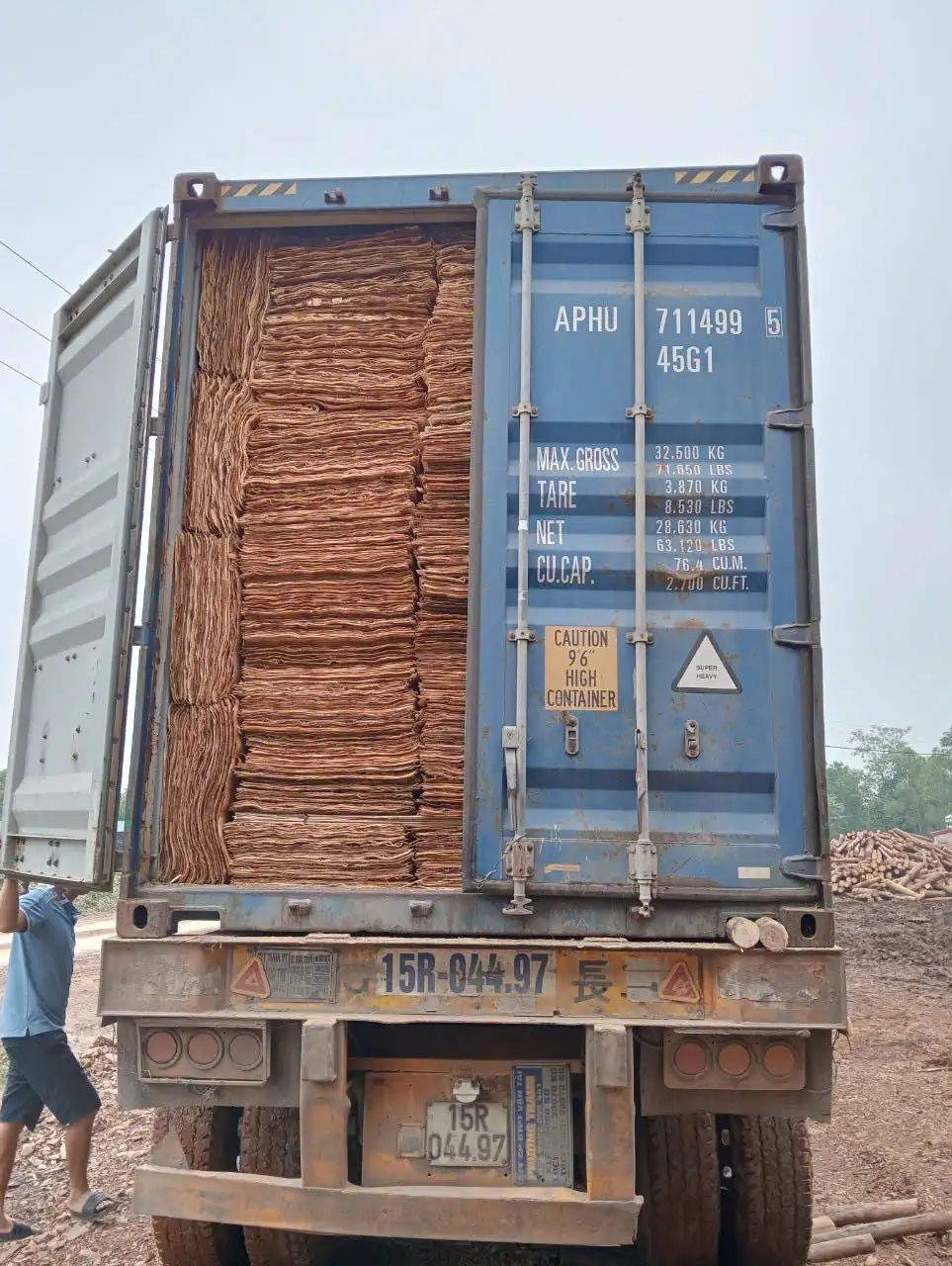
A standard 40HC container loading for 1220×2440mm eucalyptus core plywood:
- 15 pallets (versus 18 for styrax core)
- ~44.5 CBM total volume
- ~28 MT total weight (close to the 28.5 MT hard payload limit)
Compare this to styrax core loading:
- 18 pallets per 40HC
- ~53 CBM total volume
- ~26.5 MT total weight
(Mika Plywood factory loading data, 2026)
The CBM difference is approximately 8.5 CBM per container. If your freight rate is $50/CBM (CIF basis), that represents ~$425 per container in foregone volume. For a buyer purchasing 10 containers per year, that is over $4,000 in additional freight cost from the density penalty alone — before accounting for the higher FOB price of eucalyptus core sheets.
⚠️ Important: Eucalyptus core approaches the 28.5 MT payload limit for a 40HC container. Mixed-spec loads combining eucalyptus core with other products require careful weight recalculation. Overloading carries port rejection risk and significant delays. Always request a packing list from your supplier before finalizing specifications.
For a full breakdown of container loading by core type, see our plywood container packing calculation guide.
🔧 Eucalyptus Core vs Acacia vs Styrax: Application Decision Matrix
The right core choice depends on what your application actually requires, not on a general preference for “stronger” material.
Case study — correct core saves freight costs: A furniture buyer in Poland originally specified acacia core for eucalyptus-faced panels. After learning the panels were for indoor furniture, Mika Plywood recommended switching to styrax core — lighter weight (500 vs 580 kg/m³), smoother surface for furniture finishing, and 54 CBM per 40HC instead of 46-47 CBM with acacia. The buyer switched and now orders 3-5 containers per month. Always specify your end application before locking in the core species.
| Application | Recommended Core | Reason |
|---|---|---|
| Concrete formwork (reuse 15+) | Eucalyptus | Deflection resistance, flatness retention |
| Flooring underlayment | Eucalyptus | Dimensional stability under load |
| Heavy shelving / industrial furniture | Eucalyptus | Long-span sag resistance |
| Standard furniture cabinets | Styrax | Lighter, lower shipping cost, adequate strength |
| Premium furniture (E0, sanded, export EU/US) | Styrax or Eucalyptus | Depends on spec: styrax for weight-sensitive, eucalyptus for structural |
| Packing / crates | Acacia | Cost minimization, strength sufficient |
| Commercial interior fit-out | Acacia or Styrax | Cost-driven, adequate for non-structural use |
“The most common mistake we see is buyers specifying eucalyptus core for furniture applications where they simply want ‘the best’ without considering the shipping cost penalty,” says Jay, International Sales Manager at Mika Plywood. “For a 12mm cabinet panel, styrax core is sufficient and saves you 3 pallets per container.”
⚙️ Glue and Emission Options with Eucalyptus Core
Two distinct specifications control plywood performance — glue type and emission standard — and they are not the same thing.
Glue type (moisture resistance):
- Melamine (MR): 12-hour boiling test. Suitable for furniture, interior applications.
- Phenolic (WBP): 72-hour boiling test. Required for formwork, marine, exterior use.
Emission standard (formaldehyde off-gassing):
- E0 / CARB P2: Required for US, EU interior furniture, Japan
- E1: Standard European indoor grade
- E2: Budget grade, for exterior or industrial use only — not accepted for interior furniture in the US or EU
Eucalyptus core plywood from Mika Plywood is available with either glue type and any emission standard. The most common combination for construction markets is phenolic WBP glue with E1 emission. For export furniture markets (Korea, Japan, Germany), E0 emission with melamine glue is standard.
⚠️ Note: E0 and WBP are not the same specification. WBP refers to moisture resistance (glue performance). E0 refers to formaldehyde emission (air quality compliance). A panel can be WBP + E1, or MR + E0, or WBP + E0 — these are independent variables.
For a complete explanation of the glue and emission distinction, see plywood glue types and emission standards guide.
🏭 Core Construction Quality: Stitched vs Loose-Laid
The manufacturing quality of the core construction matters as much as the species. Plywood with this core species is produced using four main construction methods, each affecting strength and price:
| Construction | Quality | Cost | Best For |
|---|---|---|---|
| Full stitched | Highest — no gap, no overlap | Highest | Premium furniture, E0 export |
| Stitched outer + edge-trimmed inner | Good — balanced quality/price | Medium | General export furniture |
| Finger-jointed | Medium | Medium | Commercial interior |
| Loose-laid | Lowest | Lowest | Budget commercial, packing |
Full stitched eucalyptus core — where all veneer pieces are machine-sewn together before pressing — eliminates internal voids and overlaps. This produces the most dimensionally stable panel with the highest strength-to-specification ratio. Mika Plywood’s premium furniture facility uses full stitched construction exclusively for export-grade panels.
Loose-laid panels, despite the same species and eucalyptus plywood density, will perform worse structurally because internal voids create stress concentration points. If your application requires structural performance, specify stitched construction explicitly in your purchase order.
For context on how Vietnamese factory segments differ in core construction standards, see the Vietnam plywood factory types guide.
📦 Container Loading Impact: Numbers for Your Quotation
If you are comparing this core type against styrax or acacia on a landed-cost basis, use these factory-level loading figures as your baseline.
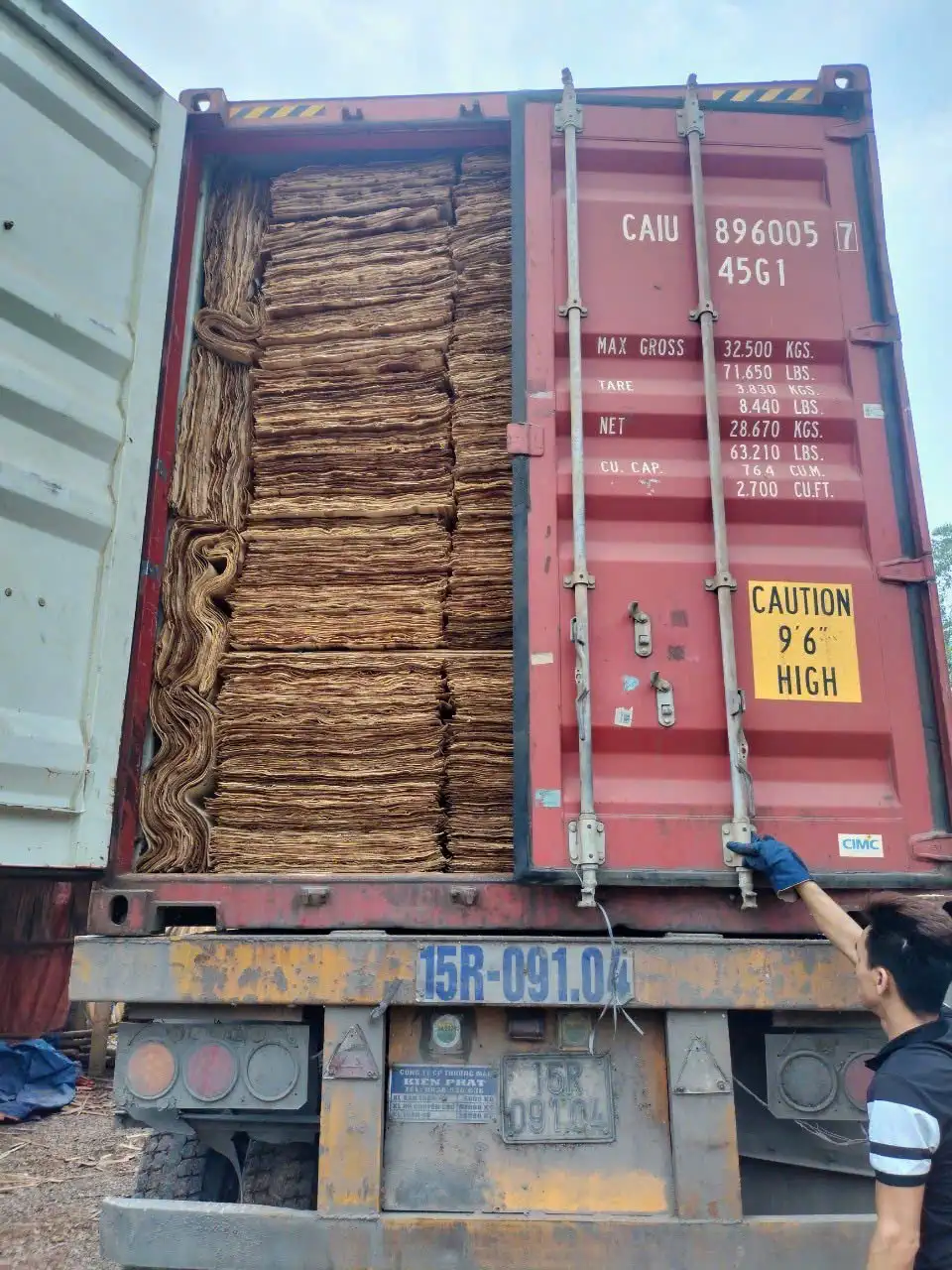
18mm eucalyptus core, 1220×2440mm example:
- Stack height: 970mm (eucalyptus 1220×2440mm — reduced from 1000mm, per Mika Plywood packing standard)
- Sheets per pallet: 53 (ROUNDDOWN(970 ÷ 18) = 53)
- Total sheets per 40HC: 795 (53 × 15 pallets)
- Volume per sheet: 0.05363 CBM (1.22 × 2.44 × 0.018)
- Total volume: ~42.6 CBM
- Estimated weight: ~27.7 MT (42.6 × 650 ÷ 1000)
💡 Key data: Eucalyptus core for 1220×2440mm sheets uses a 970mm stack height, giving 53 sheets per pallet at 18mm. This — combined with 15 pallets per 40HC — keeps total weight at ~27.7 MT, safely within the 28.5 MT payload limit. (Mika Plywood production data, 2026)
For step-by-step CBM and weight calculation formulas applicable to any thickness and core combination, see plywood CBM calculation formula.
Request a packing plan with exact weight for your specification — Mika Plywood provides factory-level calculation before you confirm the order.
📐 Thickness and Size Options
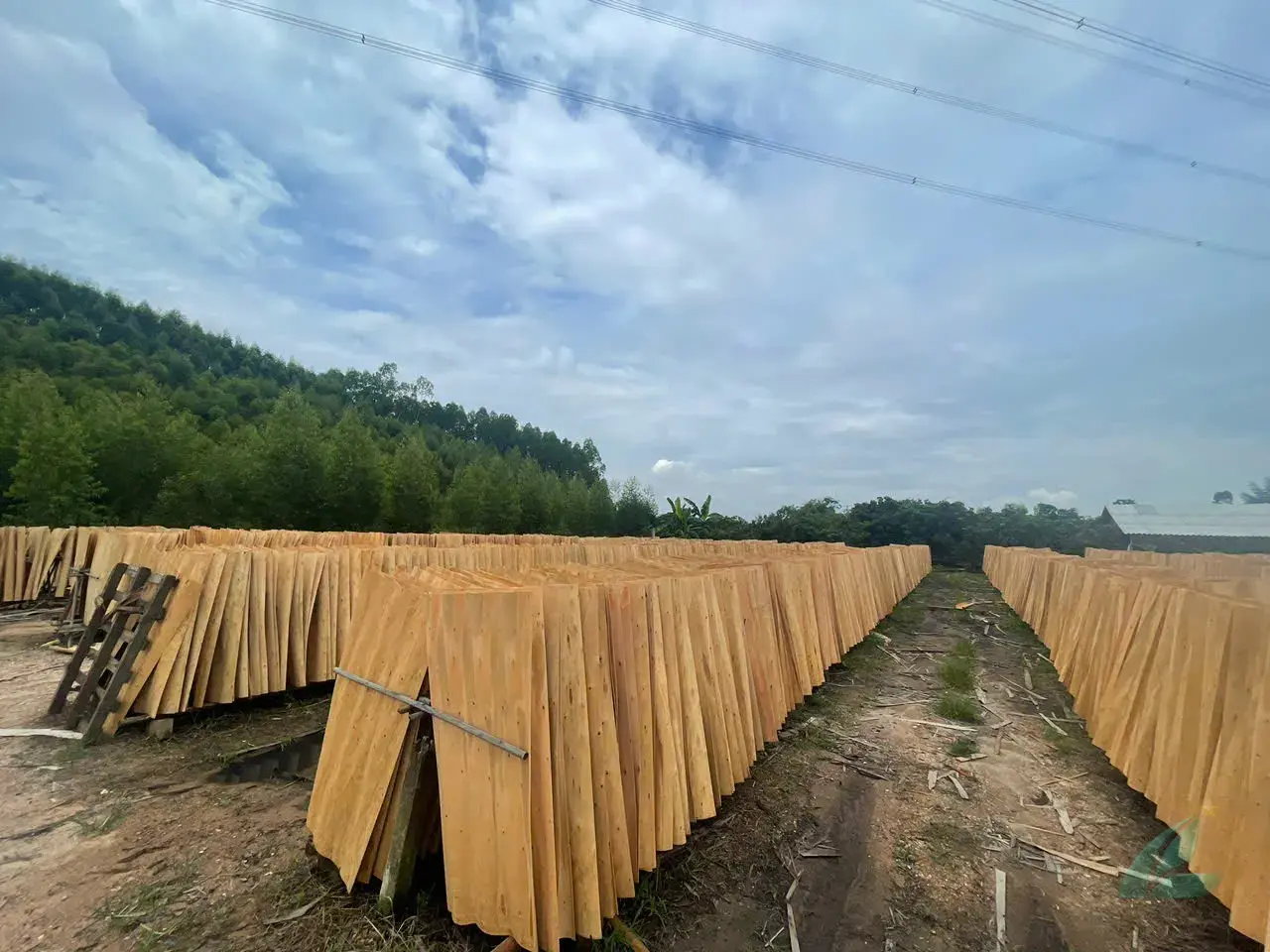
Vietnam eucalyptus core plywood is available in the full standard range:
- Thickness: 3mm to 40mm (custom cutting available)
- Standard sizes: 1220×2440mm (4×8ft) and 1250×2500mm (metric EU)
- Thickness tolerance: ±0.3mm
- Surface: Sanded or unsanded depending on face veneer and application
Common thicknesses for construction applications using eucalyptus core: 12mm, 15mm, 18mm, 21mm.
Common thicknesses for flooring underlayment: 9mm, 12mm, 15mm.
✅ Is Eucalyptus Core Right for Your Order?
This species is the correct specification when:
- Your application carries structural or mechanical loads (flooring, formwork, heavy shelving)
- You need the highest dimensional stability under moisture exposure
- Your destination market or project spec explicitly requires high-density core
- Weight is not a primary concern (you are not freight-constrained per container)
It is the wrong specification when:
- You are producing standard furniture cabinets or interior paneling
- Freight cost per sheet is a key competitive factor
- Your buyer has not specified density or structural performance requirements
- You need to maximize sheets per container
“Matching core species to application is the fastest way to optimize your total landed cost,” Jay notes. “Over-specifying eucalyptus core for furniture markets adds cost without adding value your buyer will pay for.”
Disclosure: This article is published by Mika Plywood, a Vietnam-based plywood manufacturer and export operator. While we aim to provide objective industry guidance, readers should consider our perspective as a market participant when evaluating recommendations.
🔗 Related Articles
- Plywood Core Types: Acacia vs Eucalyptus vs Styrax Guide
- Styrax Core Container Loading Guide — 18 Pallets vs 15
- Plywood Container Packing Calculation 40HC
- Vietnam Plywood Manufacturing Process — From Log to Container
- Eucalyptus Plywood Vietnam — Full Product Specifications
- Core Veneer Vietnam — Raw Eucalyptus & Acacia Sheets
Eucalyptus core plywood from Vietnam delivers the strongest, densest panel available in the Vietnamese market. That strength is real and justified for construction, flooring, and structural applications. But the 40HC loading penalty — three fewer pallets per container compared to styrax core — means the landed-cost comparison is never as simple as the FOB price alone.
The right question is not “which core is best?” but “which core does my application actually require?” For most furniture markets, the answer is styrax. For construction and flooring, eucalyptus core earns its premium.
Get eucalyptus core plywood specifications and pricing from Mika Plywood — factory-direct quotation, no intermediary markup.
Frequently Asked Questions
What is the density of Vietnam eucalyptus core plywood?Eucalyptus core plywood from Vietnam has a density of 650–750 kg/m³, making it the heaviest and densest of the three Vietnamese core species. Acacia core runs around 580 kg/m³ and styrax core 480–500 kg/m³.How does eucalyptus core affect container loading?Eucalyptus core's high density limits a 40HC container to 15 pallets (approximately 44.5 CBM, ~28 MT). By comparison, styrax core fits 18 pallets in the same container. The weight difference directly raises your freight cost per sheet.Is eucalyptus core plywood suitable for furniture?Yes, but it depends on the application. Eucalyptus core works well for heavy-duty furniture, flooring substrates, and applications requiring dimensional stability. For lightweight furniture or cabinets, styrax core is often preferred due to lower weight and cost.Which markets prefer eucalyptus core plywood?Korea, Australia, and Gulf construction markets commonly specify eucalyptus core for its strength. European buyers sourcing flooring underlayment or heavy-duty shelving also request it. Price-sensitive furniture markets usually choose acacia or styrax instead.What glue types are available with eucalyptus core?Eucalyptus core plywood is available with either melamine (MR) glue or phenolic (WBP) glue. Emission standards — E0, E1, or E2 — are a separate specification from the glue type and can be selected independently.
Ready to order?
Get a Eucalyptus Core Plywood Quote

Written by
David
Export Project Leader
Content contributor at Vietnam Plywood.
On this page
- 📊 Eucalyptus Core at a Glance: The Key Numbers
- 💪 Where Eucalyptus Core Strength Delivers Real Value
- 📌 Construction and Formwork Applications
- 📌 Flooring Substrates
- 📌 Heavy-Duty Shelving and Industrial Furniture
- 💰 The Real Cost of Eucalyptus Core: Shipping Math Matters
- 🔧 Eucalyptus Core vs Acacia vs Styrax: Application Decision Matrix
- ⚙️ Glue and Emission Options with Eucalyptus Core
- 🏭 Core Construction Quality: Stitched vs Loose-Laid
- 📦 Container Loading Impact: Numbers for Your Quotation
- 📐 Thickness and Size Options
- ✅ Is Eucalyptus Core Right for Your Order?
- 🔗 Related Articles
On this page
- 📊 Eucalyptus Core at a Glance: The Key Numbers
- 💪 Where Eucalyptus Core Strength Delivers Real Value
- 📌 Construction and Formwork Applications
- 📌 Flooring Substrates
- 📌 Heavy-Duty Shelving and Industrial Furniture
- 💰 The Real Cost of Eucalyptus Core: Shipping Math Matters
- 🔧 Eucalyptus Core vs Acacia vs Styrax: Application Decision Matrix
- ⚙️ Glue and Emission Options with Eucalyptus Core
- 🏭 Core Construction Quality: Stitched vs Loose-Laid
- 📦 Container Loading Impact: Numbers for Your Quotation
- 📐 Thickness and Size Options
- ✅ Is Eucalyptus Core Right for Your Order?
- 🔗 Related Articles
Industry Newsletter
Stay Updated with
Plywood Industry Insights
Factory prices, spec guides, market trends and export tips — delivered weekly to B2B buyers and importers in 20+ countries.