Plywood specs for Middle East, Africa, and Southeast Asia buyers: grades, certifications, and what each market needs from Vietnam.
Buyers in the Middle East, Africa, and Southeast Asia share one common challenge: finding a Vietnamese plywood supplier who understands their local spec requirements — not just ships generic panels offshore.
The MEA plywood market generated USD 3.97 billion in revenue in 2025, with the fastest projected CAGR of 5.62% through 2030 driven by infrastructure megaprojects and rapid urbanization (Grand View Research, 2025). Southeast Asia adds another layer of demand, with the Philippines alone importing over 312,000 cubic meters of plywood annually (IndexBox, 2025). These are not homogeneous markets. Each region has distinct construction standards, import regulations, and price tolerance — and the wrong spec costs far more than the freight.
This guide maps the real product requirements for each emerging market zone so procurement teams and trading partners can specify correctly from the first inquiry.
View the full Mika Plywood product range and get factory-direct pricing
🏗️ Middle East: Construction-First, High Volume
The Gulf Cooperation Council (GCC) states — UAE, Saudi Arabia, Qatar, Kuwait, Bahrain, Oman — run on construction. Saudi Arabia’s Vision 2030 programme alone earmarks more than USD 1.25 trillion for infrastructure and real estate (GlobeNewsWire, 2025). Projects like NEOM, Qiddiya, and The Red Sea Project consume enormous volumes of formwork plywood. The UAE had more than 120 active megaprojects across Dubai and Abu Dhabi as of 2025, with contractors reporting 20% year-on-year increases in plywood consumption (GlobeNewsWire, 2025).
📌 What GCC Contractors Specify
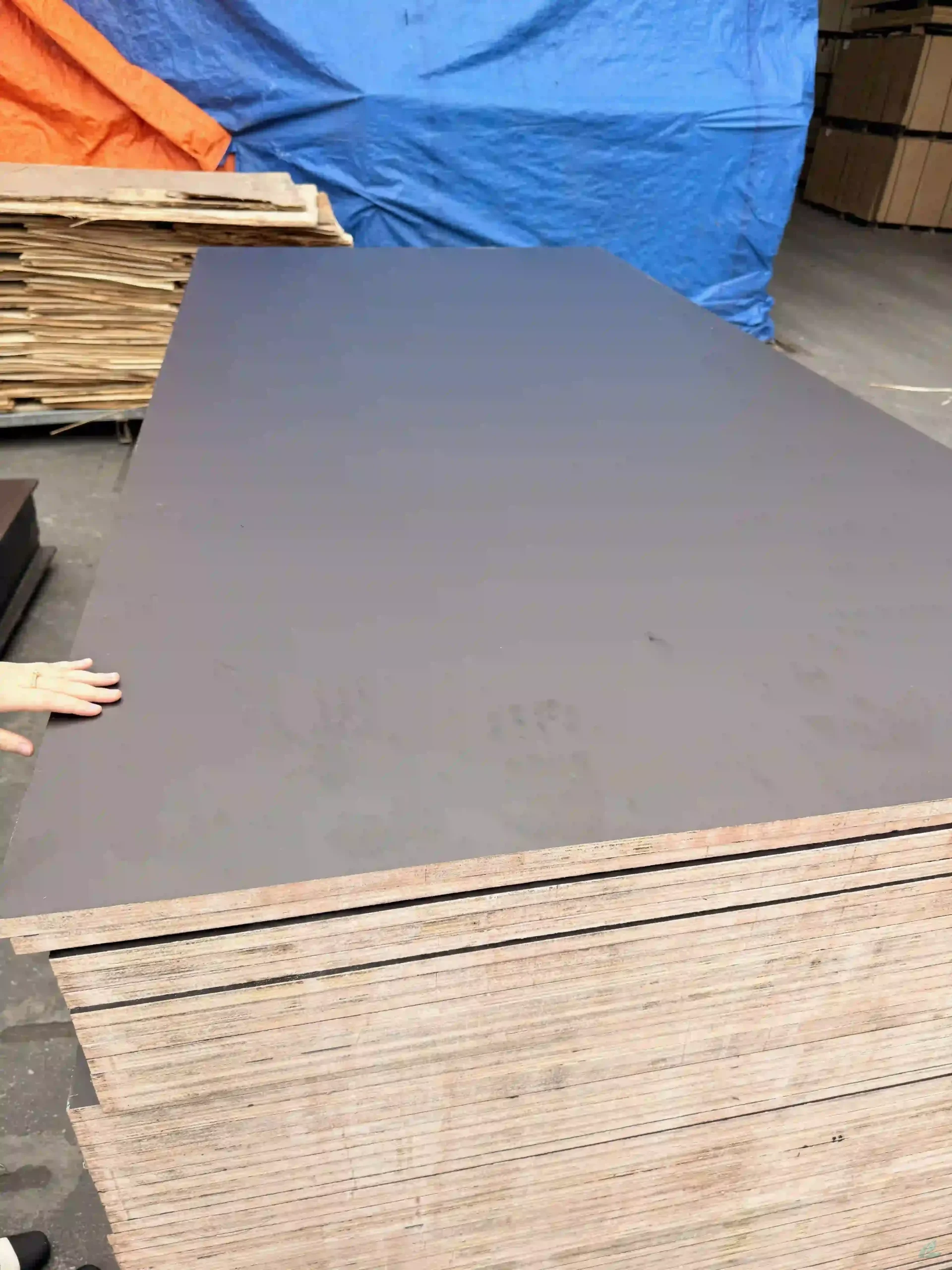
Concrete formwork is the dominant application. The preferred product is film-faced phenolic plywood, 12mm to 21mm thickness, WBP (phenolic) glue, with high-quality AICA film rated for 15+ reuses. Standard sheet size is 1220×2440mm; metric 1250×2500mm is less common but accepted.
The key buyer questions in this segment:
- How many reuses can the film sustain under Gulf humidity and temperature?
- Is the core eucalyptus or acacia, and how does that affect load-bearing?
⚠️ Technical note: Eucalyptus core (650–750 kg/m³ density) gives higher load capacity but heavier container weight. Acacia core (~580 kg/m³) is lighter and more affordable. For film-faced plywood going to hot-climate formwork, eucalyptus core is the stronger choice — higher stiffness under heat cycling.
Interior fit-out and joinery work in hotels and residential towers uses bintangor, okoume, or birch-faced panels — melamine (MR) glue, E1 emission minimum, sanded surface. Dubai’s hospitality sector sets higher material standards than bulk construction, so E0 emission is increasingly requested for interior applications.
The UAE functions as a regional re-export hub. Panels cleared through Jebel Ali are often redistributed to Oman, Kuwait, and East Africa. This means UAE-based traders sometimes consolidate shipments with broader regional specs.
Explore Mika Plywood Film-Faced Plywood specifications and pricing
🌍 Africa: Three Sub-Markets, Three Requirement Profiles
“Africa” is not one market. Import documentation, certification requirements, price sensitivity, and preferred grades vary significantly by sub-region.
“We process quotation requests from 20+ countries monthly. Each market has different priorities — European buyers focus on EUDR compliance and E0 emission, Indian buyers prioritize BIS certification and competitive pricing, and Japanese buyers demand the tightest thickness tolerances.” — Jay, International Sales Manager, Mika Plywood
📌 North Africa — Egypt & Algeria Lead Volume
Egypt imported 164,000 cubic meters and Algeria 136,000 cubic meters of plywood in 2024 — together representing roughly 31% of total African imports (IndexBox, 2025). Both markets are construction-driven. Egypt’s housing programs and infrastructure corridor development continue to absorb large volumes of commercial-grade and film-faced panels.
North African buyers typically trade through established trading companies in Alexandria and Cairo. They are cost-focused and familiar with Vietnamese product. FSC certification adds value for government tenders but is not universally required. Standard CO (Certificate of Origin), phytosanitary, and fumigation certificates are sufficient for most private sector transactions.
Product preference: bintangor-faced panels (A/B grade), acacia core, MR glue, E2 emission acceptable, 9mm–18mm thickness range.
📌 East Africa — Kenya and Tanzania
Kenya imported 84,000 cubic meters in 2024 (IndexBox, 2025). The market is split between construction panels (film-faced for Nairobi’s commercial towers) and lower-cost commercial plywood for furniture and joinery workshops.
“Kenyan buyers are practical — they want correct thickness tolerance and clean edges more than certification paperwork,” notes Jay, International Sales Manager at Mika Plywood, who has serviced East African accounts for 6+ years. “Delamination in transit heat is the biggest rejection risk in this market.”
Thickness tolerance (±0.3mm) and core gap quality are the key quality differentiators. Loose-lay cores without stitching fail in humid coastal transit and cause delamination within the first construction season. Mika Plywood supplies stitched-core construction for East Africa-bound panels specifically to address this failure mode.
Port entry is typically Mombasa (Kenya) or Dar es Salaam (Tanzania). Transit times from Hai Phong via Singapore feeder: approximately 18–24 days.
📌 West Africa — Nigeria and Ghana
Nigeria and Ghana represent the growth frontier. Construction in Lagos, Abuja, and Accra is accelerating with foreign direct investment inflows and urbanization. Ghana imported 51,000 cubic meters in 2024 (IndexBox, 2025). Both markets are price-sensitive and prefer lower-cost packing-grade or commercial bintangor panels for site construction.
Certification requirements are minimal — standard export documents suffice. Container fumigation certification is required. West African ports (Apapa Lagos, Tema Ghana) have longer dwell times, so packaging and strapping quality matter; panels must arrive without moisture ingress.
🌏 Southeast Asia: Price-Competitive, Application-Specific
Southeast Asian buyers operate closest to Vietnam geographically — shorter lead times and lower freight costs give Vietnamese panels a natural advantage. But this market is also the most competitive.
📌 Philippines — Largest Regional Importer
The Philippines imported over 312,000 cubic meters of plywood annually, making it one of Vietnam’s key plywood trading partners in ASEAN. Construction booms in Metro Manila, Cebu, and Davao drive continuous demand for formwork and structural panels.
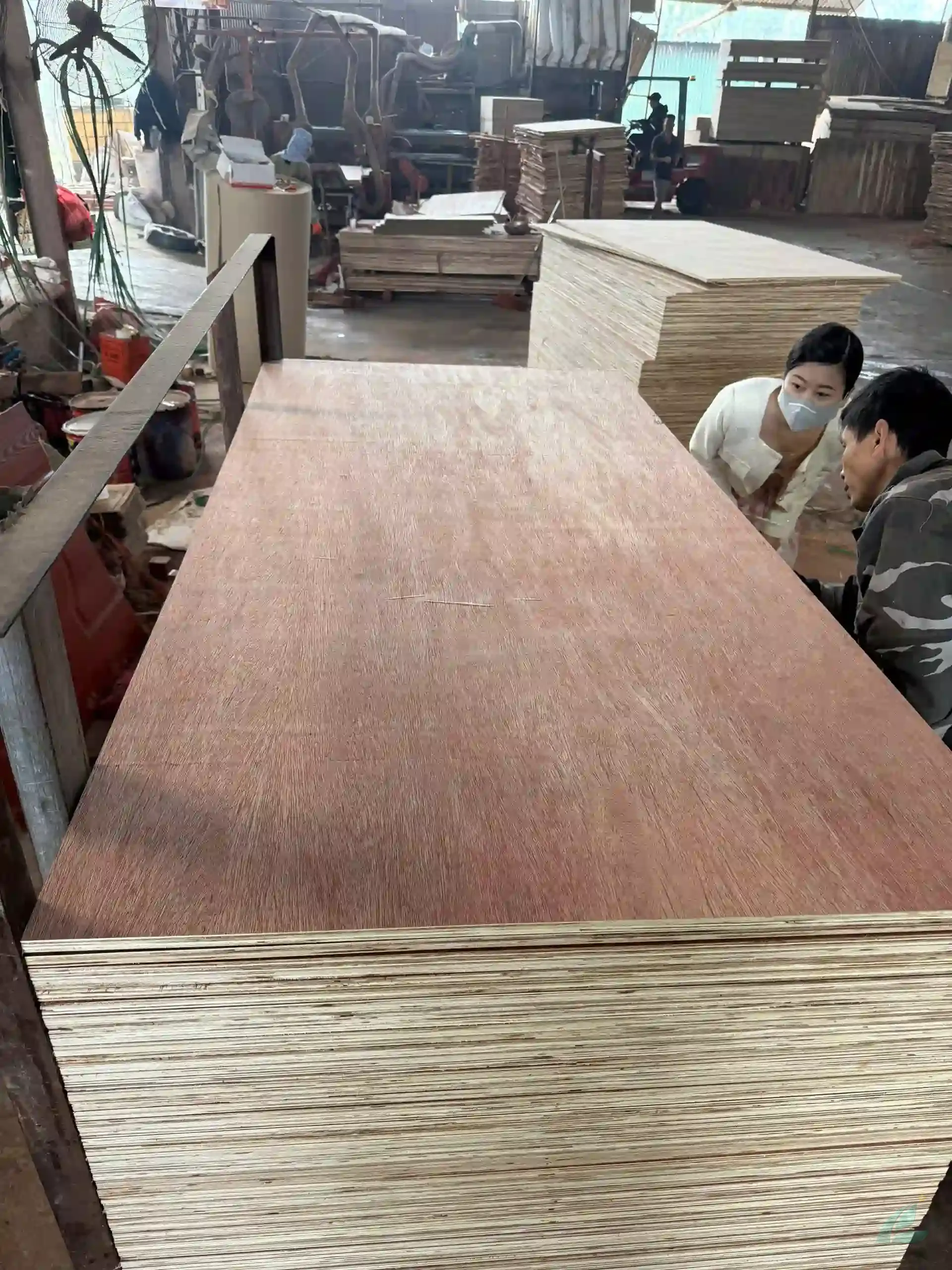
Preferred specs: film-faced plywood (12–18mm, WBP glue) for formwork, packing-grade bintangor (9–12mm) for scaffolding decking and site furniture. Price sensitivity is high; buyers compare multiple Vietnamese and Malaysian suppliers on every order cycle.
Transit time from Hai Phong to Manila: 4–6 days. This short cycle allows Philippine buyers to keep lower inventory and order more frequently — a buying behavior that suits mixed-spec container loading.
📌 Malaysia — Re-Manufacturing and Premium Grades
Malaysia imports predominantly for re-manufacturing: Vietnamese raw core veneer and lower-grade matt plywood are processed into finished products for domestic furniture or export to Europe under Malaysian origin. The furniture-grade channel imports birch-faced panels (D-grade face, E0/E1 emission, styrax core) for high-end cabinet production.
📌 Indonesia and Thailand
Indonesia is primarily a plywood exporter but imports specific premium grades it does not efficiently produce — birch-faced, EV (engineered veneer), and certified (FSC, CARB P2) panels for furniture exported to the US and EU. Thailand is similar: import volumes are lower, but the segment is high-value (E0, FSC-certified, sanded panels for furniture OEM factories).
📊 Market Specification Matrix
| Market | Primary Product | Glue | Emission | Certification |
|---|---|---|---|---|
| UAE / Saudi Arabia (Construction) | Construction plywood 12–21mm | WBP Phenolic | N/A (outdoor) | FSC preferred |
| UAE / Saudi Arabia (Interior) | Bintangor / Birch sanded | MR Melamine | E0 / E1 | FSC optional |
| Egypt / Algeria | Commercial plywood | MR Melamine | E1 / E2 | CO + Phyto |
| Kenya / East Africa | Film-faced + Commercial | WBP / MR | E1 | Fumigation cert |
| Nigeria / West Africa | Packaging plywood | MR Melamine | E2 | Fumigation cert |
| Philippines | Film-faced + Packing | WBP / MR | E1 / E2 | Standard docs |
| Malaysia (Re-mfg) | Matt / Core veneer | N/A | N/A | N/A |
| Indonesia / Thailand (OEM) | Birch / EV sanded | MR Melamine | E0 / CARB P2 | FSC + CARB |
📋 Certification Requirements by Region
Getting the documentation wrong costs as much as getting the spec wrong. Here is the practical certification requirement by market as of 2026:
GCC (UAE, Saudi Arabia, Qatar): No mandatory plywood-specific standard. FSC Chain-of-Custody certificates are increasingly specified in government tenders. Standard VCCI-issued CO (Form B), phytosanitary certificate, and heat treatment / fumigation documentation required for all wood products.
North Africa (Egypt, Algeria, Morocco): Import controlled through GOEIC (Egypt) and equivalent bodies. Certificate of Conformity sometimes required for commercial tenders. FSC not mandated. Standard CO, phyto, fumigation.
East and West Africa: Standard CO, phytosanitary, fumigation. Kenya Revenue Authority inspects import values. No plywood-specific certification mandated.
Philippines: BPS (Bureau of Product Standards) product registration applies to some wood-based panels sold domestically, but imported plywood in commercial quantities is typically covered under standard CO and phytosanitary documentation.
Malaysia: CITES and legal-timber compliance tracked by MTIB (Malaysian Timber Industry Board). FSC preferred for export-linked manufacturing chains.
Indonesia: SVLK (Indonesian Timber Legality Verification System) applies to imported timber products in some channels. CARB P2 required for panels destined for US-export furniture.
Thailand: No mandatory plywood certification for imports. E0 and FSC increasingly specified by Thai furniture OEM factories exporting to EU and US.
For detailed certification guidance, see our plywood certifications and export documentation guide.
🔧 How Vietnam Exporters Service Emerging Market Orders
Key logistics parameters relevant to emerging market buyers:
- MOQ: 1 × 40HC container
- Lead time: 15–20 days production + transit
- Mixed specs: Accepted within one container (requires weight recalculation)
- FOB port: Hai Phong, Vietnam
- Container capacity: 40–53 CBM depending on core species and thickness (see container packing calculation guide)
- Documents: CO (Form B or Form D), Phytosanitary, Fumigation, FSC CoC (on request), CARB P2 (on request), Commercial Invoice, Packing List, B/L
For buyers entering the Vietnam supply chain, our guides on how to import plywood from Vietnam and how to buy plywood from Vietnam cover the full process. Vietnam’s plywood exports exceeded USD 1.4 billion in 2025, with Northern Vietnamese producers maintaining the lowest landed cost to Gulf, East African, and Southeast Asian ports among major Asian source countries (ITTO Tropical Timber Market Report, 2026).
For quality verification before you order, Mika Plywood provides real-time production photos and videos at each QC stage — pressing, sanding, and pre-shipment inspection. See our factory quality control process and client review record from buyers in 20+ countries.
📐 Choosing the Right Spec: A Practical Checklist
Before sending an inquiry, confirm these five parameters:
- Application — formwork (WBP film-faced), furniture (MR sanded), packaging (MR commercial)
- Core species — acacia (budget), styrax (light, furniture), eucalyptus (heavy, structural)
- Emission — E0 (US/EU furniture), E1 (most markets), E2 (exterior/packing only)
- Certification — FSC? CARB P2? CO form type (B for most, D for ASEAN)
- Size and thickness — 1220×2440mm or 1250×2500mm; common thicknesses 9, 12, 15, 18, 21mm
Getting these five parameters right in the first inquiry cuts response time from 48 hours to same-day pricing. Mika Plywood’s export team handles 50-100 containers per month across emerging markets and can confirm pricing against any spec combination within one business day.
Send your specification sheet and get a factory-direct quote
Related reading:
- For current pricing, see film-faced plywood price guide.
- For bintangor supply, see bintangor plywood for Indian market.
- Browse our list of Vietnam plywood companies supplying the Indian market.
- New to importing? See how to import plywood from Vietnam and the complete buying guide.
✅ Conclusion
Plywood for Middle East, Africa, and Southeast Asia emerging markets is not a single product decision — it is a market-specific matching exercise. GCC construction demands WBP film-faced panels with high reuse ratings. East African buyers prioritize stitched-core quality to survive humid transit. Southeast Asian OEM factories need certified, sanded grades. North and West African commercial buyers want competitive pricing on standard documentation.
Vietnamese plywood — sourced from Northern Vietnam factories near Hai Phong — reaches all these markets with competitive freight economics and production lead times that regional alternatives cannot match. The key is specifying correctly from the start.
Mika Plywood manages 3 dedicated production facilities covering all the product segments described in this guide. Factory-direct pricing, on-site QC, and full export documentation from a single contact point.
Disclosure: This article is published by Mika Plywood, a Vietnam-based plywood manufacturer and export operator. While we aim to provide objective industry guidance, readers should consider our perspective as a market participant when evaluating recommendations.
Contact Mika Plywood Now — Get a free quote for your target market
Frequently Asked Questions
What plywood grade does the Middle East construction sector prefer?Most GCC construction projects specify film-faced phenolic plywood (12–21mm, WBP glue) for concrete formwork. Standard size is 1220×2440mm. Reuse target is 10–15 times for AICA-film grade boards. Commercial and interior fit-out work uses bintangor or okoume-faced panels with melamine (MR) glue, E1 emission standard.What certification do African plywood importers require?Requirements vary by sub-region. North Africa (Egypt, Algeria) and the Gulf re-export route generally accept FSC Chain of Custody and standard phytosanitary documentation. East Africa (Kenya, Tanzania) rarely requires FSC but expects fumigation certificates and standard CO. South Africa enforces SABS and timber import controls more strictly.Does Vietnam plywood go to Southeast Asia markets?Yes. The Philippines imports over 300,000 cubic meters of plywood annually and Vietnamese commercial-grade panels (bintangor, packing grade) are competitive on price and lead time. Malaysia and Thailand import mainly for re-manufacturing. Indonesia, as a plywood producer, imports premium furniture-grade panels from Vietnam where local supply is limited.What is the minimum order for export to emerging markets?MOQ from Mika Plywood is 1 × 40HC container. Mixed specifications are accepted within one container. FOB Hai Phong with 15–20 day production lead time. CIF quotations available for most ports including Jebel Ali, Port Klang, and Mombasa.
Ready to order?
Get a free quote for your target market

Written by
Jay
International Sales Manager
Content contributor at Vietnam Plywood.
On this page
- 🏗️ Middle East: Construction-First, High Volume
- 📌 What GCC Contractors Specify
- 🌍 Africa: Three Sub-Markets, Three Requirement Profiles
- 📌 North Africa — Egypt & Algeria Lead Volume
- 📌 East Africa — Kenya and Tanzania
- 📌 West Africa — Nigeria and Ghana
- 🌏 Southeast Asia: Price-Competitive, Application-Specific
- 📌 Philippines — Largest Regional Importer
- 📌 Malaysia — Re-Manufacturing and Premium Grades
- 📌 Indonesia and Thailand
- 📊 Market Specification Matrix
- 📋 Certification Requirements by Region
- 🔧 How Vietnam Exporters Service Emerging Market Orders
- 📐 Choosing the Right Spec: A Practical Checklist
- ✅ Conclusion
On this page
- 🏗️ Middle East: Construction-First, High Volume
- 📌 What GCC Contractors Specify
- 🌍 Africa: Three Sub-Markets, Three Requirement Profiles
- 📌 North Africa — Egypt & Algeria Lead Volume
- 📌 East Africa — Kenya and Tanzania
- 📌 West Africa — Nigeria and Ghana
- 🌏 Southeast Asia: Price-Competitive, Application-Specific
- 📌 Philippines — Largest Regional Importer
- 📌 Malaysia — Re-Manufacturing and Premium Grades
- 📌 Indonesia and Thailand
- 📊 Market Specification Matrix
- 📋 Certification Requirements by Region
- 🔧 How Vietnam Exporters Service Emerging Market Orders
- 📐 Choosing the Right Spec: A Practical Checklist
- ✅ Conclusion
Industry Newsletter
Stay Updated with
Plywood Industry Insights
Factory prices, spec guides, market trends and export tips — delivered weekly to B2B buyers and importers in 20+ countries.