Anti-slip plywood flooring guide: truck floors, scaffolding, industrial platforms. AICA film, core species, and glue systems.
Anti-slip plywood fails most often not because the surface wears out — but because buyers choose the wrong core and glue for the application. A scaffolding deck exposed to rain needs phenolic WBP. A covered logistics platform can work with melamine. Choosing incorrectly drives premature failure, replacement costs, and safety incidents.
This guide covers every major flooring application for anti-slip plywood: the right core species, glue system, surface pattern, thickness, and certification requirements — based on Mika Plywood’s factory production data for export markets as of 2026.
📋 What Is Anti-Slip Plywood?
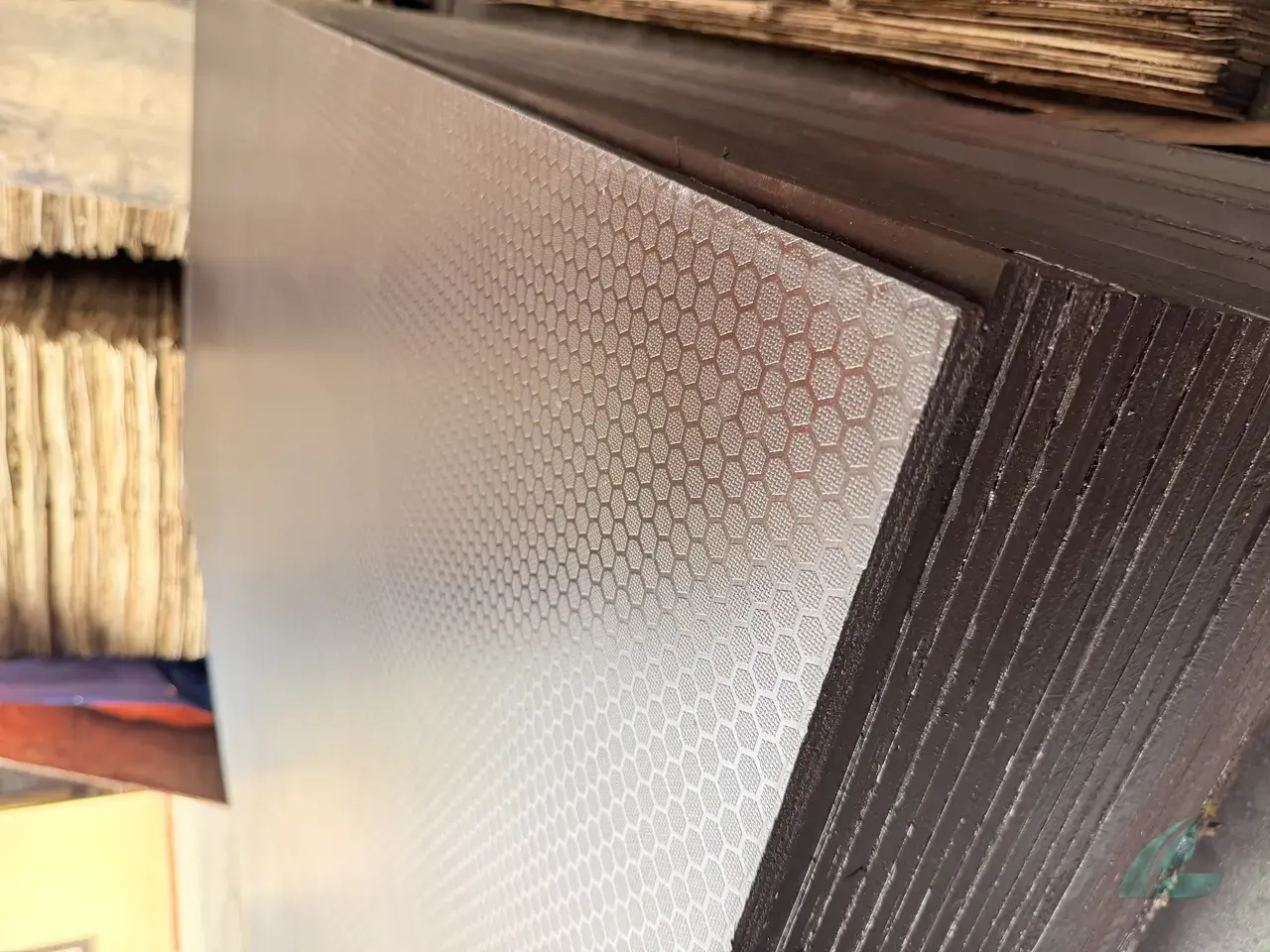
Anti-slip plywood is a film-faced panel bonded with a textured phenolic overlay on the top face, engineered to provide grip under load, moisture, and foot or wheel traffic. It is not a surface coating — the film becomes an integral structural layer pressed directly into the panel during hot pressing.
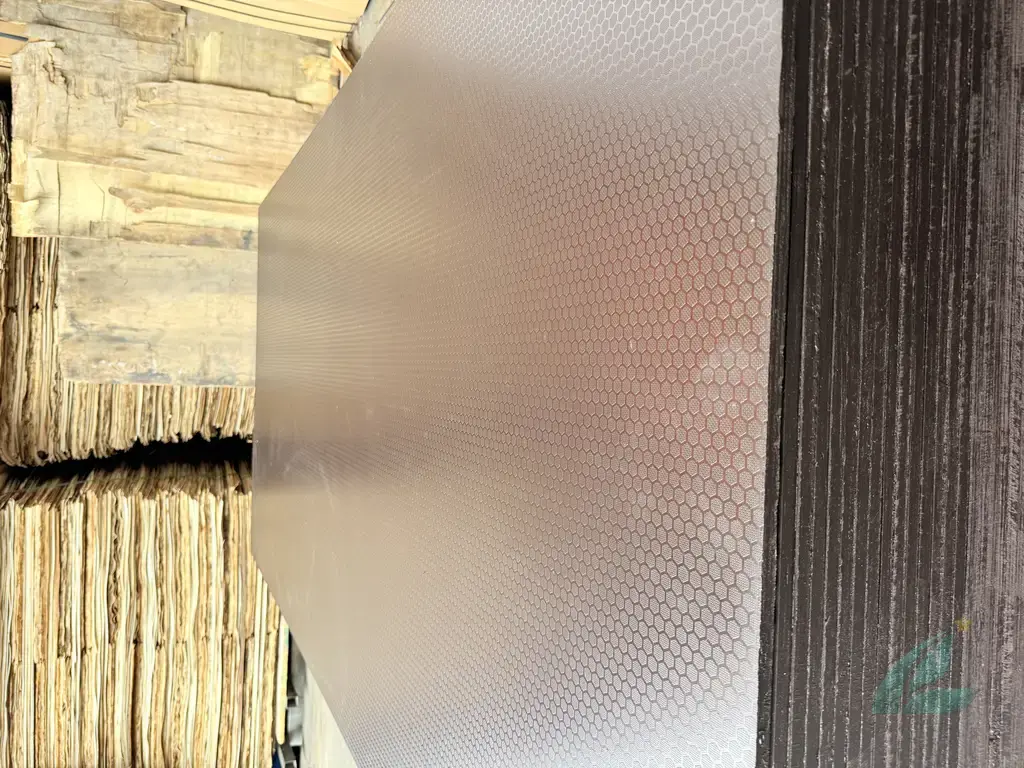
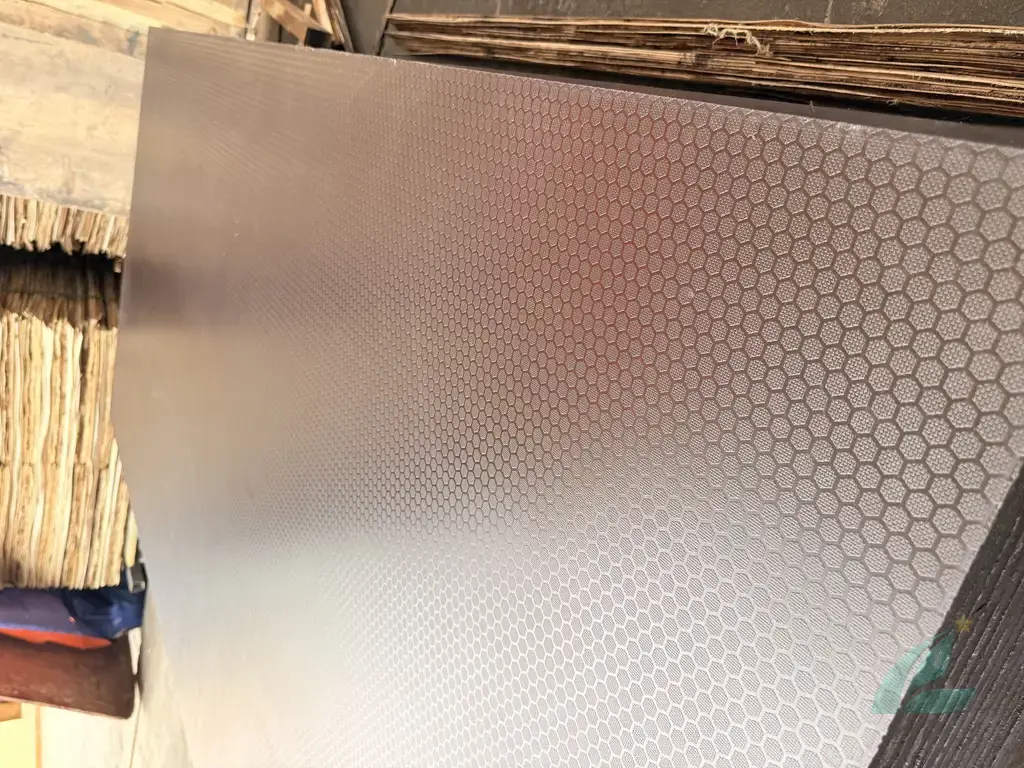
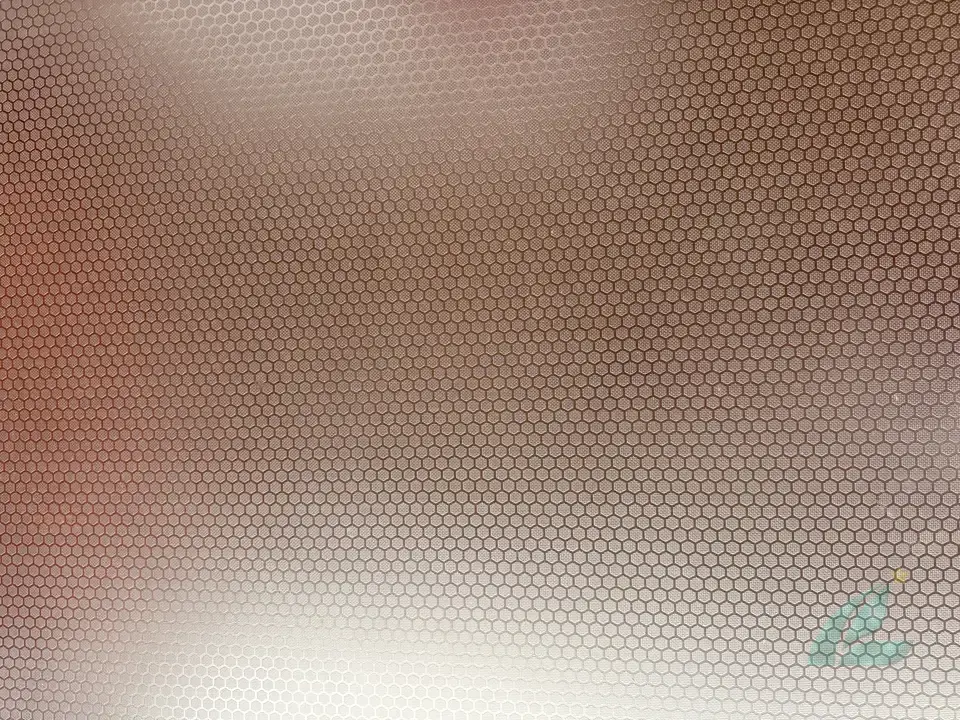
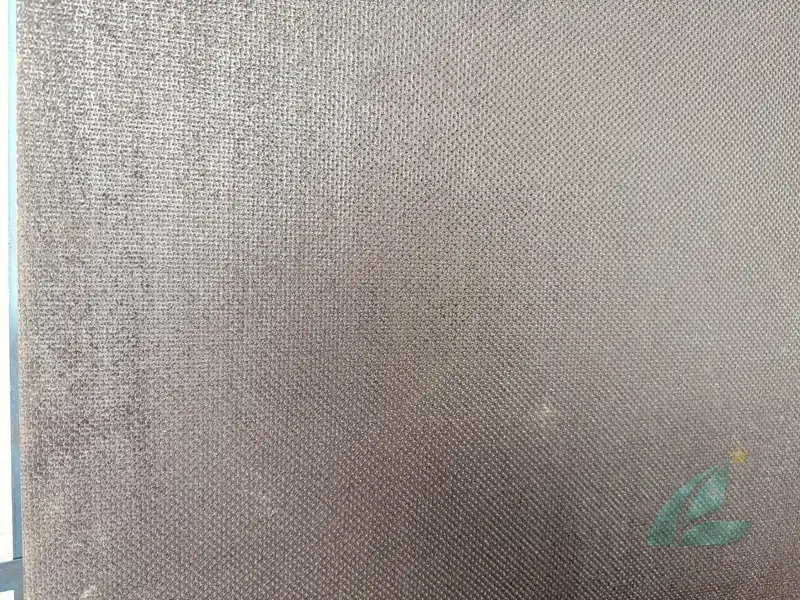
The defining component is the AICA anti-slip film at 220 gsm — a Japanese-sourced phenolic paper impregnated with high resin content. Two surface patterns are available:
- Hexa (hexagonal/wire mesh): Aggressive raised grid, optimal for wet outdoor conditions
- Rice grain: Uniform micro-texture, easier to clean, preferred for indoor industrial use
Both patterns deliver equivalent slip resistance. The back face is typically a smooth 130 gsm phenolic film.
Core species choices are acacia (~580 kg/m³) or eucalyptus (650–750 kg/m³). Glue systems are phenolic WBP or melamine MR. Available thickness range: 12–21mm. Standard sheet sizes: 1220×2440mm and 1250×2500mm.
⚠️ Important: Anti-slip plywood is NOT sanded. The film surface replaces sanding entirely. Ordering sanded anti-slip is a specification contradiction.
🚚 Application 1: Truck and Trailer Flooring
Truck flooring is the highest-volume application for anti-slip plywood globally. Panels are exposed to constant dynamic stress: forklift wheels, pallet jacks, repeated loading and unloading, oil, moisture, and temperature swings.
“The manufacturing process determines 80% of the final panel quality. Core veneer drying, stitching method, hot press time and temperature — these factory-floor decisions matter more than the species name on the spec sheet.” — David, Export Project Leader, Mika Plywood
📌 Recommended Configuration for Truck Floors
| Parameter | Standard Fleet | Heavy-Duty Long-Haul |
|---|---|---|
| Thickness | 18mm | 21mm |
| Core | Acacia (~580 kg/m³) | Eucalyptus (650–750 kg/m³) |
| Glue | Phenolic WBP | Phenolic WBP |
| Surface | Hexa or Rice Grain | Hexa |
| Film weight | 220 gsm | 220 gsm |
Phenolic WBP glue is non-negotiable for truck floors. The 72-hour boiling test requirement (EN 314-2 Class 3) confirms bonding integrity under prolonged moisture exposure — relevant when panels absorb condensation overnight or during rain loading.
Acacia core at 18mm covers the majority of European logistics fleet specifications. Eucalyptus core adds compression resistance and is specified by transport companies with heavier payloads or longer fleet replacement cycles (5+ years).
“For truck flooring, buyers consistently ask about edge delamination over time,” says Jay, International Sales Manager at Mika Plywood. “Our phenolic WBP system with kiln-dried core veneers eliminates this failure mode — moisture cannot penetrate the glue line.”
Get a Free Quote for Anti-Slip Plywood
Request truck floor specifications from Mika Plywood
🏗️ Application 2: Scaffolding Decks and Construction Platforms
Scaffolding is a safety-critical application where anti-slip plywood performance is a regulatory compliance matter, not just a purchasing preference. In Europe, scaffold deck plywood must meet load-bearing standards under EN 12811-1 — human safety is directly involved.
📌 Recommended Configuration for Scaffolding
- Thickness: 12mm (light-duty platforms), 15mm (standard scaffolding decks), 18mm (heavy-duty industrial scaffolding)
- Core: Acacia or eucalyptus — eucalyptus preferred for permanent scaffolding structures
- Glue: Phenolic WBP (mandatory for outdoor exposure)
- Surface: Hexa pattern for maximum wet-weather grip
- Film: AICA 220 gsm anti-slip face, 130 gsm smooth back
Rain, cement splatter, and muddy boots create severe slip risk on scaffolding. The hexa pattern’s raised hexagonal grid maintains friction coefficient even when wet — a critical difference from smooth film-faced plywood, which becomes a hazard in wet conditions (industry data, 2025).
Mika Plywood’s scaffolding-grade anti-slip plywood uses kiln-dried core veneers pressed under controlled temperature and pressure specifically matched to phenolic curing requirements. This prevents moisture entrapment in core layers — a common failure mechanism in budget-grade panels that use inadequately dried veneer.
🏭 Application 3: Industrial and Logistics Center Flooring
Warehouses, distribution centers, and logistics platforms require anti-slip flooring with a different performance balance: grip is needed, but cleanability and panel lifespan under repetitive forklift cycles take priority over maximum outdoor waterproofing.
📌 Recommended Configuration for Industrial Flooring
| Parameter | Controlled Indoor | High-Traffic Warehouse |
|---|---|---|
| Thickness | 15–18mm | 18–21mm |
| Core | Acacia | Eucalyptus |
| Glue | Melamine MR or Phenolic WBP | Phenolic WBP |
| Surface | Rice grain | Rice grain or Hexa |
For covered logistics centers where panels are not exposed to rain or standing water, melamine glue is a cost-effective option — saving 50–80 USD/CBM compared to phenolic systems while meeting moisture resistance needs in a controlled environment.
Rice grain surface is preferred in logistics applications. The smoother micro-texture reduces debris entrapment, making cleaning faster and reducing surface wear from regular pallet movement.
Eucalyptus core (650–750 kg/m³) is specified for high-traffic zones where forklift wheel loads create concentrated compression stress. Its density advantage over acacia becomes measurable in long-term panel flatness retention (Mika Plywood production data, 2026).
🛠️ Application 4: Reusable and Modular Flooring Systems
Temporary event flooring, modular industrial decking, and reusable construction platforms represent a growing application segment — particularly in Europe where circular construction practices and total cost reduction drive procurement decisions.
Anti-slip plywood is well-suited to reusable systems because:
- AICA film durability: High resin saturation maintains surface integrity across multiple deployment cycles
- Phenolic glue dimensional stability: WBP bonding resists moisture cycling that causes warping in lower-grade panels
- Edge integrity: Properly sealed edges prevent water ingress between cycles
Expected reuse cycles for Mika Plywood anti-slip plywood: 8–12 cycles with proper storage (stored flat, dry, edges sealed) based on AICA film technical specifications.
💡 Tip: For reusable flooring systems, specify eucalyptus core with phenolic WBP glue. The higher initial cost is recovered by extended service life across multiple deployment cycles.
The modular flooring market increasingly standardizes on 18mm thickness for compatibility with aluminum frame systems. Custom sheet sizes (e.g., 1250×2500mm for metric European standards) are available for projects requiring precise panel geometry.
⚙️ Core Species Selection: Acacia vs Eucalyptus
Core species selection is the most consequential technical decision when ordering anti-slip plywood. It drives density, load capacity, container logistics economics, and FOB pricing.
Acacia Core (~580 kg/m³)
Acacia is Vietnam’s most common plantation species for plywood core, harvested primarily in northern provinces including Phu Tho and Yen Bai. It provides:
- Excellent veneer bonding: High glue penetration into acacia fiber
- Competitive cost: Lowest-priced core option from Vietnam
- Adequate structural performance for most truck flooring, scaffolding, and light-to-medium industrial use
- Container logistics: 16 pallets per 40HC container, approximately 47.5 CBM (Mika Plywood logistics data, 2026)
Eucalyptus Core (650–750 kg/m³)
Eucalyptus is the premium structural core from Vietnamese manufacturers. Density advantage is significant — 18–36% denser than acacia depending on grade.
- Superior compression resistance: Critical for permanent industrial platforms with sustained heavy loads
- Better flatness retention under repeated stress cycles
- Higher screw-holding capacity for panel-to-frame fastening in modular systems
- Container logistics: 15 pallets per 40HC, approximately 44.5 CBM — heavier at approximately 28 MT payload (Mika Plywood logistics data, 2026)
⚠️ Note: Vietnam does not produce birch core plywood. Styrax core is the lightweight alternative to birch for furniture applications — but for anti-slip plywood, acacia and eucalyptus are the two relevant choices.
For an in-depth comparison of Vietnamese core species with density and container loading data, see the plywood core types guide from Mika Plywood’s factory.
🔧 Glue System Selection: Phenolic WBP vs Melamine MR
The glue system is the second major technical decision. Anti-slip plywood is primarily associated with phenolic WBP — but melamine has legitimate cost-optimized applications.
Phenolic WBP Glue
Phenolic (WBP) glue passes the 72-hour boiling test, confirming water resistance under extreme conditions. It is the correct choice for:
- All outdoor applications (scaffolding, truck floors)
- Applications with standing water or rain exposure
- Long-term or permanent installations
- European CE-compliant construction products
Phenolic pressing requires kiln-dried core veneers — mandatory to prevent delamination. Mika Plywood controls in-house veneer drying capacity, maintaining moisture content below 8% before pressing.
Melamine MR Glue
Melamine passes the 12-hour boiling test. It is suitable for:
- Covered indoor logistics platforms
- Temporary factory flooring
- Cost-sensitive projects in controlled environments
Price difference: 50–80 USD/CBM lower than phenolic at equivalent specifications (Mika Plywood export pricing, 2026).
Decision rule: If the panel will be exposed to outdoor moisture, rain, or standing water at any point in its service life — specify phenolic WBP. The cost saving from melamine is lost after a single delamination event requiring panel replacement.
For a detailed technical breakdown of plywood glue chemistry and boiling test methodology, the plywood glue types and emission standards guide covers MR vs WBP specifications in full.
📐 Thickness Selection by Application
| Application | Recommended Thickness | Core | Glue |
|---|---|---|---|
| Light-duty walkways, indoor use | 12mm | Acacia | Melamine or WBP |
| Standard scaffolding decks | 15mm | Acacia or Eucalyptus | WBP |
| Truck and trailer flooring | 18mm | Acacia | WBP |
| Heavy-duty industrial platforms | 18–21mm | Eucalyptus | WBP |
| Maximum load-bearing, permanent | 21mm | Eucalyptus | WBP |
Thickness alone does not determine load capacity. A 15mm eucalyptus core + phenolic WBP panel outperforms an 18mm acacia + melamine panel in compression resistance and long-term stability. Specify the full combination — thickness, core, and glue — when placing an order.
All Mika Plywood anti-slip plywood is hot-pressed with cross-oriented veneers for balanced stress distribution, with strict thickness calibration to ±0.3mm tolerance after pressing.
📄 Certifications for Anti-Slip Plywood Export
Anti-slip plywood entering European and US markets requires specific documentation. Mika Plywood provides:
- FSC Certification: Chain-of-custody traceability from certified forest sources
- CARB P2 / TSCA Title VI: Ultra-low formaldehyde emission — applicable to US market imports
- CE Marking: Structural plywood conformity marking for European construction products
- EUTR / EUDR Compliance: EU Timber Regulation due diligence and EUDR supply chain transparency
- CO, Phytosanitary, Fumigation Certificate: Standard export shipping documents
CE marking for structural plywood in Europe requires compliance with EN 636 (structural plywood specification) and EN 13986 (wood panels for construction). Anti-slip plywood falls under this framework when used in scaffolding and formwork applications.
For the full picture on plywood certification requirements by market, the plywood certifications and export documentation guide covers FSC, CARB, CE, and EUDR in detail.
💰 Anti-Slip Plywood Pricing Structure
Factory-direct pricing from Mika Plywood for anti-slip plywood (FOB Hai Phong, 2026):
| Configuration | Price Range |
|---|---|
| Acacia core + Melamine MR | From ~420 USD/CBM |
| Acacia/Eucalyptus core + Phenolic WBP | From ~490 USD/CBM |
| Eucalyptus core premium (~+30 USD/CBM vs acacia) | Included above |
These are FOB prices for full 40HC container volumes. Pricing is stable for long-term supply programs, not spot orders. Mika Plywood does not apply VAT overhead because goods ship directly from factory to export — a structural cost advantage over trading companies that purchase domestically before re-exporting.
MOQ: 1 × 40HC container. Lead time: 15–20 days production. Mixed specifications across a single container are accepted, but require recalculation of total container weight before confirmation.
Get a factory-direct quotation for your specific application
🔗 How Anti-Slip Compares to Film-Faced Plywood
Anti-slip plywood and film-faced plywood share the same base construction — phenolic film overlay on eucalyptus or acacia core — but serve different use cases:
| Feature | Film-Faced Plywood | Anti-Slip Plywood |
|---|---|---|
| Top face film | Smooth phenolic film | Textured AICA 220 gsm |
| Primary use | Concrete formwork | Flooring, walkways, truck floors |
| Reuse focus | 15+ cycles (formwork) | 8–12 cycles (flooring) |
| Back face | Smooth or anti-slip | Smooth 130 gsm |
| Grip requirement | Not required | Primary performance spec |
For construction buyers who need both formwork plywood and anti-slip flooring, Mika Plywood manufactures both product lines from the same facility — enabling mixed-container orders with unified documentation. The construction plywood guide covering film-faced and anti-slip applications provides a full comparison for construction procurement.
✅ Conclusion: Matching Anti-Slip Plywood to Your Flooring Application
Anti-slip plywood is not a generic product — performance depends on matching core, glue, thickness, and surface pattern to the actual use environment:
- Truck flooring: 18mm acacia core + phenolic WBP + hexa pattern
- Scaffolding: 15–18mm eucalyptus core + phenolic WBP + hexa pattern
- Indoor logistics: 15–18mm acacia core + melamine MR + rice grain pattern
- Reusable systems: 18mm eucalyptus core + phenolic WBP + rice grain pattern
Disclosure: This article is published by Mika Plywood, a Vietnam-based plywood manufacturer and export operator. While we aim to provide objective industry guidance, readers should consider our perspective as a market participant when evaluating recommendations.
Request samples and a factory-direct quotation — specify your application, thickness, and target market for a matched recommendation.
Sources: AICA Film technical specifications (AICA Kogyo Co., Japan); EN 314-2 bonding strength classification (European Standard); industry market reports (2025); Mika Plywood production and logistics data (2026).
Frequently Asked Questions
What thickness of anti-slip plywood is best for truck flooring?18mm is the most common choice for truck and trailer flooring. It provides adequate load-bearing for forklift traffic and repeated loading cycles. Heavy-duty long-haul fleets often specify 21mm with eucalyptus core for maximum compression resistance.What is the difference between hexa pattern and rice grain anti-slip plywood?Both patterns use 220 gsm AICA film and deliver equivalent grip performance. Hexa (hexagonal/wire mesh) provides aggressive traction for wet outdoor conditions — ideal for scaffolding and truck floors. Rice grain has a uniform micro-texture that is easier to clean, preferred for logistics centers and indoor industrial walkways.Which core species is better for anti-slip plywood — acacia or eucalyptus?Acacia core (approximately 580 kg/m³) is cost-efficient for most truck flooring and scaffolding applications. Eucalyptus core (650–750 kg/m³) is 20–30% denser, providing higher compression resistance for heavy-duty industrial flooring where maximum structural integrity is required.Does anti-slip plywood require phenolic glue (WBP)?For outdoor and moisture-exposed applications — scaffolding decks, truck floors, logistics platforms — phenolic WBP glue is strongly recommended. It passes the 72-hour boiling test, maintaining bond integrity under rain, humidity, and temperature fluctuation. Melamine glue is suitable for covered indoor environments where full waterproof exposure is not a factor.What certifications does Mika Plywood anti-slip plywood carry?Mika Plywood anti-slip plywood is available with FSC, CARB P2, CE marking, EUTR compliance, and EUDR-ready documentation — covering European, US, and global market requirements.
Ready to order?
Get a Free Quote for Anti-Slip Plywood

Written by
David
Export Project Leader
Content contributor at Vietnam Plywood.
On this page
- 📋 What Is Anti-Slip Plywood?
- 🚚 Application 1: Truck and Trailer Flooring
- 📌 Recommended Configuration for Truck Floors
- 🏗️ Application 2: Scaffolding Decks and Construction Platforms
- 📌 Recommended Configuration for Scaffolding
- 🏭 Application 3: Industrial and Logistics Center Flooring
- 📌 Recommended Configuration for Industrial Flooring
- 🛠️ Application 4: Reusable and Modular Flooring Systems
- ⚙️ Core Species Selection: Acacia vs Eucalyptus
- 🔧 Glue System Selection: Phenolic WBP vs Melamine MR
- 📐 Thickness Selection by Application
- 📄 Certifications for Anti-Slip Plywood Export
- 💰 Anti-Slip Plywood Pricing Structure
- 🔗 How Anti-Slip Compares to Film-Faced Plywood
- ✅ Conclusion: Matching Anti-Slip Plywood to Your Flooring Application
On this page
- 📋 What Is Anti-Slip Plywood?
- 🚚 Application 1: Truck and Trailer Flooring
- 📌 Recommended Configuration for Truck Floors
- 🏗️ Application 2: Scaffolding Decks and Construction Platforms
- 📌 Recommended Configuration for Scaffolding
- 🏭 Application 3: Industrial and Logistics Center Flooring
- 📌 Recommended Configuration for Industrial Flooring
- 🛠️ Application 4: Reusable and Modular Flooring Systems
- ⚙️ Core Species Selection: Acacia vs Eucalyptus
- 🔧 Glue System Selection: Phenolic WBP vs Melamine MR
- 📐 Thickness Selection by Application
- 📄 Certifications for Anti-Slip Plywood Export
- 💰 Anti-Slip Plywood Pricing Structure
- 🔗 How Anti-Slip Compares to Film-Faced Plywood
- ✅ Conclusion: Matching Anti-Slip Plywood to Your Flooring Application
Industry Newsletter
Stay Updated with
Plywood Industry Insights
Factory prices, spec guides, market trends and export tips — delivered weekly to B2B buyers and importers in 20+ countries.