Exact plywood weight per sheet by thickness and core species. Acacia, styrax, eucalyptus core density tables — 9mm to 21mm for 4×8 and metric sheets.
Plywood weight per sheet is one of the most misquoted numbers in the industry — not because it is hard to calculate, but because most buyers ask the wrong question. They ask: “How heavy is 18mm plywood?” The correct question is: “How heavy is 18mm plywood with acacia core, vs styrax core, vs eucalyptus core?”
The core species determines density. Density determines weight. Face veneer — whether birch, okoume, gurjan, or film — contributes less than 2% of total panel weight. An 18mm eucalyptus-core sheet weighs 37.5 kg. The same 18mm in styrax core weighs 26.3 kg. That 11 kg difference per sheet adds up to 385 kg per container pallet — and that affects freight cost, pallet capacity, and container payload.
This guide gives you the exact formula, verified density values for all three Vietnamese core species, and pre-calculated weight tables for the 10 most common thicknesses and two standard sizes. For quick calculations, try our weight and packing calculator.
📐 The Weight Formula — One Equation, Applied Consistently
The formula:
Weight (kg) = Thickness(m) × Length(m) × Width(m) × Density(kg/m³)Or written more explicitly:
Step 1: Volume (m³)  = Thickness(mm) ÷ 1000 × Length(mm) ÷ 1000 × Width(mm) ÷ 1000
Step 2: Weight (kg)  = Volume(m³) × Density(kg/m³)
There are no correction factors, no moisture adjustments needed for standard export plywood at factory moisture content (6–8%). The formula is exact when you use the correct density for the core species. Plywood density ranges typically span 340–700 kg/m³ depending on species and construction (USDA Forest Products Laboratory, Wood Handbook, 2021).
📌 Why Core Density Is the Only Variable That Matters
Three species dominate Vietnamese plywood production. Their densities are factory-verified and consistent across Northern Vietnam production facilities:
| Core Species | Density Range | Value Used in Calculations |
|---|---|---|
| Styrax (bồ đề) | 480–500 kg/m³ | 490 kg/m³ |
| Acacia (keo) | ~580 kg/m³ | 580 kg/m³ |
| Eucalyptus (bạch đàn) | 650–750 kg/m³ | 700 kg/m³ |
Key Insight: These density values are for the full assembled panel, not just the core veneer in isolation. The glue line and face veneers are already incorporated into factory-measured panel density. Use these numbers directly — no adjustment required.
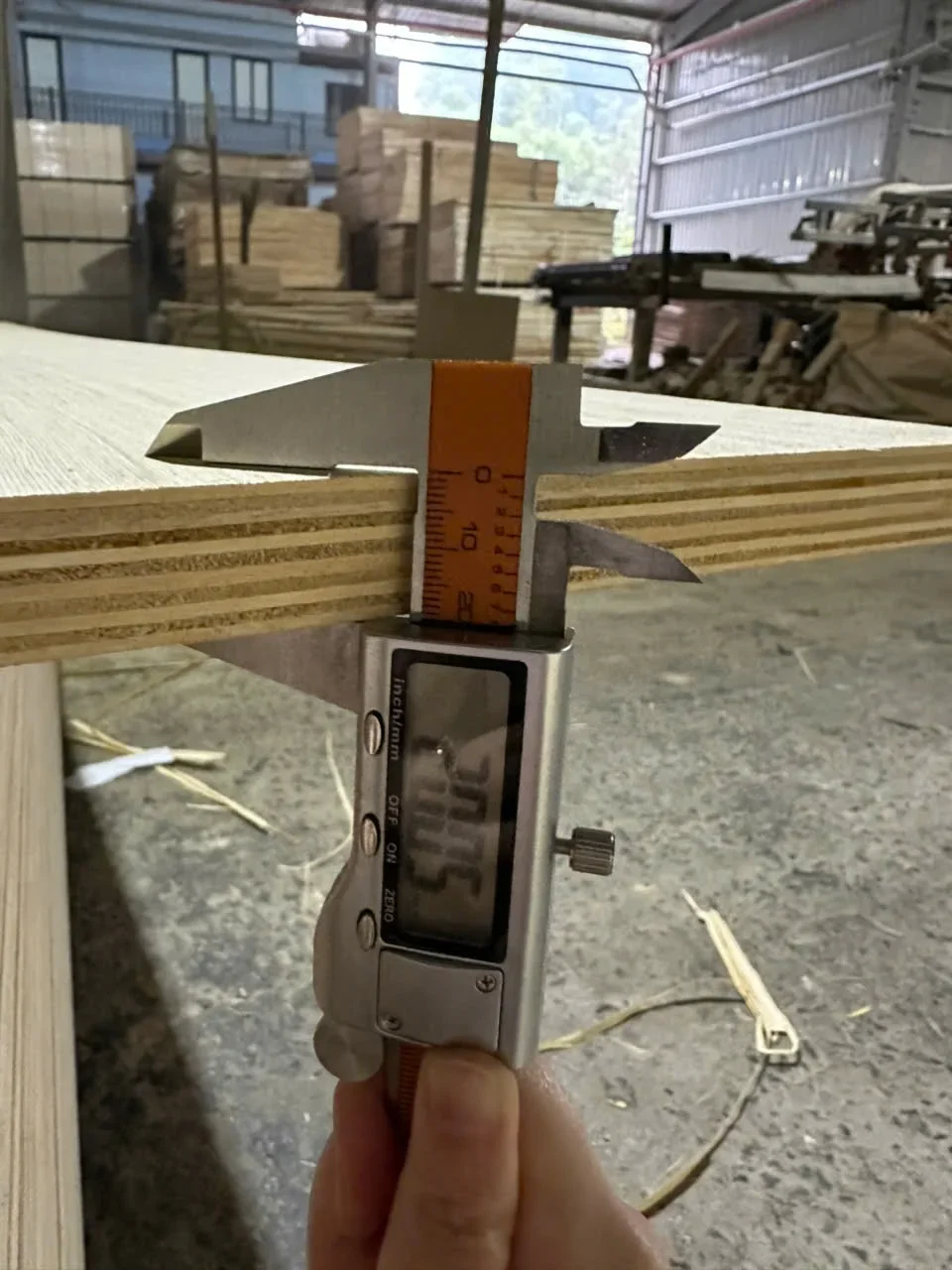
Face veneer species (birch, okoume, gurjan, film-faced coating) does not meaningfully change these figures. A 0.3mm face on an 18mm board is 1.7% of total thickness. Even if the face veneer were twice the density of the core, total panel weight shifts by less than 2%.
📊 Weight per Sheet — Standard Size 1220 × 2440mm (4 × 8 ft)
This is the most common export size from Vietnamese factories. Gross area = 2.9768 m².
| Thickness | Volume (m³) | Styrax ~490 kg/m³ | Acacia ~580 kg/m³ | Eucalyptus ~700 kg/m³ |
|---|---|---|---|---|
| 9mm | 0.02679 | 13.1 kg | 14.7 kg | 18.8 kg |
| 12mm | 0.03572 | 17.5 kg | 19.6 kg | 25.0 kg |
| 15mm | 0.04465 | 21.9 kg | 24.6 kg | 31.3 kg |
| 18mm | 0.05357 | 26.3 kg | 29.5 kg | 37.5 kg |
| 21mm | 0.06251 | 30.6 kg | 34.4 kg | 43.8 kg |
⚠️ Important: These weights are per finished sheet at standard factory moisture content (6–8%). Freshly pressed panels before drying can be 10–15% heavier. Always request weights from the pre-shipment inspection report, not production estimates.
Additional Common Thicknesses
| Thickness | Volume (m³) | Styrax ~490 | Acacia ~580 | Eucalyptus ~700 |
|---|---|---|---|---|
| 3mm | 0.00893 | 4.4 kg | 4.9 kg | 6.3 kg |
| 5mm | 0.01488 | 7.3 kg | 8.2 kg | 10.4 kg |
| 25mm | 0.07442 | 36.5 kg | 40.9 kg | 52.1 kg |
📊 Weight per Sheet — Metric Size 1250 × 2500mm (EU Standard)
Gross area = 3.125 m² — approximately 5% more than the 1220×2440mm sheet.
| Thickness | Volume (m³) | Styrax ~490 kg/m³ | Acacia ~580 kg/m³ | Eucalyptus ~700 kg/m³ |
|---|---|---|---|---|
| 9mm | 0.02813 | 13.8 kg | 15.5 kg | 19.7 kg |
| 12mm | 0.03750 | 18.4 kg | 20.6 kg | 26.2 kg |
| 15mm | 0.04688 | 23.0 kg | 25.8 kg | 32.8 kg |
| 18mm | 0.05625 | 27.6 kg | 30.9 kg | 39.4 kg |
| 21mm | 0.06563 | 32.2 kg | 36.1 kg | 45.9 kg |
The 1250×2500 size is preferred in Germany, Poland, and other Central European markets. When calculating container payloads, use the correct size table — mixing values across size tables is the most common calculation error.
🔧 How to Calculate Any Non-Standard Size
Use the same formula. The only change is the sheet area.
Example: 18mm acacia-core plywood, custom size 1220 × 2135mm (4×7 ft)
Step 1: 0.018 × 1.220 × 2.135 = 0.04689 m³
Step 2: 0.04689 × 580 = 27.2 kg
Example: 12mm styrax-core, 915 × 2440mm (3×8 ft)
Step 1: 0.012 × 0.915 × 2.440 = 0.02677 m³
Step 2: 0.02677 × 490 = 13.1 kg
Observation: A 3×8 sheet at 12mm styrax weighs the same as a 4×8 sheet at 9mm styrax. Thickness-to-size ratio matters when estimating per-sheet labor handling costs on the jobsite.
Get accurate weight data with your custom quotation from Mika Plywood
📦 Weight in Shipping Context — Impact on Container Loading
Individual sheet weight becomes important at three points in the supply chain:
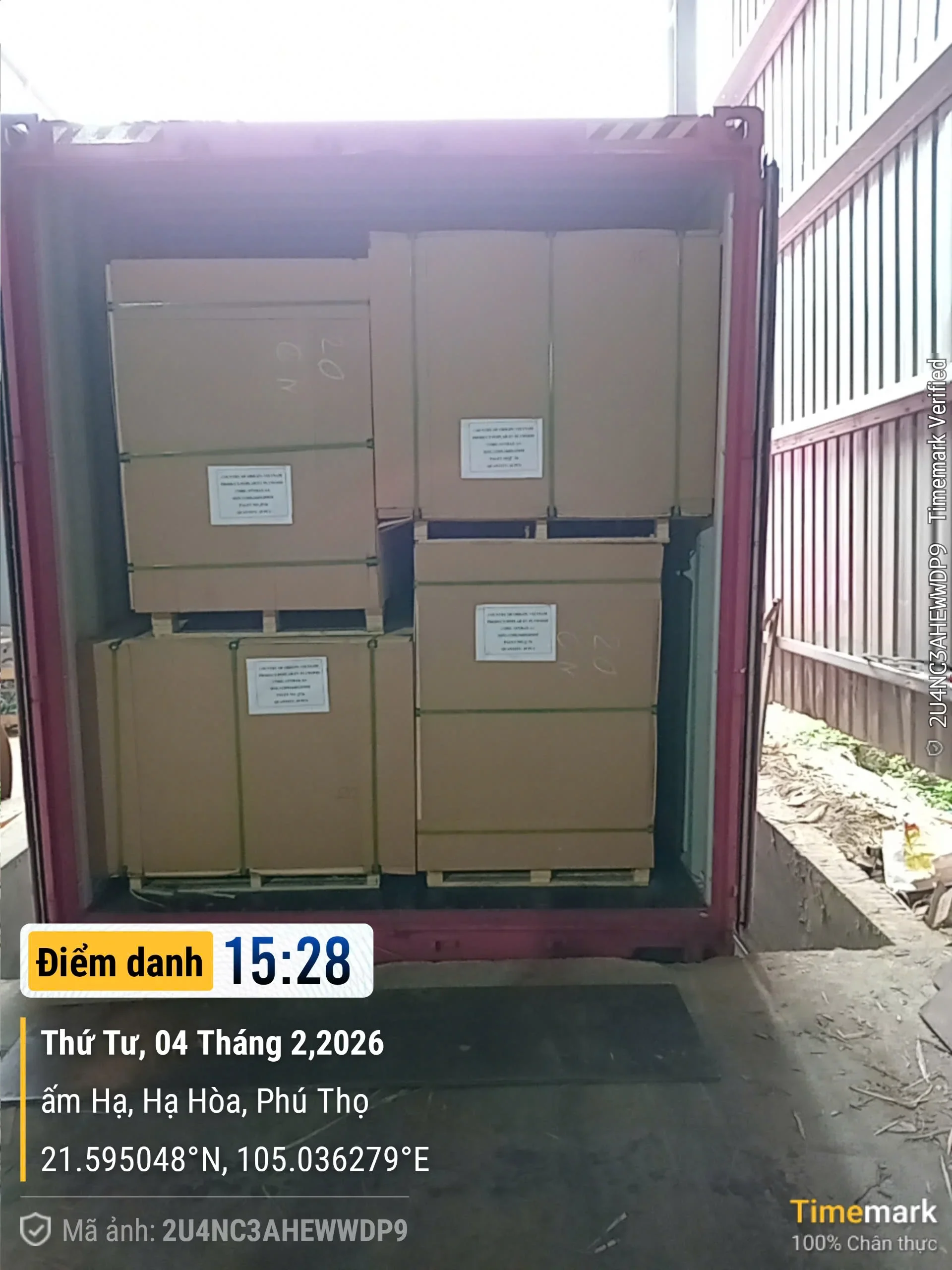
- Pallet configuration — pallet stack height is capped at 1000mm for forklift safety (see pallet height limit guide for 40HC containers). Pallet weight is directly calculated from sheets per pallet × weight per sheet.
- Container payload — 40HC payload limit is 28.5 MT. Eucalyptus-core plywood loads 15 pallets per 40HC vs 18 pallets for styrax, because eucalyptus approaches the payload limit before the volumetric limit.
- Freight cost per sheet — heavier boards increase freight cost per unit, which matters when comparing product options at the same FOB price.
Weight Comparison: Full Pallet at 18mm
For 1220×2440mm, 18mm, pallet stack 1000mm: sheets per pallet = ROUNDDOWN(1000 ÷ 18) = 55 sheets.
| Core | kg/Sheet | kg/Pallet (55 sheets) | Difference vs Styrax |
|---|---|---|---|
| Styrax ~490 | 26.3 kg | 1,447 kg | baseline |
| Acacia ~580 | 29.5 kg | 1,622 kg | +175 kg |
| Eucalyptus ~700 | 37.5 kg | 2,060 kg | +615 kg |
A single pallet of eucalyptus-core 18mm weighs approximately 2,060 kg — 615 kg more than the same pallet in styrax. The payload weight per pallet is one reason eucalyptus-core containers are configured with fewer pallets (15 vs 18 for styrax) — the 28.5 MT payload hard limit is reached well before the container fills volumetrically at heavier thicknesses.
For a detailed breakdown of sheets per container by core type and thickness, read the Plywood Container Packing Calculation Guide. For pre-calculated weight values across all standard thicknesses, see the complete weight table for all core types.
⚙️ Core Species Comparison — Weight vs Strength Trade-Off
Understanding why core species differ in density helps buyers make better specification decisions.
Styrax (480–500 kg/m³) — Lightweight Premium
Styrax (bồ đề) grows in Northern Vietnam’s mountainous provinces. Its cell structure is less dense than acacia, producing a lighter panel. Styrax was originally developed as a cost-effective substitute for birch core — European furniture manufacturers specify it for kitchen cabinets and interior panels where every kilogram affects delivery cost.
For every 1000 sheets of 18mm furniture plywood, choosing styrax over eucalyptus saves approximately 11,200 kg of freight weight.
“Styrax core gives our European buyers the same flatness and screw-holding as birch-substitute panels, at a weight that keeps their container payloads optimized.” — Jay, International Sales Manager, Mika Plywood
Acacia (~580 kg/m³) — Mid-Range Workhorse
Acacia is the most widely grown plantation species in Northern Vietnam. Its density sits between styrax and eucalyptus, making it the default choice for commercial and packing plywood. Acacia core plywood is heavier than styrax but cheaper — the standard choice for markets where price sensitivity outweighs weight-sensitivity.
Learn more in the detailed Acacia Core Plywood Guide.
Eucalyptus (650–750 kg/m³) — Heavy Duty
Eucalyptus produces the heaviest, most dimensionally stable panels. The higher density translates directly to superior MOR (Modulus of Rupture) and screw-holding performance — properties required for flooring substrates, structural applications, and high-load shelving.
Buyers who specify eucalyptus core should plan container payloads with care. At 700 kg/m³, a full eucalyptus-core 40HC container reaches the 28.5 MT payload limit before reaching the volumetric limit. Eucalyptus globulus plantation density in Southeast Asia falls consistently in the 640–760 kg/m³ range (FAO Forestry Paper, Eucalyptus in a Changing World, 2004).
For the full strength and specification breakdown, see the Eucalyptus Core Plywood Guide and Styrax Core Plywood Guide.
📋 Quick Reference: Weight Summary by Application
| Application | Typical Core | Typical Thickness | Approx Weight/Sheet (1220×2440) |
|---|---|---|---|
| Kitchen cabinets | Styrax | 18mm | 26.3 kg |
| Commercial furniture | Acacia | 18mm | 29.5 kg |
| Packing / crates | Acacia | 12mm | 19.6 kg |
| Flooring substrate | Eucalyptus | 15mm | 31.3 kg |
| Concrete formwork | Eucalyptus/Acacia | 18mm | 30–38 kg |
| Scaffolding deck | Eucalyptus | 21mm | 43.8 kg |
| Lamination substrate | Styrax | 9mm | 13.1 kg |
This table uses midpoint densities from (Mika Plywood production data, 2026). Actual weights for a specific order will appear on the packing list and Bill of Lading.
✅ Conclusion — Core Species Is the Weight Variable
Plywood weight per sheet is simple to calculate once you know the core species. The formula is fixed. The only variable that matters is the density of the core.
For buyers comparing quotations from Vietnamese factories:
- Request the core species explicitly — “acacia core” or “styrax core”, not just “hardwood core”
- Use the tables above to verify that quoted pallet weights match your container payload plans
- Thicker boards with lighter cores can weigh less per sheet than thinner boards with denser cores
The calculation gap between a birch-alternative furniture spec (styrax core) and a structural flooring spec (eucalyptus core) is real and significant — up to 42% heavier at the same thickness. Planning freight around the right weight figure protects your landed cost.
Disclosure: This article is published by Mika Plywood, a Vietnam-based plywood manufacturer and export operator. While we aim to provide objective industry guidance, readers should consider our perspective as a market participant when evaluating recommendations.
Frequently Asked Questions
How much does an 18mm plywood sheet weigh?An 18mm sheet (1220×2440mm) weighs 26–38 kg depending on core species. Styrax core: ~26.3 kg. Acacia core: ~29.5 kg. Eucalyptus core: ~37.5 kg. Weight is set by core density, not the face veneer.Why does plywood weight vary so much between sheets of the same thickness?Core species drives density. Vietnamese plywood uses three core species: styrax (480–500 kg/m³), acacia (~580 kg/m³), and eucalyptus (650–750 kg/m³). Same thickness, same size — eucalyptus core weighs 40–45% more than styrax core.Does the face veneer affect plywood weight?Face veneer contributes a small fraction of total weight. A 0.3mm face veneer on an 18mm board is less than 2% of total thickness. Core species accounts for 95%+ of the weight difference between boards of the same dimensions.How do I calculate plywood weight per sheet?Formula: Weight (kg) = Thickness(m) × Length(m) × Width(m) × Density(kg/m³). For an 18mm acacia core sheet (1220×2440mm): 0.018 × 1.220 × 2.440 × 580 = 31.1 kg.Which core type is lightest for air freight or weight-critical applications?Styrax core is the lightest Vietnamese core at 480–500 kg/m³. An 18mm styrax-core sheet weighs approximately 26.3 kg — about 11 kg less than the same size in eucalyptus core.
Ready to order?
Get an accurate weight sheet with your quotation from Mika Plywood

Written by
David
Export Project Leader
Content contributor at Vietnam Plywood.
On this page
- 📐 The Weight Formula — One Equation, Applied Consistently
- 📌 Why Core Density Is the Only Variable That Matters
- 📊 Weight per Sheet — Standard Size 1220 × 2440mm (4 × 8 ft)
- Additional Common Thicknesses
- 📊 Weight per Sheet — Metric Size 1250 × 2500mm (EU Standard)
- 🔧 How to Calculate Any Non-Standard Size
- 📦 Weight in Shipping Context — Impact on Container Loading
- Weight Comparison: Full Pallet at 18mm
- ⚙️ Core Species Comparison — Weight vs Strength Trade-Off
- 📋 Quick Reference: Weight Summary by Application
- ✅ Conclusion — Core Species Is the Weight Variable
On this page
- 📐 The Weight Formula — One Equation, Applied Consistently
- 📌 Why Core Density Is the Only Variable That Matters
- 📊 Weight per Sheet — Standard Size 1220 × 2440mm (4 × 8 ft)
- Additional Common Thicknesses
- 📊 Weight per Sheet — Metric Size 1250 × 2500mm (EU Standard)
- 🔧 How to Calculate Any Non-Standard Size
- 📦 Weight in Shipping Context — Impact on Container Loading
- Weight Comparison: Full Pallet at 18mm
- ⚙️ Core Species Comparison — Weight vs Strength Trade-Off
- 📋 Quick Reference: Weight Summary by Application
- ✅ Conclusion — Core Species Is the Weight Variable
Industry Newsletter
Stay Updated with
Plywood Industry Insights
Factory prices, spec guides, market trends and export tips — delivered weekly to B2B buyers and importers in 20+ countries.