Marine plywood applications: boat building, docks, outdoor furniture, coastal construction. WBP vs MR glue, grade selection, and export specs from Vietnam.
Marine plywood fails in the ocean for one reason: the wrong glue. 90% of plywood on the market uses MR (melamine resin) adhesive — fine for furniture, but it begins to delaminate at around 12 hours of boiling exposure (EN 314 Part 2 Class 2 test, 2017). Marine applications demand WBP phenolic glue, tested to 72 continuous hours. That single specification difference separates plywood that survives a decade on a dock from a panel that buckles in its first monsoon season.
This guide covers every primary marine plywood application, the technical reasons certain panels work while others fail, and how to specify the right grade from a Vietnam factory (Mika Plywood production data, 2026).
🚢 What Is Marine Plywood? The WBP Standard Explained
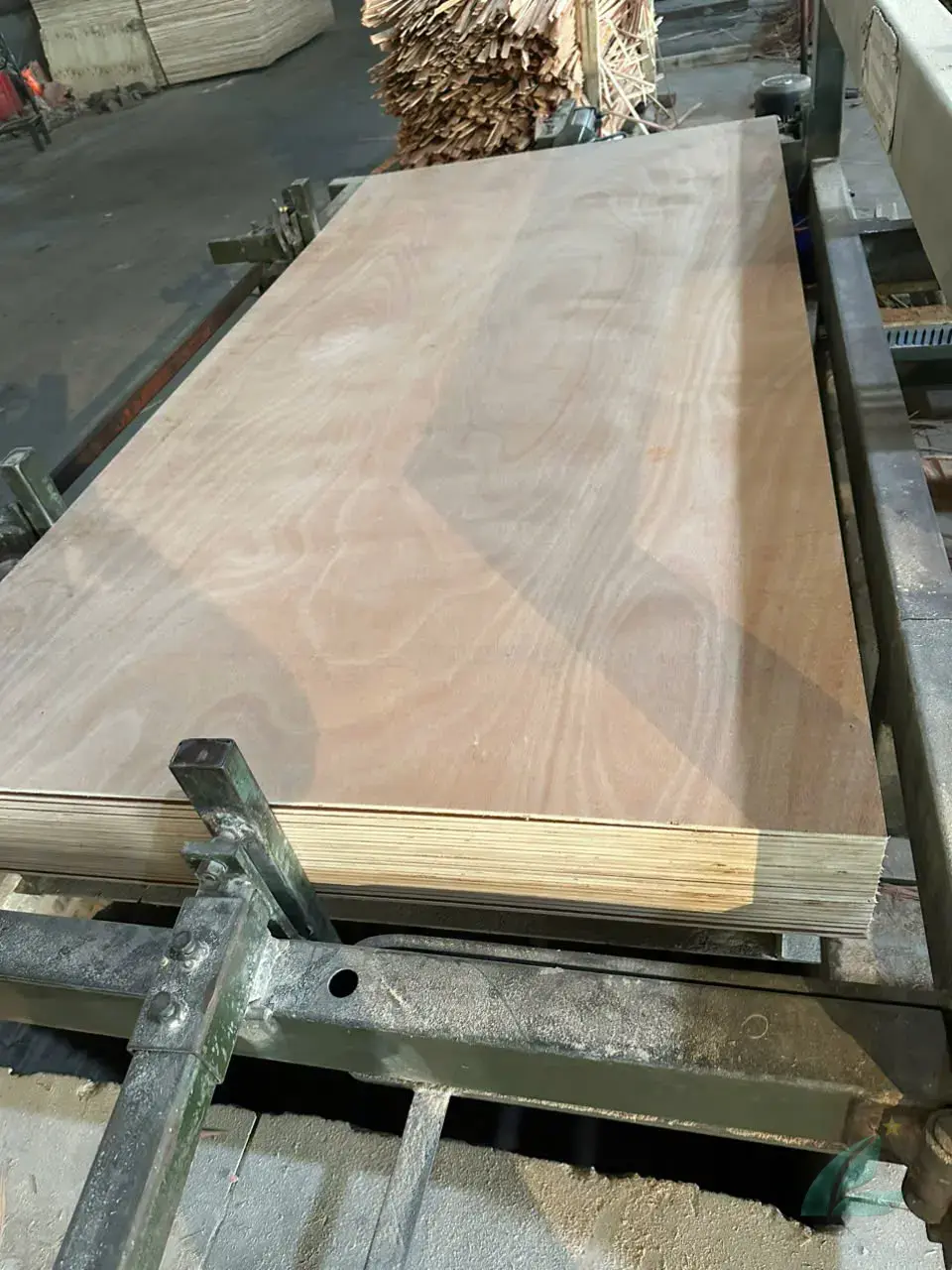
Marine plywood is a structural wood panel manufactured with WBP (Weather and Boil Proof) phenolic glue, premium-grade face veneers, and void-free core construction. The phenolic resin bond is tested to withstand 72 hours of continuous boiling without delamination — the benchmark established by BS 1088 (British Standard for Marine Plywood).
Two technical properties define true marine-grade specification:
- Glue type: Phenolic WBP — not melamine MR. Phenolic resin polymerizes under heat (150°C) and pressure (~200 psi), creating an inert, boil-proof bond — see our WBP glue vs MR glue comparison for the full specification breakdown. MR glue softens at high heat and moisture.
- Void-free core — no internal gaps between veneer layers. Voids trap moisture, create delamination points, and reduce structural strength under load.
Key Insight: Marine plywood is water-resistant, not waterproof. The WBP glue bond resists moisture — but veneer fibers still absorb water if surfaces are unsealed. Every marine plywood installation requires epoxy saturation or UV-stable varnish to achieve full weather protection.
From Mika Plywood’s production facilities in Northern Vietnam, marine-grade panels use eucalyptus or acacia core (650–750 kg/m³ and ~580 kg/m³ respectively) with okoume or gurjan face veneers, bonded with phenolic WBP glue. Core construction uses full-stitched or edge-jointed veneer to eliminate internal voids.
🛥️ Boat Building: Where Marine Plywood Performance Is Most Critical
Boat building is the highest-demand marine plywood application. Hull panels, cabin soles, deck underlayment, and bulkheads are all exposed to continuous moisture cycling — wet when the vessel is in use, drying between uses, and occasionally submerged.
Key applications in boat construction:
Hull planking (hard chine designs): 9mm–15mm marine plywood bent and glued to create hull sides and bottom panels in stitch-and-glue construction. The panels must flex without delaminating at stress points.
Deck underlayment: 15mm–18mm panels beneath fiberglass or teak deck overlay. Gaps or voids in substandard plywood create hard spots and eventually rot pockets under the deck finish.
Bulkheads and structural frames: 12mm–18mm full-void-free panels provide the lateral stiffness of a small vessel’s interior. A single internal void becomes a moisture reservoir.
Cabin and interior lining: 6mm–9mm lightweight panels for ceiling liners, berth fronts, and galley surfaces inside the cabin. Okoume face is particularly common here — consistent grain, light pink color, finishes cleanly with varnish (WoodenBoat, 2023).
“For export clients building workboats in India and the Philippines, gurjan face plywood with WBP phenolic glue has been our most consistent specification for over six years. The density and grain structure of gurjan handles the mechanical stress of boat frames better than lighter veneer options.” — Jay, International Sales Manager, Mika Plywood
Request boat-grade plywood specifications and FOB pricing from Mika Plywood
🌊 Dock and Pier Construction: High-Load Outdoor Plywood
Marine plywood applications in dock and pier construction differ from boat building in one important way: the panels are often permanently exposed rather than protected inside a hull. Dock decking takes direct UV, rain, foot traffic, and saltwater spray simultaneously.
Specification requirements for dock plywood:
- Thickness: 18mm–21mm for decking surfaces subject to foot traffic and equipment loads
- Core density: Eucalyptus core (650–750 kg/m³) preferred for decking — its higher density resists point-load compression and dimensional change under wet-dry cycling
- Glue: WBP phenolic — non-negotiable for any submerged or splash-zone application
- Surface treatment: Panels must be sealed on all six faces and edges with marine epoxy before installation; unsealed edges are the most common failure point in dock plywood
⚠️ Important: Standard film-faced plywood (phenolic film, WBP core glue) is NOT the same as BS 1088 marine plywood. Film-faced panels are excellent for concrete formwork and wet-area construction, but their core construction is not specified for void-free quality. For structural dock decking, request marine-grade specification explicitly.
Mika Plywood supplies 18mm and 21mm eucalyptus-core panels with WBP phenolic glue for dock applications. Panels are available in 1220×2440mm and 1250×2500mm sheet sizes, with custom cutting available for specific dock plank dimensions (Mika Plywood production data, 2026).
🌧️ Outdoor Furniture and Structures: Choosing the Right Exterior Grade
Not every outdoor application needs full marine specification. Outdoor furniture, garden structures, pergolas, and covered decking areas experience weather exposure but not permanent submersion. This creates a cost-performance decision between:
| Application | Exposure Level | Recommended Spec | Notes |
|---|---|---|---|
| Garden furniture (covered) | Low — seasonal moisture | WBP glue, okoume or pine face | Surface sealing required |
| Garden furniture (uncovered) | Medium — direct rain | WBP phenolic, eucalyptus or gurjan face | Edge sealing critical |
| Outdoor decking substrate | Medium-high — continuous wet-dry | WBP phenolic, high-density core | 18mm minimum thickness |
| Dock decking (splash zone) | High — saltwater + UV | Marine-grade WBP, void-free core | 18mm–21mm, 6-face epoxy coating |
| Marine hull planking | Extreme — immersion | BS 1088 marine grade | Full boil test certification |
For outdoor furniture intended for export markets in Europe and Australia — including the fast-growing Asia-Pacific plywood markets of Korea, Japan, and Australia — buyers typically specify okoume face with WBP glue and E1 emission. Okoume’s consistent grain takes exterior paints and stains evenly, which matters when the finished product is a branded garden furniture collection (Epoxyworks, 2021).
View Mika Plywood’s okoume plywood specifications for outdoor and marine use
🏗️ Coastal Construction: Marine Plywood in Building Applications
Marine plywood in coastal construction covers a different range of applications than boat building or dock work. The key environments are:
Bathroom and wet-area wall lining
In coastal resorts, hotels, and residential bathrooms, marine-grade plywood is used as tile backing and wet-wall substrate behind showers and baths. The WBP glue bond means the substrate holds its dimensional stability even when steam and water vapor penetrate through grout lines over years of use.
Standard specification: 12mm marine plywood with okoume or eucalyptus face. Emission standard E0 or E1 applies when used in enclosed interior spaces.
Prefabricated coastal structures
Modular beach cabins, lifeguard stations, coastal boardwalks, and jetty access ramps often use 15mm–18mm marine plywood panels as structural decking and wall elements. These structures are designed for assembly rather than permanent construction — the panels must be transportable, dimensionally stable, and resist the salt-air oxidation that corrodes metallic fasteners.
Concrete formwork in coastal sites
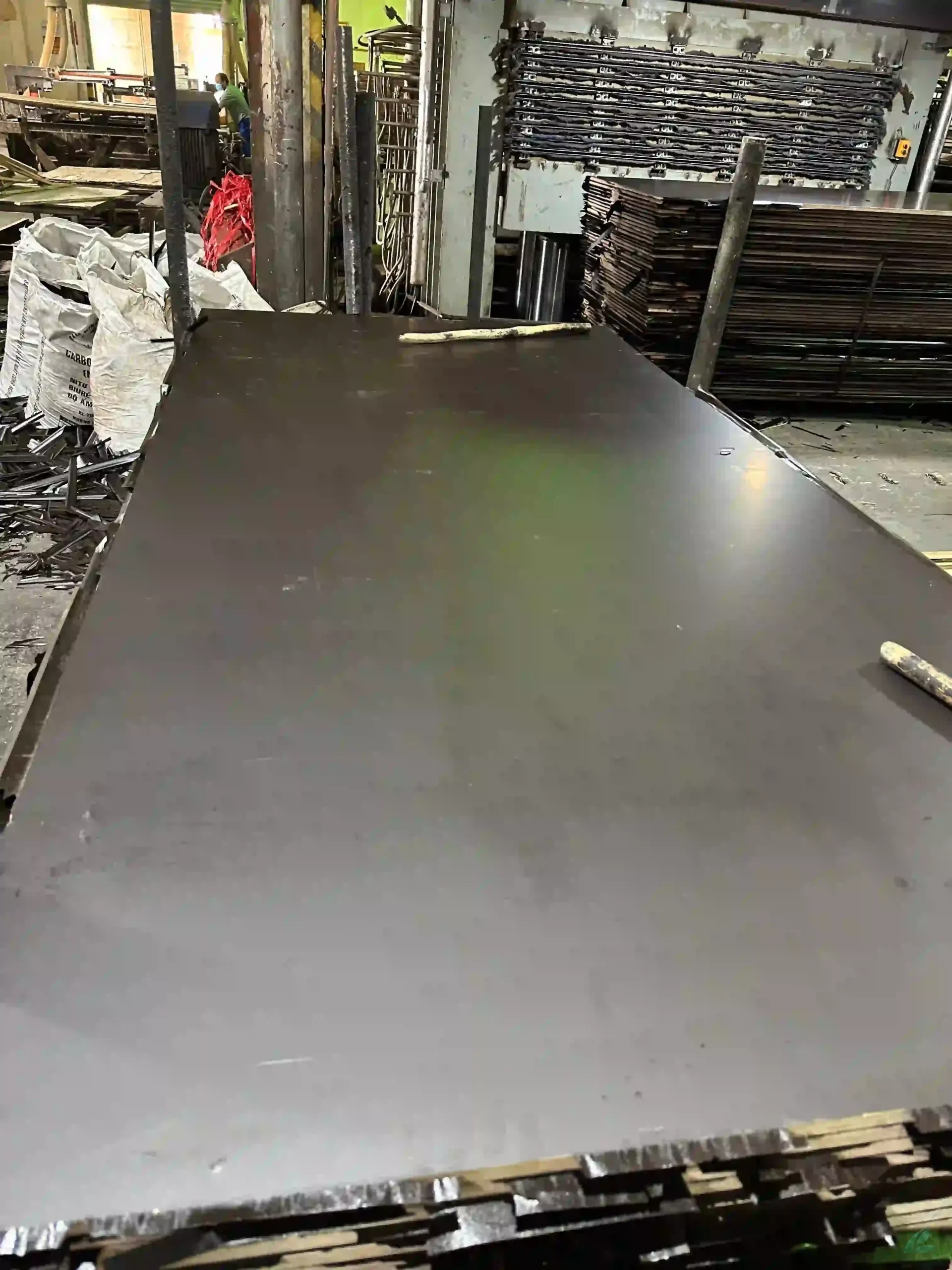
Film-faced plywood with WBP phenolic glue performs well for concrete formwork in tidal and coastal concrete pours. The phenolic film surface resists seawater contamination during concrete curing, and panels can be reused 10–20 times before replacement. Mika Plywood’s film-faced panels use AICA film (minimum 135 gsm) and eucalyptus or acacia core with WBP glue.
Learn more about how film-faced plywood performs in high-reuse construction applications.
📊 Selecting the Right Veneer for Marine Plywood
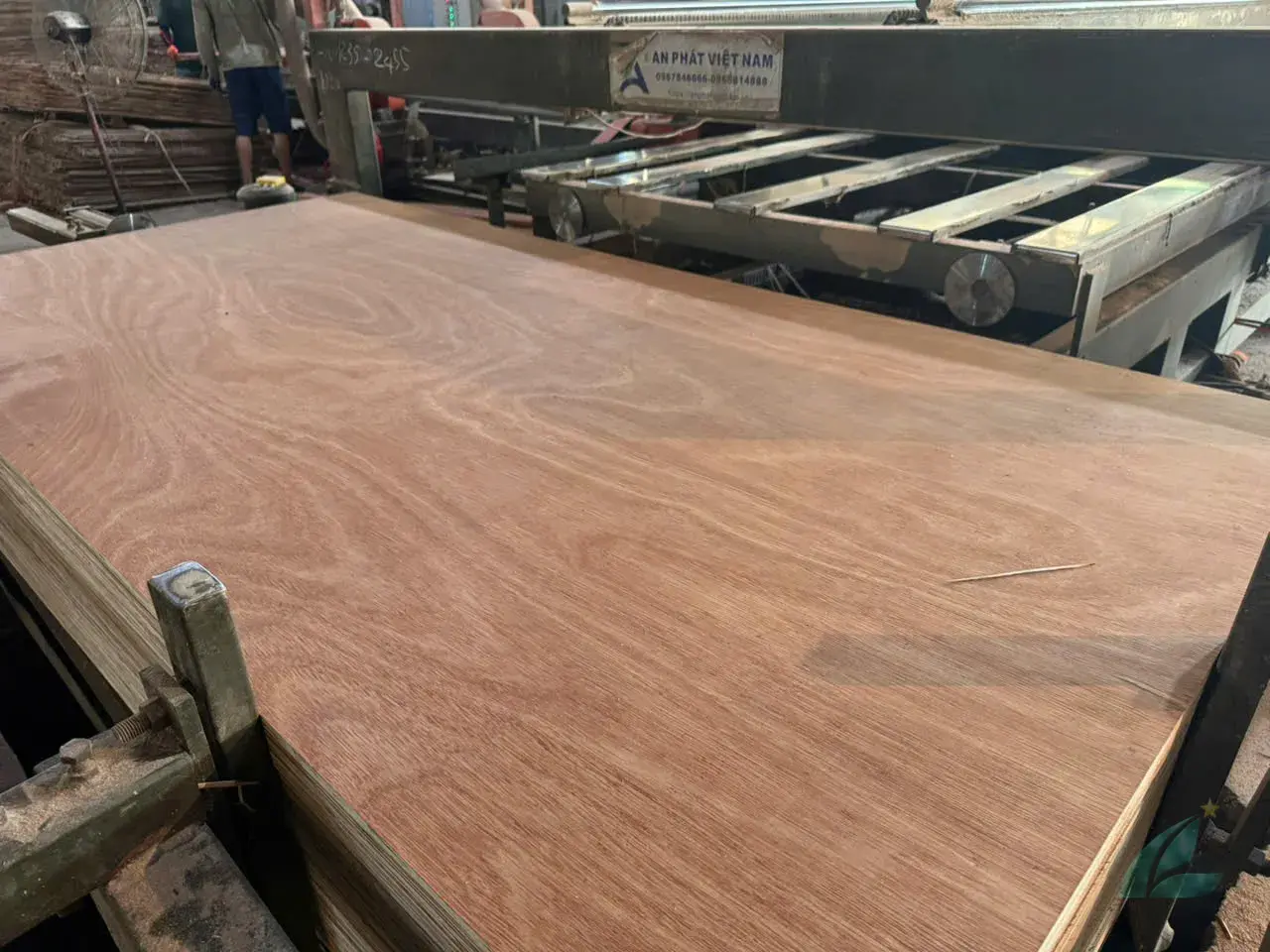
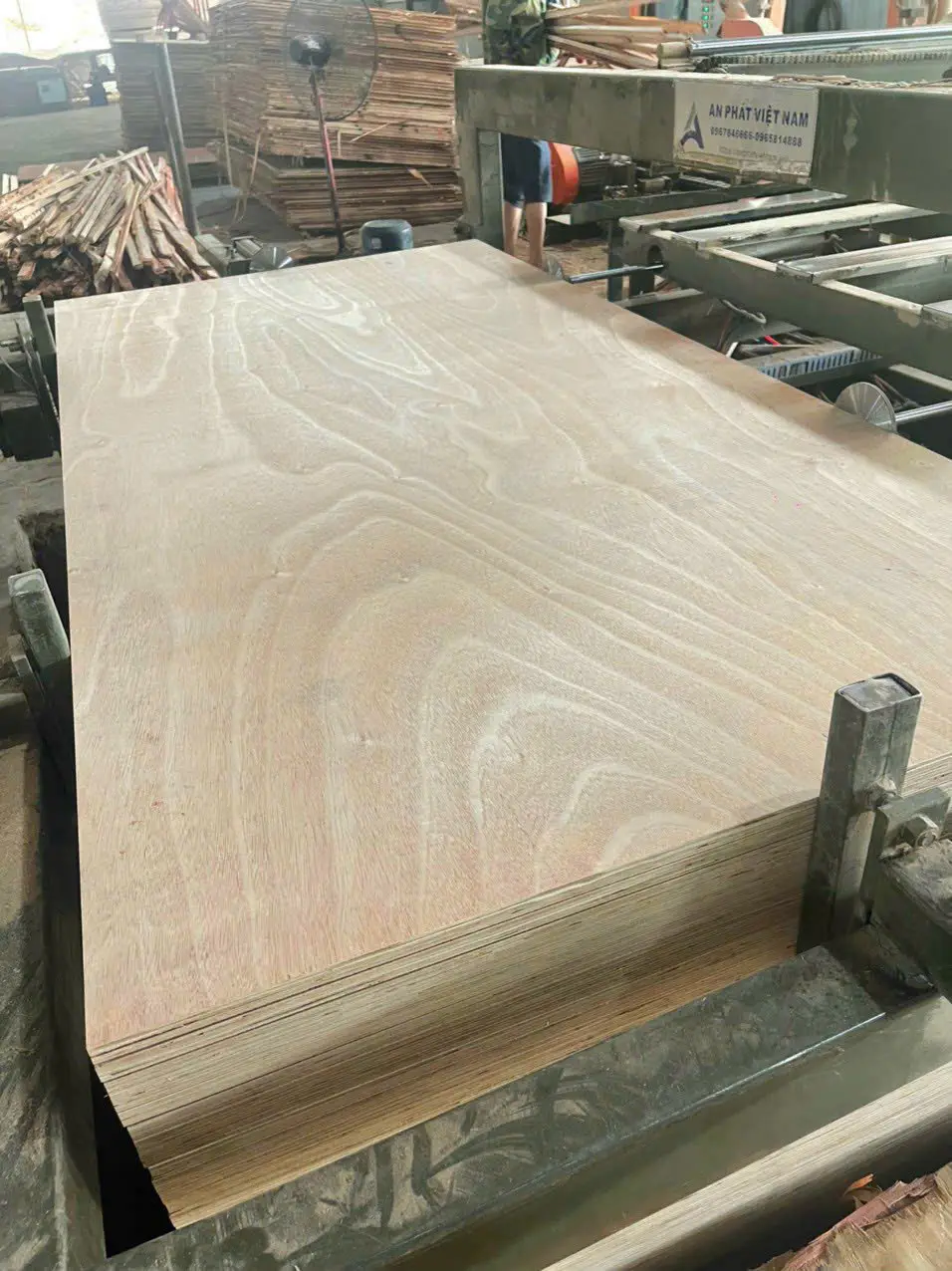
Face veneer selection in marine plywood affects durability, weight, and finishing behavior. From Mika Plywood’s production range, two face species dominate marine and outdoor specifications:
Gurjan (Keruing) Face
Gurjan is a dense tropical hardwood veneer (face density contributes to panel stiffness) widely specified for marine use in India and South Asia. It has a tight grain structure that resists surface checking under wet-dry cycling, and its natural oils contribute moderate weather resistance before additional surface treatment.
- Best for: Structural marine applications, boat building, heavy dock platforms, Indian market specifications
- Glue: WBP phenolic (always for marine)
- Core: Acacia or eucalyptus
- Grade: A/B face standard
View Mika Plywood’s gurjan plywood specifications for marine and structural applications
Okoume Face
Okoume is a lighter African hardwood veneer (average density ~400 kg/m³) with a clean pinkish-white color and even grain. It is the preferred face for boat interiors and lightweight dock panels in European and Australian markets.
- Best for: Boat cabin linings, lightweight dock panels, outdoor furniture (Europe market), panels requiring a clean varnished finish
- Glue: WBP phenolic for marine; MR melamine for covered outdoor furniture
- Core: Eucalyptus or styrax
- Grade: A/B face
The weight difference between okoume and gurjan face panels is meaningful for small boat construction where total vessel weight affects performance (Forest Products Laboratory, USDA, 2021).
🔧 What to Specify When Ordering Marine Plywood from Vietnam
When placing an export order for marine or outdoor-application plywood, buyers should specify five parameters explicitly:
- Glue type: Phenolic WBP — confirm not melamine. Request the EN 314 or BS 1088 boiling test certificate if the application is structural marine use.
- Core species: Eucalyptus for maximum density and load capacity; acacia for cost-optimized outdoor furniture or light dock work.
- Face veneer: Gurjan for structural and Indian market; okoume for lightweight panels and European market finishing.
- Thickness: Match to structural load requirements. 9–12mm for interior panels, 15–18mm for decking, 18–21mm for heavy platforms.
- Emission standard: Even for outdoor applications, specify E1 minimum. If the panels will be used in any enclosed or semi-enclosed space (boat cabin, coastal bathroom), specify E0.
Key Insight: Mixed specifications within one container are possible. Mika Plywood regularly ships 12mm okoume/WBP alongside 18mm gurjan/WBP panels in a single 40HC container. Verify total weight against the 28.5 MT payload limit — eucalyptus-core panels at 15 pallets/40HC approach that ceiling faster than acacia or styrax core panels.
For buyers calculating container loads for marine-grade orders, the 40HC plywood packing calculation guide covers payload limits by core species with factory-verified data.
Request marine plywood specifications and export pricing from Mika Plywood
✅ Marine Plywood Applications: Key Takeaways
Marine plywood applications span a wide range of outdoor and water-exposed environments. The critical selection criteria stay consistent across all of them:
- WBP phenolic glue is non-negotiable for any application with continuous moisture, submersion risk, or coastal exposure. MR melamine is for interior and covered applications only.
- Core construction quality — void-free, full-stitched or edge-jointed — determines long-term structural integrity under moisture cycling.
- Face veneer selection balances weight, density, and finishing behavior: gurjan for structural/high-density applications, okoume for lightweight and clean-finish applications.
- Surface treatment after installation is required regardless of WBP specification. Unsealed edges on marine plywood are the primary cause of premature delamination failure.
- Emission standards apply even outdoors for any semi-enclosed space; specify E0 for boat cabins, coastal bathrooms, and covered structures.
Disclosure: This article is published by Mika Plywood, a Vietnam-based plywood manufacturer and export operator. While we aim to provide objective industry guidance, readers should consider our perspective as a market participant when evaluating recommendations.
Contact Mika Plywood for a marine plywood quote — free samples available
Frequently Asked Questions
What makes plywood suitable for marine and outdoor applications?Marine-grade plywood uses WBP (Weather and Boil Proof) phenolic glue that survives a 72-hour boiling test without delamination. The glue bond stays intact under continuous moisture. The wood veneers themselves still absorb water — surface sealing with epoxy or marine varnish is required for full protection.What is the difference between WBP and MR glue for outdoor use?WBP (phenolic) glue passes a 72-hour boiling test — it is the only appropriate adhesive for marine and permanently wet outdoor conditions. MR (melamine) glue passes only a 12-hour test, making it suitable for interior moisture-resistant applications but not for continuous outdoor or submerged exposure.Which face veneer is best for marine plywood from Vietnam?Okoume and gurjan are the two most common face veneers for marine-grade plywood from Vietnam. Gurjan is a dense tropical hardwood preferred in India and South Asia for structural marine use. Okoume is lighter and cleaner-grained, widely used in European boat building and lightweight dock applications.Can I use film-faced plywood in marine environments?Film-faced plywood with phenolic WBP glue is water-resistant and performs well in damp construction environments — concrete formwork near water, outdoor scaffolding, and wet-area shuttering. For direct seawater submersion or hull construction, BS 1088 certified marine plywood is the correct specification.What thickness is recommended for marine plywood applications?Common marine plywood thicknesses from Vietnam: 9mm and 12mm for cabin linings and interior panels; 15mm and 18mm for decking and dock surfaces; 21mm for structural flooring and heavy-load platforms. Mika Plywood supplies marine-grade panels from 9mm to 25mm to match specific structural requirements.
Ready to order?
Request marine plywood specifications and pricing from Mika Plywood

Written by
David
Export Project Leader
Content contributor at Vietnam Plywood.
On this page
- 🚢 What Is Marine Plywood? The WBP Standard Explained
- 🛥️ Boat Building: Where Marine Plywood Performance Is Most Critical
- Key applications in boat construction:
- 🌊 Dock and Pier Construction: High-Load Outdoor Plywood
- Specification requirements for dock plywood:
- 🌧️ Outdoor Furniture and Structures: Choosing the Right Exterior Grade
- 🏗️ Coastal Construction: Marine Plywood in Building Applications
- Bathroom and wet-area wall lining
- Prefabricated coastal structures
- Concrete formwork in coastal sites
- 📊 Selecting the Right Veneer for Marine Plywood
- Gurjan (Keruing) Face
- Okoume Face
- 🔧 What to Specify When Ordering Marine Plywood from Vietnam
- ✅ Marine Plywood Applications: Key Takeaways
On this page
- 🚢 What Is Marine Plywood? The WBP Standard Explained
- 🛥️ Boat Building: Where Marine Plywood Performance Is Most Critical
- Key applications in boat construction:
- 🌊 Dock and Pier Construction: High-Load Outdoor Plywood
- Specification requirements for dock plywood:
- 🌧️ Outdoor Furniture and Structures: Choosing the Right Exterior Grade
- 🏗️ Coastal Construction: Marine Plywood in Building Applications
- Bathroom and wet-area wall lining
- Prefabricated coastal structures
- Concrete formwork in coastal sites
- 📊 Selecting the Right Veneer for Marine Plywood
- Gurjan (Keruing) Face
- Okoume Face
- 🔧 What to Specify When Ordering Marine Plywood from Vietnam
- ✅ Marine Plywood Applications: Key Takeaways
Industry Newsletter
Stay Updated with
Plywood Industry Insights
Factory prices, spec guides, market trends and export tips — delivered weekly to B2B buyers and importers in 20+ countries.