How Vietnamese plywood factories control veneer moisture, glue spread, and hot press parameters to deliver delamination-free export panels every shipment.
Delamination is the most visible failure mode in plywood — and the most preventable. When a panel arrives at a buyer’s warehouse and layers peel apart under light moisture or handling stress, the problem almost always traces back to a controllable factory variable: veneer moisture, glue spread rate, press time, or cooling protocol. Vietnam’s export-grade plywood factories manage these variables through documented processes and systematic testing, not by chance.
This guide explains exactly what factories control and what happens inside a quality-focused Vietnamese facility to guarantee plywood bonding strength meets — and exceeds — international export requirements.
🔧 Why Bonding Strength Determines Panel Performance
Plywood bonding strength is the measurable force required to separate two bonded veneer layers. It predicts whether a panel will hold up under bending loads, cyclical humidity changes, or prolonged moisture exposure.
For importers in Germany buying birch furniture panels, or contractors in Korea ordering film-faced formwork boards, the bonding standard they specify controls everything downstream: warranties, liability, and re-order reliability.
The two primary glue systems used in Vietnam for export plywood map directly to application requirements:
| Glue Type | Trade Name | Boiling Test | Primary Application |
|---|---|---|---|
| Melamine Urea Formaldehyde | MR (Moisture Resistant) | 12 hours | Furniture, cabinets, interior fitout |
| Phenol Formaldehyde | WBP (Weather & Boil Proof) | 72 hours | Construction, marine, formwork |
⚠️ Important: Glue type (MR or WBP) and emission class (E0, E1, E2) are two separate parameters. A panel can be Melamine MR with E0 emission — or Phenolic WBP with no emission classification. Confusing the two is a common specification error in purchase orders. See the full breakdown in plywood glue types and emission standards guide.
💧 Step 1 — Veneer Moisture: The Foundation of Strong Bonds
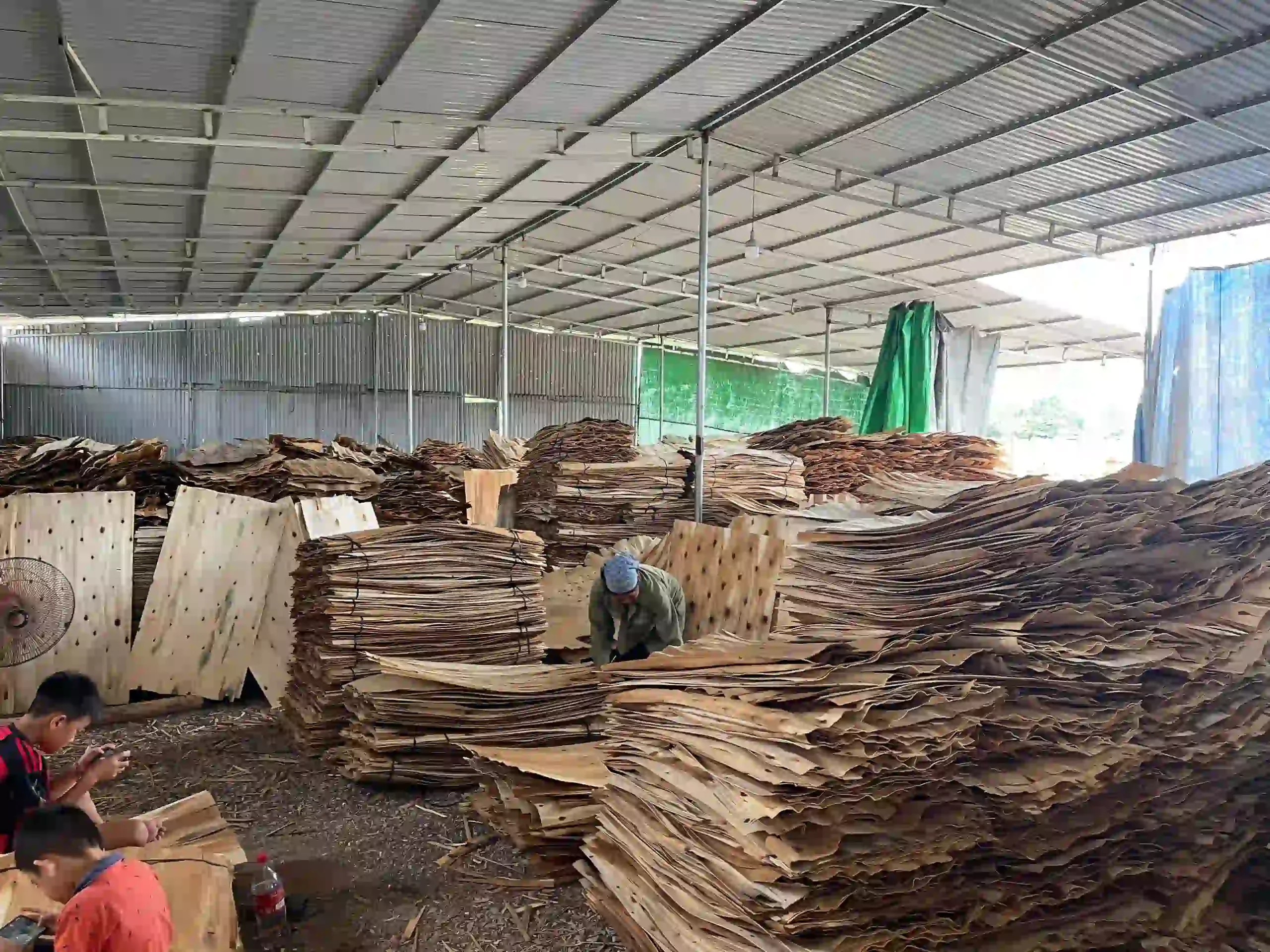
No other variable has more impact on final bonding strength than veneer moisture content at the time of glue application. Adhesive — whether melamine or phenolic — requires a narrow moisture window to penetrate veneer fibers properly and cure without steam-induced delamination.
Target moisture range: 6–8% (Mika Plywood production standard, 2026)
Veneer above 10% moisture introduces steam during hot pressing. That steam creates micro-voids in the glue line, which look acceptable immediately after pressing but delaminate within weeks under storage or transport humidity cycling. For the full picture of moisture content standards and testing, see our technical reference.
Veneer below 4% moisture is over-dried. The surface becomes hydrophobic — glue spreads poorly, penetration depth drops, and bond strength falls even under controlled pressing.
Vietnam’s Northern production region experiences significant seasonal humidity shifts between the dry winter months (relative humidity 50–60%) and the humid rainy season (80–95%). Factories without climate-controlled drying halls see veneer moisture fluctuate by 3–5% within the same day. Mika Plywood’s facilities use continuous-belt tunnel dryers with inline moisture meters to target the 6–8% window regardless of ambient conditions.
🖌️ Step 2 — Glue Application: Consistency at Scale
Once veneers reach target moisture, the next variable is glue spread rate and uniformity. Uneven application — whether from worn roller surfaces, inconsistent glue viscosity, or operator error — creates high-bond and low-bond zones within a single sheet. The low-bond zones become delamination initiation points.
Three control points for consistent glue application:
📌 Glue Spread Rate
Optimal spread rate depends on veneer species and surface roughness. Mika Plywood uses roller coaters with daily calibration checks — weight of adhesive per square meter is verified against specification at the start of each shift.
📌 Adhesive Viscosity
Melamine and phenolic resins are mixed with hardeners in specific ratios. Temperature affects viscosity. Adhesive mixed at 20°C behaves differently at 32°C ambient conditions. Factories that skip viscosity checks create invisible batch-to-batch variation in bond strength.
📌 Open Assembly Time
After glue application, veneers are assembled into panels before pressing. Extended open time (beyond 20 minutes for most MR formulations) allows surface moisture to re-absorb into veneer, disrupting the adhesive layer. Time-to-press is logged per batch at Mika Plywood production lines.
💡 Tip: When evaluating a supplier’s quality system, ask specifically whether they log adhesive mixing ratios and open assembly times per batch. Factories that do have process control. Factories that cannot provide this data are relying on operator intuition.
♨️ Step 3 — Hot Pressing: Where Bond Strength Is Made
Hot pressing is the critical step where adhesive cures under controlled temperature and pressure. The three parameters — temperature, pressure, and time — must align with the specific glue system and panel thickness.
For the full technical breakdown of hot press parameters by thickness and glue type, see hot press temperature and time for plywood.
Key principles at production level:
Melamine (MR) pressing: 120–130°C press temperature, pressure 10–12 kg/cm², time varies by thickness (approximately 8–12 minutes for 15–18mm panels). Under-pressing at this temperature creates a brittle glue line that passes initial peel but fails cyclic moisture testing.
Phenolic (WBP) pressing: 140–155°C press temperature, higher pressure. Phenolic resin requires elevated heat to cross-link fully. Factories substituting MR pressing parameters for WBP panels produce panels that fail the 72-hour boil test — a common fraud vector in lower-grade suppliers. For a comparison of when each adhesive system is appropriate, see WBP vs MR glue — which suits your needs.
Post-press cooling: Panels must cool under weight or in stacked formation before trimming and sanding. Premature handling of hot panels causes glue line stress before curing is complete — a subtle cause of delamination that rarely gets documented in QC reports.
🔍 Step 4 — Core Construction and Its Bond Implications
The core construction method directly affects bond uniformity across the panel face. Vietnam plywood cores use four construction approaches, each with different bonding implications. For a deeper look at stitch-core plywood and how stitching quality impacts structural performance, see our dedicated guide:
| Construction | Bond Consistency | Gap Risk | Applications |
|---|---|---|---|
| Full stitched (all layers sewn) | Highest — no voids | None | Premium furniture (E0, EU/US market) |
| Outer stitched + edge-trimmed inner | High — occasional narrow gaps | Low | Standard furniture |
| Finger-jointed | Moderate | Splice points can fail under load | Mid-grade commercial |
| Loose-laid | Variable — high void risk | High | Budget packing/packaging grade |
⚠️ Note: A buyer specifying furniture-grade plywood without specifying core construction may receive loose-laid core. The face veneer looks identical. The bond strength difference only becomes apparent under stress or moisture. Always specify core construction alongside glue type. The plywood manufacturing process guide covers this in detail.
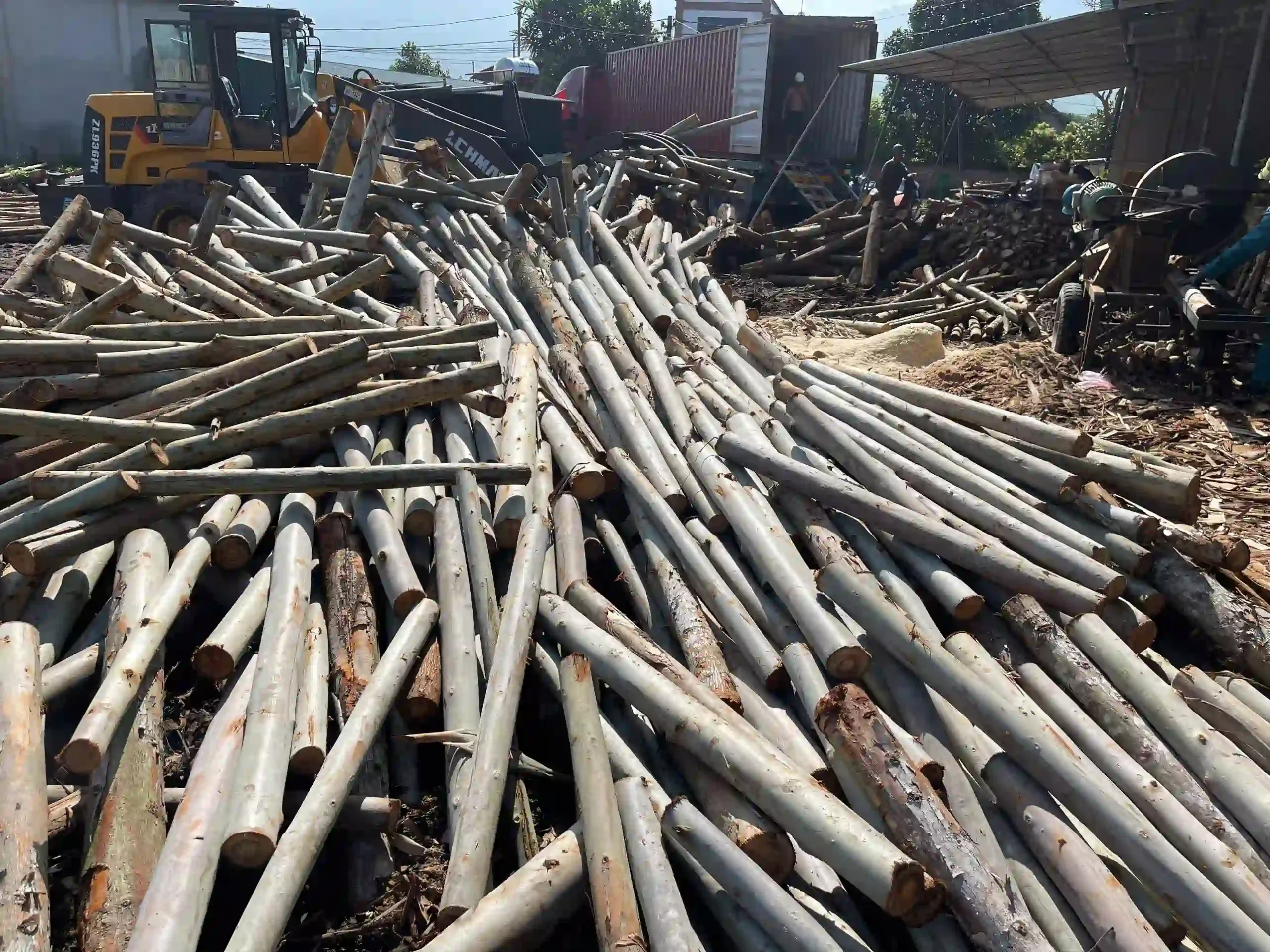
Core species also matters. Eucalyptus core (650–750 kg/m³) has a dense, tight grain that requires calibrated glue spread to achieve full penetration. Styrax core (480–500 kg/m³) is more porous and bonds readily with standard parameters. Acacia core (~580 kg/m³) performs well but has more variable surface character between batches. Each species requires adjusted pressing parameters for optimal bond strength.
📋 Step 5 — QC Testing Protocols
Bonding strength claims without supporting test data are unverifiable. Vietnam’s export-grade factories run two categories of bond testing: in-line production checks and pre-shipment batch testing.
Shear Strength Test (ISO 12466-1)
Panels are cut into test specimens and pulled to failure in a tensile tester. The failure mode matters as much as the force measurement — cohesive failure (wood fiber tears, glue line holds) indicates a stronger bond than adhesive failure (clean separation at the glue line).
Boil Test (EN 314 / GB/T 9846)
- MR panels: Specimens submerged in boiling water for 1 hour, dried, boiled again — total 12 hours
- WBP panels: 72-hour continuous boil, followed by visual and measurement assessment
Any visible delamination or gap opening exceeding the standard tolerance = batch rejection. For a detailed walkthrough of the boiling test procedure and how importers can verify results independently, see the plywood boiling test guide.
Cyclic Delamination Test
Panels are subjected to alternating wet-dry cycles simulating real-world humidity exposure over time. This test is required for marine-grade and construction-grade panels destined for EU or Korean markets.
“The bonding standard we hold ourselves to isn’t just about passing tests — it’s about what happens to those panels two years after installation. Buyers in Germany or Japan are specifying warranty periods we need to back with process data, not just a certificate.” — Jay, International Sales Manager, Mika Plywood
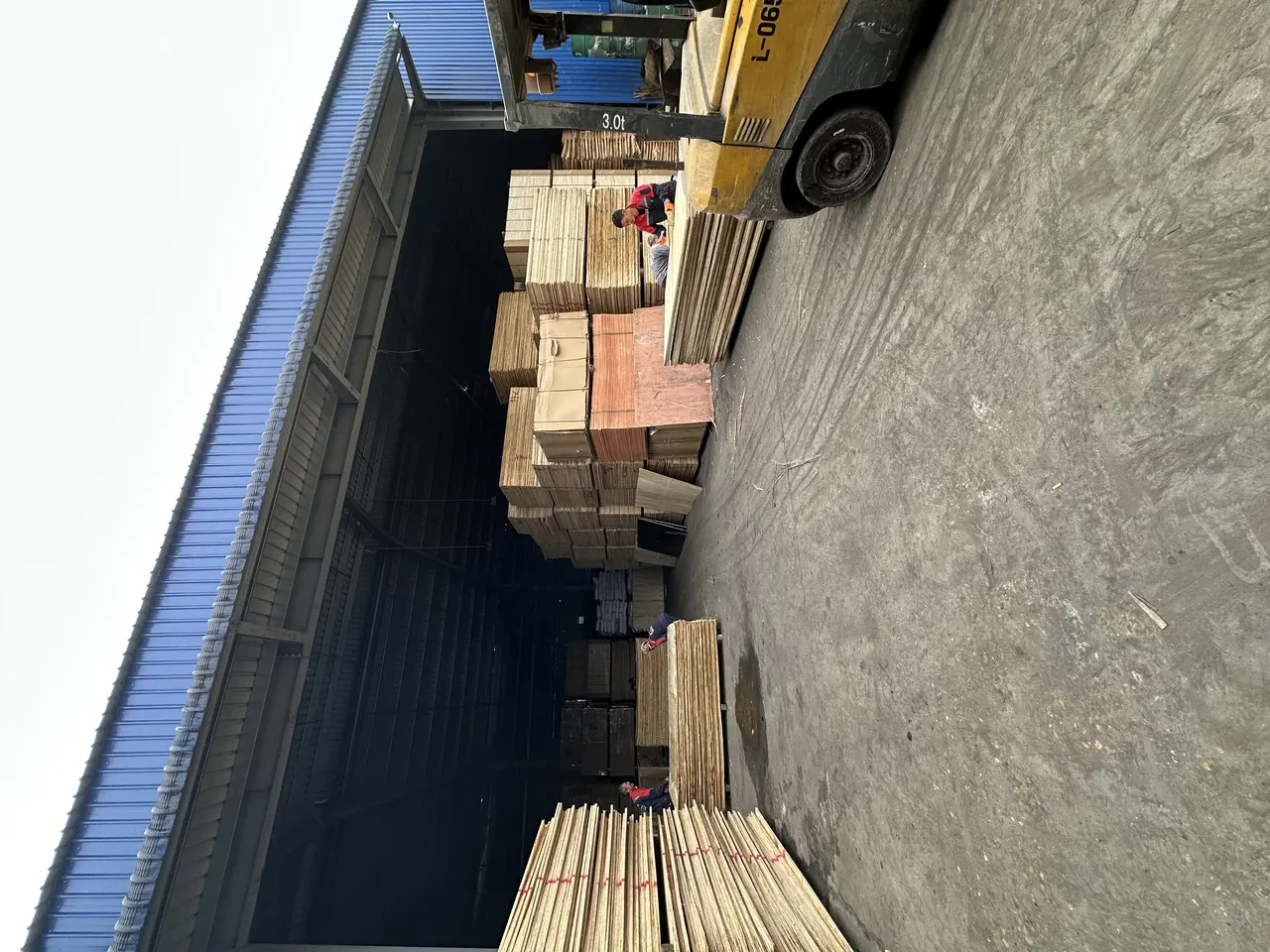
The 3-stage QC process at Mika Plywood’s facilities documents testing at pressing, sanding, and pre-loading stages — with results logged per production batch and available to buyers on request.
❌ Common Bonding Failures and Their Root Causes
Understanding failure modes helps buyers identify weak suppliers before placing orders. The three most common delamination causes seen in Vietnamese export plywood, in order of frequency:
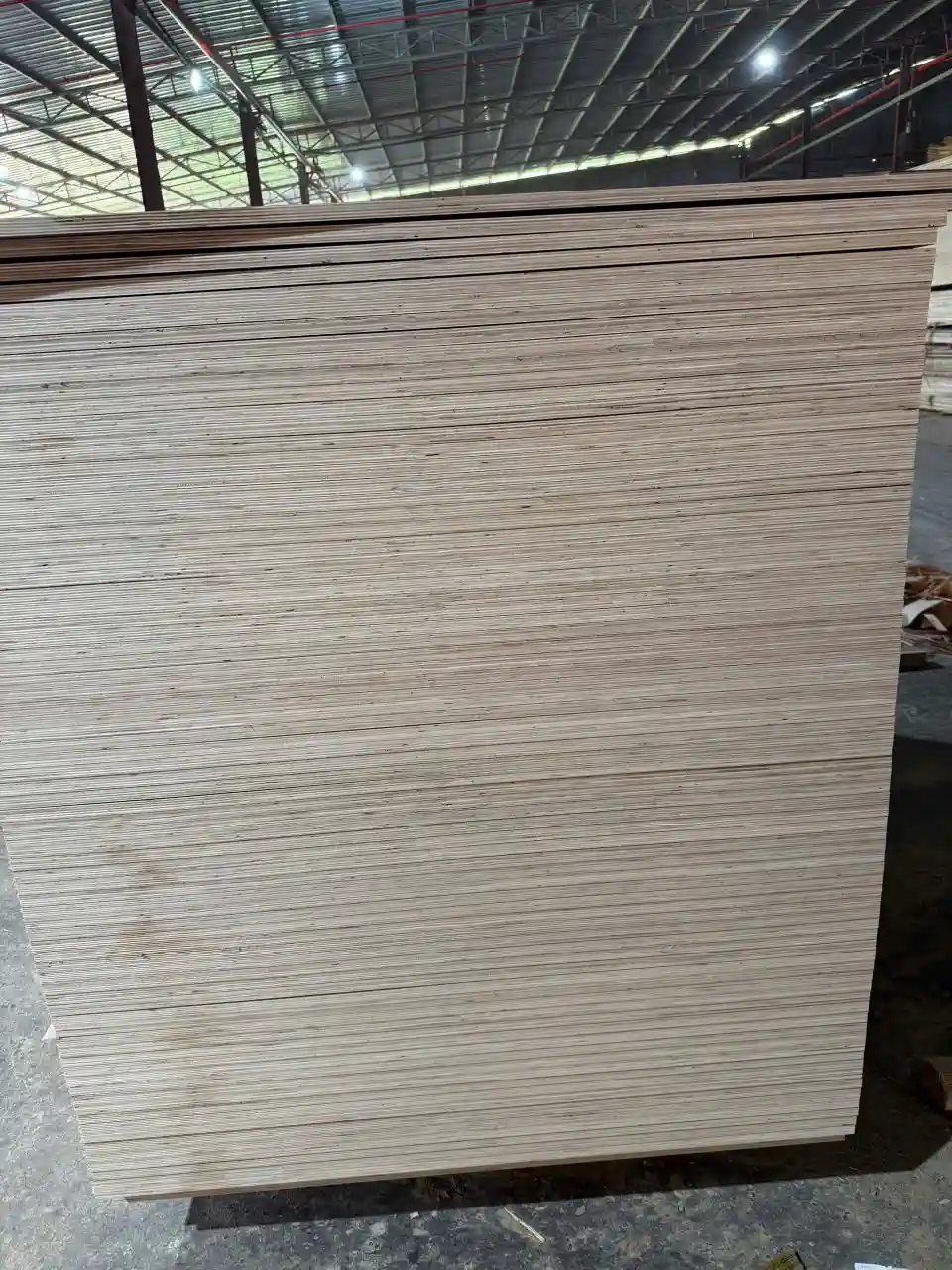
-
Over-dried veneer at pressing
Surface becomes hydrophobic. Glue cannot penetrate. Bond line looks solid but has micro-gaps throughout. Panels pass visual QC but fail after 3–6 months in high-humidity environments. Common in factories without humidity-controlled drying. -
Wrong press parameters for the glue system
A factory running MR press settings on a WBP panel batch will produce a panel that appears well-bonded. The phenolic resin does not fully cross-link at 120°C. The panel fails the 72-hour boil test but passes a visual check. This is the most common cause of WBP certification fraud. -
Extended open assembly time
Glue applied and then panels staged for 30–60 minutes before pressing. Surface moisture re-absorption weakens the adhesive interface. No visible defect — failure only appears under stress. Addressable only through production time logging, not inspection.
✅ How Buyers Can Verify Bonding Strength
When sourcing export plywood from Vietnam, buyers should request three specific documents in addition to standard certifications:
- Batch QC reports with shear strength test data — look for ISO 12466-1 or ASTM D906 values per batch, not just a blanket certificate
- Press parameter log for your production run — temperature, pressure, and time recorded per batch confirms process control
- Boil test result for your glue specification — MR panels: 12-hour result; WBP panels: 72-hour result with measurement data
Buyers with volume relationships can also conduct arrival inspection using a simple knife-and-peel test at the dock: cut a 50mm × 100mm specimen, heat it in boiling water for 30 minutes, and attempt to separate layers by hand. For MR panels, no visible delamination is acceptable. For WBP panels, the 30-minute test is a conservative preview of the 72-hour standard.
📊 Bonding Standards by Destination Market
Different export markets specify different minimum bonding standards. Knowing your destination requirement prevents over-specification (cost waste) and under-specification (rejection risk).
| Market | Minimum Glue Requirement | Emission Requirement | Key Standard |
|---|---|---|---|
| EU (furniture) | MR (Melamine) | E0 or E1 | EN 636, EN 314 |
| EU (construction) | WBP (Phenolic) | N/A | EN 636-3 |
| US | MR or WBP | CARB P2 | ANSI/HPVA HP-1 |
| Japan | MR (JAS F4-star ≈ E0) | F4-star | JAS 1152 |
| South Korea | MR or WBP | E0 | KS F 3101 |
| India | MR or WBP | IS:303 | IS:1328 |
| Middle East | MR | E1 or E2 | BS EN 636 |
💡 Pro tip: For EU furniture exports, specifying MR glue alone is insufficient. You also need E0 or E1 emission certification — two separate requirements from two separate test protocols. Suppliers who quote “MR/E0” as a combined specification are correctly addressing both; those who list only glue type are leaving the emission question open.
Get a Free Quote with test reports and samples
🏭 How Multi-Facility Operations Manage Bonding Quality
- Furniture facility — Styrax/eucalyptus core, Melamine MR, E0/E1, full stitched construction, calibrated sanding. Target markets: EU, US, Japan, Korea.
- Commercial/packing facility — Acacia core, Melamine MR, E1/E2, standard construction. Competitive pricing for India, Southeast Asia, Middle East.
- Film-faced facility — Eucalyptus/acacia core, Phenolic WBP, AICA film 220+ gsm. Reuse 15+ times. Construction markets globally.
Each facility operates its own QC program matched to the bonding standard of its product segment. On-site QC teams log press parameters, conduct batch boil tests, and document results before any container is loaded at FOB Hai Phong.
Factory-direct documentation — including QC reports, test certificates, and press logs — is available to buyers as standard practice, not on special request. (Mika Plywood production data, 2026)
🔗 Conclusion — Bonding Strength Starts Before the Press
Plywood bonding strength is not a single-step outcome. It is the cumulative result of every variable controlled — or not controlled — from log to loading dock. Veneer moisture, glue spread uniformity, press parameters, and post-press handling all contribute to whether a panel delaminate within 6 months or delivers 10 years of reliable service.
Vietnam’s export-grade manufacturers, operating with documented processes and systematic testing, deliver panels that meet or exceed EU, US, Japanese, and Korean bonding standards. The difference between these factories and lower-grade producers is not the equipment — it is the discipline of process documentation.
Buyers who specify bonding requirements precisely, request batch test data, and verify supplier QC documentation will consistently source panels that perform. Those who rely on price as the primary criterion will encounter delamination claims.
Request test reports and factory samples with your quote — Mika Plywood includes batch QC documentation as standard with every shipment.
Disclosure: This article is published by Mika Plywood, a Vietnam-based plywood manufacturer and export operator. While we aim to provide objective industry guidance, readers should consider our perspective as a market participant when evaluating recommendations.
🔗 Related Articles
- Plywood Glue Types and Emission Standards — MR vs WBP, E0/E1/E2 Explained
- Vietnam Plywood Manufacturing Process — From Log to Container
- Plywood Quality Control — 3-Stage Factory Inspection Process
- Hot Press Parameters for Plywood — Temperature, Pressure, Time by Thickness
Frequently Asked Questions
What glue types do Vietnam plywood factories use?Vietnamese factories primarily use Melamine (MR) glue for furniture and interior plywood, and Phenolic (WBP) glue for construction and marine grades. Melamine passes a 12-hour boiling test; phenolic passes 72 hours. Emission standards (E0, E1, E2) are separate from glue type.What causes plywood delamination and how is it prevented?Delamination results from veneer moisture above 10% before pressing, inconsistent glue spread, or incorrect hot press temperature and time. Prevention requires drying veneers to 6–8% moisture, calibrating glue applicators daily, and logging press parameters for every batch.How is plywood bonding strength tested before export?Factories conduct shear strength tests per ISO 12466-1 and boil tests per EN 314. WBP panels undergo a 72-hour boil test; MR panels undergo a 12-hour cycle. Results are documented in QC reports shared with buyers on request.Does core species affect bonding strength in Vietnamese plywood?Yes. Styrax core (480–500 kg/m³) bonds readily due to its uniform porosity. Eucalyptus core (650–750 kg/m³) is denser and requires tighter glue spread control. Acacia core (~580 kg/m³) performs well but needs verified moisture levels given its variable density.Can buyers specify bonding strength requirements in purchase orders?Yes. Buyers should state the glue type (Melamine MR or Phenolic WBP), emission class (E0, E1, or E2), and applicable test standard (ISO 12466, EN 314, or ASTM D906). Mika Plywood includes test reports in the standard shipment documentation package.
Ready to order?
Request test reports and factory samples with your quote

Written by
David
Export Project Leader
Content contributor at Vietnam Plywood.
On this page
- 🔧 Why Bonding Strength Determines Panel Performance
- 💧 Step 1 — Veneer Moisture: The Foundation of Strong Bonds
- 🖌️ Step 2 — Glue Application: Consistency at Scale
- 📌 Glue Spread Rate
- 📌 Adhesive Viscosity
- 📌 Open Assembly Time
- ♨️ Step 3 — Hot Pressing: Where Bond Strength Is Made
- 🔍 Step 4 — Core Construction and Its Bond Implications
- 📋 Step 5 — QC Testing Protocols
- ❌ Common Bonding Failures and Their Root Causes
- ✅ How Buyers Can Verify Bonding Strength
- 📊 Bonding Standards by Destination Market
- 🏭 How Multi-Facility Operations Manage Bonding Quality
- 🔗 Conclusion — Bonding Strength Starts Before the Press
- 🔗 Related Articles
On this page
- 🔧 Why Bonding Strength Determines Panel Performance
- 💧 Step 1 — Veneer Moisture: The Foundation of Strong Bonds
- 🖌️ Step 2 — Glue Application: Consistency at Scale
- 📌 Glue Spread Rate
- 📌 Adhesive Viscosity
- 📌 Open Assembly Time
- ♨️ Step 3 — Hot Pressing: Where Bond Strength Is Made
- 🔍 Step 4 — Core Construction and Its Bond Implications
- 📋 Step 5 — QC Testing Protocols
- ❌ Common Bonding Failures and Their Root Causes
- ✅ How Buyers Can Verify Bonding Strength
- 📊 Bonding Standards by Destination Market
- 🏭 How Multi-Facility Operations Manage Bonding Quality
- 🔗 Conclusion — Bonding Strength Starts Before the Press
- 🔗 Related Articles
Industry Newsletter
Stay Updated with
Plywood Industry Insights
Factory prices, spec guides, market trends and export tips — delivered weekly to B2B buyers and importers in 20+ countries.