Complete 8-step guide to ordering plywood from Vietnam — specifications, supplier vetting, samples, payment terms, documents, shipping, and QC inspection.
Vietnam exports plywood to 20+ countries every year. Knowing how to order plywood from Vietnam correctly — from spec definition to container loading — comes down to following the right sequence of steps and asking the right questions before money changes hands.
This guide covers the full Vietnam plywood ordering process: how to define your specifications, vet a supplier, request samples, confirm payment terms, arrange documents, manage quality control, and plan your shipment. By the end, you will know precisely what to send your supplier and what to expect back at every stage.
📋 Step 1: Define Your Plywood Specifications
Every order starts with a specification sheet. Suppliers cannot price accurately without it, and vague specs are the #1 cause of quality disputes after delivery.
Your specification sheet must include:
- Face veneer species — bintangor, okoume, birch, gurjan, pine, poplar, eucalyptus, EV, film-faced, anti-slip, or unfaced (matt). Face species determines price tier and appearance.
- Core species — acacia (~580 kg/m³), eucalyptus (650–750 kg/m³), or styrax (480–500 kg/m³). Core choice affects weight, price, and container loading capacity. Vietnam only produces acacia, eucalyptus, and styrax cores — no birch core (Mika Plywood production data, 2026).
- Glue type — Melamine (MR) for furniture and interior use, Phenolic (WBP) for construction, marine, and formwork.
- Emission standard — E0/CARB P2 for US and premium EU furniture. E1 for standard EU markets. E2 for commercial/packing use only.
- Thickness — 3 to 40mm, common exports: 3, 5, 9, 12, 15, 18, 21, 25mm. Tolerance is ±0.3mm.
- Sheet size — 1220×2440mm (4×8ft) is the global standard. 1250×2500mm for metric (European) markets.
- Quantity — express in CBM (cubic metres) or sheets. Your supplier will convert both ways.
- Certifications required — FSC, CARB P2, CE, EUDR based on your destination market.
⚠️ Important: Glue type and emission standard are two different specifications. Melamine (MR) or Phenolic (WBP) describes glue chemistry. E0, E1, E2 describes formaldehyde emission class. A sheet can be MR glue + E0 emission, or WBP glue with no emission rating. Never combine them in one field.
For a full walkthrough of how to build a quotation-ready specification, see the plywood quotation guide: what to know before pricing.
🔍 Step 2: Vet Your Supplier
More than 80% of Vietnamese plywood exporters listed online are trading companies, not direct manufacturers (Vietnam Timber and Forest Product Association data, 2024). The distinction matters for price, QC control, and documentation.
Four supplier types operate in Vietnam:
- Trading companies — buy from factories, resell. Pay VAT (8%) internally → higher FOB prices. Highest SEO/marketing visibility.
- Manufacturer-exporters — own one factory + sales team. Direct QC, but capacity limited to one facility.
- Brokers — individuals placing orders at small factories. Lowest price but minimal QC control.
- Multi-facility export operators — manage dedicated production facilities across segments. Factory-direct pricing, no VAT overhead, on-site QC team. Mika Plywood operates this model across 3 specialized facilities (furniture, commercial, film-faced premium).
For detailed due diligence criteria on each type, read our guide on Vietnam plywood supplier types and buyer due diligence.
Minimum verification checklist:
- Business registration certificate (shows entity type)
- Export license for timber products
- FSC or CARB P2 certificate (with active certificate number — verify on the FSC/CARB public registry)
- Sample photos of production line and QC area
- Reference contacts from buyers in your target market
💡 Tip: Call the certificate number on the FSC website (info.fsc.org) or the CARB ATCM database to confirm it is current. Expired certificates are a common issue with trading companies that obtained them once for a specific order.
📦 Step 3: Request Samples Before Committing
When you order plywood from Vietnam, no reputable supplier refuses sample requests. If they do — that is your answer.
A standard sample set should include:
- Full sheet sample (minimum 300×300mm) — inspect surface finish, face veneer consistency, and edge quality
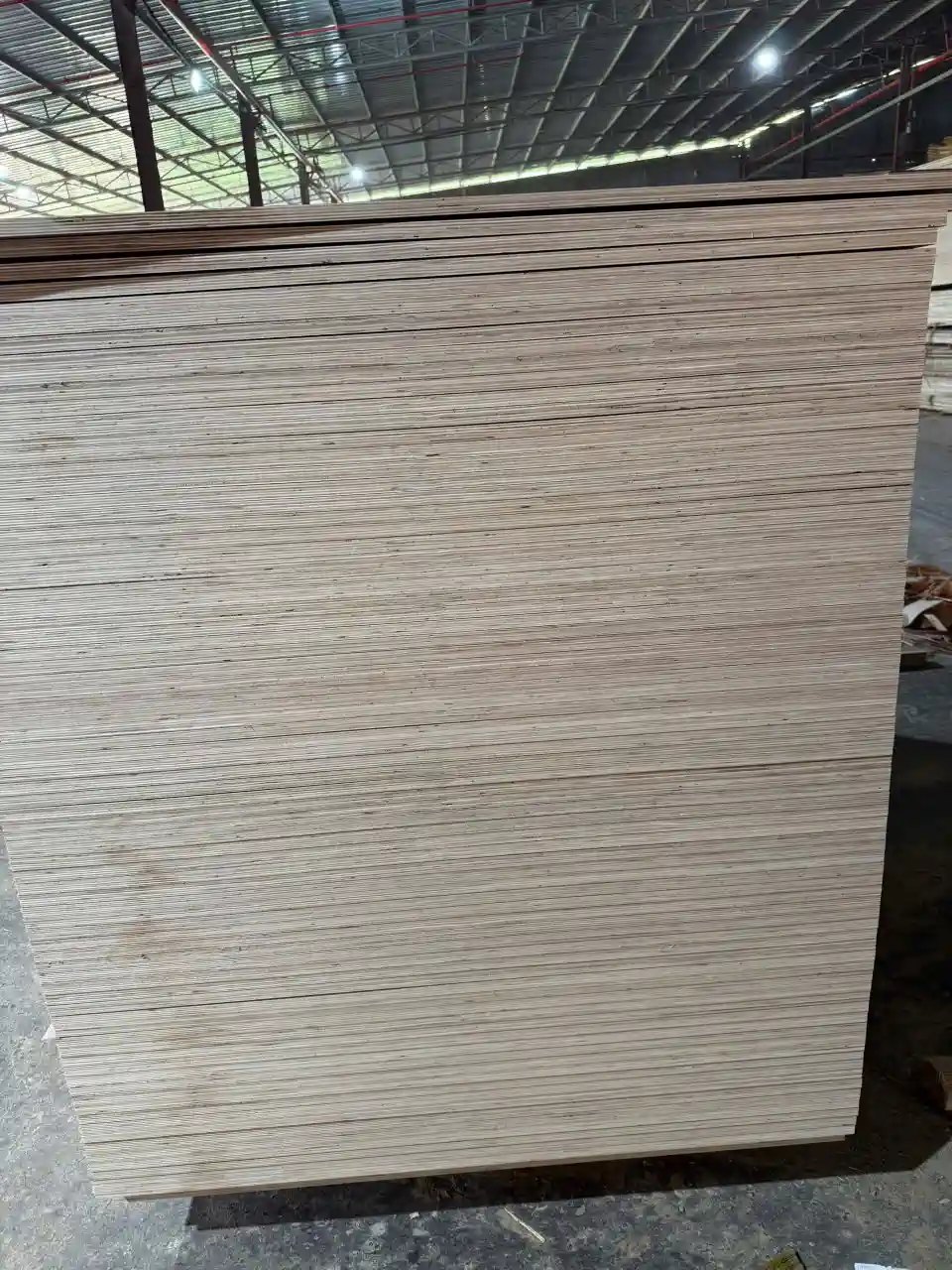
- Cross-section cut — count plies, check core construction (stitched vs loose-lay), and confirm core species visually
- Moisture reading — target 8–12% for export. Ask supplier to include moisture meter readings
- Boiling test result — request a 12-hour (MR) or 72-hour (WBP) boiling test result. Delamination after test = product failure (Vietnam Plywood Association standard, 2023)
“The cross-section tells you more than the face ever will. I can identify acacia core from eucalyptus by color and density in under 10 seconds. Buyers who skip this step often receive a different core than quoted.” — Jay, International Sales Manager, Mika Plywood
Sample shipping cost is typically $30–80 USD via DHL or FedEx. Request samples from 2–3 shortlisted suppliers simultaneously. Delivery takes 3–5 working days to most destinations.
💰 Step 4: Negotiate Specifications and Price
Once samples are approved, request a formal Proforma Invoice (PI). The PI is the basis for all subsequent documents.
Standard FOB price breakdown includes:
- Ex-factory price (raw production cost)
- Inland freight from factory to Hai Phong port
- Port handling and export customs clearance
- Certification fees (FSC, fumigation, phytosanitary)
Price variables that buyers frequently overlook:
- Core species: styrax core is typically 8–12% more expensive than acacia for the same face. See the key factors affecting Vietnam plywood export prices for a full breakdown
- Core construction: full stitched core adds $15–25/CBM vs loose-lay
- Sanding: furniture-grade sanded surface adds $5–10/CBM vs unsanded
⚠️ Note: Never compare FOB prices between suppliers without confirming core construction. A $180/CBM quote with acacia loose-lay core is not comparable to a $210/CBM quote with styrax full-stitched core — even with the same face veneer.
For MOQ, mixed container rules, and negotiation levers, read the plywood MOQ and ordering guide.
📄 Step 5: Confirm Documents and Payment Terms
Before placing a formal order, agree on three things in writing:
-
Sales Contract or Purchase Order
Must specify: product description, quantity (CBM + sheets), unit price, total value, delivery terms (FOB Hai Phong / CIF destination), payment terms, production timeline, and penalty clause for late delivery or off-spec product. -
Payment Structure
Standard first-order terms:
- 30% T/T deposit on order confirmation
- 70% T/T balance against scan copy of B/L (before original documents sent)
For repeat orders with established trust, some suppliers offer 20/80 or net-30 terms. L/C (irrevocable, at-sight) is accepted for large orders above $50,000 USD. Avoid Western Union or PayPal for B2B timber orders — no documentation trail.
- Certificate and Document List
Confirm which documents you need before production starts. Standard export package:
- Commercial Invoice + Packing List
- Bill of Lading (B/L)
- Certificate of Origin (CO Form B for ASEAN, Form AI for India)
- Phytosanitary Certificate (IPPC-compliant)
- Fumigation Certificate
- FSC, CARB P2, CE, EUDR certificates as required
For a full breakdown of each document and when it is required, read 7 essential plywood import documents.
🏭 Step 6: Production and Quality Control
After deposit is received, production begins. A typical 15–20 working day timeline:
| Stage | Days | What happens |
|---|---|---|
| Raw material preparation | 1–3 | Core veneer sourced, face veneer confirmed |
| Core construction | 3–5 | Peeling, drying (target 6–8% moisture), stitching or jointing |
| Gluing + hot pressing | 2–3 | Assembly, press cycle, cooling |
| Post-press QC | 1–2 | Thickness check, delamination inspection |
| Sanding + finishing | 2–4 | Surface calibration, edge trimming |
| Pre-shipment QC | 1–2 | Random sampling, moisture, visual inspection |
| Packing + loading | 2–3 | Palletizing, strapping, container loading |
QC checkpoints to request:
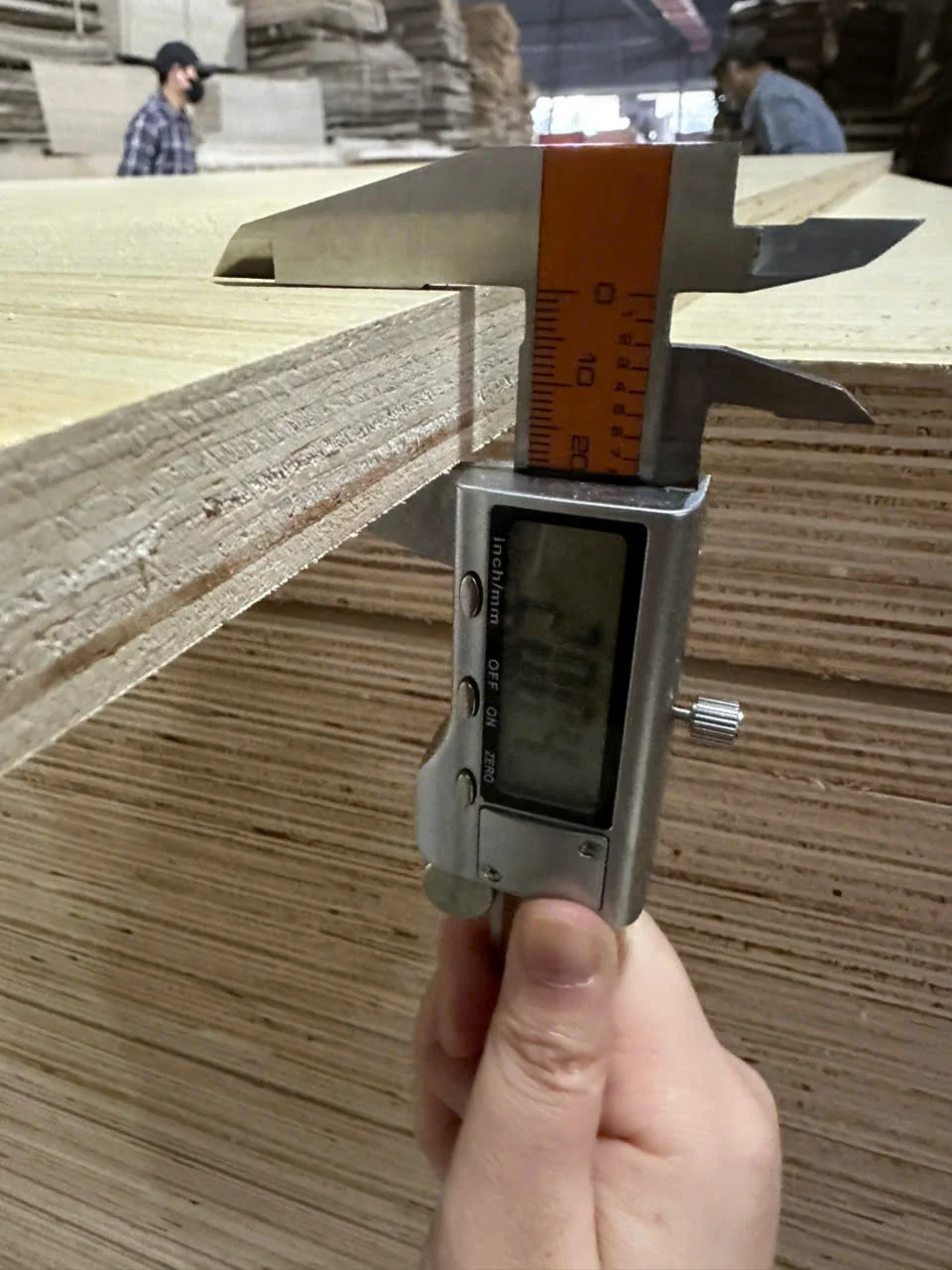
- Thickness readings (caliper measurements at 4 corners + center per sampled sheet)
- Moisture readings (target 8–12% for sea freight)
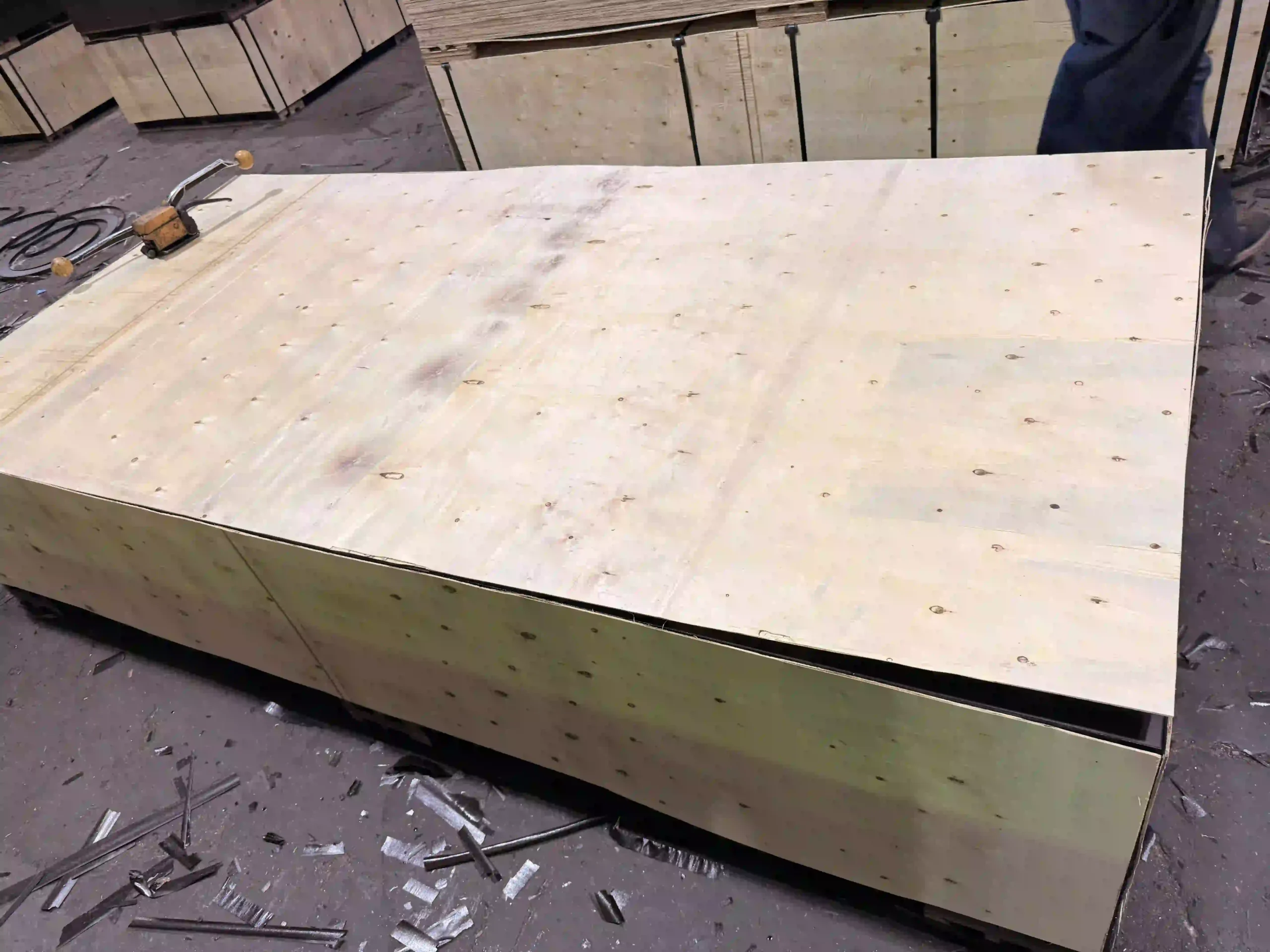
- Surface inspection photos (face and back, full sheet, edge cross-section)
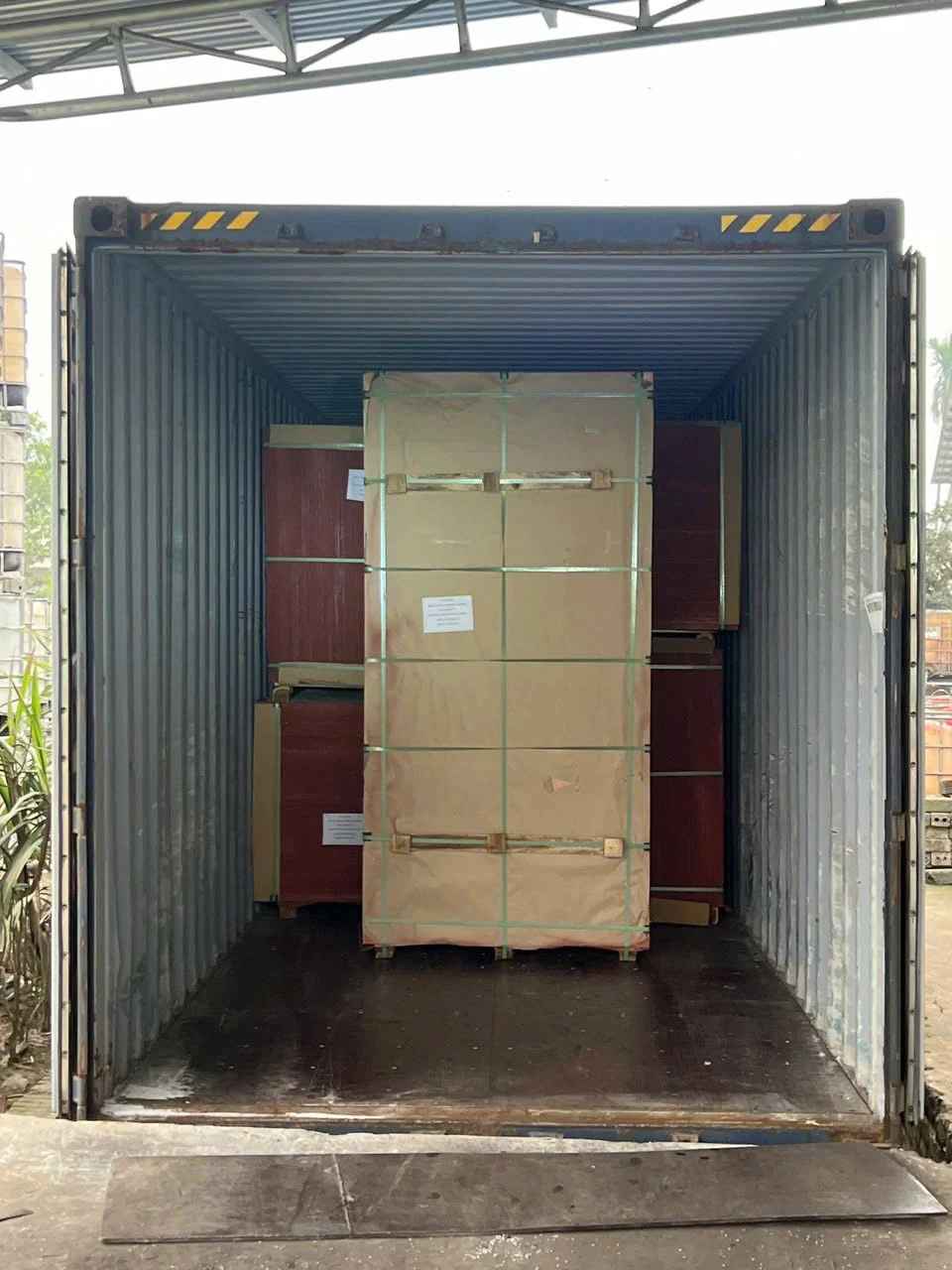
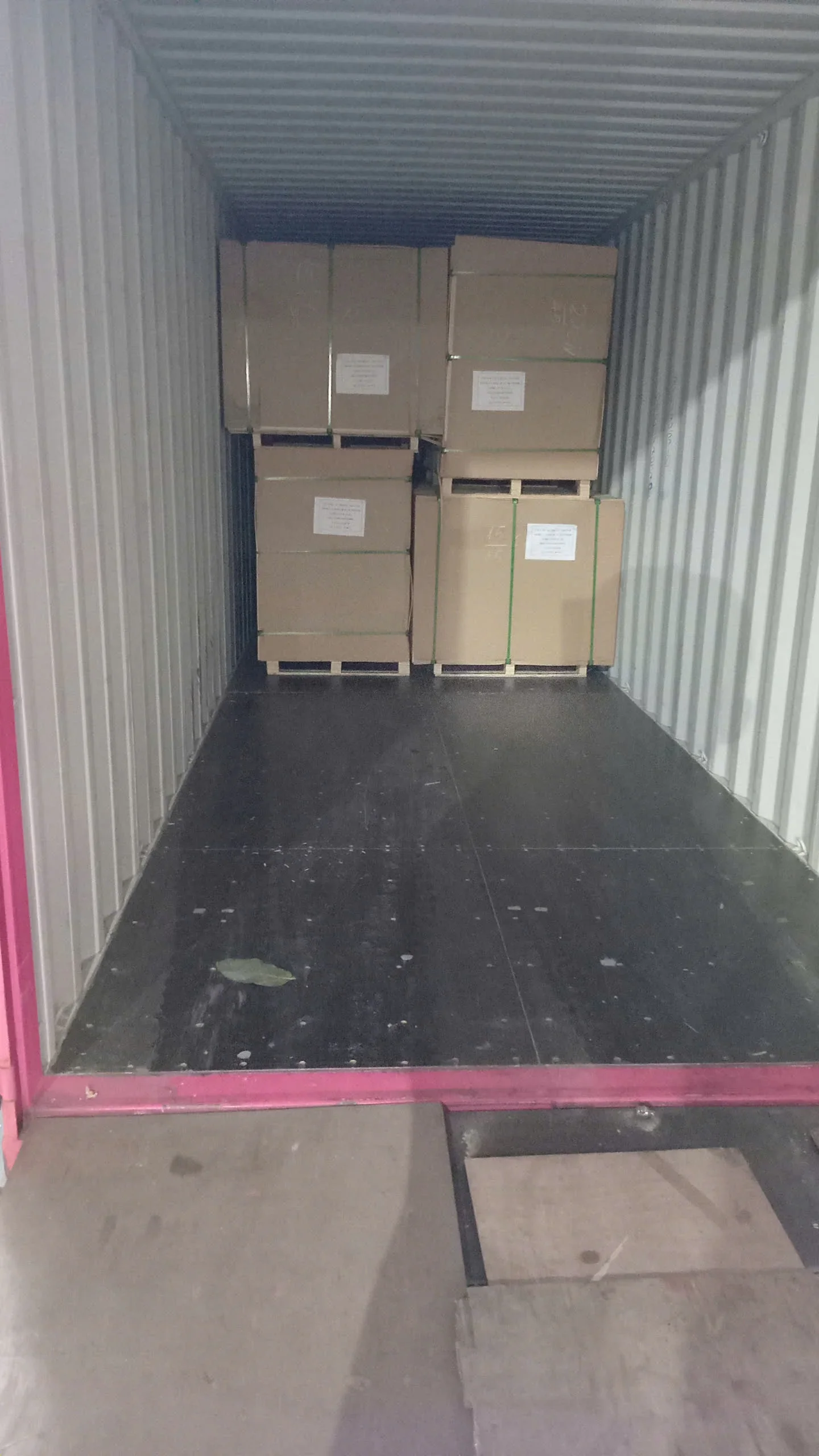
- Container loading photos (each pallet numbered, container number visible)
At Mika Plywood, buyers receive a production update with QC photos and moisture readings before the container is sealed. This happens at every order regardless of quantity.
🚢 Step 7: Shipping Your Plywood Order from Vietnam
Standard export from Vietnam uses 40HC (40-foot high-cube) containers. Shipping volume depends on core species and thickness:
| Core | Density | Pallets/40HC | Approx. CBM |
|---|---|---|---|
| Styrax | 480–500 kg/m³ | 18 | ~53 CBM |
| Acacia | ~580 kg/m³ | 16 | ~47.5 CBM |
| Eucalyptus | 650–750 kg/m³ | 15 | ~44.5 CBM |
Maximum payload per 40HC is 28.5 MT — this is a hard stop, not a target. Eucalyptus core orders approaching this limit require careful weight calculation before loading.
For detailed calculations and pallet configurations, read the plywood container packing calculation guide and the CBM per thickness complete table.
Incoterms choice:
- FOB Hai Phong — seller delivers to port. Buyer arranges freight forwarder. Best option if you have an established freight relationship or want cost control.
- CIF [destination port] — seller handles freight and insurance. Simpler for first-time buyers. Typically 3–8% more expensive than FOB + your own freight.
- EXW — rarely used for plywood exports. All logistics risk on buyer from factory gate.
Transit times from Hai Phong:
- India (JNPT/Chennai): 8–12 days
- UAE (Jebel Ali): 12–16 days
- Europe (Hamburg/Rotterdam): 22–28 days
- US East Coast: 28–35 days
- US West Coast: 18–22 days
For the detailed import clearance process on your end, read our complete guide on how to import plywood from Vietnam. First-time buyers may also benefit from our complete guide to buying plywood from Vietnam.
✅ Step 8: Receiving Your Shipment and Checking Quality
When the container arrives at your port, inspect before signing the delivery receipt (Delivery Order or DO). If you sign without noting damage, insurance claims become difficult to process.
On-arrival inspection checklist:
- Count pallets against Packing List
- Photograph container doors before opening (damage to seals = possible moisture ingress)
- Check for wet spots, discoloration, or delamination on visible sheets
- Measure thickness on 5% of sheets (random selection across pallets)
- Compare batch photos from factory QC against received product
If defects are found:
- Note on the delivery receipt before signing
- Photograph all defects with pallet number + sheet number visible
- Send defect report with photos to supplier within 7 days of arrival
- Most reputable Vietnamese exporters offer credit, replacement, or partial refund for verified factory defects
“We review every defect claim with the factory QC team and provide a resolution within 5 working days. Photos taken at every stage of production — from pressing to loading — mean disputed claims are rare and resolved quickly.” — David, Export Project Leader, Mika Plywood
📊 Summary: Full Order Timeline
| Phase | Time Required | Key Action |
|---|---|---|
| Spec + supplier vetting | 3–7 days | Build spec sheet, verify certificates |
| Sample request + approval | 7–14 days | Request samples, test, approve |
| PI + contract + payment | 3–5 days | Review PI, sign contract, send deposit |
| Production | 15–20 working days | Monitor QC updates |
| Container loading + docs | 2–3 days | Receive QC photos, review B/L draft |
| Sea transit | 8–35 days | Track vessel, prepare import clearance |
| Customs clearance + delivery | 3–7 days | Submit HS code declaration, arrange inland freight |
Total time from first contact to delivery: 6–12 weeks depending on destination and complexity of specification. Most buyers who order plywood from Vietnam for the first time complete their first container in 8–10 weeks.
Disclosure: This article is published by Mika Plywood, a Vietnam-based plywood manufacturer and export operator. While we aim to provide objective industry guidance, readers should consider our perspective as a market participant when evaluating recommendations.
🔗 Related Resources
- How to buy plywood from Vietnam — complete guide — end-to-end buying process with pricing and logistics
- Vietnam Plywood Supplier Types — Due Diligence Guide — How to distinguish manufacturer-exporters from trading companies
- Plywood Certifications and Export Documentation Guide — FSC, CARB P2, CE, EUDR explained for buyers
- Plywood Supplier Evaluation Checklist — 20-point verification framework
- Plywood Container Packing Calculation — 40HC Guide — Factory-level CBM and pallet tables
- Vietnam plywood manufacturer — Mika Plywood product range — factory-direct product catalog
📐 Conclusion
The Vietnam plywood ordering process follows a consistent 8-step sequence: define specifications, vet your supplier, request samples, negotiate price and terms, confirm documents, monitor production QC, plan shipping, and inspect on arrival. Each step depends on the one before it — skipping sample approval or document confirmation creates problems that are difficult and expensive to resolve once the container is sealed.
Request a free sample and quote from Mika Plywood — specify your face veneer, core, thickness, and destination market. We respond within 24 hours with a Proforma Invoice and packing plan.
Frequently Asked Questions
What is the minimum order quantity (MOQ) for plywood from Vietnam?The standard MOQ is 1 × 40HC container. For most products this equals 40–53 CBM depending on thickness and core species. Some suppliers accept LCL (Less than Container Load) for trial orders, but FOB unit costs are 20–30% higher than FCL.What payment terms are standard for Vietnamese plywood orders?The most common payment structure is 30% T/T deposit on order confirmation, 70% T/T balance against a copy of the Bill of Lading. First-time buyers sometimes request 50/50. L/C (Letter of Credit) is accepted for orders above $50,000 USD.How long does it take to receive plywood from Vietnam?Mika Plywood's production lead time is 15–20 working days from deposit receipt. Transit time depends on destination: India 8–12 days, Middle East 12–18 days, Europe 22–30 days, US East Coast 28–35 days. Total door-to-port time is typically 5–8 weeks.What certifications should I request when ordering plywood from Vietnam?Request FSC for EU/US markets, CARB P2 for the US, CE for construction products sold in Europe, and E0/E1 emission test reports for furniture markets. Phytosanitary and Fumigation certificates are mandatory for all shipments.Can I mix different plywood specifications in one container?Yes. Vietnamese factories can consolidate multiple species, thicknesses, and grades in one 40HC. Mixed loads require recalculating total weight against the 28.5 MT payload limit. Mika Plywood provides a packing plan for every mixed order.
Ready to order?
Request a Free Sample & Quote from Mika Plywood

Written by
Jay
International Sales Manager
Content contributor at Vietnam Plywood.
On this page
- 📋 Step 1: Define Your Plywood Specifications
- 🔍 Step 2: Vet Your Supplier
- 📦 Step 3: Request Samples Before Committing
- 💰 Step 4: Negotiate Specifications and Price
- 📄 Step 5: Confirm Documents and Payment Terms
- 🏭 Step 6: Production and Quality Control
- 🚢 Step 7: Shipping Your Plywood Order from Vietnam
- ✅ Step 8: Receiving Your Shipment and Checking Quality
- 📊 Summary: Full Order Timeline
- 🔗 Related Resources
- 📐 Conclusion
On this page
- 📋 Step 1: Define Your Plywood Specifications
- 🔍 Step 2: Vet Your Supplier
- 📦 Step 3: Request Samples Before Committing
- 💰 Step 4: Negotiate Specifications and Price
- 📄 Step 5: Confirm Documents and Payment Terms
- 🏭 Step 6: Production and Quality Control
- 🚢 Step 7: Shipping Your Plywood Order from Vietnam
- ✅ Step 8: Receiving Your Shipment and Checking Quality
- 📊 Summary: Full Order Timeline
- 🔗 Related Resources
- 📐 Conclusion
Industry Newsletter
Stay Updated with
Plywood Industry Insights
Factory prices, spec guides, market trends and export tips — delivered weekly to B2B buyers and importers in 20+ countries.