Film faced plywood Vietnam: specifications, reuse rates, black vs brown film, top applications, and factory-direct sourcing.
Film faced plywood from Vietnam ships to construction sites across the Middle East, Europe, Korea, and Southeast Asia — and for good reason. Vietnamese manufacturers produce phenolic film-faced panels that match or exceed Chinese grades at competitive FOB prices, backed by FSC and ISO 9001 certification.
But not all film faced plywood Vietnam suppliers are equal. This guide covers what separates premium construction-grade panels from budget alternatives, the key specifications to specify in your purchase order, and what to look for when evaluating a Vietnamese exporter.
📋 What Is Film Faced Plywood?
Film faced plywood is a structural panel with a phenolic resin film bonded to both faces under heat and pressure. The film creates a sealed, non-absorbent surface that resists moisture, concrete alkali, chemicals, and mechanical abrasion.
The core construction uses hardwood veneer — typically eucalyptus or acacia from Northern Vietnam’s plantation forests — glued with phenolic WBP adhesive. Phenolic glue passes a 72-hour boiling test without delamination (versus melamine MR glue, which passes only a 12-hour test). This WBP rating makes film-faced panels the standard choice for outdoor, wet, and concrete-contact applications. (See our guide to plywood glue types and emission standards for the full WBP vs MR comparison.)
The result: a panel that can be stripped from concrete, cleaned, and reused 10–20 times in a single construction project.
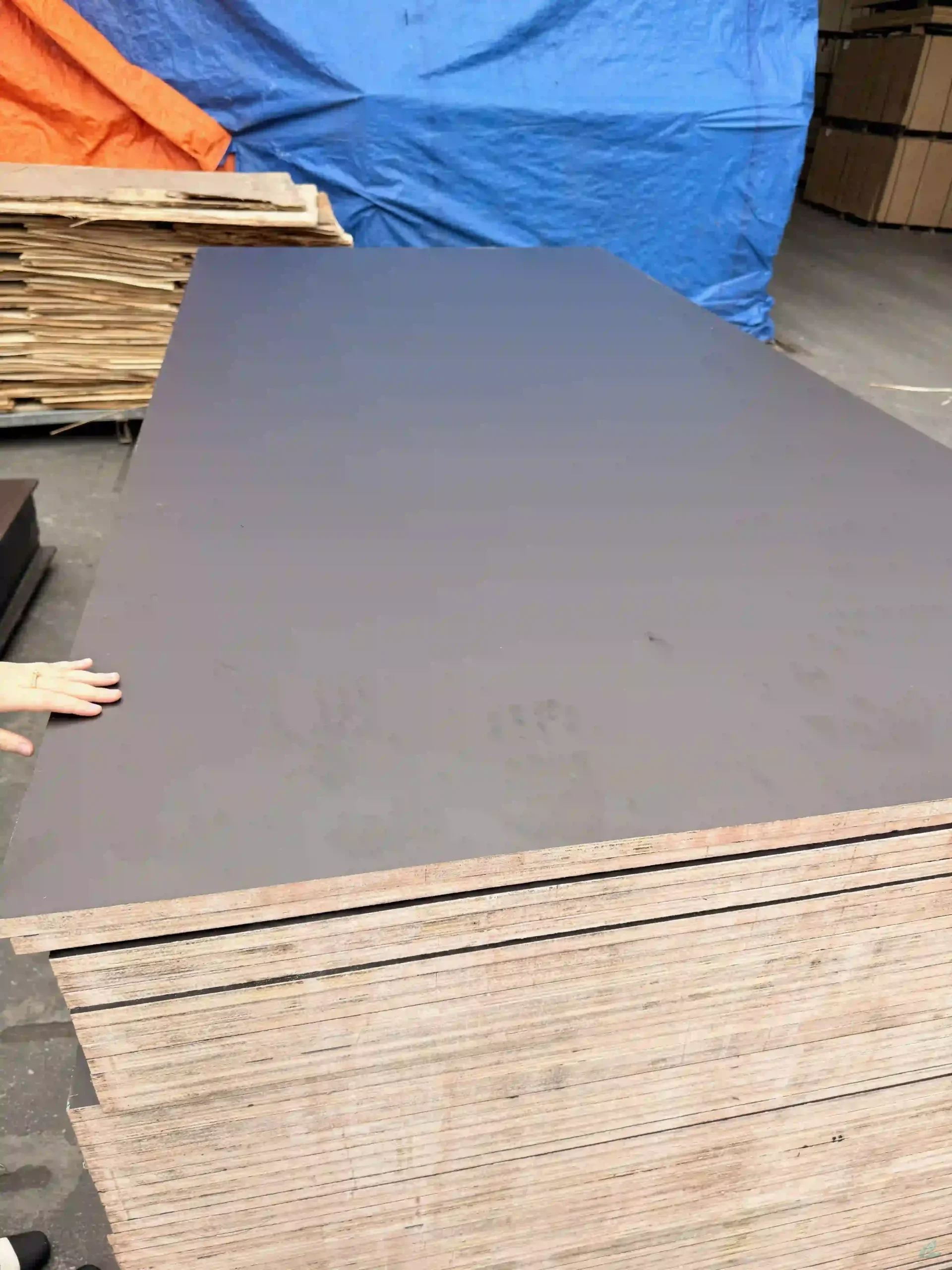
📦 Film Faced Plywood Specifications — What to Specify in Your PO
Specifying film faced plywood correctly prevents the most common import problem: receiving panels that technically meet “film-faced” description but fail on-site after 4–5 uses.
📌 Film Weight (GSM) — The Most Important Spec
Film weight determines surface durability and reuse potential more than any other single specification.
| Film Weight | Reuse Potential | Recommended Use |
|---|---|---|
| 120 gsm | 4–6 reuses | Budget, short projects |
| 135 gsm | 6–10 reuses | Standard commercial |
| 180 gsm | 10–15 reuses | Premium construction |
| 220 gsm (AICA) | 15–20 reuses | High-rise, export-grade |
Mika Plywood’s premium grade uses AICA film at 220gsm — a Japanese-standard phenolic overlay used in Korea, Japan, and European construction projects. (Mika Plywood production data, 2026.)
📌 Core Species and Density
The core species determines panel weight, strength, and container loading capacity.
- Eucalyptus core (650–750 kg/m³): Heaviest and strongest. Preferred for high-load formwork applications, floor slab shuttering, and heavy construction. A 40HC container loads approximately 15 pallets of eucalyptus-core film-faced plywood.
- Acacia core (~580 kg/m³): Lighter and more cost-effective. Suitable for standard wall formwork and applications where maximum strength is not critical. A 40HC container loads approximately 16 pallets.
⚠️ Important: Never confuse core species with face veneer. Film faced plywood takes its name from the phenolic film overlay, not from the wood underneath. The core is always a structural hardwood — eucalyptus or acacia — not a decorative species.
📌 Thickness Range
Standard film-faced thickness from Vietnamese factories:
| Thickness | Primary Application |
|---|---|
| 12mm | Light-duty shuttering, secondary formwork |
| 15mm | Slab formwork (close joist spacing) |
| 18mm | Standard wall + column formwork |
| 21mm | High-load, high-rise, heavy construction |
Thickness tolerance is ±0.5mm per Mika Plywood factory QC standard (calibrated premium panels may achieve ±0.3mm).
📌 Sheet Size
- 1220 × 2440mm (4×8ft) — Standard for most construction markets globally
- 1250 × 2500mm — Metric size preferred in European and Korean markets
- Custom cutting available for special formwork systems
🔧 Black Film vs Brown Film — Which Should You Order?
This is the most common question from first-time film-faced plywood buyers.
Black film: Pure phenolic resin without filler. Harder surface, slightly smoother finish, marginally higher reuse count. Preferred in Korea, Japan, and premium European projects.
Brown film: Phenolic resin with wood-flour filler. Slightly more textured surface, more affordable per sheet. Dominant in Middle East, Southeast Asia, and standard commercial projects.
In practical terms, when film weight is equal (both at 180gsm or both at 220gsm), the performance difference between black and brown is minimal. The critical variable is film weight and glue quality — not film color.
💡 Tip: If your formwork contractor specifies “black film,” confirm whether they mean film color or a specific technical standard. Many site managers say “black” simply because they have seen black-film panels from Chinese suppliers — brown film at equivalent or higher weight performs identically.
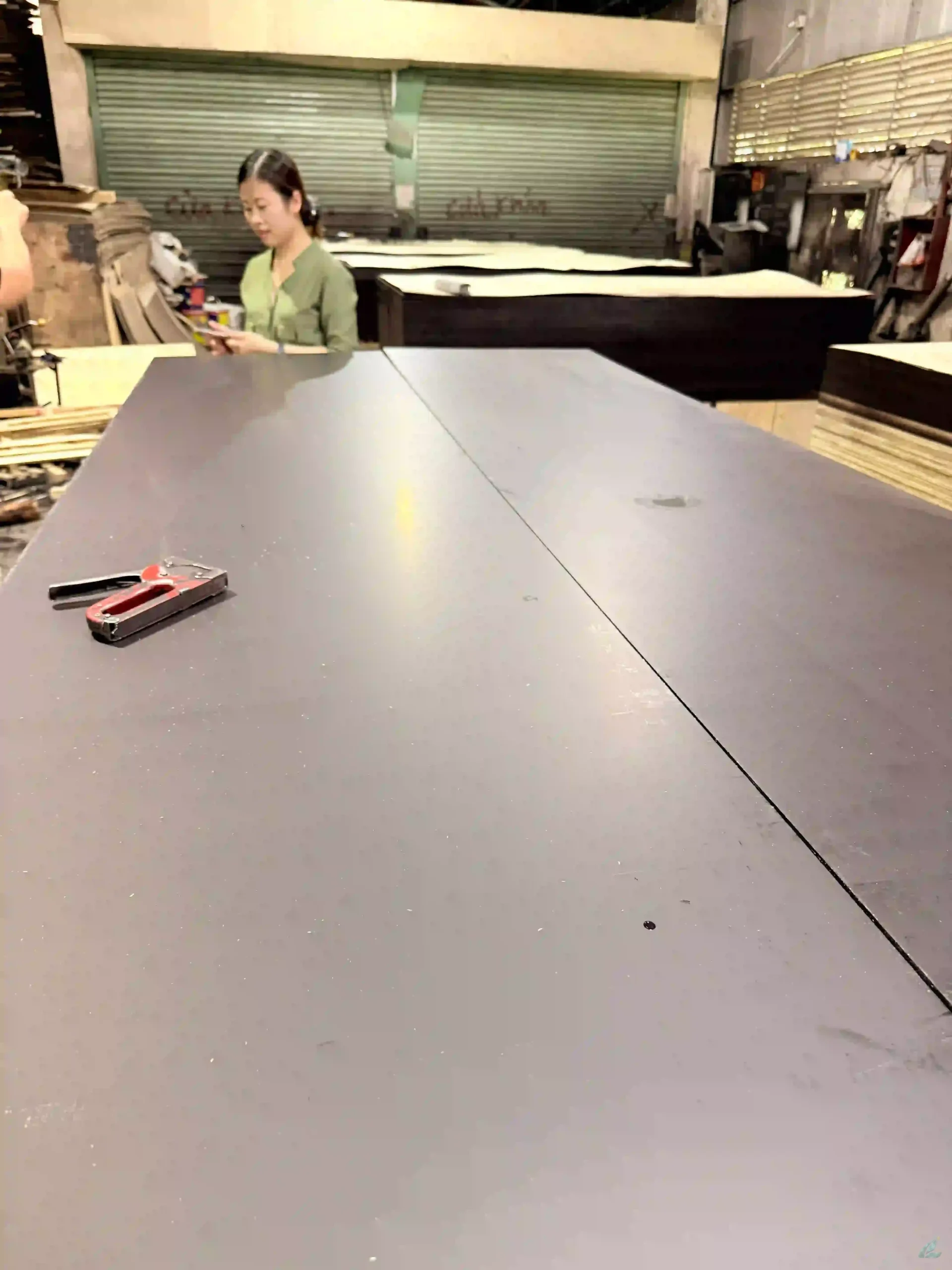
🏭 Top Applications for Film Faced Plywood from Vietnam
📌 Concrete Formwork (Primary Use)
Concrete formwork is the dominant application — accounting for an estimated 70–80% of global film-faced plywood consumption (ITTO market data, 2024). Film-faced panels form the mold for poured concrete in:
- Walls and columns (vertical formwork)
- Floor slabs and beams (horizontal/soffit formwork)
- Tunnel and bridge shuttering (heavy civil)
- Prefabricated concrete element production
Vietnamese film-faced plywood is currently used on major infrastructure projects across the UAE, Saudi Arabia, Philippines, and South Korea (Mika Plywood export records, 2026). For full technical specifications on formwork applications, see our concrete formwork plywood specification guide.
📌 Truck and Trailer Flooring
Heavy-duty film-faced panels used as truck bed flooring need high-density core, smooth surface, and WBP glue. Eucalyptus-core 18mm or 21mm panels are the standard specification. The phenolic surface resists fuel spills, moisture, and mechanical wear from loading equipment.
Container Flooring Base
Film-faced plywood is used as the base layer in shipping container floor systems, placed beneath bamboo or hardwood top decking. WBP glue prevents delamination in the high-humidity environment of container interiors during ocean transit.
Scaffolding Platforms and Work Decks
For applications where surface grip is more critical than smooth concrete release, anti-slip plywood is the standard choice — but film-faced panels are used as scaffold decking in some markets where anti-slip overlay is added separately.
Agricultural and Marine Applications
High-humidity environments — fish farming structures, boat interiors, coastal construction — require WBP-rated panels. Film-faced plywood provides both moisture resistance and a cleanable surface. Panel edges should be sealed with paraffin wax at the factory or on-site for maximum moisture protection.
📊 Vietnam vs China Film Faced Plywood — A Buyer’s Comparison
Film-faced plywood buyers frequently compare Vietnamese and Chinese sources. Here is a factual comparison based on production data as of 2026.
| Factor | Vietnam (Mika Plywood) | China (typical export grade) |
|---|---|---|
| Core species | Eucalyptus / Acacia | Poplar (lighter, lower density) |
| Core density | 580–750 kg/m³ | 400–500 kg/m³ |
| WBP glue standard | Phenolic WBP (72h boil) | Varies — verify per supplier |
| Film weight | 120–220gsm (specify) | 120–180gsm typical |
| FSC certification | Available | Available |
| Formaldehyde | E0/E1 available | E1/E2 typical |
| Lead time (to Hai Phong) | 15–20 days | 15–25 days (depending on port) |
| Anti-dumping duties (US) | Not currently applicable | AD/CVD duties apply |
The density difference is significant for structural applications. Higher-density eucalyptus core provides greater stiffness and load capacity — critical for slab and heavy formwork where panel deflection affects concrete surface quality.
“When European contractors specify formwork plywood, they ask for density and film weight first — not country of origin. Our eucalyptus core at 650–750 kg/m³ meets structural specifications that poplar-core panels from other origins cannot match.”
— Jay, International Sales Manager, Mika Plywood
🔍 How to Evaluate Film Faced Plywood Vietnam Suppliers
Vietnam has several hundred plywood exporters. Most are trading companies, not manufacturers. Here is how to identify factory-direct suppliers.
Request a Video Factory Tour
A legitimate film-faced plywood manufacturer can show you:
- Film lamination lines (hot press with film roll input)
- Panel marking with your brand/specifications during production
- QC area with thickness gauges and boil-test samples
Verify Certifications Through Issuing Bodies
- FSC certificate: Verify via fsc.org using the certificate code
- ISO 9001: Verify via the certification body’s online registry (Bureau Veritas, SGS, etc.)
- CARB P2 (for US market): Verify via CARB’s ATCM database
⚠️ Note: Some Vietnamese trading companies display factory certifications they do not own. Always verify the certificate holder’s legal entity name matches the company you are buying from.
Understand the Pricing Structure
Factory-direct exporters do not pay 8% VAT on domestic transactions. Trading companies do. A genuine factory-direct FOB price will typically be USD 8–15/m³ lower than a trading company’s FOB price for identical specifications. If a supplier cannot explain this pricing structure, investigate further.
Get factory-direct pricing for film faced plywood from Mika Plywood
📐 Container Loading — Film Faced Plywood 40HC
Knowing how film-faced plywood packs into a 40HC container helps you calculate total landed cost before requesting a quote.
For standard 1220×2440mm panels:
| Core | Pallets per 40HC | CBM per 40HC | Weight per 40HC |
|---|---|---|---|
| Eucalyptus | 15 | ~44.5 CBM | ~28 MT |
| Acacia | 16 | ~47.5 CBM | ~27.5 MT |
Pallet stack height is 1000mm (forklift-safe). For full calculation methodology by thickness and core, see our plywood container packing calculation guide.
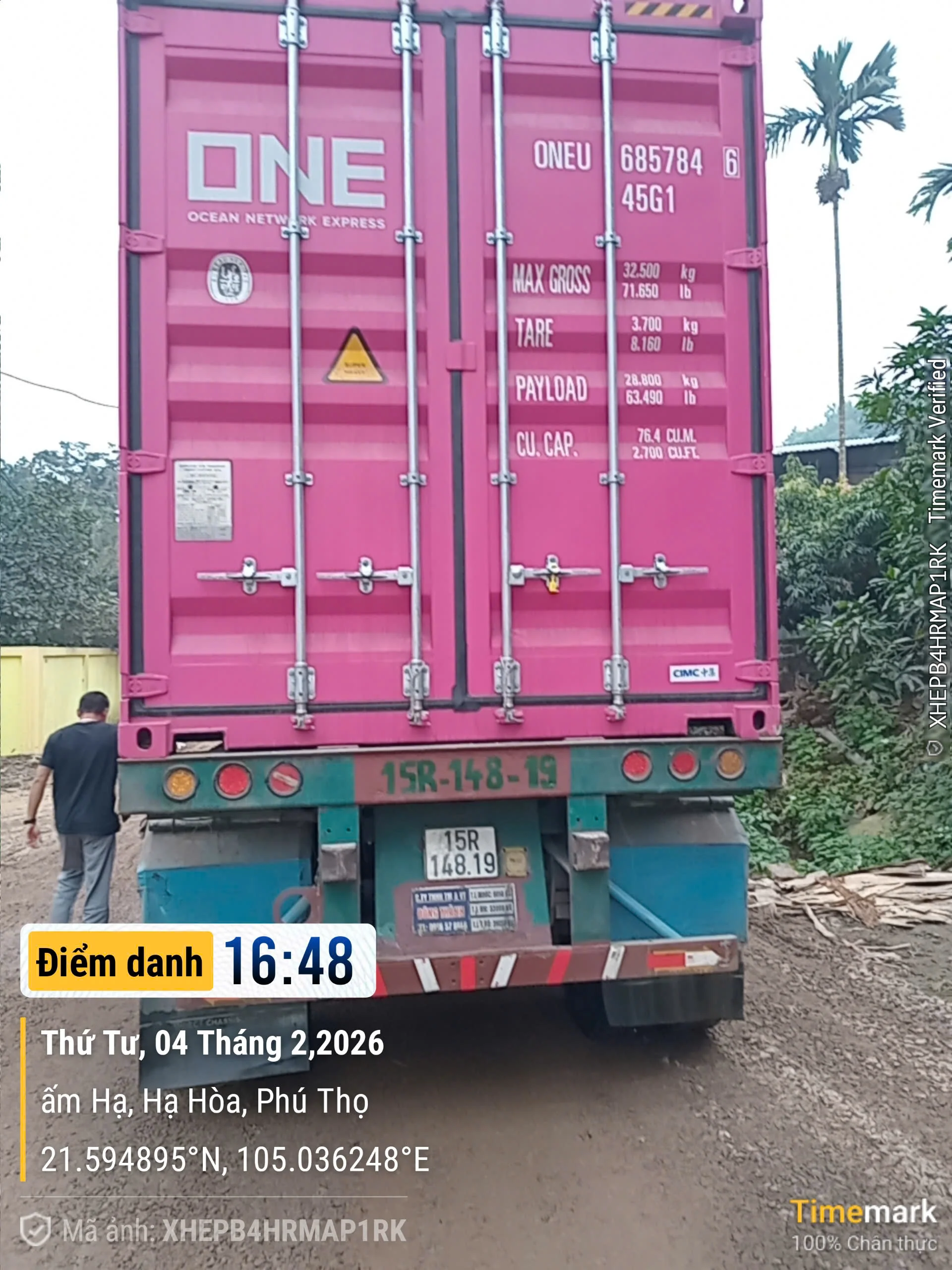
✅ What to Look for in a Film Faced Plywood Supplier
Mika Plywood manages a specialized film-faced production facility in Northern Vietnam dedicated to construction-grade panels. This facility uses:
- AICA phenolic film (220gsm) for premium grades
- Eucalyptus and acacia core from certified plantation forests in Phu Tho Province
- Phenolic WBP glue meeting 72-hour boiling test requirements
- On-site QC team with thickness calibration and film adhesion checks before every container load
Mika Plywood exports to 20+ countries with full documentation: FSC certificate, ISO 9001, CO (Certificate of Origin), Phytosanitary certificate, Fumigation certificate, Bill of Lading. All certifications are issued directly from the production facility.
Current export markets for Mika Plywood film-faced plywood include UAE, Saudi Arabia, Kuwait, South Korea, Philippines, Malaysia, and Germany (Mika Plywood export records, 2026).
Request a free sample + FOB price quote from Mika Plywood
Related reading:
- For specs, see film-faced plywood technical specifications.
- For pricing, read our film-faced plywood price guide.
- Compare brands in Dynea vs AICA film plywood.
Disclosure: This article is published by Mika Plywood, a Vietnam-based plywood manufacturer and export operator. While we aim to provide objective industry guidance, readers should consider our perspective as a market participant when evaluating recommendations.
🔗 Related Resources
- Film Faced Plywood Vietnam — Product Page & Full Specifications
- Concrete Formwork Plywood: Complete Specification Guide
- Plywood Glue Types & Emission Standards — WBP vs MR Explained
- Types of Plywood from Vietnam — Complete Classification Guide
- Plywood Container Packing Calculation — 40HC Factory Tables
Frequently Asked Questions
What is film faced plywood used for?Film faced plywood is primarily used for concrete formwork (shuttering) in construction. The phenolic film surface resists concrete adhesion, moisture, and alkali attack — allowing the panel to be stripped, cleaned, and reused 10–20+ times. Secondary applications include truck flooring, scaffolding decking, packing equipment bases, and marine use where weather resistance is critical.How many times can film faced plywood be reused?Premium film-faced plywood using AICA film (220gsm minimum) with phenolic WBP glue achieves 15–20 reuse cycles under controlled site conditions. Budget grades with lighter film (120–135gsm) typically yield 4–8 reuses. Proper release agent application and careful stripping after each pour are the single biggest factors in extending panel life.What is the difference between black and brown film faced plywood?Both black and brown film faced plywood use phenolic resin overlay. Black film uses pure phenolic resin without filler, giving a harder, smoother surface that extends reuse cycles slightly. Brown film uses phenolic resin with wood-flour filler, which is slightly more absorbent but more affordable. Both grades are WBP (Weather and Boil Proof) compliant. Performance difference in practice is minimal when film weight is equal.What thickness is standard for concrete formwork plywood?18mm is the industry standard for wall and column formwork. Slab formwork with closer joist spacing can use 15mm. Heavy-load or high-rise applications specify 21mm. Below 15mm is not recommended for direct concrete contact without full-sheet backing support. Mika Plywood supplies 12–21mm film-faced panels in both 1220×2440mm and 1250×2500mm sizes.How do I verify a Vietnam film faced plywood supplier is a real manufacturer?Request a factory visit video showing your brand/logo stamped on panels during production. Verify certifications (FSC, ISO 9001) through the issuing body's online database. Ask for a pre-shipment inspection report from SGS or Bureau Veritas. Factory-direct suppliers export without VAT overhead — if pricing seems suspiciously high compared to other Vietnam quotes, you may be dealing with a trading company adding margin.
Ready to order?
Request Film Faced Plywood Samples & FOB Price

Written by
David
Export Project Leader
Content contributor at Vietnam Plywood.
On this page
- 📋 What Is Film Faced Plywood?
- 📦 Film Faced Plywood Specifications — What to Specify in Your PO
- 📌 Film Weight (GSM) — The Most Important Spec
- 📌 Core Species and Density
- 📌 Thickness Range
- 📌 Sheet Size
- 🔧 Black Film vs Brown Film — Which Should You Order?
- 🏭 Top Applications for Film Faced Plywood from Vietnam
- 📌 Concrete Formwork (Primary Use)
- 📌 Truck and Trailer Flooring
- 📊 Vietnam vs China Film Faced Plywood — A Buyer’s Comparison
- 🔍 How to Evaluate Film Faced Plywood Vietnam Suppliers
- 📐 Container Loading — Film Faced Plywood 40HC
- ✅ What to Look for in a Film Faced Plywood Supplier
- 🔗 Related Resources
On this page
- 📋 What Is Film Faced Plywood?
- 📦 Film Faced Plywood Specifications — What to Specify in Your PO
- 📌 Film Weight (GSM) — The Most Important Spec
- 📌 Core Species and Density
- 📌 Thickness Range
- 📌 Sheet Size
- 🔧 Black Film vs Brown Film — Which Should You Order?
- 🏭 Top Applications for Film Faced Plywood from Vietnam
- 📌 Concrete Formwork (Primary Use)
- 📌 Truck and Trailer Flooring
- 📊 Vietnam vs China Film Faced Plywood — A Buyer’s Comparison
- 🔍 How to Evaluate Film Faced Plywood Vietnam Suppliers
- 📐 Container Loading — Film Faced Plywood 40HC
- ✅ What to Look for in a Film Faced Plywood Supplier
- 🔗 Related Resources
Industry Newsletter
Stay Updated with
Plywood Industry Insights
Factory prices, spec guides, market trends and export tips — delivered weekly to B2B buyers and importers in 20+ countries.