Compare Dynea vs AICA film in Vietnam film faced plywood — resin type, GSM weight, reuse cycles, and which film suits your formwork project in 2026.
Two film brands dominate film faced plywood Vietnam export production: Dynea film and AICA film. Buyers see both names on product sheets, often assume they are competing products, and frequently order the wrong one for their project. This buyer’s guide explains the technical difference between Dynea film plywood and AICA film plywood — resin chemistry, surface performance, reuse cycles, and which film suits each application — based on Mika Plywood’s production experience across 20+ export markets as of 2026.
📋 TL;DR — Dynea vs AICA Film at a Glance
| Feature | Dynea Film | AICA Film |
|---|---|---|
| Origin | Finland (Dynea Oy, now AICA Group) | Japan (AICA Kogyo Co., Ltd.) |
| Resin type | 100% phenol-formaldehyde | Melamine-phenolic hybrid |
| Film weight | 120–130 GSM | 130–150 GSM |
| Surface finish | Matte or semi-gloss | Glossy to mirror finish |
| Reuse cycles | 10–15 formwork reuses | 15+ formwork reuses |
| Alkali resistance | Excellent | Superior (longer exposure) |
| Best markets | India, Middle East, Africa | Korea, Europe, Japan |
| Relative price | Lower | ~8–10% higher |
💡 Key Insight: Both products belong to the same AICA corporate group since 2012. The difference is resin formulation and surface quality tier — not competing manufacturers.
📦 The Corporate Story: Why Both Films Exist
In late 2012, Japan’s AICA Kogyo Co., Ltd. acquired all shares of Dynea Asia Pacific, forming AICA Asia Pacific Holding Pte Ltd (AAPH) — a 100% AICA subsidiary. This merger combined Dynea’s Finnish phenolic resin technology with AICA’s Japanese melamine and surface chemistry expertise into one supply network.
The acquisition did not eliminate the Dynea brand. Instead, AICA maintained two distinct product lines:
- Dynea film — the original phenol-formaldehyde line, optimized for cost-effective heavy-duty formwork
- AICA film — the upgraded melamine-phenolic hybrid line, targeting premium architectural and export-grade applications
Vietnamese manufacturers of film faced plywood Vietnam now source both film types through AICA Asia Pacific’s regional distribution network. Mika Plywood uses AICA film at minimum 135 GSM for its premium export line, produced at its dedicated film-faced facility in Northern Vietnam (Mika Plywood production data, 2026).
🔧 What Is Dynea Film Plywood?
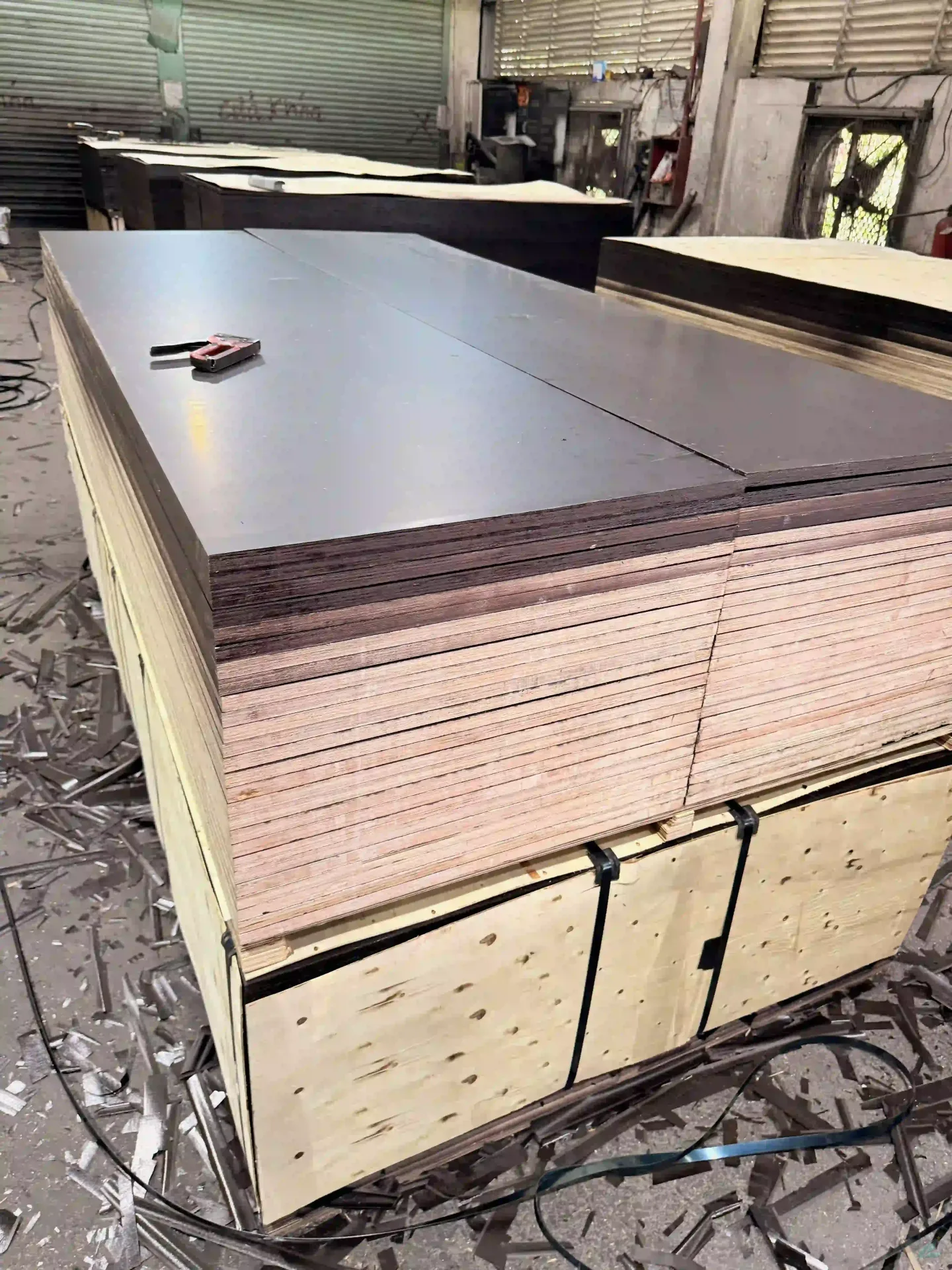
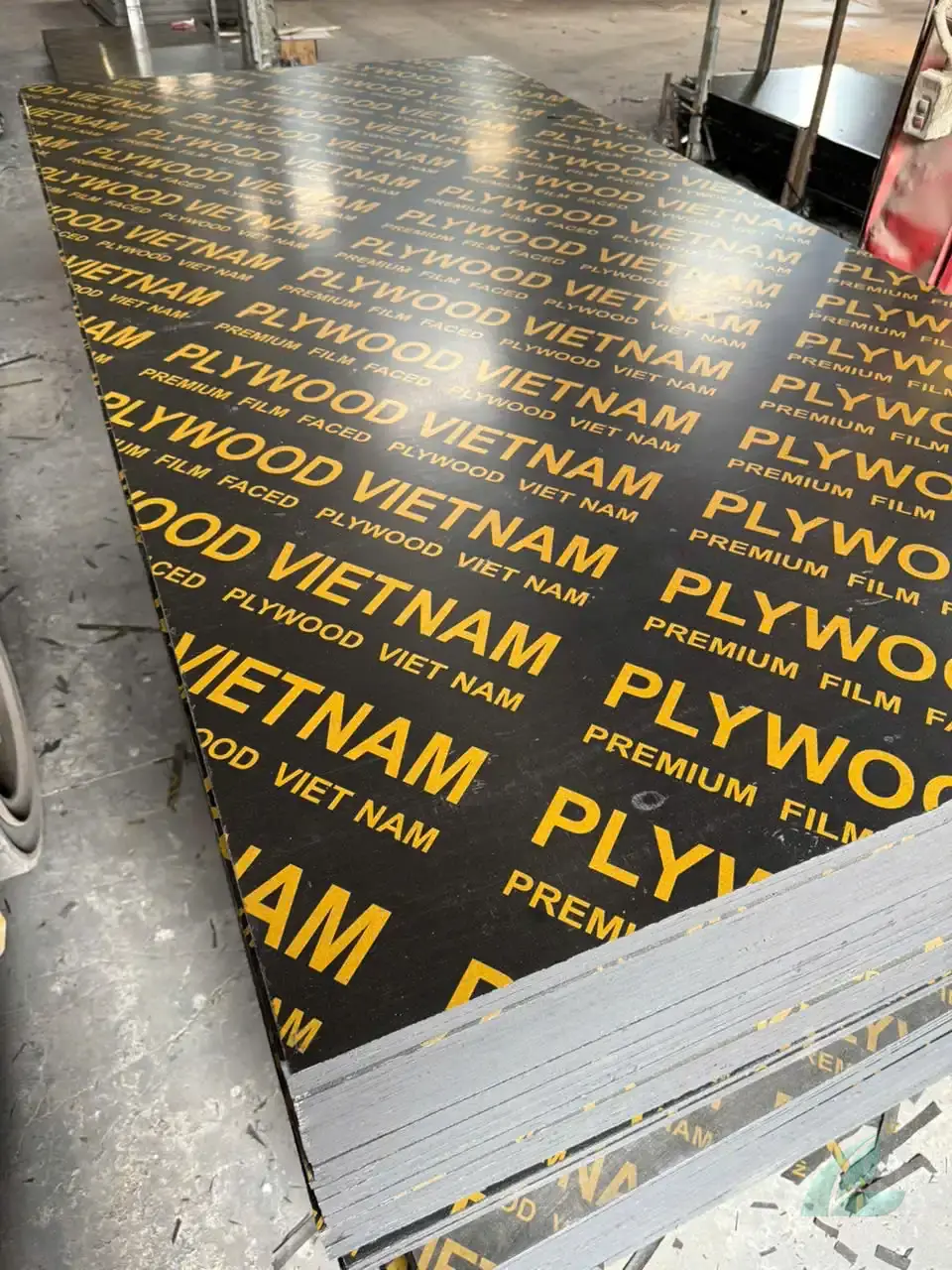
Dynea film plywood is film faced plywood coated with Dynea phenolic film — a surface overlay made by saturating kraft paper with 100% phenol-formaldehyde resin, then hot-pressing under controlled temperature and pressure.
The result is a dense, matte-to-semi-gloss surface that bonds tightly with the plywood core. Key characteristics:
- Phenol-formaldehyde resin only — no melamine component
- Film weight: 120–130 GSM (grams per square metre)
- Surface colour: dark brown or black
- Formwork reuse: 10–15 cycles under standard conditions
- Standards: manufactured to EN 13986, ISO 9001
The phenolic chemistry gives Dynea film strong waterproofing and abrasion resistance. Its lower film weight and simpler resin system translate to a lower per-sheet cost compared to AICA hybrid film — making it the standard choice for budget-sensitive construction markets.
“For large-scale infrastructure projects where price-per-sheet drives the decision, Dynea phenolic film consistently delivers reliable formwork performance at the most competitive cost basis.” — Jay, International Sales Manager, Mika Plywood
🔧 What Is AICA Film Plywood?
AICA film plywood is film faced plywood coated with AICA’s melamine-phenolic hybrid film. After the 2012 Dynea acquisition, AICA integrated Dynea’s phenolic resin know-how into its own multi-layer melamine impregnation process, producing a film with distinct advantages:
- Melamine-phenolic hybrid resin — multi-layer impregnation with high-pressure curing
- Film weight: 130–150 GSM — denser, heavier film layer
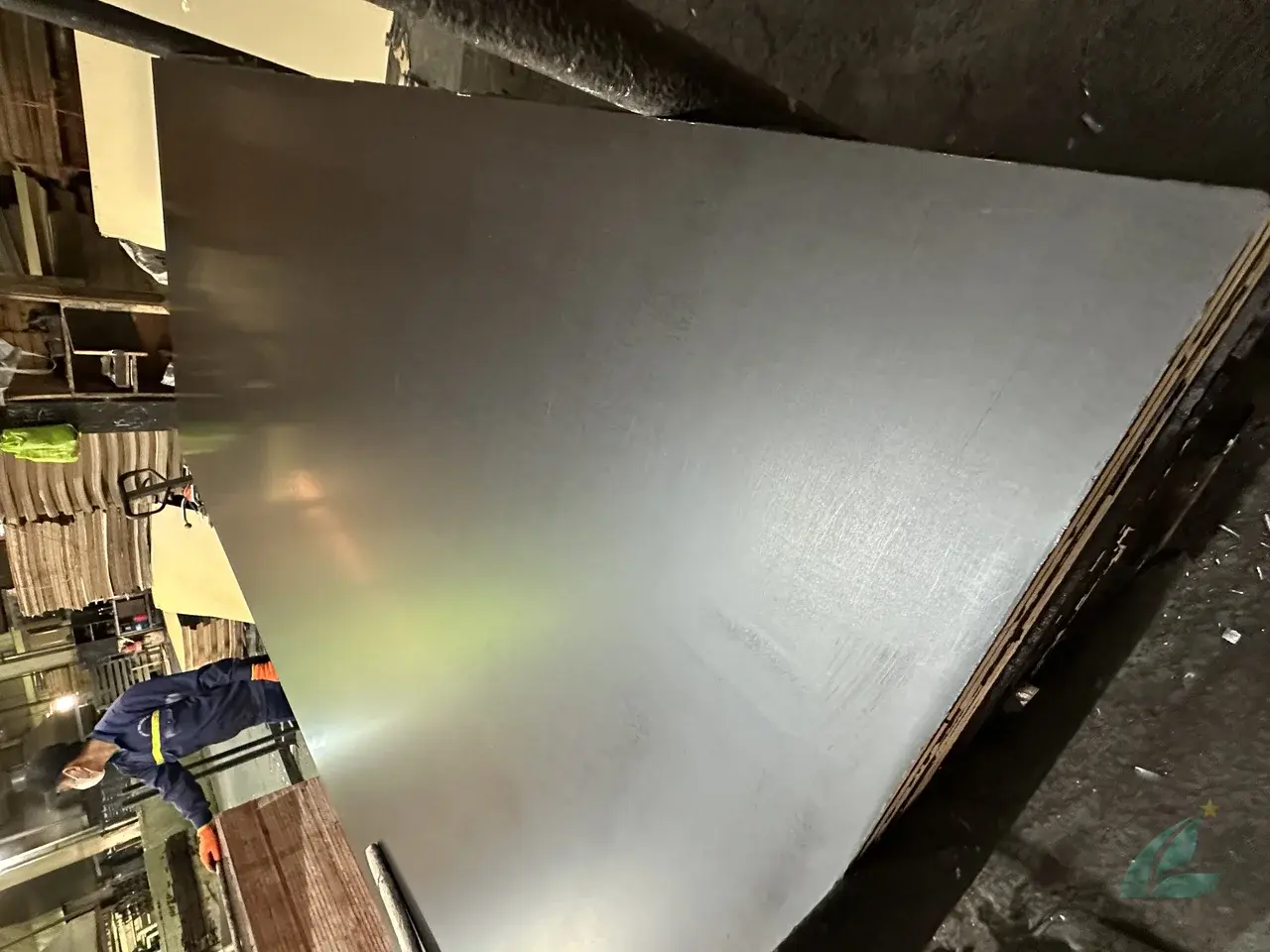
- Surface finish: glossy to mirror-like
- Colour options: black, chocolate brown, or custom gloss
- Formwork reuse: 15+ cycles with proper demoulding agent
- UV stability and anti-alkali properties: superior to standard phenolic film
The hybrid resin structure delivers two performance advantages over Dynea film: higher surface gloss for architectural concrete work, and extended alkali exposure resistance due to the melamine layer acting as an additional chemical barrier.
Mika Plywood applies AICA film at minimum 135 GSM on eucalyptus or acacia core substrates for its premium export line, meeting specifications required by Korean, European, and Japanese buyers (Mika Plywood production data, 2026).
📊 Detailed Technical Comparison
📌 Resin Chemistry
The core difference between the two films lies in resin formulation:
Dynea film uses pure phenol-formaldehyde resin. Phenolic resins cure under heat to form a rigid, cross-linked polymer that is chemically inert to water, mild acids, and concrete alkali. The cured surface is hard, dark, and matte.
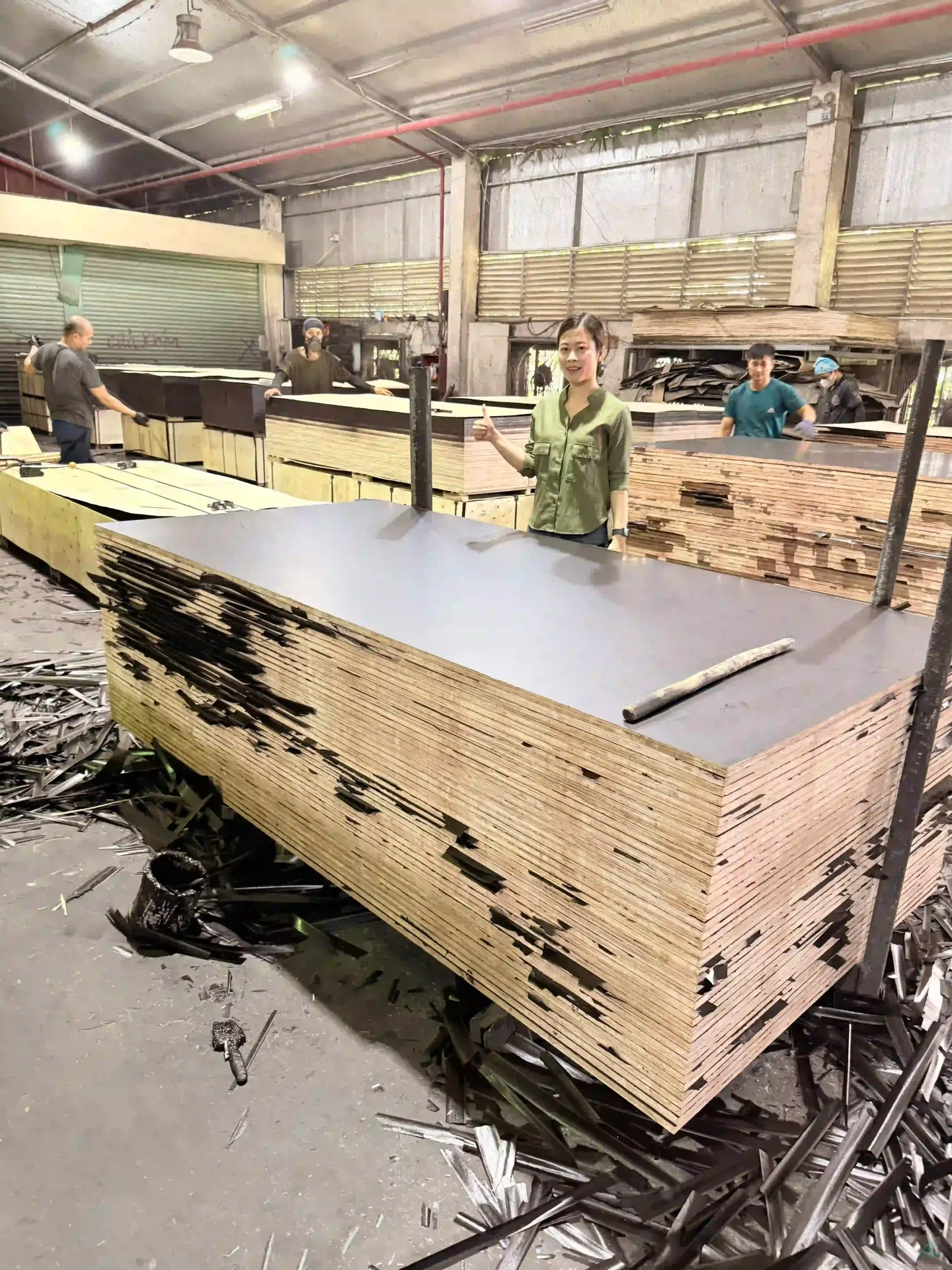
AICA film combines melamine resin with the phenolic base. Melamine resin adds amino groups to the polymer structure, which increases surface hardness, scratch resistance, and gloss level. The resulting hybrid film is denser (higher GSM), harder, and significantly glossier than pure phenolic.
This distinction matters for two buyer groups:
- Contractors casting structural concrete — Dynea phenolic film is sufficient
- Builders requiring architectural-quality exposed concrete or high-gloss prefab molds — AICA hybrid film is specified
📌 Surface Finish and Concrete Quality
Film surface finish directly affects the quality of cast concrete:
- Dynea matte/semi-gloss: Produces a smooth but non-reflective concrete surface. Adequate for structural applications where visual quality is secondary.
- AICA glossy/mirror: Produces a polished, high-reflectivity concrete surface. Required for visible architectural formwork — metro stations, airport terminals, facade panels, luxury residential towers.
⚠️ Important: Surface finish is not purely aesthetic. A smoother, denser film releases from concrete more cleanly, reducing surface defects and allowing more reuse cycles before film degradation.
📌 GSM Weight and Durability
Film weight (GSM) is a reliable proxy for film durability:
| GSM Range | Film Type | Relative Durability |
|---|---|---|
| 100–120 GSM | Budget phenolic (non-AICA/Dynea) | Low |
| 120–130 GSM | Dynea standard phenolic | Medium-high |
| 130–150 GSM | AICA hybrid film | High |
| 220+ GSM | Anti-slip overlay film | Special application |
Higher GSM = thicker film layer = more resin content = more reuse cycles before surface breakdown. When comparing formwork panels from different Vietnamese suppliers, GSM specification is a more reliable indicator than brand name alone — buyers should confirm film GSM in writing (Mika Plywood export documentation standard, 2026).
🏭 Applications by Film Type
Dynea Film Plywood Applications
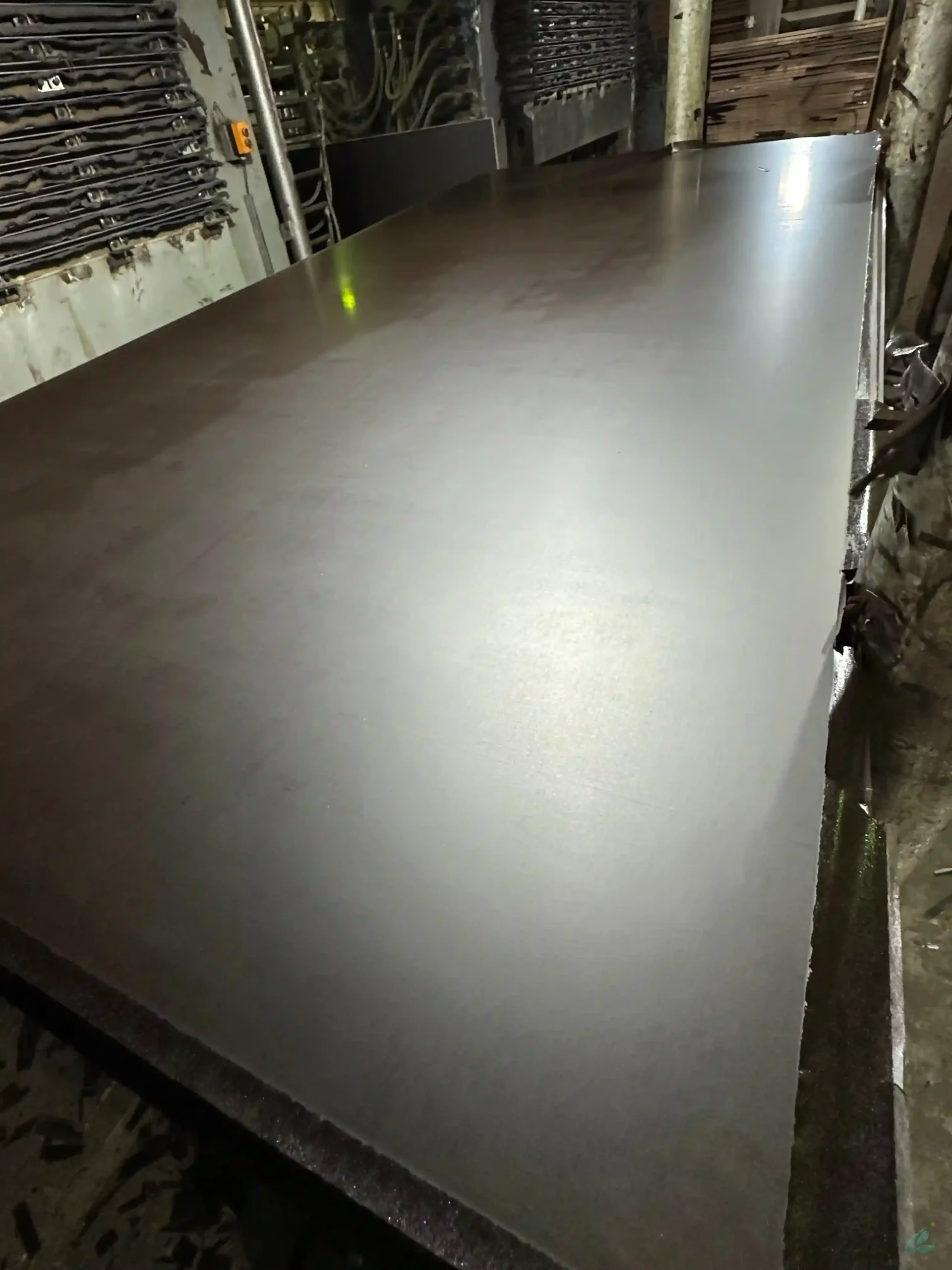
Concrete formwork — structural work: Building columns, beams, slabs, retaining walls. The phenolic surface withstands water and concrete vibration. 10–15 reuses make it cost-effective for large infrastructure projects where volume matters more than surface aesthetics.
Bridge and civil engineering formwork: High phenolic content resists prolonged moisture exposure. Used for pier formwork, culverts, and road construction in India, the Middle East, and African markets.
Industrial flooring and load platforms: The matte, abrasion-resistant surface performs well under heavy foot traffic and machinery. Often specified for factory floors and platform decking.
Price-sensitive export markets: India, the Middle East, and Southeast Asia predominantly purchase Dynea-film-grade formwork plywood at competitive FOB pricing from Hai Phong port.
AICA Film Plywood Applications
Architectural and visible formwork: Metro stations, airport terminals, luxury residential towers, and facade elements where the finished concrete surface quality is visible and specified. AICA mirror-finish film produces polished concrete surfaces that eliminate the need for post-cast surface treatment.
Prefabricated concrete panels: Off-site precast elements require consistent mold surfaces for batch uniformity. AICA film’s higher GSM and glossy finish deliver panel-to-panel consistency across production runs.
Export to demanding markets: Korea, Japan, Germany, and Australia specify AICA-class film for formwork imports. EN 13986 certification with minimum 130 GSM film is commonly required by European buyers.
High-frequency reuse scenarios: Contractors reusing panels 15+ times per formwork cycle benefit from AICA film’s extended surface life, reducing replacement cost over a project lifecycle.
Explore our complete film faced plywood specification and pricing
📐 Cost-Performance Analysis
AICA film plywood costs approximately 8–10% more per sheet than equivalent Dynea film plywood. However, when evaluated on a cost-per-formwork-cycle basis, the calculation changes:
| Parameter | Dynea Film | AICA Film |
|---|---|---|
| Unit cost (base = 100) | 100 | 110 |
| Average reuse cycles | 12 | 18 |
| Cost per cycle | 8.33 | 6.11 |
| Surface quality grade | Good | Premium |
At 12 average cycles for Dynea vs 18 for AICA, the hybrid film delivers approximately 27% lower cost per formwork use despite the higher upfront price (Mika Plywood export division analysis, 2026).
This calculation assumes proper demoulding agent application before each pour — a critical factor that extends reuse cycles for both film types.
💡 Tip: Request a cost-per-cycle calculation from your supplier when comparing bids. A cheaper phenolic film panel with 10 average reuses may cost more per concrete pour than a premium AICA panel with 18 cycles.
🌍 Market Recommendations by Project Type
| Project Type | Recommended Film | Reason |
|---|---|---|
| Mass concrete infrastructure | Dynea phenolic | Lower cost per sheet, adequate reuse cycles |
| Architectural exposed concrete | AICA hybrid | Mirror finish, longer reuse, cleaner release |
| High-rise residential formwork | AICA hybrid | Consistent surface over 15+ cycles |
| Marine and outdoor formwork | Dynea phenolic | High phenolic content for moisture resistance |
| Export to Korea / Europe / Japan | AICA hybrid | Market specification requires 130+ GSM gloss film |
| Export to India / Middle East / Africa | Dynea phenolic | Price-competitive, EN 13986 compliant |
For buyers sourcing from Vietnam, Mika Plywood manages a dedicated film-faced production facility equipped to produce both Dynea-specification and AICA-specification panels. Minimum order is 1 × 40HC container. Mixed film type in one container is available on request.
Request a free quote for film faced plywood from Mika Plywood
Related reading:
- For full specifications, see film-faced plywood technical specs.
- Browse film-faced plywood top suppliers and applications.
- For current pricing, see our film-faced plywood price guide.
Disclosure: This article is published by Mika Plywood, a Vietnam-based plywood manufacturer and export operator. While we aim to provide objective industry guidance, readers should consider our perspective as a market participant when evaluating recommendations.
🔗 Related Technical Guides
Understanding film faced plywood fully requires knowledge of the glue system beneath the film. The phenolic WBP glue used in formwork plywood is a separate but equally critical specification — see our guide to phenolic glue plywood WBP waterproof standards for a full breakdown of boiling test requirements.
For buyers specifying complete formwork systems, the concrete formwork plywood specification guide covers film weight, core density selection, reuse count standards, and WBP requirements by market.
If you are comparing film faced plywood against standard construction-grade panels, construction plywood Vietnam formwork grade explains when film-faced is required versus when an alternative is acceptable.
✅ Conclusion: Which Film Should You Specify?
Dynea film and AICA film are not competing manufacturers — they are two product lines within the same AICA corporate family, optimized for different performance tiers.
Choose Dynea film plywood when:
- Project budget is the primary constraint
- Structural concrete quality is sufficient — no architectural exposure requirement
- Export destination is India, the Middle East, or Africa
- Reuse cycle target is 10–15 pours
Choose AICA film plywood when:
- Architectural or visible concrete quality is required
- Export destination is Korea, Europe, Japan, or Australia
- Specification requires minimum 130 GSM film
- Long-term formwork contracts justify the cost-per-cycle calculation
Mika Plywood produces both film specifications from its dedicated film-faced facility in Northern Vietnam. Both product lines carry FSC and CARB P2 certification available on request. Lead time is 15–20 days from confirmed order.
Contact Mika Plywood for film faced plywood specifications, samples, and pricing
Frequently Asked Questions
Are Dynea film and AICA film the same brand?They share the same parent company. AICA Kogyo acquired Dynea Asia Pacific in 2012, creating AICA Asia Pacific Holding (AAPH). Dynea film now refers to the phenolic-only product line; AICA film refers to the melamine-phenolic hybrid line sold under the AICA brand.How many times can AICA film plywood be reused?Under standard formwork conditions with proper demoulding agent, AICA film plywood achieves 15+ reuse cycles. Dynea phenolic film plywood typically delivers 10-15 reuses. Actual numbers depend on handling practice, site conditions, and core quality.What GSM film does Mika Plywood use for export-grade film faced plywood?Mika Plywood uses AICA film at minimum 135 GSM for premium formwork export. Standard export grade typically uses 120-130 GSM phenolic film. Higher GSM means greater film thickness, better moisture resistance, and more reuse cycles.Is Dynea film still made in Finland?Dynea Oy was a Finnish chemical company. After the 2012 AICA acquisition, production was consolidated under AICA's Asian manufacturing network. The Dynea brand continues as a product line within AICA Asia Pacific Holding.Which film type is better for the European export market?AICA film is preferred by European buyers due to its glossy surface finish, higher alkali resistance, and compliance with EN 13986 standards for formwork panels. Markets such as Germany, France, and Poland typically specify minimum 130 GSM AICA-type film.
Ready to order?
Get film faced plywood specs and pricing from Mika Plywood

Written by
David
Export Project Leader
Content contributor at Vietnam Plywood.
On this page
- 📋 TL;DR — Dynea vs AICA Film at a Glance
- 📦 The Corporate Story: Why Both Films Exist
- 🔧 What Is Dynea Film Plywood?
- 🔧 What Is AICA Film Plywood?
- 📊 Detailed Technical Comparison
- 📌 Resin Chemistry
- 📌 Surface Finish and Concrete Quality
- 📌 GSM Weight and Durability
- 🏭 Applications by Film Type
- Dynea Film Plywood Applications
- AICA Film Plywood Applications
- 📐 Cost-Performance Analysis
- 🌍 Market Recommendations by Project Type
- 🔗 Related Technical Guides
- ✅ Conclusion: Which Film Should You Specify?
On this page
- 📋 TL;DR — Dynea vs AICA Film at a Glance
- 📦 The Corporate Story: Why Both Films Exist
- 🔧 What Is Dynea Film Plywood?
- 🔧 What Is AICA Film Plywood?
- 📊 Detailed Technical Comparison
- 📌 Resin Chemistry
- 📌 Surface Finish and Concrete Quality
- 📌 GSM Weight and Durability
- 🏭 Applications by Film Type
- Dynea Film Plywood Applications
- AICA Film Plywood Applications
- 📐 Cost-Performance Analysis
- 🌍 Market Recommendations by Project Type
- 🔗 Related Technical Guides
- ✅ Conclusion: Which Film Should You Specify?
Industry Newsletter
Stay Updated with
Plywood Industry Insights
Factory prices, spec guides, market trends and export tips — delivered weekly to B2B buyers and importers in 20+ countries.