European furniture makers switching from Russian birch: poplar and EV plywood from Vietnam — E0-certified, EUDR-compliant, 25–40% lower FOB price.
European furniture manufacturers are two years into a supply chain shift that shows no sign of reversing. Russian and Belarusian birch plywood — the backbone of premium cabinet and interior panel production — is banned from EU markets. Prices for Baltic birch from Finland and Latvia have risen 30–50% since 2021 (Wood Based Panels International, 2024), pushing mid-tier manufacturers to qualify alternatives or accept margin compression.
Vietnam has emerged as one of the most viable sources for birch substitutes. Two products cover most use cases: poplar plywood and EV (engineered veneer) plywood. Neither is a perfect drop-in for all birch applications, but for the majority of furniture carcass, cabinet interior, and decorative panel work, both deliver the surface quality, emission compliance, and cost position that European buyers need.
This guide explains exactly what each product delivers, where it matches birch performance, where it falls short, and what to specify when placing an order from Vietnam.
📋 Why European Buyers Are Replacing Birch Now
The birch shortage is structural, not cyclical. Before 2022, Russia and Belarus supplied roughly 60–70% of Europe’s birch plywood (European Panel Federation, 2023). When EU sanctions took effect, that volume did not simply redirect — it largely stopped reaching EU markets through legal channels.
Finnish and Latvian birch production expanded, but Northern European birch forests cannot scale fast enough to fill the gap. Garnica (Spain) and other European manufacturers pivoted to mixed-species products combining poplar and eucalyptus cores. Meanwhile, Vietnamese exporters — already shipping birch-faced plywood with imported veneer — developed poplar and EV alternatives targeting the same European interior market.
Key Insight: EU imported over €1.5 billion of sanctioned Russian birch since the ban took effect — routed through Kazakhstan, Georgia, and Turkey (VSquare.org investigation, 2024). EUDR enforcement in 2025 is closing this route. Buyers sourcing Vietnam-origin FSC-certified panels eliminate this compliance risk entirely.
Three drivers are pushing the shift toward Vietnam-origin alternatives:
- Price gap. Vietnamese poplar and EV plywood ship at FOB prices 25–40% below current Finnish birch spot rates for equivalent thickness and grade (Mika Plywood production data, 2026).
- E0 and CARB P2 availability. Vietnamese furniture-grade factories run full E0 lines — the same emission class required by EU and US interior regulations.
- EUDR compliance. FSC chain-of-custody from Vietnamese factories satisfies EUDR traceability requirements that apply to all wood products entering the EU market.
Explore all Vietnamese face veneer options to understand the full range before narrowing your spec.
📦 Poplar Plywood from Vietnam
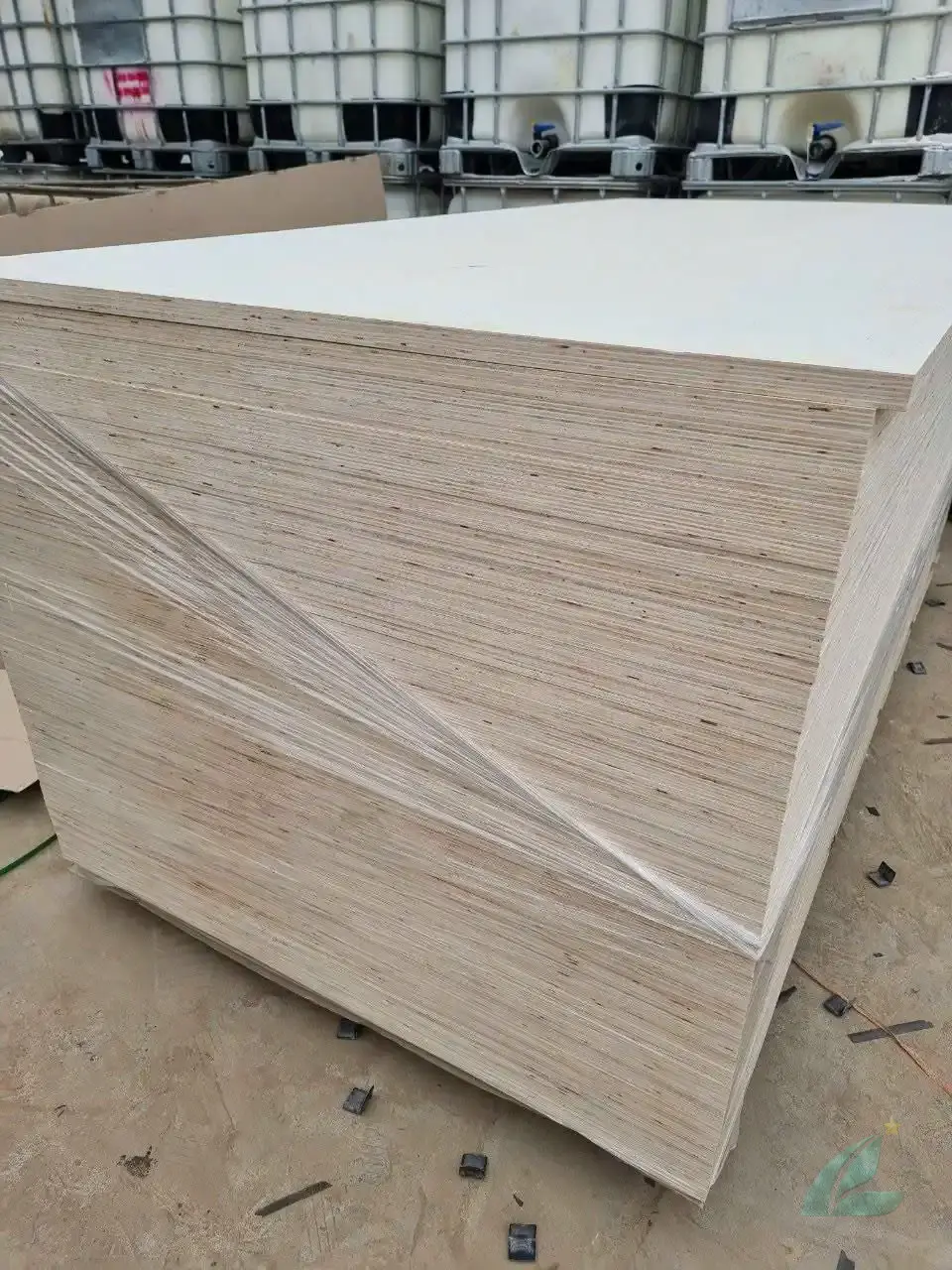
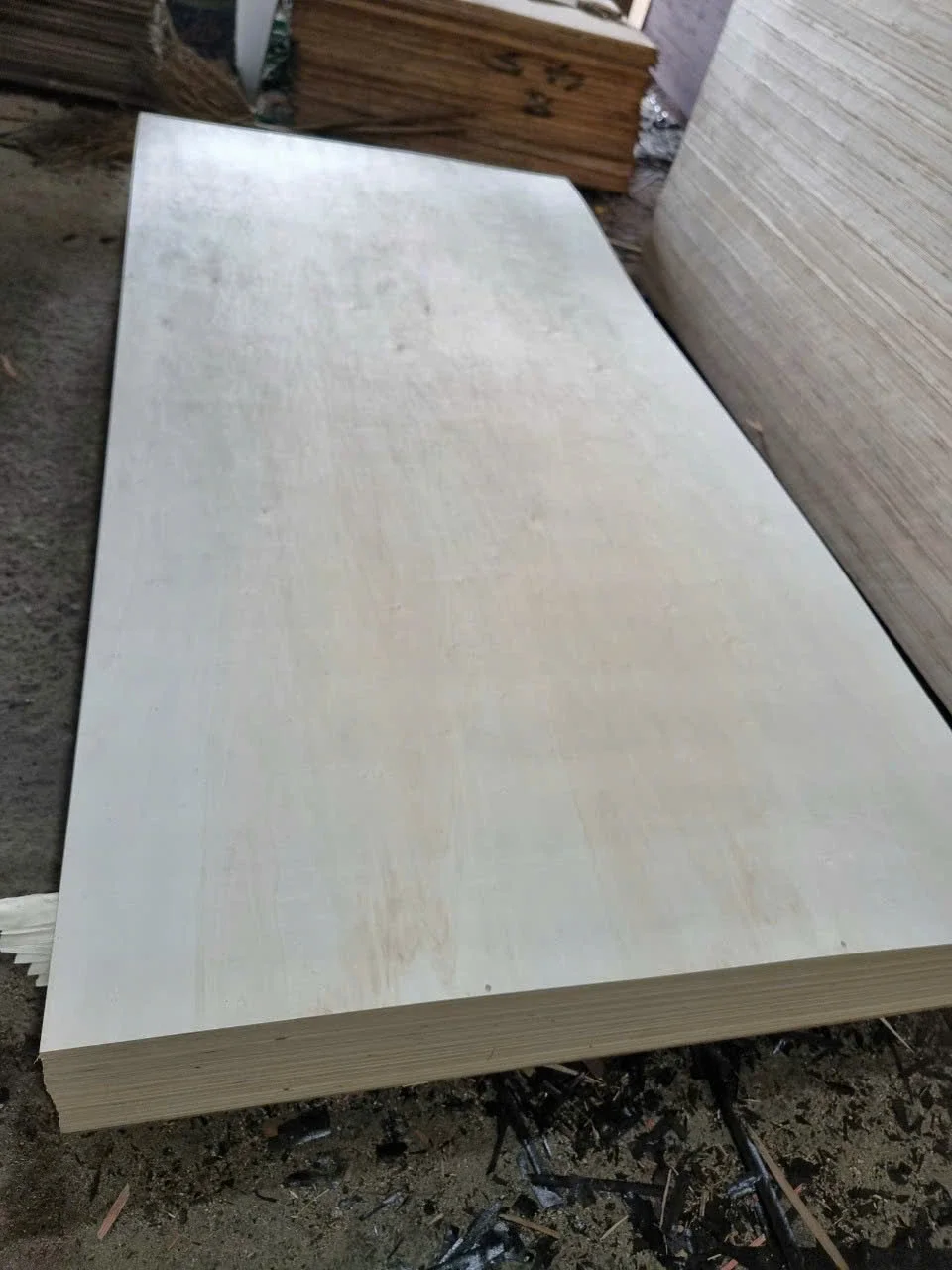
Poplar plywood uses a white poplar face veneer over a styrax or acacia core. It is one of the lightest construction-grade plywood products available from Vietnam.
“We process quotation requests from 20+ countries monthly. Each market has different priorities — European buyers focus on EUDR compliance and E0 emission, Indian buyers prioritize BIS certification and competitive pricing, and Japanese buyers demand the tightest thickness tolerances.” — Jay, International Sales Manager, Mika Plywood
📌 What Poplar Plywood Delivers
The face is pale — nearly white — with a fine, consistent grain. It accepts paint, lacquer, and lamination well, which makes it suitable for cabinet carcass panels, furniture backs, interior shelving, and drawer box interiors. See full specifications at poplar plywood from Vietnam. European kitchen manufacturers increasingly specify poplar for internal panels where a laminated or foil-covered surface is the final finish.
Core species for premium export grade: styrax (bồ đề), 480–500 kg/m³. Styrax is the lightest commercially available core in Vietnam, grown in Northern Vietnam (Phu Tho Province and surrounding regions). It is the closest Vietnamese equivalent to Baltic birch core in terms of weight and color — light, uniform, and dimensionally stable.
Density: 480–520 kg/m³ depending on core and thickness (Mika Plywood production data, 2026). This is considerably lighter than acacia-core plywood (~580 kg/m³) and similar in weight class to Baltic birch, which averages around 500–580 kg/m³ depending on moisture content.
Emission: E0 (≤0.5 mg/L formaldehyde) using melamine (MR) glue. Glue type and emission class are two separate parameters — melamine MR glue achieves E0 when calibrated correctly in a premium furniture-grade press line. This satisfies EU EN 636 Class 2 requirements for interior use.
⚙️ Where Poplar Matches Birch — and Where It Does Not
| Property | Vietnamese Poplar | Baltic Birch | Practical Impact |
|---|---|---|---|
| Face color | White to pale cream | Light yellow-brown | Poplar better for white/painted finishes |
| Surface hardness | Medium | High | Birch better for exposed, unfinished surfaces |
| Density (with styrax core) | 480–520 kg/m³ | 500–580 kg/m³ | Near-equivalent weight class |
| Emission | E0 available | E0 standard | Equal compliance |
| EUDR/FSC | Available | Available (Finland/Latvia) | Equal compliance when specified |
| FOB price vs. birch | 25–40% lower | Reference price | Significant cost advantage |
| Sanded finish | Yes — two-side calibrated | Yes | Equal quality |
Poplar is not the right choice for applications requiring exposed natural wood grain as a final surface (e.g., varnished cabinet doors with visible grain). For those applications, EV plywood is a better match — or birch plywood from Vietnam with imported face veneer.
⚠️ Important: Vietnam does not use poplar as a core species for its premium export grades. “Poplar plywood from Vietnam” means a poplar face veneer over a styrax or acacia core — not a full-poplar construction. European Poplar from France and Italy is a different product (full poplar core). Specify clearly when requesting samples.
Request a poplar plywood sample and FOB quote — we ship physical samples before any order commitment.
📊 EV Plywood: Engineered Veneer for Premium Interiors
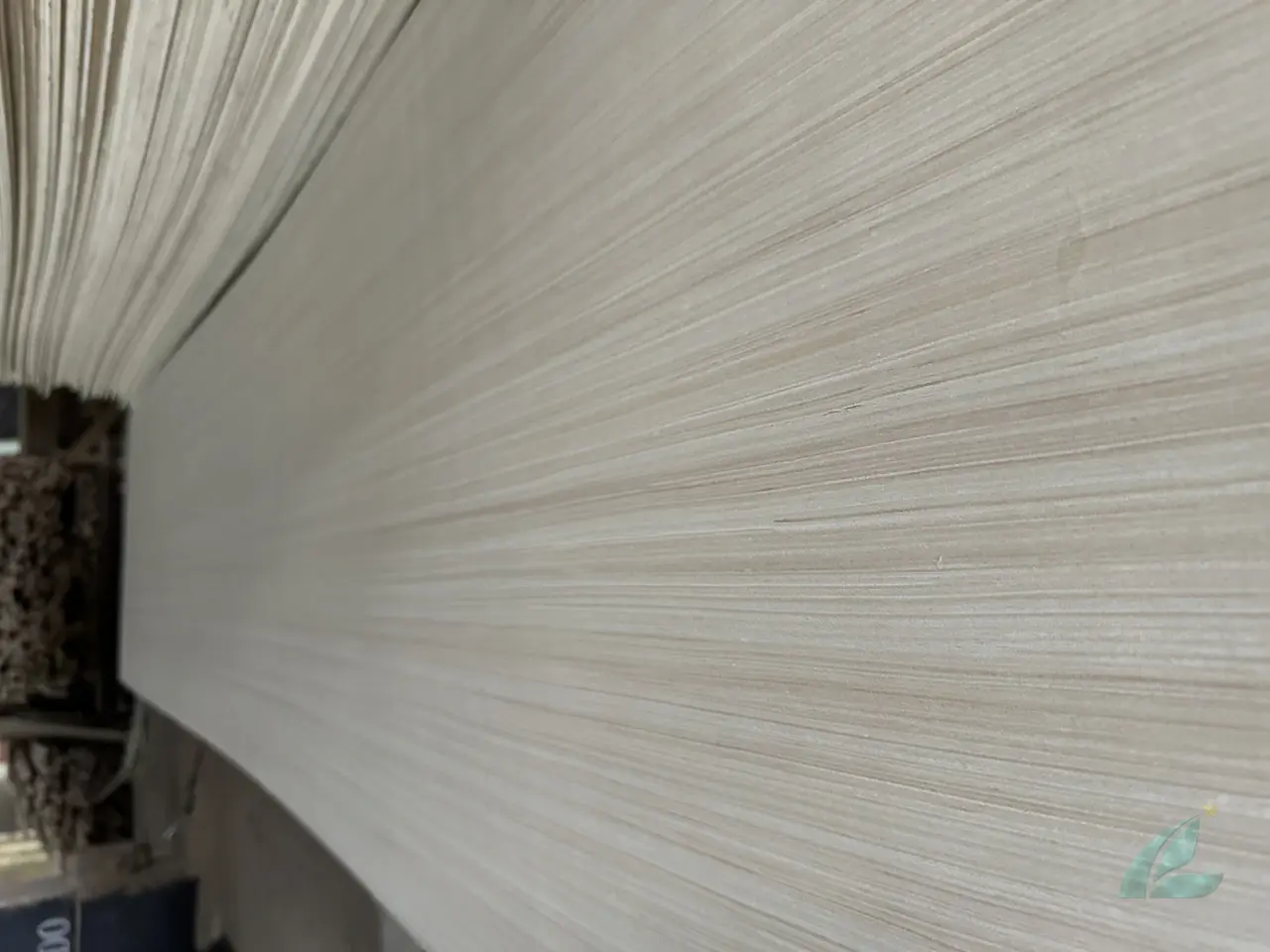
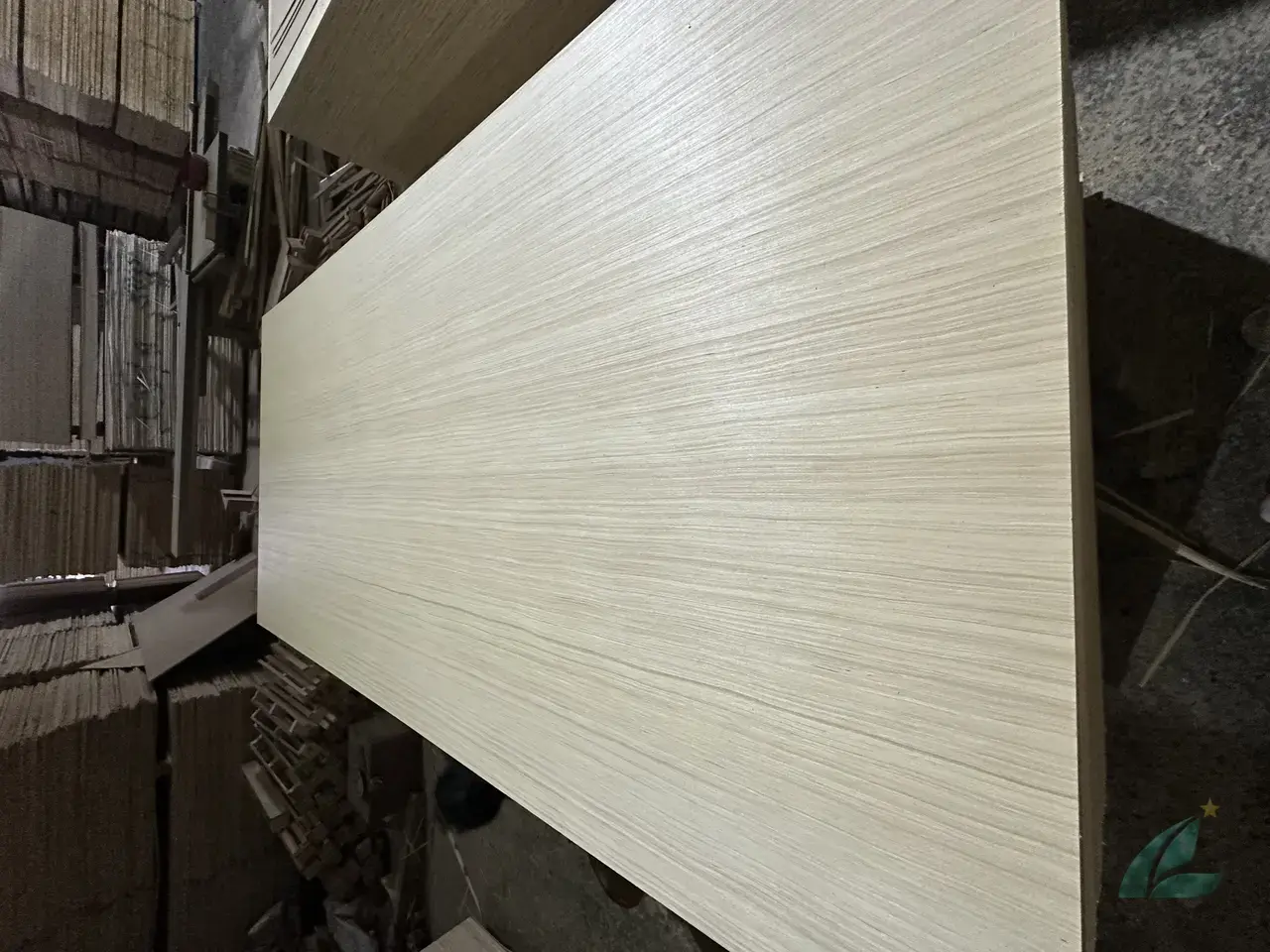
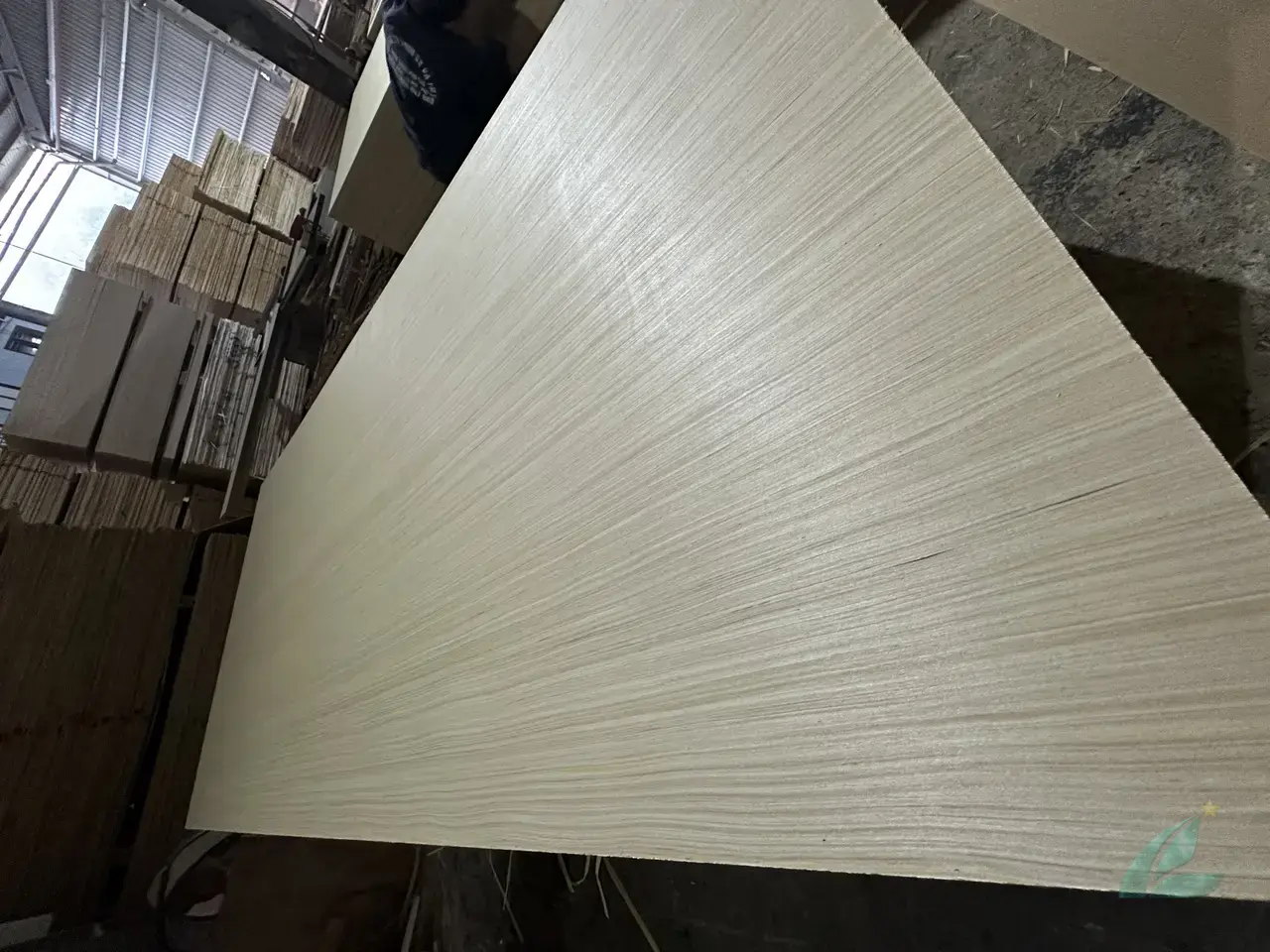
EV (engineered veneer) plywood uses a reconstituted veneer face — poplar fibers that have been processed, dyed if required, and sliced into a uniform face sheet. The result is a face with no knots, no color variation, and a consistent grain pattern that repeats across every sheet in a production run.
📌 How Engineered Veneer Is Made
The process starts with poplar logs, which are peeled, broken down into fibers, reconstituted into billets with specific grain direction and color, and then sliced into face veneer at 0.2–0.4mm thickness (standard Vietnamese face veneer thickness range). The face is applied to a styrax or eucalyptus core depending on application requirements.
This manufacturing approach produces a face that looks like natural wood but performs more consistently than natural veneer — no wild grain variation, no mineral streaks, no color shifts between sheets. For European furniture lines running CNC-routed components, this consistency reduces sorting time and waste.
⚙️ EV vs. Birch: Technical Comparison
“Jay, our International Sales Manager at Mika Plywood, explains it directly: ‘EV is not trying to look like birch. It is trying to solve the problems birch creates — inconsistent faces, color sorting, surface repairs in each sheet. For cabinet interiors and painted drawer boxes, EV eliminates those steps entirely.’”
| Property | EV Plywood (Vietnam) | Birch Plywood (Vietnam/Finland) |
|---|---|---|
| Face species | Engineered poplar | Natural birch |
| Face consistency | Perfect — no variation | Natural variation between sheets |
| Grade system | A/B surface quality | D/E/F (Vietnamese birch) |
| Core options | Styrax, eucalyptus | Styrax |
| Glue | Melamine (MR) | Melamine (MR) |
| Emission | E0/CARB P2 | E0/CARB P2 |
| Thickness range | 3–25mm | 4–30mm |
| Price position | Similar to okoume | 30–40% higher than EV |
| Best application | Cabinet interiors, furniture backs, decorative panels | Exposed natural wood applications |
For applications where the plywood face will be painted, lacquered, wrapped with foil, or covered with laminate, EV plywood typically outperforms natural birch on consistency grounds while costing considerably less.
View EV plywood specifications and product page for full technical details.
🔧 Specification Guide: What to Include in Your Order
Specifying poplar or EV plywood from Vietnam correctly prevents the most common quality gaps. These are the parameters that matter:
Core species: Always specify styrax for premium furniture applications. Styrax core is lighter, whiter, and dimensionally more stable than acacia. Acacia core (~580 kg/m³) is suitable for packing and commercial grades, not premium furniture. For detailed explanation, see styrax core as a birch core alternative.
Core construction: Specify full stitched (fully sewn inner layers) for export furniture grades. Loose-laid core is for packing grade only. The core construction directly affects surface flatness and edge quality — critical for CNC-machined parts.
Emission standard: Specify E0 explicitly. Vietnamese factories produce E0, E1, and E2 grades on different press lines. Without specifying E0, you may receive E1. For EU furniture, E0 (≤0.5 mg/L) is the correct class. For US market, specify CARB P2. Understanding glue types and emission standards helps you communicate these requirements precisely.
Sanding: Specify two-side sanded (calibrated). Furniture-grade poplar and EV plywood is always sanded; confirm this in your PO to avoid the commercial-grade unsanded product being substituted.
Certification: Specify FSC-COC for EU market shipments. This satisfies EUDR Article 3 traceability requirements and eliminates customs risk on EU entry.
Thickness tolerance: ±0.3mm is the Vietnamese factory standard for premium grades. If your CNC toolpaths or edge-banding equipment requires tighter tolerance, state this in the specification — it requires selection from a calibrated batch.
🏭 Why Northern Vietnam Produces Both Products
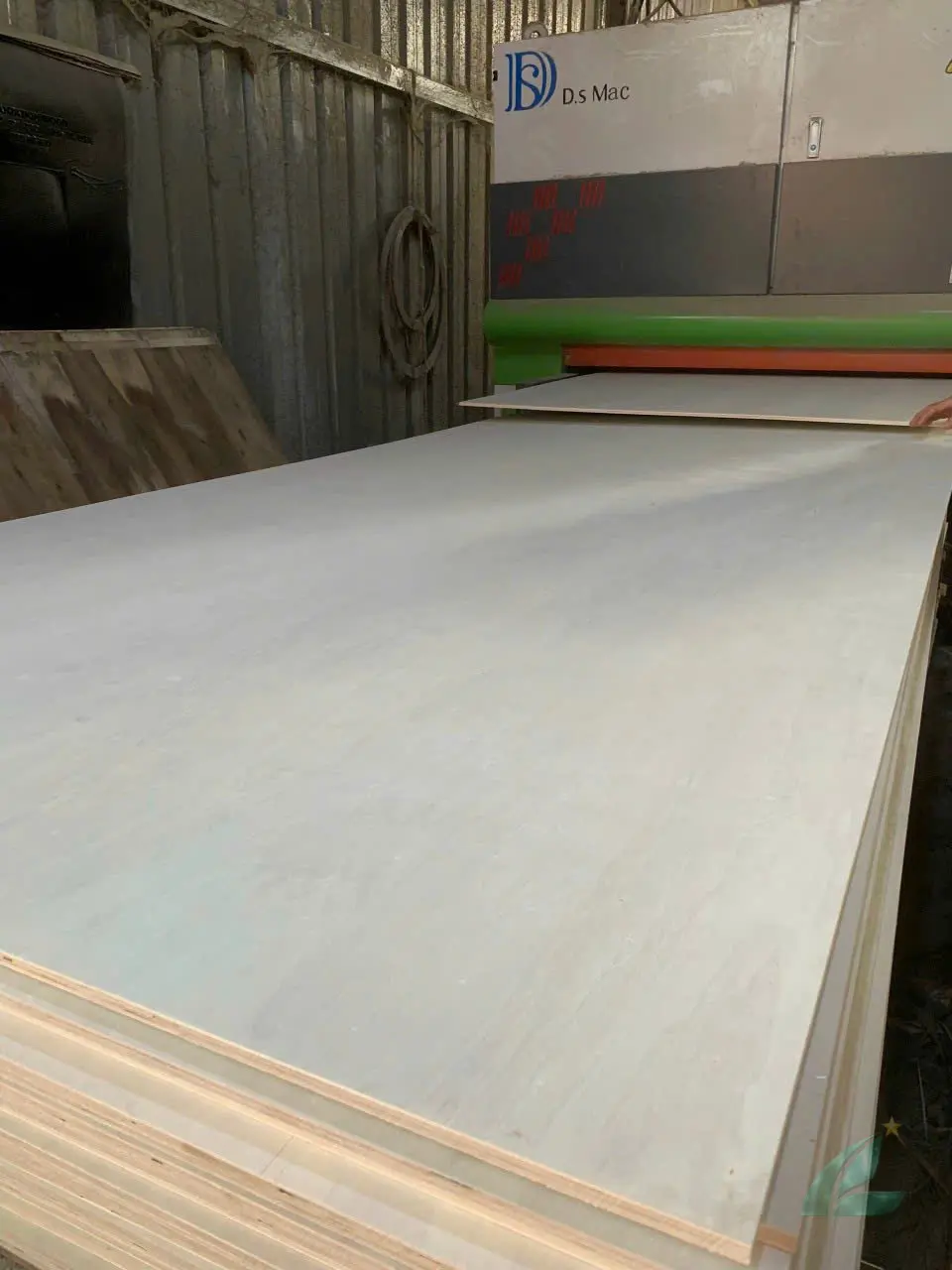
Northern Vietnam is the correct production origin for these products. Styrax (bồ đề) grows only in the northern provinces — Phu Tho, Yen Bai, Tuyen Quang. Southern Vietnamese facilities do not have access to styrax core and typically run acacia-based commercial grades. When sourcing premium furniture alternatives to birch, the production region matters as much as the specification on paper.
⚠️ Note: Suppliers showing northern Vietnam factory photos but quoting from southern Ho Chi Minh City offices may be trading company intermediaries buying from multiple factories. Always verify factory location against the production facility on documentation before placing large orders.
Mika Plywood’s factory-direct model means export documentation (CO, FSC certificate, Phytosanitary, Fumigation, Invoice, B/L) originates from the production facility — not from an intermediary office. This matters for EUDR due diligence documentation requirements.
Current lead time for 1×40HC container of poplar or EV plywood: 15–20 days from order confirmation. Mixed specifications are accommodated in a single container.
✅ Choosing Between Poplar and EV for Your Application
Both products work as birch substitutes, but their strengths differ:
Choose poplar plywood when:
- Final finish is paint, lacquer, or laminate (face grain not visible)
- Cost is the primary constraint
- Weight class equivalent to birch is important for shipping economics
- Application is furniture carcass, shelving, drawer box, or furniture back panel
Choose EV plywood when:
- Face consistency across full production run is critical
- CNC machining or edge-banding requires dimensionally uniform panels
- Application is visible cabinet interior, high-gloss lacquered surface, or premium drawer front
- Defect-free face specification must be guaranteed by manufacturer
For comparison shopping, the relevant competitor is not Russian birch — it is Vietnamese birch-faced plywood with imported face veneer, which costs more but delivers natural birch grain where that is genuinely required.
Related reading:
- Compare all three in our poplar vs birch vs okoume face veneers guide.
- See also birch plywood from Vietnam as a Russian birch alternative.
- For poplar core options, read full poplar core vs mixed core plywood.
Disclosure: This article is published by Mika Plywood, a Vietnam-based plywood manufacturer and export operator. While we aim to provide objective industry guidance, readers should consider our perspective as a market participant when evaluating recommendations.
🔗 Related Articles
- Plywood Face Veneer Types — Complete Buyer Guide
- Birch Plywood Vietnam — How Imported Face + Styrax Core Works
- Styrax Core — Why It Replaces Birch Core in Vietnamese Production
- Plywood Glue Types & Emission Standards — E0/E1/E2 Explained
❓ Frequently Asked Questions
Answers to the most common questions about poplar and EV plywood from Vietnam are included above. Additional buyer questions:
How do I verify EUDR compliance for Vietnamese plywood?
Request FSC-COC certificate number from the supplier. Cross-check on the FSC public certificate database (info.fsc.org). For EUDR Article 4 due diligence, your supplier must provide GPS coordinates of the forest management unit — Vietnamese FSC-certified plantations have this on file.
Can I mix poplar and EV in the same 40HC container?
Yes. Mika Plywood accommodates mixed specifications within one container. Weight calculation is handled per core type — styrax-core orders pack 18 pallets per 40HC at approximately 26.5 MT, within the 28.5 MT payload limit.
European furniture manufacturers who standardized on Russian birch before 2022 now face a permanent supply structure change. Poplar and EV plywood from Vietnam — with E0 certification, FSC compliance, and factory-direct pricing — represent the most cost-effective qualified alternative available at scale in 2026.
Contact Mika Plywood for poplar and EV plywood samples — physical samples with test reports dispatched within 5 working days. No commitment required before sampling.
Frequently Asked Questions
Can poplar plywood replace birch plywood for European furniture?Yes, for most interior furniture applications. Poplar plywood has a pale, consistent face suitable for paint or lamination. It is lighter than birch, meets E0 emission standards, and is EUDR-compliant when FSC-certified. It does not match birch's surface hardness, so it works best for carcass panels, internal shelving, and applications where a secondary finish is applied.What is EV plywood and how does it compare to birch?EV (engineered veneer) plywood uses a reconstituted poplar face processed to produce a uniform, consistent grain pattern. Compared to birch, EV offers a cleaner, defect-free surface, is priced similarly to okoume, and meets E0/CARB P2 emission standards. It is widely used for exposed cabinet interiors, drawer boxes, and premium furniture back panels where visible quality matters.Why did birch plywood prices increase so much after 2022?The EU ban on Russian and Belarusian wood products following the Ukraine invasion removed the primary source of Baltic birch from the European market. European birch plywood prices rose 30–50% from 2021 levels (Wood Based Panels International, 2024). Vietnam, Finland, and Latvia are the main alternative sources, with Vietnam offering lower FOB prices and faster scaling due to its established export infrastructure.What emission standards do Vietnamese poplar and EV plywood meet?Premium furniture-grade poplar and EV plywood from Vietnam meets E0 emission standard (≤0.5 mg/L formaldehyde) and CARB Phase 2, using melamine (MR) glue. This satisfies European EN 636 indoor requirements and US TSCA Title VI. FSC certification is available for EUDR compliance on EU market shipments.What thicknesses and sizes are available for poplar and EV plywood from Vietnam?Mika Plywood produces poplar and EV plywood from 3mm to 30mm in standard sizes 1220×2440mm (4×8ft) and 1250×2500mm (metric EU standard). Custom cutting is available. Thickness tolerance is ±0.3mm. MOQ is 1×40HC container, with mixed specifications allowed.
Ready to order?
Request poplar or EV plywood samples and FOB quotation

Written by
David
Export Project Leader
Content contributor at Vietnam Plywood.
On this page
- 📋 Why European Buyers Are Replacing Birch Now
- 📦 Poplar Plywood from Vietnam
- 📌 What Poplar Plywood Delivers
- ⚙️ Where Poplar Matches Birch — and Where It Does Not
- 📊 EV Plywood: Engineered Veneer for Premium Interiors
- 📌 How Engineered Veneer Is Made
- ⚙️ EV vs. Birch: Technical Comparison
- 🔧 Specification Guide: What to Include in Your Order
- 🏭 Why Northern Vietnam Produces Both Products
- ✅ Choosing Between Poplar and EV for Your Application
- 🔗 Related Articles
- ❓ Frequently Asked Questions
On this page
- 📋 Why European Buyers Are Replacing Birch Now
- 📦 Poplar Plywood from Vietnam
- 📌 What Poplar Plywood Delivers
- ⚙️ Where Poplar Matches Birch — and Where It Does Not
- 📊 EV Plywood: Engineered Veneer for Premium Interiors
- 📌 How Engineered Veneer Is Made
- ⚙️ EV vs. Birch: Technical Comparison
- 🔧 Specification Guide: What to Include in Your Order
- 🏭 Why Northern Vietnam Produces Both Products
- ✅ Choosing Between Poplar and EV for Your Application
- 🔗 Related Articles
- ❓ Frequently Asked Questions
Industry Newsletter
Stay Updated with
Plywood Industry Insights
Factory prices, spec guides, market trends and export tips — delivered weekly to B2B buyers and importers in 20+ countries.