Birch plywood Vietnam: imported birch face veneer + styrax core explained. Grade D/E/F, E0/CARB specs, full-stitched construction for furniture export.
Vietnam does not grow birch trees. Yet Vietnamese manufacturers produce and export thousands of containers of birch plywood every year to Europe, South Korea, the US, and beyond. The reason is a manufacturing model that most competitors never explain: imported birch face veneer pressed over a local styrax core. Understanding exactly how this combination works — and why it performs the way it does — is essential before placing any order.
This article breaks down the full construction of birch plywood Vietnam factories produce: where the face veneer comes from, why styrax replaces birch core, what the D/E/F grading system actually means, and how Mika Plywood’s production process delivers E0 and CARB-compliant sheets at factory-direct pricing.
🌲 Why Vietnam Makes Birch Plywood Without Birch Trees
Birch plywood is named after its face veneer, not its core. Any plywood panel with birch veneer on the surface qualifies as birch plywood — regardless of what species form the inner layers. This naming convention is standard across the global industry (FAO Timber Market Review, 2024).
Vietnam applies this construction principle at scale. The country’s plantation forests — primarily acacia, eucalyptus, and styrax in the northern provinces of Phu Tho, Yen Bai, and Tuyen Quang — are unsuitable for birch face veneer. Birch is a temperate hardwood native to Russia, Scandinavia, and Central Europe. Vietnam imports peeled birch veneer sheets from these regions, primarily Russia and China, for use as face and back layers.
The result is a hybrid panel: Russian or Chinese birch face veneer bonded to a Vietnamese core using hot-press with melamine (MR) glue. The finished panel carries the birch face appearance, the birch face surface properties, and grades under the birch veneer grading system — while the core contributes structural performance and determines the panel’s weight.
Key Insight: Vietnam exports an estimated 70–80% of its total plywood volume from northern provinces (Mika Plywood production data, 2026). Birch plywood production is concentrated here because styrax — the preferred core species — only grows in northern Vietnam.
📦 The Construction: Imported Face, Styrax Core
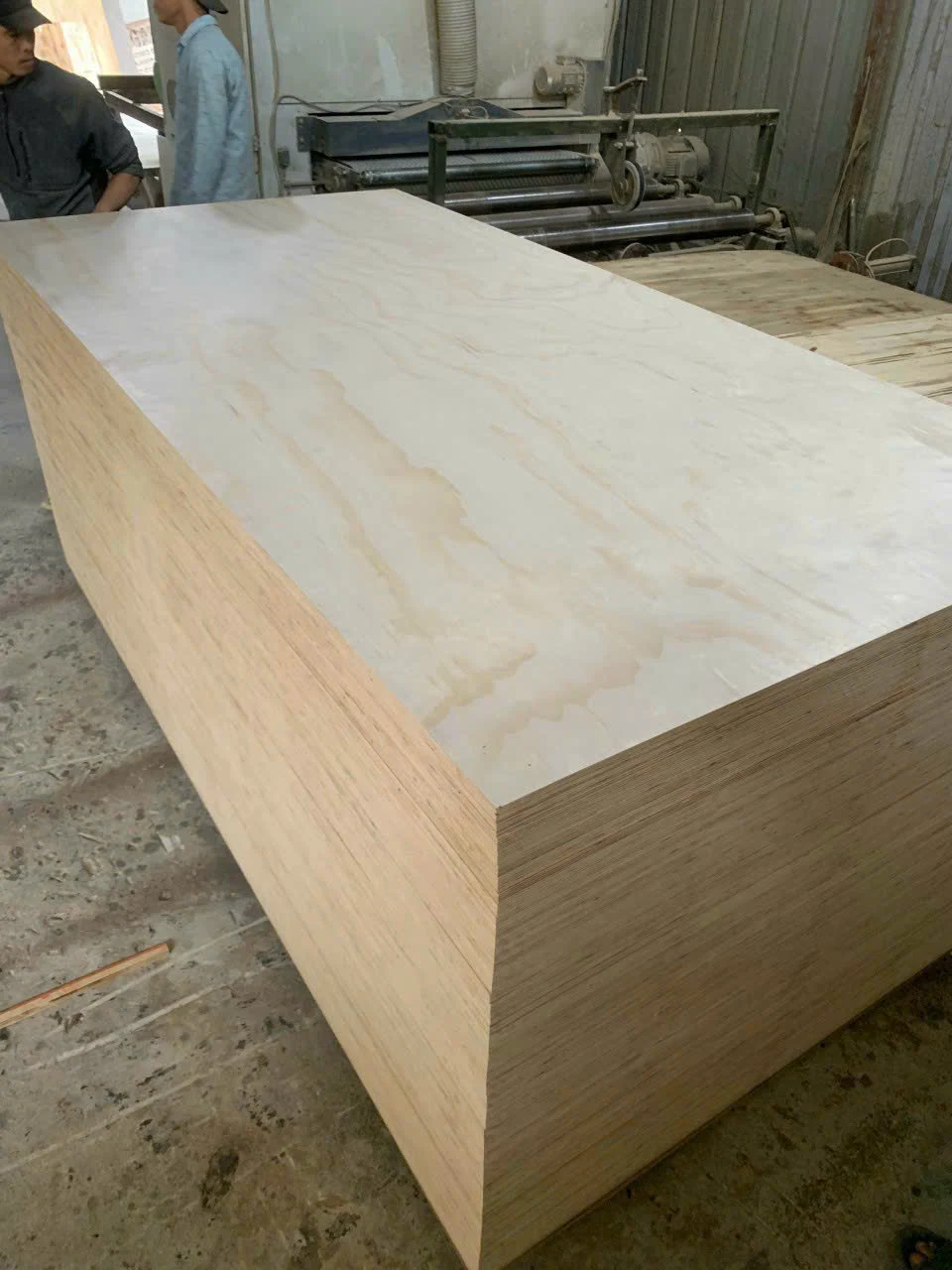
A standard Vietnamese birch plywood panel consists of:
| Layer | Material | Origin |
|---|---|---|
| Face veneer | Birch, 0.2–0.4mm thick | Imported (Russia / China) |
| Back veneer | Birch, 0.2–0.4mm thick | Imported (Russia / China) |
| Core layers | Styrax (bồ đề), full stitched | Northern Vietnam |
| Glue | Melamine (MR) | Factory input |
| Emission standard | E0 or E1 (furniture grade) | Tested per batch |
The core construction method determines panel quality more than almost any other factor. Premium furniture-grade birch plywood from Mika Plywood uses full stitched core — veneer strips sewn together with no gaps or overlaps across every ply. This delivers consistent flatness, eliminates internal voids, and produces the surface stability required for European and US furniture manufacturing.
Lower-grade products use loose-laid or edge-jointed cores. These are cheaper but show internal gaps in cross-section cuts, which affects glue bond strength and dimensional stability under humidity changes.
📌 Why Styrax Is the Correct Core Species
Styrax (bồ đề, Styrax tonkinensis) is a fast-growing plantation species unique to northern Vietnam. Its core properties make it the practical substitute for birch core:
- Density: 480–500 kg/m³ — lightweight, similar to European birch core
- Color: Light creamy white — compatible with birch face aesthetics when cross-section is visible
- Workability: Takes glue uniformly, low warping tendency, stable after pressing
- Availability: Abundant in northern Vietnam, plantation-grown, FSC certifiable
⚠️ Important: Vietnam does not have commercial birch core supply. Any supplier claiming to use “birch core from Vietnam” is misrepresenting the product. The correct terminology is styrax core — the local birch alternative.
Acacia core (~580 kg/m³) and eucalyptus core (650–750 kg/m³) are both available in Vietnam but are less suitable for premium birch plywood: acacia is darker and denser than ideal for furniture panels, while eucalyptus adds significant weight that increases shipping cost per CBM. Styrax at 480–500 kg/m³ is optimal for furniture-grade birch plywood.
See how core species affect 40HC container capacity →
📋 Birch Plywood Grades: D, E, F Explained
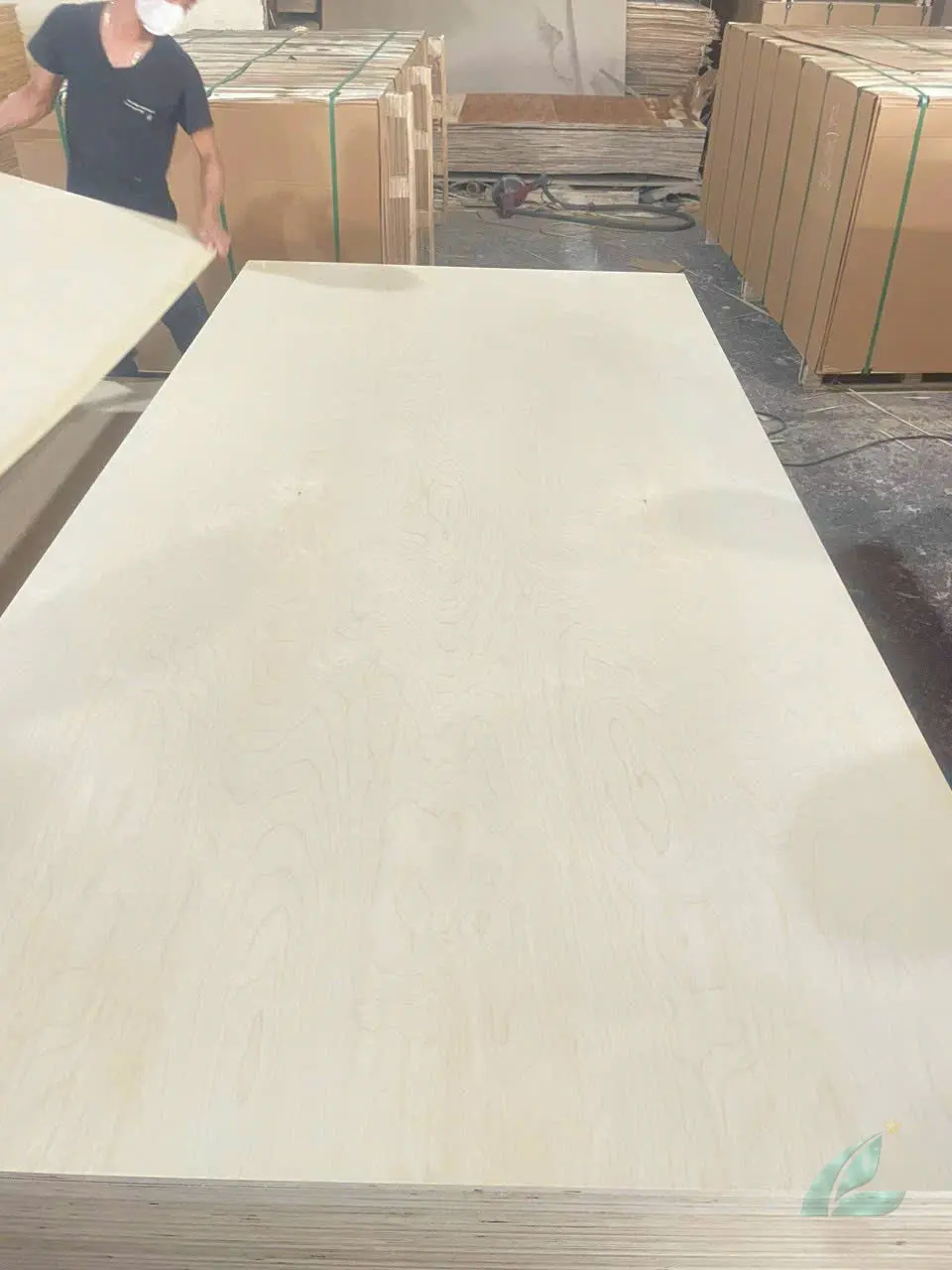
The grading system for birch veneer in Vietnam differs from the A/B system used for most other face veneers. Birch face veneer uses a D/E/F scale — and this is the source of frequent misquotations and ordering errors.
| Grade | Description | Typical Use |
|---|---|---|
| D | Best available from Vietnam. Sound face, minimal repairs, tight knots permitted | Premium furniture, visible surfaces |
| E | Clean face with small knots and permitted repairs | Interior furniture, non-visible surfaces |
| F | More repairs and knots permitted | Painted applications, structural use |
Grade D is the best birch grade available from Vietnamese manufacturers. There is no Grade A, Grade B, or Grade C in the Vietnamese birch veneer supply chain. Buyers accustomed to European Baltic birch (which uses a different B/BB/CP/C system) must align their specification language before ordering.
⚠️ Note: If a Vietnamese supplier quotes you “Grade A” or “Grade B” birch plywood, ask for a sample inspection immediately. These designations do not exist in the standard Vietnamese birch grading framework.
“When buyers come to us with Baltic birch specs, the first thing we clarify is the grading terminology. D/E/F from Vietnam is not inferior — it describes the same quality range under a different naming convention. A Grade D birch panel from our factory meets all the visual standards EU furniture buyers require.” — Jay, International Sales Manager, Mika Plywood
🔧 Glue and Emission Standards
Glue type and emission standard are two separate specifications — a distinction many buyers (and some suppliers) confuse.
Glue type defines water resistance:
- Melamine (MR): Passes 12-hour boil test. Standard for furniture and interior applications.
- Phenolic (WBP): Passes 72-hour boil test. Used for construction grades — not typical for birch plywood.
Emission standard defines formaldehyde release:
- E0 / CARB P2: ≤0.5 mg/L — mandatory for US and EU interior furniture export
- E1: ≤1.5 mg/L — acceptable for general European commercial interiors
- E2: ≤5.0 mg/L — industrial or exterior only; NOT acceptable for US or EU furniture
For birch plywood destined for European furniture factories, kitchen cabinet manufacturers, or US-market interior applications: Glue: Melamine (MR). Emission: E0 (≤0.5 mg/L, CARB Phase 2 compliant).
Do not conflate these two parameters. Specifying “WBP E0” or “MR, E0, E2” is internally contradictory and signals to the factory that the buyer’s technical specification is unclear — which delays quotation or results in incorrect product.
Read the complete guide to glue types and emission standards →
📐 Specifications: Thicknesses, Sizes, Tolerances
Mika Plywood produces birch plywood across the full standard thickness range:
| Thickness (mm) | Common Application |
|---|---|
| 4, 5 | Drawer bottoms, cabinet backs |
| 9, 12 | Cabinet carcasses, shelving |
| 15, 18 | Cabinet doors, structural panels |
| 21, 25 | Work surfaces, heavy furniture |
| 28, 30 | Specialty structural applications |
Standard sheet sizes:
- 1220 × 2440mm (4 × 8 ft) — most common globally
- 1250 × 2500mm — metric format preferred by European buyers
Tolerances:
- Thickness: ±0.3mm (calibrated by wide-belt sander)
- Length/width: ±2mm
Sanding is standard for all furniture-grade birch plywood — both calibration sanding (to achieve thickness tolerance) and finish sanding (for surface smoothness). This differentiates furniture-grade production from commercial or packing grades where sanding is skipped.
🏭 How Vietnamese Factories Make Birch Plywood
The manufacturing sequence for birch plywood at Mika Plywood’s premium furniture facility in Ha Hoa District, Phu Tho Province:
- Core veneer preparation — Styrax logs are rotary-peeled to produce core veneer. Target moisture content: 6–8% before pressing.
- Core stitching — Core veneer strips are stitched full-width (no gaps, no overlaps) on automated stitching lines. This full-stitched construction is the production differentiator for furniture grade.
- Birch face veneer — Imported birch veneer arrives as peeled sheets. Face and back pieces are selected by grade (D, E, or F depending on order spec).
- Glue spreading — Melamine (MR) resin applied to core surfaces by roller spreader.
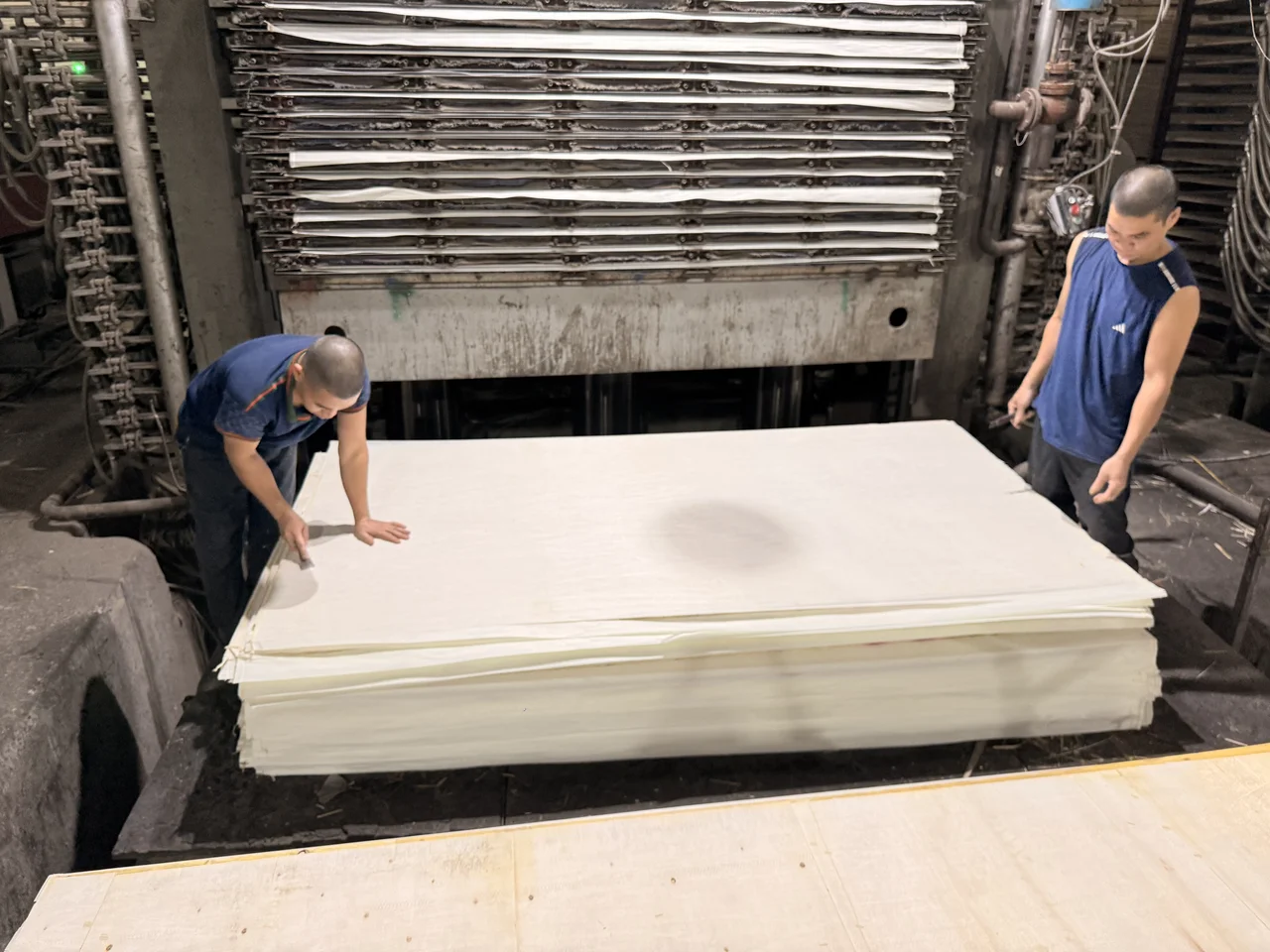
- Cold pre-pressing — Assembly laid up (back / core plies / face) and pre-pressed to align layers.
- Hot pressing — Multi-daylight press at controlled temperature and time cycle per glue type and thickness.
- Trimming — Panels trimmed to final dimensions (±2mm).
- Sanding — Wide-belt calibration sanding (thickness tolerance) followed by finish sanding.
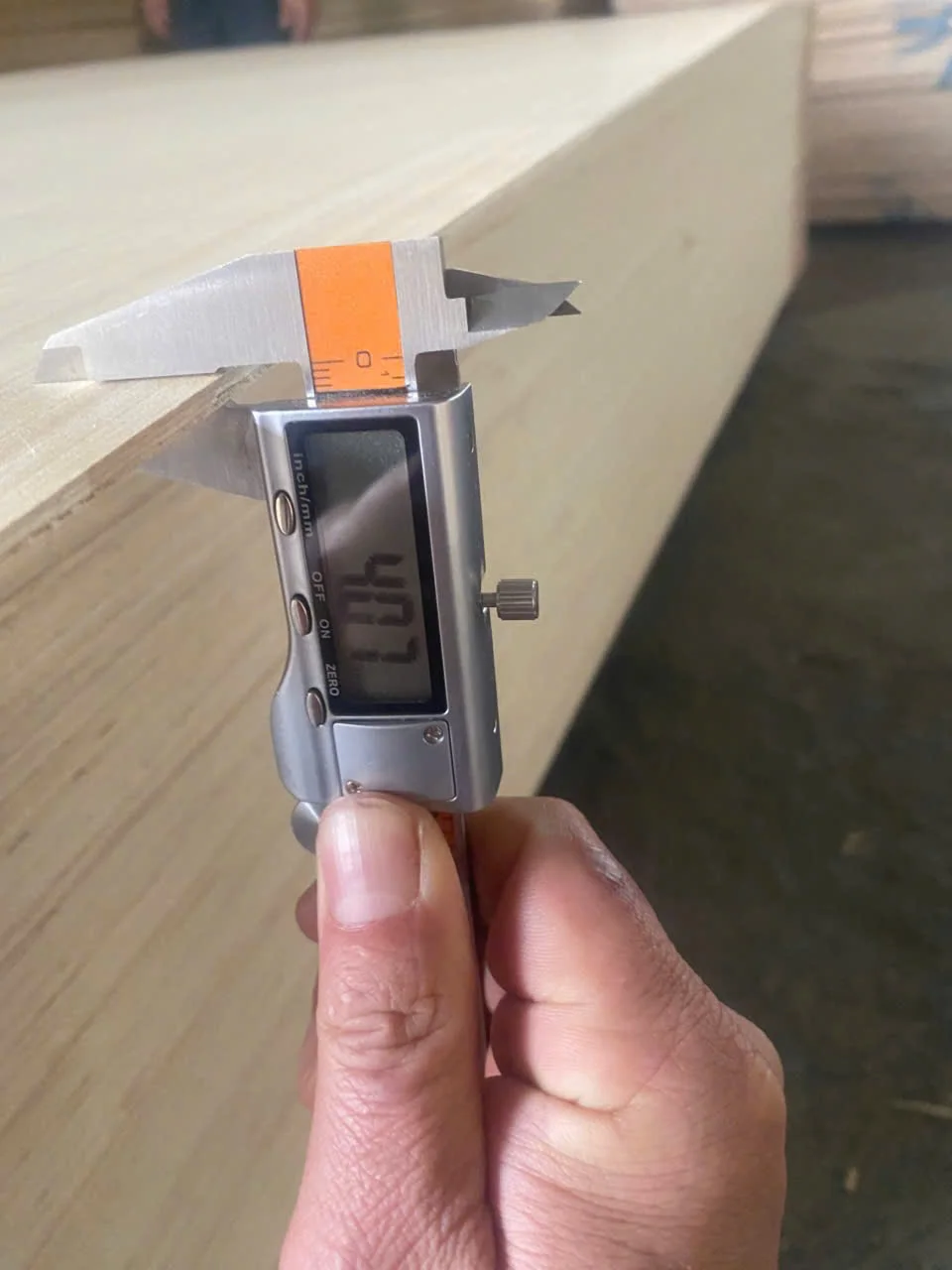
- Quality check — Thickness spot-check by caliper, surface inspection under raking light, moisture check per batch.
- Packing — Strapped pallets, edge-protected, ready for container loading.
The full process from raw core to finished panel takes 3–5 days per production run. Mixed specs (multiple thicknesses or grades) within a single container order are accommodated, though different thicknesses require separate pallet stacks for accurate CBM calculation.
📊 Who Buys Birch Plywood from Vietnam?
Buyers of birch plywood Vietnam sources fall into four distinct B2B categories:
European furniture manufacturers — EU furniture factories sourcing birch plywood for cabinet carcasses, shelving, and drawer systems. The requirement is typically E0 or E1, Grade D face, 1250×2500mm metric size, sanded both sides.
South Korean interior contractors — Korea’s construction sector consumes significant birch plywood for built-in furniture and interior fit-out. E0 is effectively mandatory for Korean market.
US kitchen cabinet importers — CARB Phase 2 (equivalent to E0) is legally required. Birch D/E grade, 4×8ft, 18mm or 3/4-inch nominal thickness is the most common spec.
Indian furniture importers — Though India’s primary face veneer preference is Gurjan or Bintangor for mass-market products, premium-tier Indian furniture manufacturers increasingly source birch-faced panels for export-oriented cabinetry production.
The shift from Chinese and Russian birch plywood toward birch plywood Vietnam supply has accelerated since 2022. US Section 301 tariffs on Chinese wood products and reduced Russian birch supply following trade disruptions have made Vietnam a structurally more reliable source for international buyers (EIA Timber Trade Briefing, 2022).
✅ Ordering Checklist: Birch Plywood from Vietnam
Before sending a request for quotation on birch plywood Vietnam, confirm these parameters: