
How to estimate plywood pallet weight before container loading. Formula, worked examples by acacia, eucalyptus, and styrax core species at every thickness.
This guide uses factory-executed data from Mika Plywood Vietnam’s export loading program. All formulas and reference tables match real 40HC container configurations shipped to 20+ countries. No theoretical estimates.
— David Duc Do, Export Project Leader, Mika Plywood Vietnam (10+ years)
📋 Why Pallet Weight Matters Before Container Loading
Underestimating plywood pallet weight is the fastest way to exceed a 40HC container’s payload ceiling mid-loading.
The 40HC payload limit is hard at 28.5 MT. Exceeding it means pulling sheets off loaded pallets on the factory floor, recounting, re-strapping, and reissuing packing documents. That delay adds 4–8 hours on loading day and often forces a rescheduled vessel booking.
International buyers from India, Korea, and Europe frequently receive packing lists without per-pallet weight breakdowns. When their customs broker or inland freight forwarder requests the data, sellers cannot produce it. The result: manual re-estimation at destination, often inaccurate, creating disputes over declared weights.
Plywood pallet weight estimation solves this upstream. Calculate before loading, not after problems appear.
Three variables govern every pallet weight calculation:
- Core species — determines board density (kg/m³). For the full weight reference, see the plywood weight table for all core types and thicknesses
- Sheet dimensions — determines volume per sheet
- Thickness — determines how many sheets stack within the height limit
Get those three right and the number follows from a four-step formula — or skip the manual math and use our pallet weight calculator.
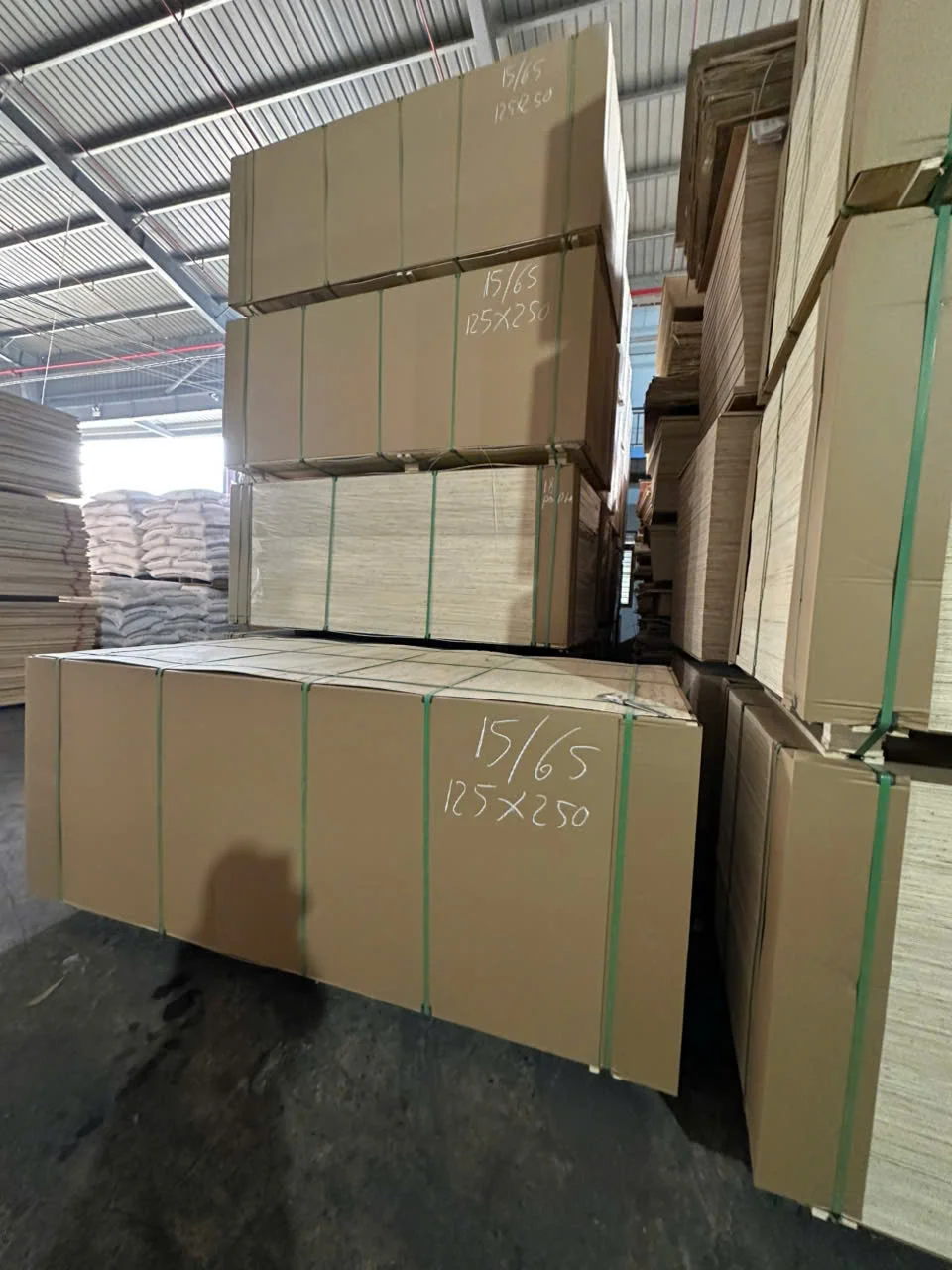
Plywood pallets at Mika Plywood facility, Phu Tho Province. Each pallet is weighed and labeled before entering the 40HC container loading sequence.
📐 The 4-Step Pallet Weight Formula
📌 Step-by-Step Calculation (1220×2440mm Sheets)
This formula applies to the standard Asian sheet size of 1220×2440mm. For Euro-standard 1250×2500mm, see the adjusted stack heights in §5.
Step 1: sheets_per_pallet = floor(stack_height_mm ÷ thickness_mm)
Step 2: weight_per_sheet_kg = 1.220 × 2.440 × (thickness_mm ÷ 1000) × density_kg_m3
Step 3: pallet_weight_kg = sheets_per_pallet × weight_per_sheet_kg
Step 4: total_container_weight_MT = pallet_weight_kg × pallets_per_container ÷ 1000
Stack heights (1220×2440mm):
| Core species | Stack height | Reason |
|---|---|---|
| Styrax | 1,000 mm | Low density — full height safe |
| Acacia | 1,000 mm | Medium density — full height safe |
| Eucalyptus | 970 mm | Higher density — reduced to protect payload |
Core densities (Mika Plywood production data, 2026):
| Core | Density | Notes |
|---|---|---|
| Styrax | 500 kg/m³ | Lightest Vietnamese core, preferred for furniture |
| Acacia | 580 kg/m³ | Most common Vietnamese core, budget tier |
| Eucalyptus | 650 kg/m³ | Heaviest, strongest, for construction and flooring |
⚠️ Important: These density values apply to cores sourced in Vietnam. Eucalyptus density for Vietnamese plantation timber is 650 kg/m³, not the 750+ kg/m³ cited for old-growth temperate eucalyptus. Always use the Vietnamese production figure when calculating container loads from Mika Plywood.
🔧 Worked Examples — 18mm Plywood
18mm is the most commonly exported thickness for furniture carcass and cabinet construction. It is also the configuration most often used to verify whether payload headroom exists for mixed containers.
⚙️ 18mm Styrax Core (1220×2440mm)
Step 1: sheets_per_pallet = floor(1000 ÷ 18) = 55 sheets
Step 2: weight_per_sheet = 1.220 × 2.440 × 0.018 × 500 = 26.8 kg
Step 3: pallet_weight = 55 × 26.8 = 1,474 kg
Step 4: container_weight = 1,474 × 18 pallets ÷ 1,000 = 26.53 MT
Payload headroom remaining: 28.5 − 26.53 = 1.97 MT — workable buffer for mixed additions.
⚙️ 18mm Acacia Core (1220×2440mm)
Step 1: sheets_per_pallet = floor(1000 ÷ 18) = 55 sheets
Step 2: weight_per_sheet = 1.220 × 2.440 × 0.018 × 580 = 31.1 kg
Step 3: pallet_weight = 55 × 31.1 = 1,711 kg
Step 4: container_weight = 1,711 × 16 pallets ÷ 1,000 = 27.38 MT
Payload headroom remaining: 28.5 − 27.38 = 1.12 MT — tight. Adding any extra sheets risks a breach.
⚙️ 18mm Eucalyptus Core (1220×2440mm)
Step 1: sheets_per_pallet = floor(970 ÷ 18) = 53 sheets  ← reduced stack height
Step 2: weight_per_sheet = 1.220 × 2.440 × 0.018 × 650 = 34.8 kg
Step 3: pallet_weight = 53 × 34.8 = 1,844 kg
Step 4: container_weight = 1,844 × 15 pallets ÷ 1,000 = 27.66 MT
Payload headroom remaining: 28.5 − 27.66 = 0.84 MT — minimal margin. Eucalyptus containers operate closest to the payload ceiling.
💡 Key insight: The same 18mm thickness in three different cores spans from 26.5 MT to 27.7 MT total container weight. That 1.2 MT range explains why export programs specify core species, not just thickness, in every packing document.
Get a packing breakdown for your specific container order — no commitment required.
📊 Pallet Weight Reference Table — Common Thicknesses (1220×2440mm)
Pre-computed for immediate use in container planning. All values follow the four-step formula using Mika Plywood production density data.
| Thickness | Styrax (S/P) | Acacia (S/P) | Eucal (S/P) | Wt/Pallet Styrax | Wt/Pallet Acacia | Wt/Pallet Eucal |
|---|---|---|---|---|---|---|
| 9mm | 111 sheets | 111 sheets | 107 sheets | 1,487 kg | 1,721 kg | 1,862 kg |
| 12mm | 83 sheets | 83 sheets | 80 sheets | 1,485 kg | 1,722 kg | 1,856 kg |
| 15mm | 66 sheets | 66 sheets | 64 sheets | 1,472 kg | 1,709 kg | 1,862 kg |
| 18mm | 55 sheets | 55 sheets | 53 sheets | 1,474 kg | 1,711 kg | 1,844 kg |
| 25mm | 40 sheets | 40 sheets | 38 sheets | 1,489 kg | 1,727 kg | 1,838 kg |
S/P = sheets per pallet. Styrax & Acacia: 1,000 mm stack. Eucalyptus: 970 mm stack.
📌 Reading the Table
Three observations that save time in planning:
-
Weight per pallet stays remarkably consistent across thicknesses for the same core — roughly 1,470–1,490 kg for styrax, 1,700–1,730 kg for acacia, 1,840–1,870 kg for eucalyptus. This is not coincidence. As thickness increases, sheets per pallet decreases proportionally, keeping pallet weight nearly constant.
-
The difference between styrax and eucalyptus pallets is approximately 370 kg at 18mm. Over a full 40HC, that difference — spread across core counts — determines whether you get 18 pallets (styrax) or 15 pallets (eucalyptus).
-
Pallet count, not pallet weight, is the primary container variable. Eucalyptus does not pack fewer pallets because pallets are heavier individually — it packs fewer because the cumulative weight of 16+ pallets exceeds the 28.5 MT ceiling.
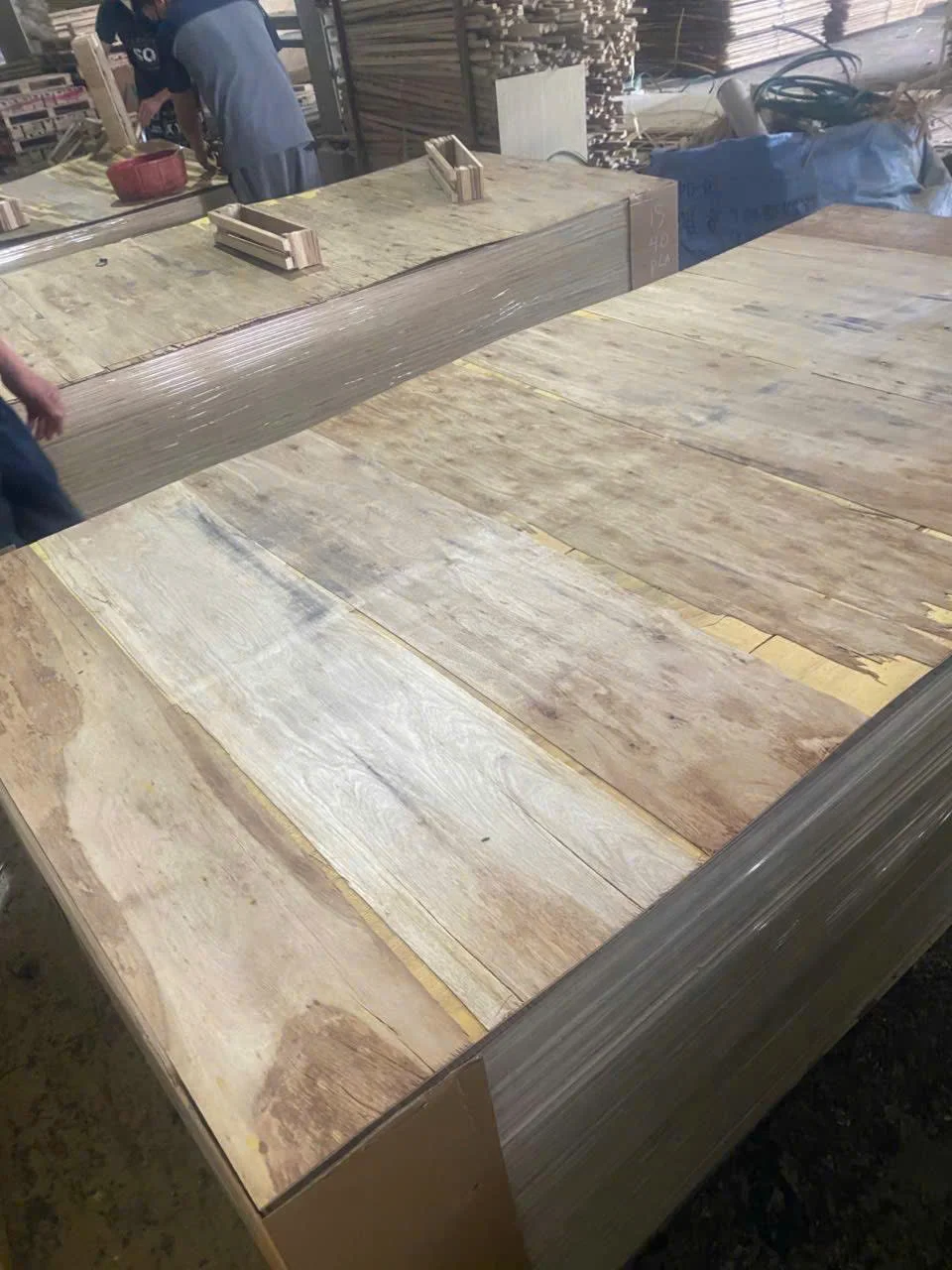
Forklift handling plywood pallets at Mika Plywood. Pallet height standardized to 1,000 mm for styrax and acacia cores to maintain forklift safety margins.
📦 Container Summary — Pallet Weight to Total Payload
Use this table to cross-check estimated container weight before issuing a packing list.
| Core | Pallets/40HC | Avg Wt/Pallet | Total Weight | Payload Ceiling |
|---|---|---|---|---|
| Styrax (18mm) | 18 | ~1,474 kg | 26.53 MT | ✅ 1.97 MT headroom |
| Acacia (18mm) | 16 | ~1,711 kg | 27.38 MT | ✅ 1.12 MT headroom |
| Eucalyptus (18mm) | 15 | ~1,844 kg | 27.66 MT | ✅ 0.84 MT headroom |
All three configurations stay below the 28.5 MT ceiling — but the margin differs by factor of 2.3x between styrax and eucalyptus. Buyers blending core types in one shipment should always calculate against the eucalyptus constraint first.
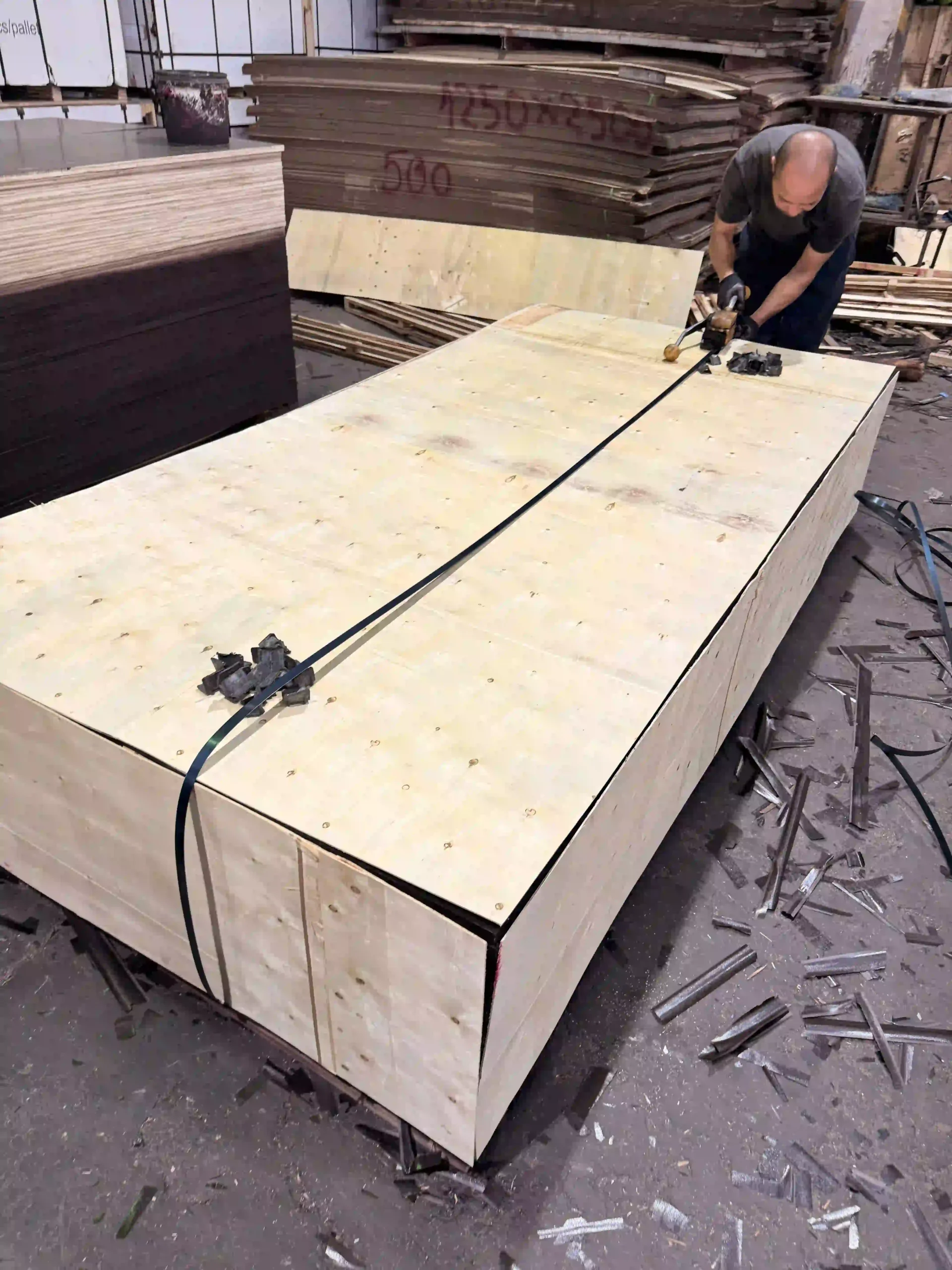
Mika Plywood export pallets — strapped and labeled before 40HC container loading. Phu Tho Province, Vietnam.
⚙️ What Drives Pallet Weight Variation
Core Species Is the Primary Driver
The density gap between styrax (500 kg/m³) and eucalyptus (650 kg/m³) represents a 30% difference in volumetric weight. For buyers sourcing mixed species configurations, this gap must be tracked per pallet, not per container average.
A container carrying 8 pallets of 18mm styrax and 8 pallets of 18mm eucalyptus cannot be estimated as 16 pallets at an average density. The correct method: calculate each group separately, then sum. (Mika Plywood production data, 2026)
Thickness Controls Sheets Per Pallet
Thinner sheets allow more sheets per pallet — but only up to the stack height limit. At 9mm, styrax produces 111 sheets per pallet. At 18mm, the same core produces 55 sheets. The sheet count is halved, but the weight per pallet changes by less than 1% because volume per pallet stays nearly constant.
This is why weight per pallet is nearly independent of thickness for a given core. Importers reviewing freight manifests can use the per-pallet weight as a fast consistency check across thicknesses without recalculating from scratch.
Sheet Size Alters the Calculation Boundary
The 1250×2500mm Euro-standard sheet changes two parameters simultaneously:
- Volume per sheet increases ~5% versus 1220×2440mm
- Stack heights for acacia and eucalyptus are further reduced (970 mm and 900 mm respectively)
For Euro-size sheets, recalculate using adjusted stack heights. The formulas remain identical — only the input constants change. See the container packing calculation guide for complete 40HC packing tables by sheet size and core.
📊 Weight Per Sheet — Quick Reference
Weight per sheet is the foundational number. Every pallet and container estimate builds from it.
weight_per_sheet_kg = L_m × W_m × thickness_m × density_kg_m³For 1220×2440mm at common thicknesses:
| Thickness | Styrax (500) | Acacia (580) | Eucalyptus (650) |
|---|---|---|---|
| 9mm | 13.4 kg | 15.5 kg | 17.4 kg |
| 12mm | 17.9 kg | 20.7 kg | 23.2 kg |
| 15mm | 22.3 kg | 25.9 kg | 29.1 kg |
| 18mm | 26.8 kg | 31.1 kg | 34.8 kg |
| 25mm | 37.2 kg | 43.2 kg | 48.4 kg |
Eucalyptus values based on 650 kg/m³ Vietnamese plantation density. (Mika Plywood production data, 2026)
The plywood weight per pallet is these per-sheet figures multiplied by sheets per pallet (Step 3 of the formula above). Pallet materials — wood base, corner protectors, strapping — add approximately 20–30 kg per pallet and are typically negligible at scale but worth noting for customs declaration accuracy.
⚠️ Note: Quoted FOB prices from Vietnamese suppliers are influenced by core species weight because heavier containers cost more to handle at Hai Phong Port. An 18mm eucalyptus container adds roughly 1.2 MT over an 18mm styrax container of the same CBM. That weight difference affects port handling fees and is sometimes absorbed differently in FOB vs CIF quotations.
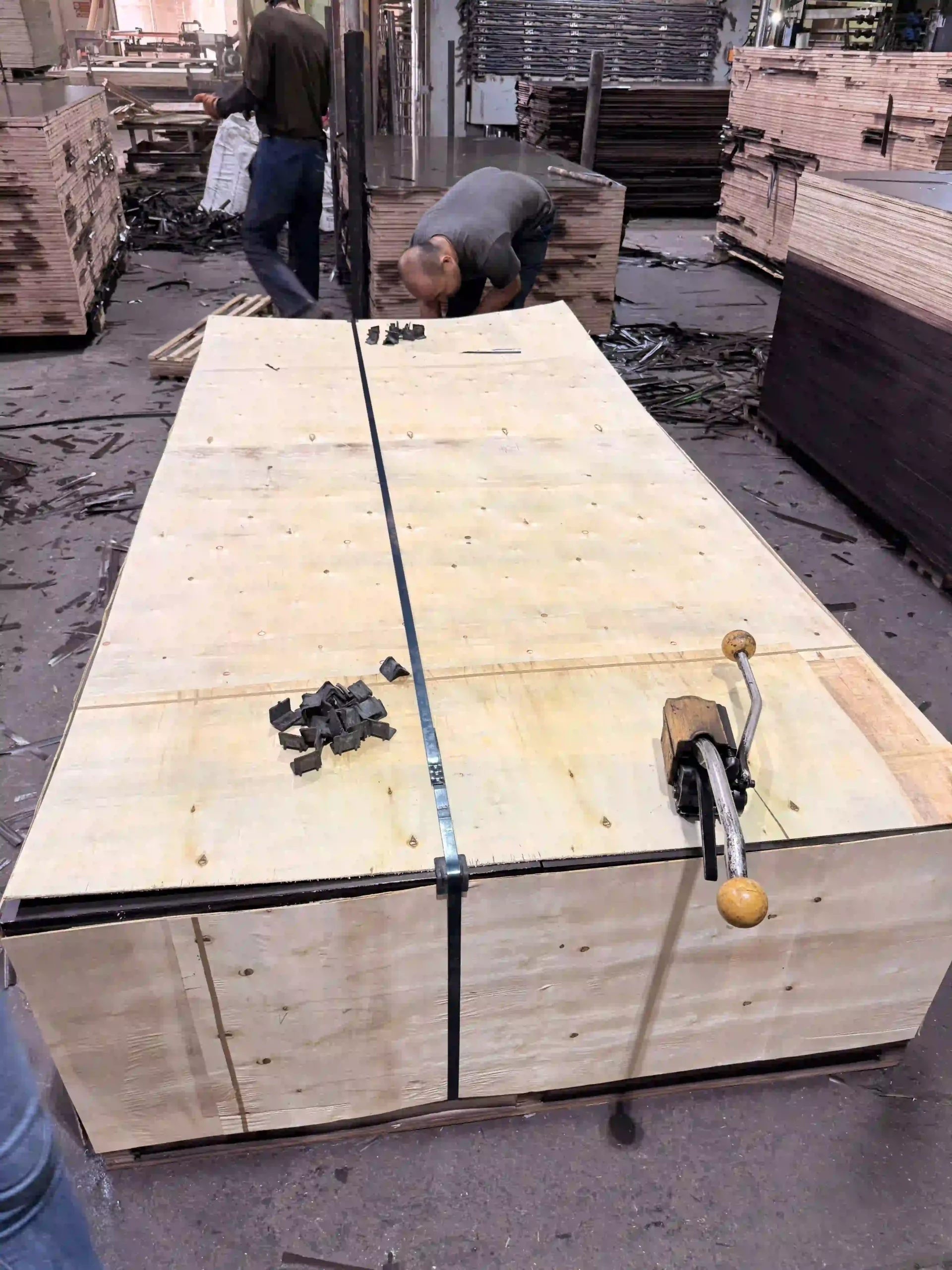
Mika Plywood export pallets with packing labels. Each pallet tracked by sheet count, species, and weight for customs documentation.
🔗 Connecting Pallet Weight to Container Planning
Pallet weight estimation is one step in a broader container planning workflow. Once you have the per-pallet weight, the next step is checking whether the full 40HC configuration — pallets, layout, and mixed specs — stays within physical and regulatory constraints.
For the complete workflow, the plywood container packing calculation guide covers:
- Full pallet count tables by core and thickness
- 40HC container layout (16 pallets flat + 2 upright at door end)
- CBM calculation alongside weight
- Mixed-thickness container handling rules
For quick CBM reference by thickness, see the plywood CBM per thickness complete table. Understanding plywood core types helps explain why density varies so significantly between the three Vietnamese core species and how it affects specifications beyond container loading.
The plywood sizes and thickness specification guide covers the full range of thickness options and how thickness selection interacts with pallet configuration and CBM efficiency.
Once pallet weights are confirmed, the next decision is securing method — see pallet wrapping vs strapping for plywood shipments for a side-by-side comparison of both approaches.
📋 Practical Checklist — Before You Finalize a Packing List
Before issuing or accepting a packing list for a plywood container: