BIS certification guide for Vietnam plywood imports to India. IS 303, IS 710, FMCS process, QCO Feb 2025 requirements, and compliance checklist.
If you are importing plywood from Vietnam into India right now, BIS certification is no longer optional. It is the law. Since February 28, 2025, the Quality Control Order (QCO) for plywood mandates that every sheet sold in India — whether manufactured domestically or imported — must carry the ISI mark under IS 303 or IS 710.
For Indian buyers sourcing furniture-grade or shuttering-grade plywood from Vietnam, BIS certification plywood India requirements are now the foundational compliance step — before price, before lead time, before anything else.
This guide is written specifically for Indian B2B buyers and importers. It covers the standards, the certification process, import duties, the best Vietnam plywood products for the Indian market, and what you need to do before your next shipment.
⚠️ Important: This guide is educational. Consult a BIS consultant or customs broker for case-specific compliance advice.
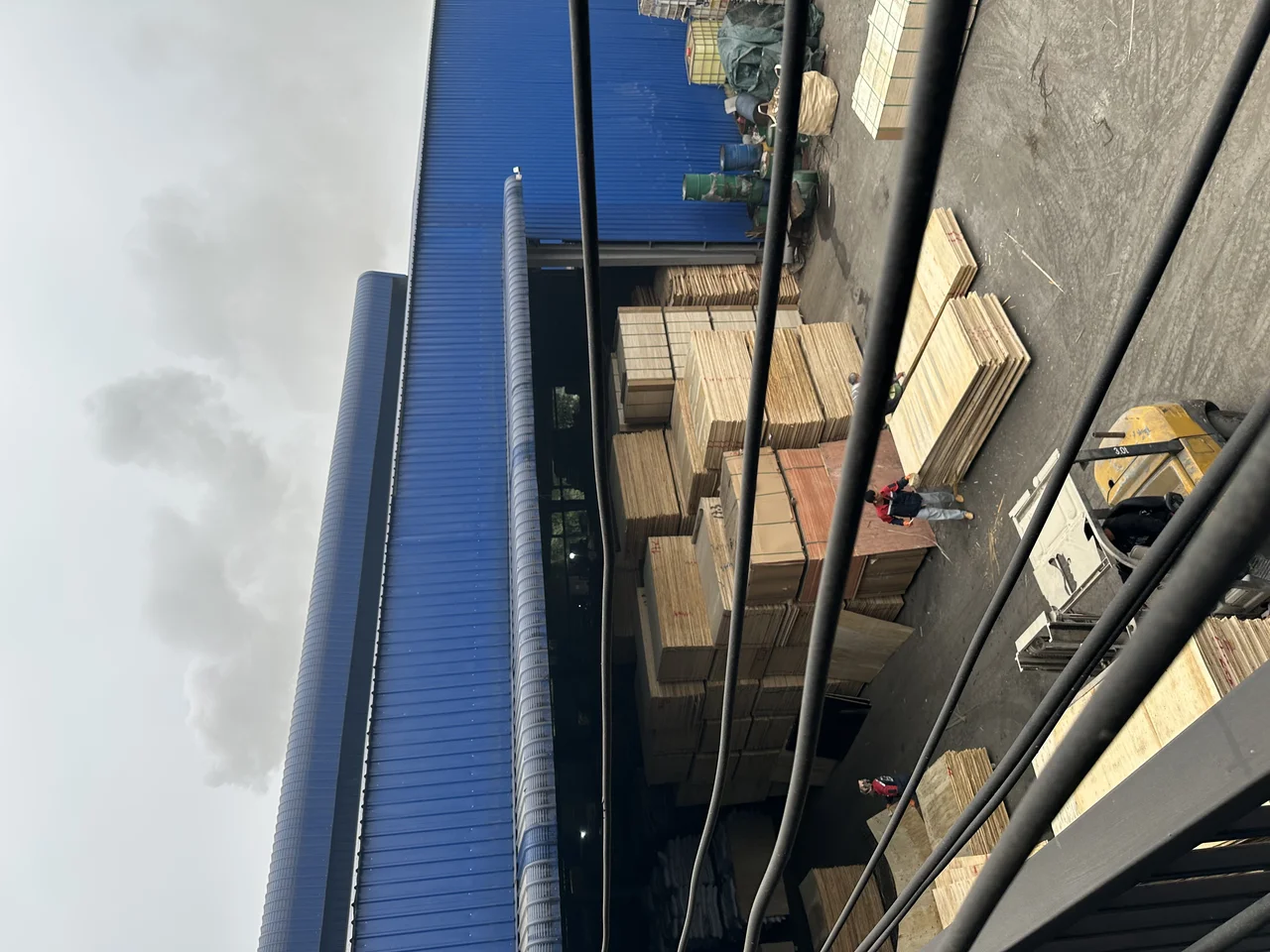 Mika Plywood production line — manufacturing IS 303-compliant plywood for the India export corridor
🇮🇳 India-Vietnam Plywood Trade: The Numbers
India is Vietnam’s largest plywood export market by volume. The scale of the trade corridor makes the BIS compliance question critical for thousands of businesses on both sides.
Key trade statistics (Mar 2023 – Feb 2024):
| Metric | Value |
|---|---|
| Total shipments | 11,459 |
| Trade value (2023) | US$34.48 million |
| Vietnamese exporters | 677 |
| Indian buyers | 1,081 |
| YoY growth | 24%+ |
India accounts for over 40% of Vietnam’s total plywood export volume. The buyers span the full value chain: furniture OEMs in Rajasthan and Gujarat, construction contractors in Maharashtra and Tamil Nadu, plywood distributors across tier-2 cities, and kitchen cabinet converters operating across NCR.
Why Vietnam dominates this corridor:
- Cost advantage: Vietnam plywood is typically 5-15% cheaper than equivalent product from Malaysia or Indonesia, once freight is factored in.
- Transit speed: 7-10 days port-to-port from Haiphong/Ho Chi Minh City to Nhava Sheva, Mundra, or Chennai. Faster than Indonesia for western India ports.
- Product range: Vietnam factories produce the full spectrum — raw core-veneer matt substrate, gurjan face, film-faced shuttering board, and anti-slip decking — all in one supply relationship.
- North Vietnam advantage: 80%+ of Vietnam’s export-grade plywood comes from the north (Phú Thọ, Hà Nội, Bắc Ninh, Yên Bái). These factories have direct access to acacia, eucalyptus, and styrax core species at source, keeping costs lower than southern Vietnam suppliers who often re-buy from the north.
For Indian buyers scaling their Vietnam imports, understanding BIS certification is now the foundational requirement.
📋 What is BIS Certification and Why It’s Now Mandatory
The Bureau of Indian Standards (BIS) is India’s national standards body, operating under the Ministry of Consumer Affairs, Food and Public Distribution. BIS issues ISI marks — the quality certification mark that appears on certified products sold in India.
“Indian buyers need to understand that BIS certification is non-negotiable for customs clearance. We maintain active BIS IS:710 and IS:303 registrations — buyers who source from non-BIS factories face rejection at the port.” — Jay, International Sales Manager, Mika Plywood
📌 Quality Control Order (QCO) — The Legal Trigger
The Government of India issued the Plywood and Block Board (Quality Control) Order under the BIS Act 2016. This QCO mandates that plywood and block board products must conform to:
- IS 303:2018 — Plywood for General Purposes
- IS 710:2010 — Plywood for Marine Use
- IS 1659 — Block Board
The QCO applies to both domestic manufacturers and imported products. There is no exemption for foreign-origin plywood.
📌 Phased Enforcement Timeline
| Enterprise Category | Enforcement Date |
|---|---|
| Large & Medium Enterprises | February 28, 2025 |
| Small Enterprises | May 28, 2025 |
| Micro Enterprises | August 28, 2025 |
If you are importing plywood from Vietnam as a large or medium enterprise, you have been under full enforcement since February 2025.
📌 What “ISI Mark” Means in Practice
The ISI mark on a plywood sheet means:
- The manufacturing factory holds a valid BIS license for that product type.
- The product has been tested and conforms to the specified Indian Standard (IS 303 or IS 710).
- A batch-level traceability system is in place for recall if a defect is found.
- Annual surveillance audits have been passed to maintain license validity.
For imported plywood, the foreign factory must hold the BIS license directly — Indian importers cannot “apply on behalf of” the manufacturer. The certification lives at the factory level.
📐 IS 303 — Plywood for General Purposes
IS 303 is the most commercially relevant standard for Indian plywood imports from Vietnam. It covers the broadest application range: furniture, interior paneling, ceiling, flooring substrates, office partitions, shop fitting, and general construction.
Adhesive Classification (IS 303)
IS 303 classifies plywood by its adhesive bond strength — specifically by how the adhesive performs under moisture exposure:
| Grade | Full Name | Adhesive Type | Test | Applications |
|---|---|---|---|---|
| MR | Moisture Resistant | Melamine Urea Formaldehyde | 12-hour cold water soak | Indoor furniture, cabinets, office paneling |
| BWR | Boiling Water Resistant | Melamine Urea Formaldehyde (enhanced) | Boiling water cycle | Kitchens, bathrooms, semi-outdoor |
| BWP | Boiling Water Proof | Phenol Formaldehyde (WBP) | 72-hour boiling water | Outdoor, high-humidity, construction |
⚠️ Note: Adhesive type (MR/BWR/BWP) and formaldehyde emission level (E0/E1/E2) are completely separate specifications. An MR-grade board can be E0 emission level. A BWP-grade board has phenolic adhesive but still has an emission classification. Do not conflate these two concepts when specifying to your supplier.
In Vietnam context:
- MR and BWR grades use Melamine (UF) adhesive — standard in furniture plywood
- BWP grade uses Phenolic (WBP) adhesive — same adhesive used in film-faced shuttering boards
Surface Quality Grades (IS 303)
IS 303 also defines surface quality based on face veneer defects:
| Grade | Face/Back | Permitted Defects |
|---|---|---|
| AA | AA/AA | Virtually no defects — premium export quality |
| AB | AA/BB | Minor defects on back face — standard commercial |
| BB | BB/BB | Defects permissible within limits |
| C | — | Utility grade, defects acceptable |
| D | — | Reject/packing grade |
Most Indian furniture importers specify AB grade — premium face, acceptable back. Premium segment buyers (luxury furniture, branded interiors) specify AA.
Thickness Range Under IS 303
IS 303 covers plywood from 3mm to 25mm. Vietnam factories produce the full range:
- Standard thicknesses: 3, 4, 5, 6, 9, 12, 15, 18, 21, 25mm
- Tolerance: ±0.3mm on thickness, ±2mm on length/width
- Standard sheet size: 1220 × 2440mm (4×8 feet) — dominant in India
Custom sizes available on request (1220×1830mm for cabinets, 915×2440mm for specific joinery).
📐 IS 710 — Marine Plywood Standard
IS 710 is the premium tier — marine-grade plywood designed for prolonged water exposure. The requirements are significantly more stringent than IS 303.
IS 710 Core Requirements
| Parameter | Requirement |
|---|---|
| Adhesive | Phenol Formaldehyde (WBP) only — no melamine permitted |
| Bond test | 72-hour boiling water — must survive without delamination |
| Core voids | Minimal — solid core required |
| Face quality | Defect-free or near-defect-free |
| Emission | E1 standard minimum |
When to Specify IS 710 vs IS 303 BWP
Choose IS 710 when:
- Application involves direct prolonged water contact (boat hulls, marine docks, coastal construction)
- Building in high-humidity zones: Western Ghats, Northeast India monsoon regions, coastal Tamil Nadu
- Exterior cladding where delamination risk is unacceptable
- Project specifications explicitly require marine plywood
IS 303 BWP (phenolic) is sufficient when:
- Concrete formwork (film-faced plywood) — this is typically IS 303 BWP territory
- Outdoor furniture with top surface protection
- Semi-exterior applications with paint/coating coverage
Price reality: IS 710 marine plywood typically carries a 15-25% price premium over IS 303 BWP of equivalent thickness. For the Indian market, IS 710 is a niche segment — high demand in shipbuilding regions (Goa, Kerala, Gujarat coast), specialist contractors, and marine infrastructure projects.
🏭 FMCS: How Vietnam Factories Get BIS Certified
The Foreign Manufacturer Certification Scheme (FMCS) is BIS’s pathway for overseas factories to obtain an ISI mark license. This is the mechanism that makes it legal to sell Vietnam-origin plywood in India with BIS compliance.
FMCS Step-by-Step Process
Step 1 — Factory Pre-qualification
The Vietnam factory must have:
- Established quality management system (ISO 9001 recommended, not mandatory)
- Accredited testing laboratory on-site, or access to a BIS-recognized third-party lab
- Complete production records and batch traceability documentation
Step 2 — Nominate an Authorized Indian Representative (AIR)
The factory must appoint an AIR — an Indian legal entity that acts as the liaison with BIS for all regulatory correspondence, complaint handling, and product recall coordination. The AIR is legally accountable in India.
Step 3 — Technical File Submission
Submit to BIS:
- Product technical specifications (per IS 303 or IS 710)
- Factory process flow documentation
- Recent test reports from a BIS-recognized laboratory
- QMS documentation
- AIR appointment letter and credentials
Step 4 — BIS On-Site Audit
A BIS inspector visits the Vietnam factory. The audit covers:
- Production line verification against declared specifications
- Raw material (veneer, adhesive, film) traceability
- In-process quality control records
- Lab testing capability and calibration records
- Factory hygiene and safety standards
Step 5 — License Issuance
If the audit passes, BIS issues a license covering:
- Specific product types (IS 303 MR, IS 303 BWP, IS 710, etc.)
- Specific factory location (the certified factory, not the sales office)
- License validity period (typically 1-2 years, renewable)
Step 6 — Annual Surveillance
BIS conducts annual surprise audits and periodic market sample testing. Failure to maintain standards can result in license suspension.
FMCS Timeline and Cost
| Item | Estimate |
|---|---|
| Full process timeline | 6-12 months |
| BIS application fees | ₹50,000 – ₹2,00,000 |
| Lab testing (per product type) | ₹20,000 – ₹50,000 |
| AIR annual retainer | ₹30,000 – ₹80,000 |
| Audit travel costs (BIS inspector) | Factory’s responsibility |
⚠️ Key point: BIS has historically been more cautious with Vietnam factories compared to established manufacturers in Malaysia or China. The process can take longer than the official 6-month estimate if documentation is incomplete at initial submission. Factories with prior ISO 9001 certification and accredited in-house labs move significantly faster.
Current Status: Who is BIS-Certified in Vietnam?
Newwood Corporation is documented as one of the first Vietnam plywood factories to obtain BIS certification under FMCS for IS 303. Their certification established the precedent that Vietnamese factories can pass BIS audit requirements.
The number of BIS-certified Vietnam factories remains small relative to the 677+ exporters active in the India corridor. This creates a compliance gap — many exporters have been shipping to India without BIS certification, relying on buyers to absorb the compliance risk. Post-February 2025, this is no longer a viable arrangement.
“Indian buyers ask me every week about BIS certification plywood India status. My advice: do not wait for your current supplier to finish the FMCS process — verify the license exists today before your next order, or you risk detention at customs.” — Ms. Jay Pham, International Sales Manager, Mika Plywood
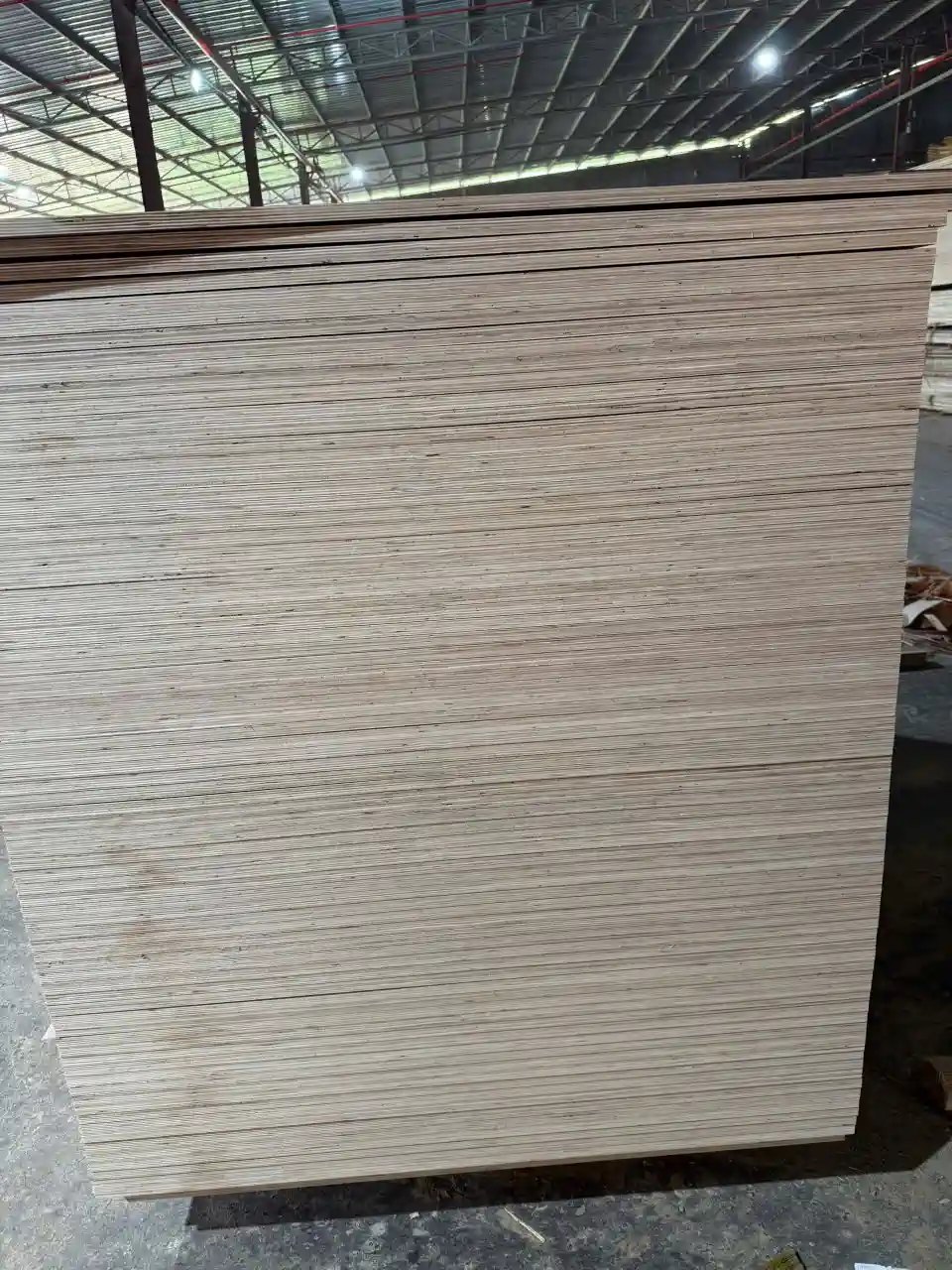 Edge quality inspection — a key checkpoint for IS 303 BIS certification compliance
Mika Plywood is actively pursuing BIS certification through the FMCS process. Contact us today for current certification status and to discuss compliance-ready sourcing options.
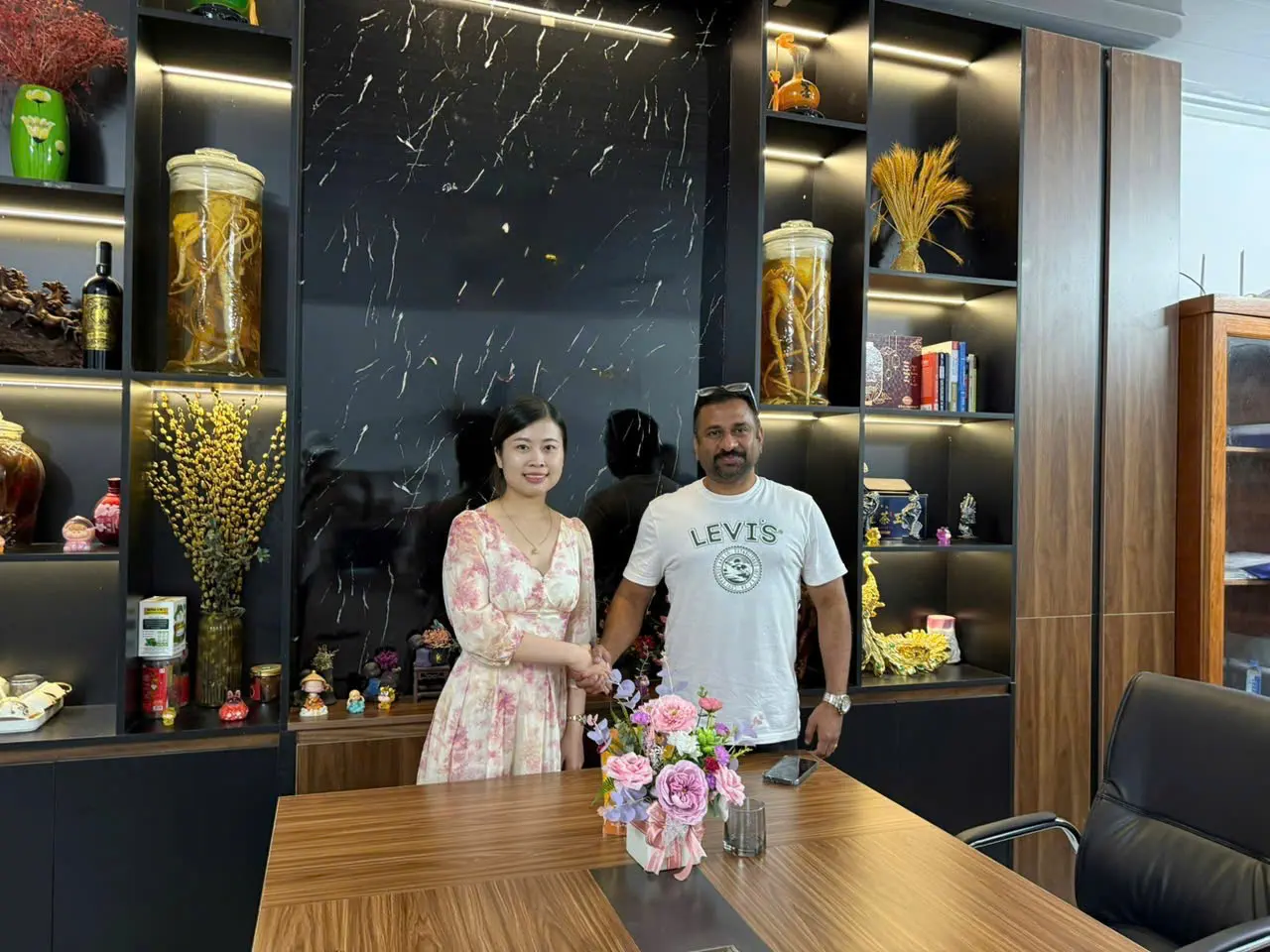 Indian buyers conducting factory audit — verifying BIS certification plywood India compliance before order placement
📊 India Import Duty Breakdown
Understanding the full duty structure is essential for landed cost calculations before placing a sourcing order.
HS Code for Plywood
Plywood from Vietnam to India is classified under HS Code Chapter 44, specifically:
| HS Code | Description |
|---|---|
| 4412.10 | Plywood with bamboo sheets |
| 4412.31 | Plywood with face/back of tropical wood (gurjan, bintangor, etc.) — most common |
| 4412.33 | Other plywood with face/back of non-coniferous |
| 4412.34 | Other plywood with face/back of coniferous (pine, etc.) |
| 4412.39 | Other plywood (core veneer matt, etc.) |
Duty Component Table
| Duty Component | Rate | Calculation Base |
|---|---|---|
| Basic Customs Duty (BCD) | 10-12% | CIF value |
| Social Welfare Surcharge (SWS) | 10% | On BCD amount |
| Integrated GST (IGST) | 5% | CIF + BCD + SWS |
| Total Effective Duty | ~18-27% | Varies by classification |
Example: 40HC Container Duty Calculation
Scenario: 18mm gurjan face plywood, IS 303 MR, acacia core. Styrax core, 18 pallets per 40HC.
| Item | Value |
|---|---|
| FOB price (Vietnam) | USD 18.50/sheet |
| Freight (Vietnam → Nhava Sheva) | USD 3,000/container |
| Insurance | USD 250 |
| CIF value | ~USD 75,500 |
| BCD at 10% | USD 7,550 |
| SWS at 10% of BCD | USD 755 |
| IGST at 5% of (CIF+BCD+SWS) | USD 4,190 |
| Total duties | ~USD 12,495 |
| Landed cost per container | ~USD 87,995 |
⚠️ Heads up: Duty rates and CIF valuations can be challenged or re-assessed by customs officers. Anti-dumping duties on plywood from Vietnam have been under review periodically. Always confirm current duty rates with a licensed customs broker before finalizing landed cost projections.
Vietnam-India ASEAN FTA: Vietnam and India are both ASEAN dialogue partners, but India-ASEAN FTA tariff benefits on plywood have limitations. Consult your customs broker to confirm current preferential rate eligibility based on Rules of Origin documentation.
📦 Which Vietnam Plywood Products Does India Want?
The Indian market is not monolithic. Product demand varies sharply by end-use segment, region, and price point. Understanding which product category matches your buyer profile is critical for sourcing efficiency.
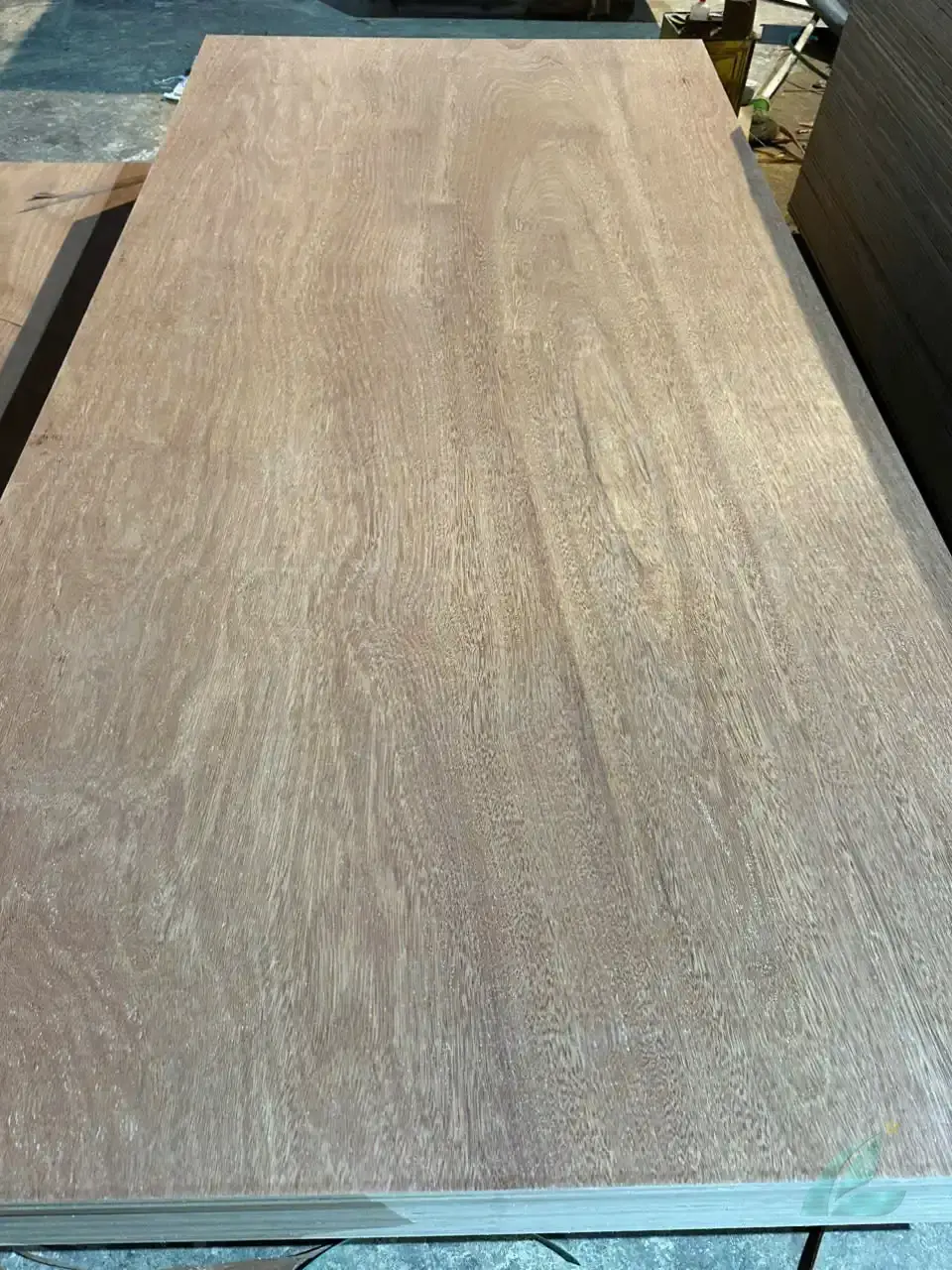 Gurjan face plywood — the premium standard for Indian furniture buyers requiring IS 303 BIS certification
Core-Veneer (Raw Matt) — Highest Volume
What it is: Unfaced raw plywood substrate — no face veneer applied. The panel shows the raw core veneer on both surfaces. This is “matt plywood” in Vietnam terminology.
Core species:
- Acacia core (~580 kg/m³): denser, darker, lower cost
- Eucalyptus core (650-750 kg/m³): premium, heavier, brighter face
- Styrax core (480-500 kg/m³): lightest, whitest substrate, premium segment
Why India buys it: Indian converters apply their own face — decorative laminate, HPL, PVC foil, or veneer — in their own manufacturing facilities. Buying raw matt from Vietnam allows them to source core substrate at Vietnam pricing while adding value domestically.
Typical buyers: Laminate panel manufacturers, modular furniture OEMs, pre-lam board producers.
Thickness demand: 6mm, 9mm, 12mm, 18mm dominate.
See core veneer plywood specifications for full technical detail.
Gurjan Face Plywood — Premium Segment
What it is: Gurjan (a tropical hardwood species) face veneer applied over acacia or eucalyptus core. IS 303 AB or AA grade.
Why India loves gurjan: Gurjan face has historically been the gold standard for Indian premium furniture. The face color, grain pattern, and workability match Indian craftsman expectations developed over decades.
Price range (Indian market): ₹110-150/sqft for 18mm IS 303 AB grade (approximate, varies by season and import cost).
Target buyers: Premium furniture manufacturers in Rajasthan (Jodhpur furniture cluster), modular kitchen makers, high-end interiors contractors.
See gurjan plywood from Vietnam for specifications and MOQ.
Bintangor Face Plywood — Volume Budget Segment
What it is: Bintangor face veneer (light pinkish-brown tropical hardwood) over acacia or styrax core. IS 303 AB grade, typically MR adhesive.
Why India buys it: Cost-conscious manufacturers, construction interior contractors, and plywood distributors in tier-2 and tier-3 markets. Bintangor delivers acceptable surface quality at a price point 30-40% below gurjan.
Price range (Indian market): ₹40-90/sqft for 12-18mm, varying by grade and thickness.
Target buyers: General construction contractors, budget furniture makers, wholesale distributors.
See bintangor plywood specifications.
Film-Faced Plywood — Shuttering and Formwork
What it is: Phenolic film-coated plywood with WBP (Boiling Water Proof) phenolic adhesive and acacia or eucalyptus core. Film weight: 120-220 gsm. Standard face color: black or brown (phenolic film).
India application: Concrete formwork for construction plywood use. The film face releases from concrete cleanly, allowing reuse. Standard Vietnam export-grade: 8-10 reuses with proper care.
Adhesive note: Film-faced plywood uses Phenolic (WBP) adhesive — which means it qualifies as IS 303 BWP grade. This is the correct standard for import classification.
Why buyers choose Vietnam film-faced over domestic: Price per reuse cycle is significantly lower. Vietnam factories producing for EU and Australian markets (Class C/D shuttering systems) apply AICA film ≥135 gsm — same film standard as premium Malaysian product.
See film-faced plywood from Vietnam.
Core Species — What Determines Your Price and Weight
The Vietnam core species you specify directly determines density, container economics, and BIS testing outcomes:
| Core | Density | 40HC Pallets | Best For |
|---|---|---|---|
| Styrax (bồ đề) | 480-500 kg/m³ | 18 pallets (~53 CBM) | Lightweight furniture, premium substrate |
| Acacia (keo) | ~580 kg/m³ | 16 pallets (~47.5 CBM) | Commercial, budget furniture, film-faced |
| Eucalyptus (bạch đàn) | 650-750 kg/m³ | 15 pallets (~44.5 CBM) | Heavy-duty, premium density applications |
For Indian buyers comparing freight cost per CBM: styrax core gives the maximum volume per container, spreading freight cost across more panels. Eucalyptus core’s higher density means fewer CBM per container — but the finished product tests higher for MOR and screw-holding in furniture applications.
See container packing calculations for 40HC and the CBM per thickness complete table for detailed CBM and weight planning.
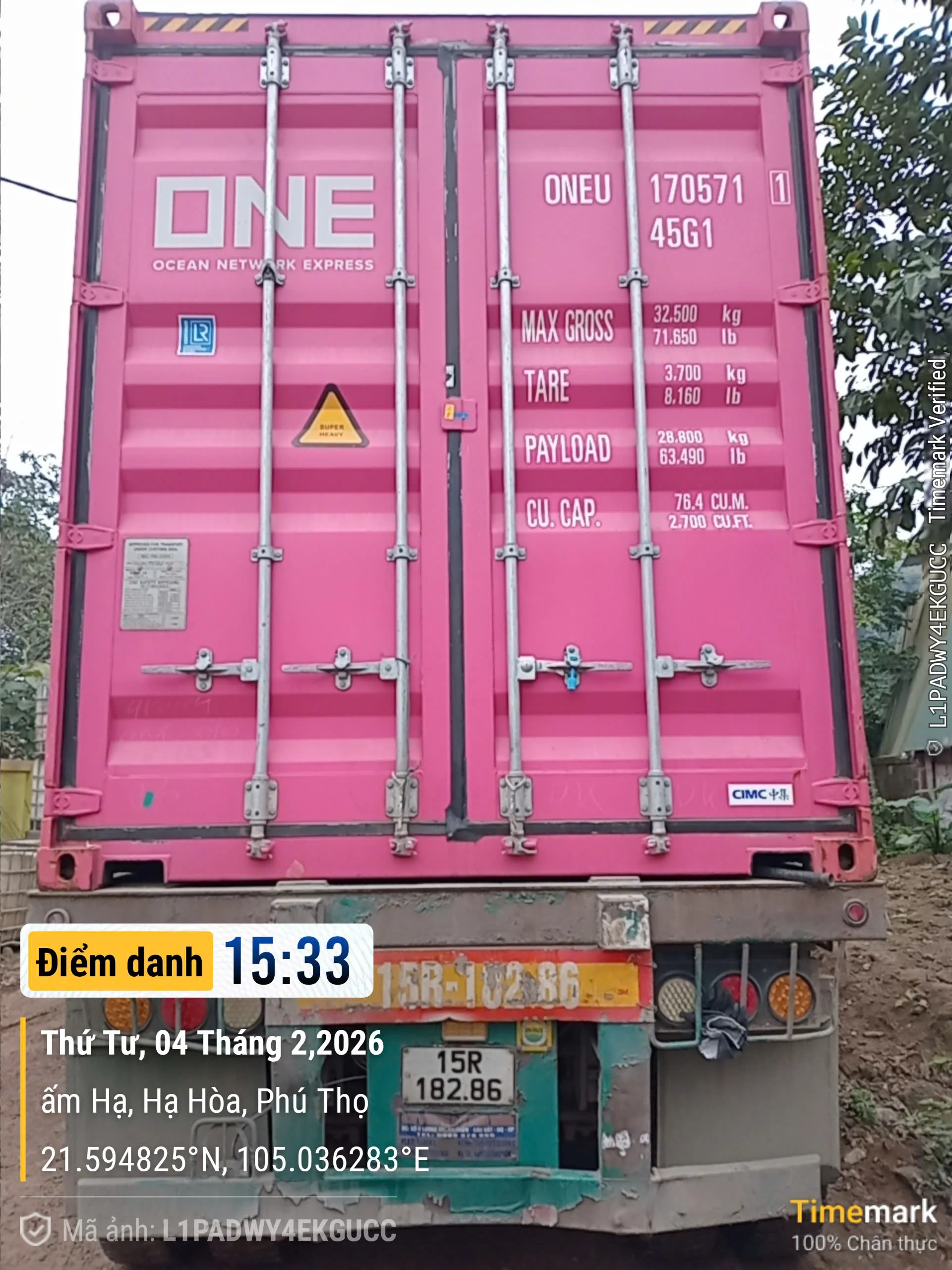 40HC container loading for India-bound shipments — every pallet must be traceable to BIS-certified factory output
Ready to verify your supplier’s BIS status before the next shipment? Contact Mika Plywood export team for documentation support.
🔧 Adhesive Requirements: Phenolic vs Melamine for India
This section addresses the single most common specification error that Indian buyers make when ordering Vietnam plywood.
The Critical Distinction: Adhesive Type ≠ Emission Level
| Concept | What It Measures | Options |
|---|---|---|
| Adhesive type | Water resistance of the glue bond | Melamine (MR/BWR) or Phenolic (WBP) |
| Emission level | Formaldehyde off-gassing from the panel | E0, E1, E2 |
These are separate specifications. A board can be:
- Melamine adhesive (MR grade) + E0 emission — for export furniture OEMs
- Phenolic adhesive (WBP/BWP) + E1 emission — for standard construction
Specifying “E0 WBP” is correct. Specifying “WBP glue E0” is correct. Specifying “WBP, E0 glue” is ambiguous and may confuse your Vietnam factory into treating E0 as a glue type.
Regional Adhesive Preferences in India
Phenolic (WBP) priority markets:
- Western Ghats belt (Karnataka, Goa, Maharashtra coastal zones)
- Northeast India — high annual rainfall, humidity extremes
- Outdoor and semi-outdoor applications nationwide
- Film-faced shuttering plywood — WBP mandatory
Melamine (MR/BWR) sufficient:
- Interior furniture (dry conditions) — majority of India
- Modular kitchen cabinets (MR grade minimum, E1 emission standard)
- Interior partition work, false ceilings
- Most commercial fit-out applications in air-conditioned environments
Emission Standards for Furniture OEMs
Major Indian furniture brands (Godrej Interio, Wipro Furniture, Zuari Furniture) and export-oriented OEM manufacturers increasingly specify E1 or E0 emission levels on their plywood procurement:
- E0: Required for exports to Europe, US, Japan
- E1: Minimum for branded Indian OEM furniture (aligned with European norms)
- E2: Acceptable for low-cost commercial and packing applications
Vietnam factories producing for the EU and US markets routinely achieve E0/E1. Confirm emission certification (CARB P2 for US markets, EN 120/717-1 for E0/E1) with your supplier’s test reports.
📋 Import Process: Step-by-Step from Vietnam to India
Pre-Shipment Checklist
On the Indian importer’s side: