Matt plywood is unfaced raw core substrate—no decorative veneer, built for lamination. Learn specs, core options, and how to source from Vietnam factories.
Matt plywood is one of the most misunderstood products in plywood sourcing. Buyers searching for it sometimes confuse it with melamine-matt finish boards. Others know exactly what they want—a clean, unfaced core panel ready to accept their own surface treatment—but struggle to specify it correctly.
This guide explains what matt plywood actually is, what makes a quality raw core board, how Vietnam’s three core species affect performance, and what to check when ordering. If you’re sourcing for a lamination factory, a furniture plant, or a wall panel manufacturer, this is the technical brief you need before placing an order.
📋 What Is Matt Plywood? Defining the Raw Core Board
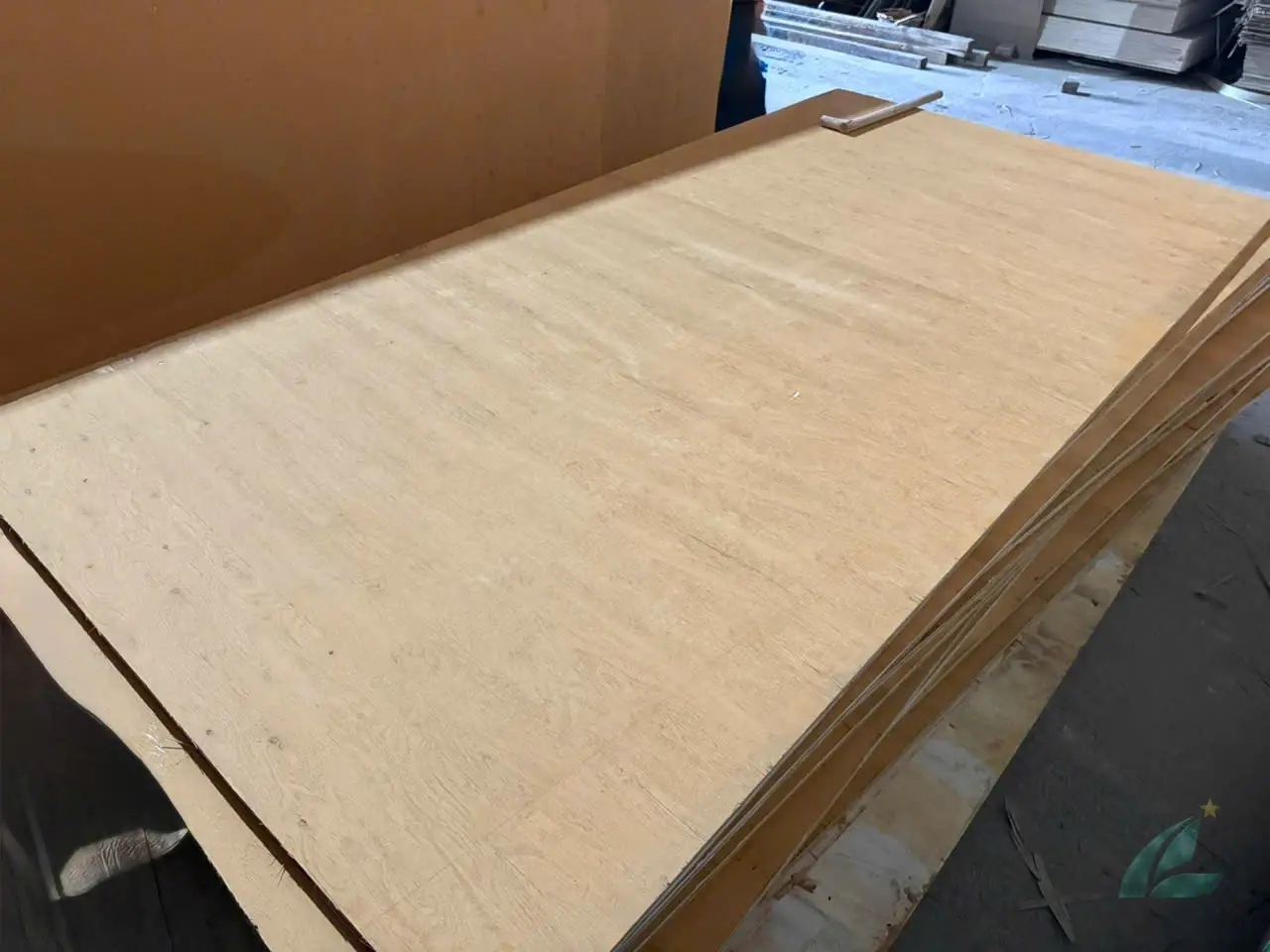
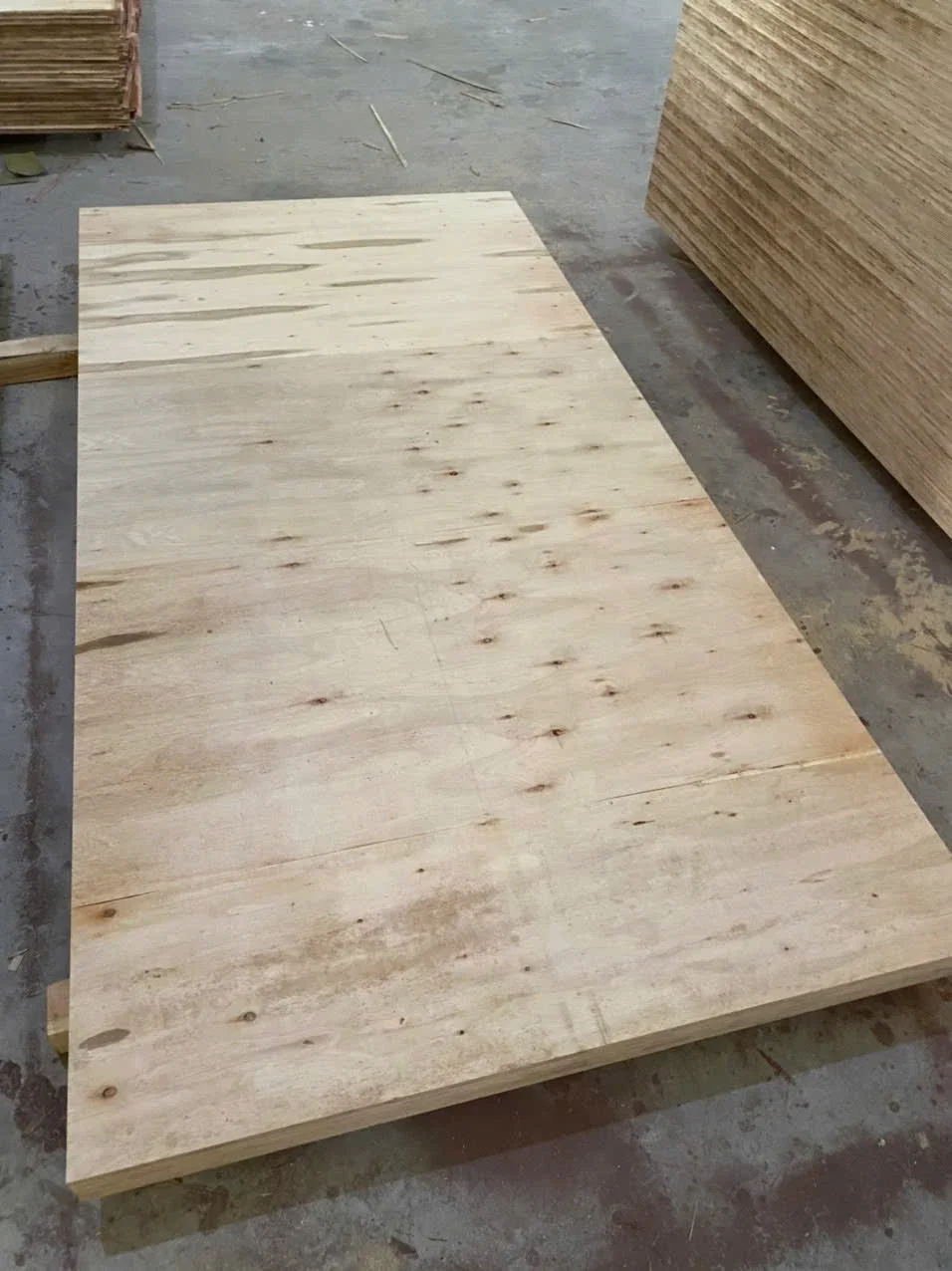
Matt plywood is a plywood panel with no decorative face veneer applied. The surface is the raw core veneer itself—unsanded or lightly sanded—with no species-specific face layer bonded on top. It is not a finish. It is not a texture. It is an absence.
The name “matt” in Vietnamese plywood terminology specifically refers to this unfaced, bare-core construction. It should not be confused with:
- Melamine-faced plywood (has a melamine paper overlay already bonded)
- Matt-finish laminated boards (a surface texture applied over a face veneer)
- Commercial plywood with a low-grade face veneer still present
When a furniture factory, wall panel producer, or surface finishing plant orders matt plywood, they are buying a structural blank. The board will be sent to their own lamination line where HPL (high-pressure laminate), melamine paper, PVC foil, natural wood veneer, or decorative film will be bonded on top.
💡 Key distinction: “Matt” describes the board’s face condition—unfaced raw core—not a surface finish or aesthetic quality. A matt board from Mika Plywood is a clean lamination substrate, engineered for bonding, not for display.
🔧 Why Manufacturers Buy Matt Plywood Instead of Finished Panels
The logic is straightforward for anyone running a downstream processing operation. Buying pre-finished plywood (birch-faced, okoume-faced, or melamine-faced) means paying for a surface you will cover anyway. Matt plywood removes that cost layer.
“Face veneer thickness determines sanding tolerance and repair options. At 0.2mm there is no margin — one pass too many on the sander exposes the core. At 0.4mm you can sand, fill, and refinish. That is why premium furniture buyers specify 0.3–0.4mm face veneer.” — David, Export Project Leader, Mika Plywood
Four primary reasons manufacturers prefer raw core boards:
-
Surface freedom. The factory applies exactly the finish, color, and texture their product requires—without being locked into a supplier’s veneer grade or species.
-
Cost efficiency. Face veneer adds 15–35% to the panel cost depending on species (Mika Plywood production data, 2026). Buying unfaced and laminating in-house eliminates that markup when your lamination capacity runs at scale.
-
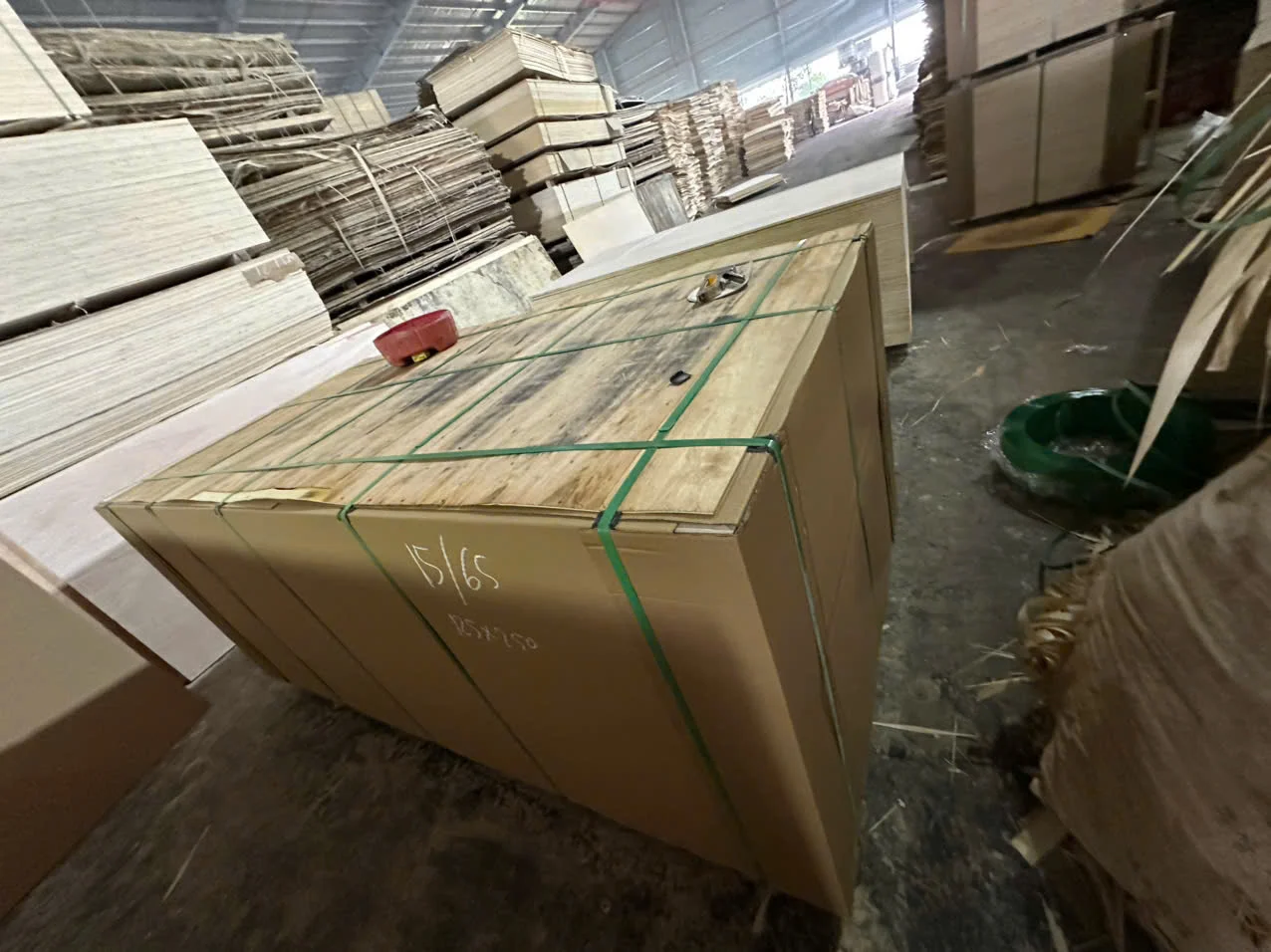
Oversized panels. Lamination presses often require panels larger than standard 1220×2440mm to allow trimming after bonding. Matt boards can be produced at 1250×2460mm or 1300×2500mm to accommodate this workflow.
-
Bonding optimization. A raw core surface, properly prepared, bonds more reliably to laminate films than a pre-sanded or pre-treated decorative face. The surface texture is calibrated for adhesion, not aesthetics.
⚠️ Important: The lamination bond strength of a matt board depends heavily on core moisture content at delivery. Specify 8–12% MC for standard lamination, or 6–8% for HPL bonding in humidity-controlled environments. Mika Plywood measures and certifies MC before loading.
For a detailed breakdown of how core species affect the board’s structural properties, see our guide on plywood core types — acacia vs eucalyptus vs styrax.
🌲 Core Species for Matt Plywood: Styrax, Acacia, Eucalyptus
Vietnam produces matt plywood from three plantation wood species. Each has distinct density, color, and price characteristics. The right choice depends on your application, target market, and container loading requirements.
📌 Styrax Core — Lightest, Premium Furniture Grade
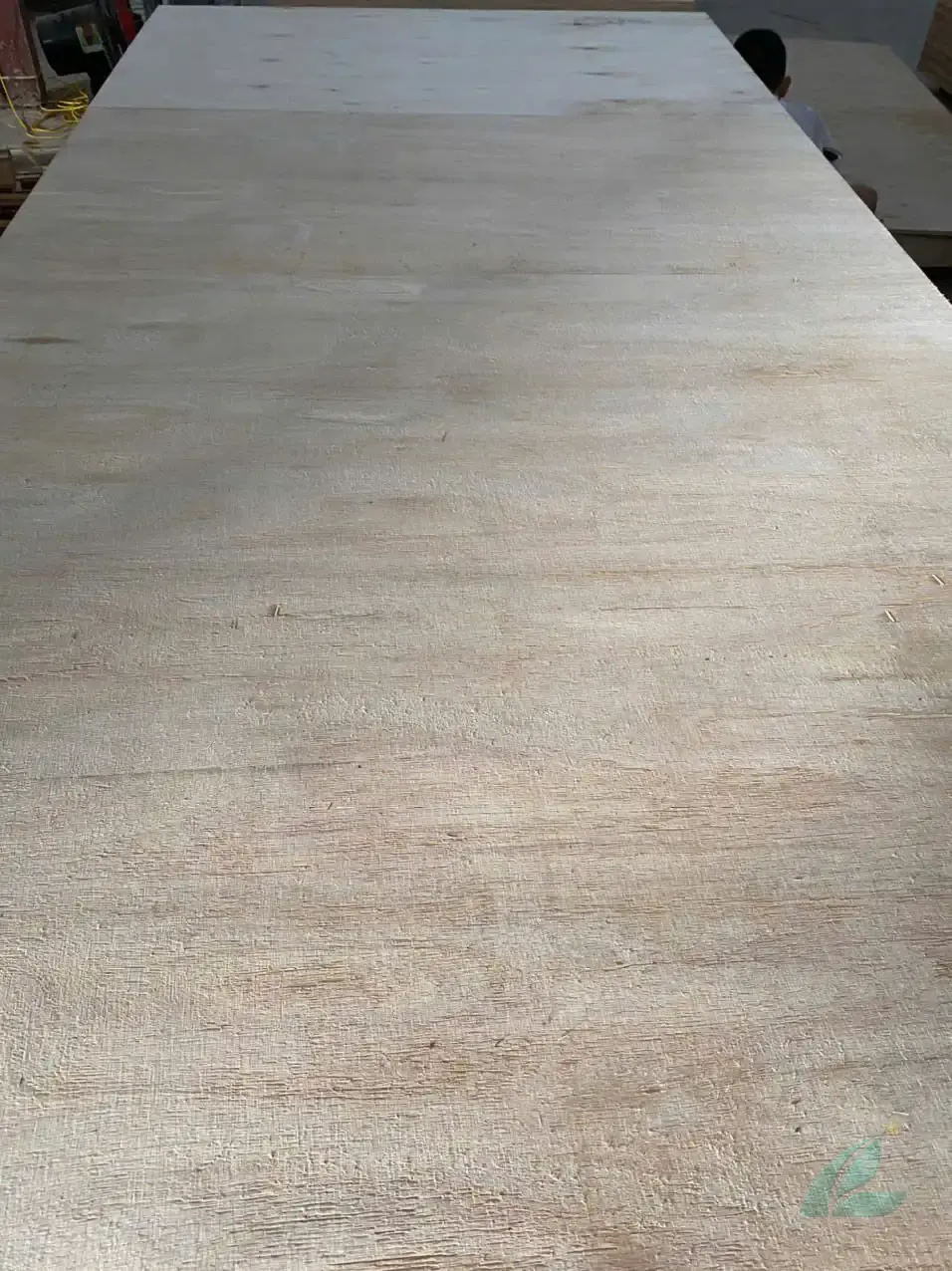
Styrax (bồ đề) is the go-to core for high-end furniture matt boards. Density runs 480–500 kg/m³—the lowest of the three species, making it the lightest panel per unit volume. The wood is pale, almost white, with a clean consistent grain that resists warping after lamination.
Styrax is grown exclusively in Northern Vietnam (Phú Thọ, Yên Bái, Tuyên Quang provinces), which is why Mika Plywood’s facilities in Phú Thọ have direct access to the freshest supply. Full-stitched styrax core with E0 emission and Melamine (MR) glue is the standard specification for European and US furniture manufacturers sourcing matt substrate.
Best for: Light-weight cabinet carcasses, wall panel substrate, European furniture export, CARB P2 or E0 certified supply chains.
📌 Acacia Core — Most Cost-Effective
Acacia (keo) runs at approximately 580 kg/m³—denser than styrax but significantly lighter than eucalyptus. The wood is darker (medium brown) and the core veneer pieces tend to be wider, making it well-suited for loose-laid or edge-jointed core construction used in commercial-grade matt boards.
Acacia core is the standard choice for Indian and Southeast Asian buyers who need a reliable lamination substrate at a competitive pricing point. E1 or E2 emission is typical for this segment.
Best for: Commercial furniture, packaging-adjacent applications, budget lamination substrate, Indian market supply.
📌 Eucalyptus Core — Strongest, Heaviest
Eucalyptus (bạch đàn) is the densest core at 650–750 kg/m³. Panels are significantly heavier per sheet—relevant both for end-use applications requiring rigidity and for container loading calculations. A 40HC loaded with eucalyptus-core matt boards at 18mm thickness typically holds 15 pallets versus 18 pallets for styrax (Mika Plywood production data, 2026).
The higher density means better screw-holding and load resistance. Eucalyptus matt boards are specified for flooring underlayment, heavy-duty shelving substrate, and applications where the laminated panel carries structural load.
Best for: High-density applications, flooring substrate, construction markets, buyers prioritizing strength over weight.
| Core Species | Density (kg/m³) | Weight 18mm Sheet (1220×2440) | Best For |
|---|---|---|---|
| Styrax | 480–500 | ~26 kg | Premium furniture, light panels |
| Acacia | ~580 | ~30 kg | Commercial, cost-optimized |
| Eucalyptus | 650–750 | ~35–42 kg | Heavy-duty, flooring, structural |
⚙️ Technical Specifications: Matt Plywood from Vietnam
| Parameter | Specification |
|---|---|
| Thickness range | 3mm – 40mm |
| Standard sheet size | 1220 × 2440mm (4×8 ft) |
| Oversized options | 1250 × 2460mm, 1300 × 2500mm |
| Thickness tolerance | ±0.3mm (premium grade) |
| Core species | Styrax, Acacia, Eucalyptus |
| Glue type | Melamine (MR) or Phenolic (WBP) |
| Emission standard | E0, E1, or E2 (specify separately from glue) |
| Moisture content | 8–14% standard; 6–8% available on request |
| Surface finish | Unsanded or lightly calibrated (no face veneer) |
| Edge options | Square-cut, glue-coated, or scarf-jointed |
| Core construction | Stitched, edge-jointed, or loose-laid |
| Certifications available | FSC, CARB P2, ISO 9001 |
⚠️ Note: Glue type (MR/WBP) and emission standard (E0/E1/E2) are two different specifications. A board can be Melamine (MR) glue with E0 emission. Always specify both when ordering. For a full explanation, see plywood glue types and emission standards guide.
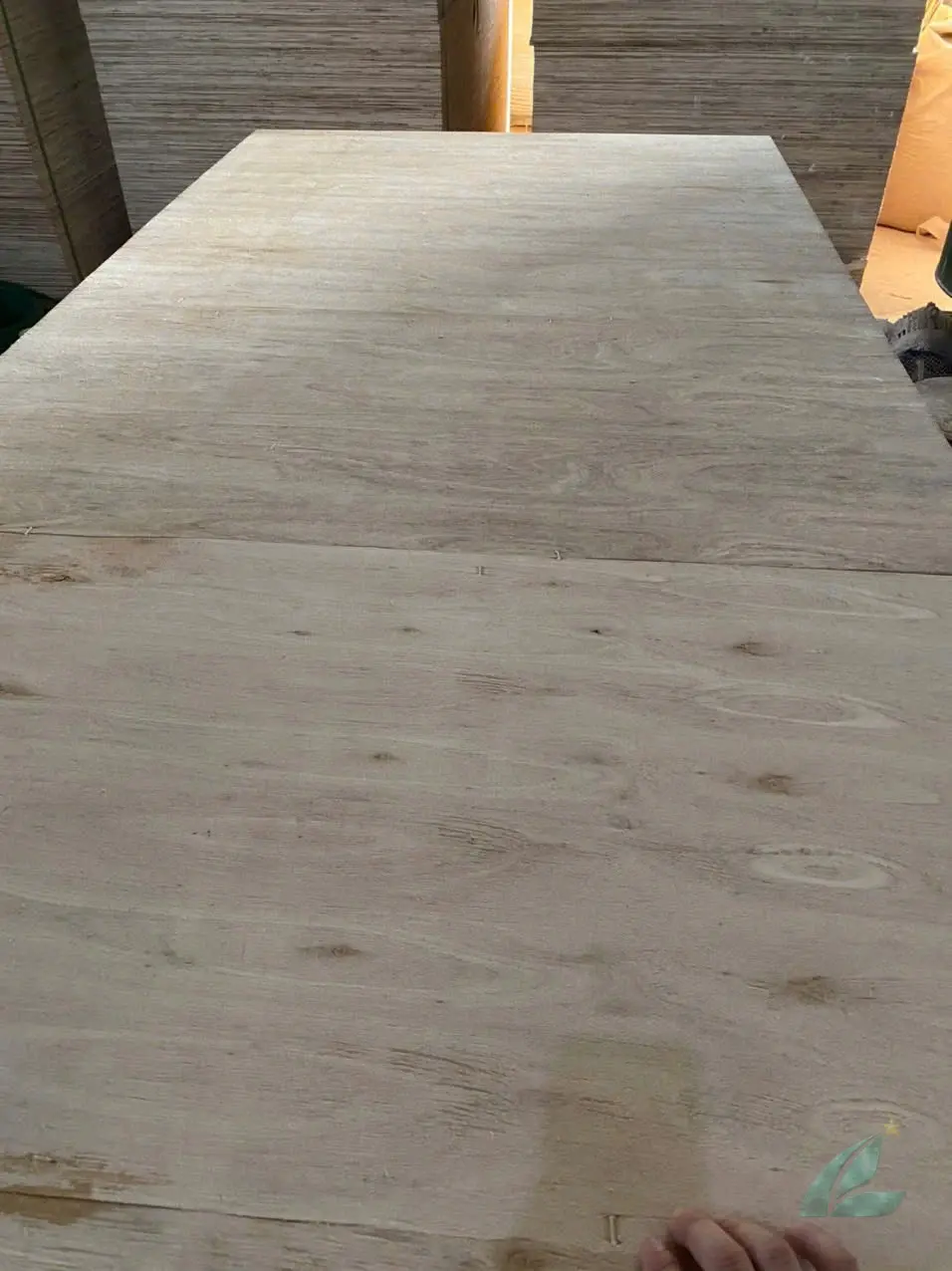
Case study — custom sizing for self-laminating buyers: A manufacturer with in-house laminating equipment needed core panels cut to 1240x2460mm instead of the standard 1220x2440mm. The extra +20mm on each dimension provides trimming allowance after the buyer applies their own face veneer. Mika Plywood produced the custom size, saving the buyer the cost of outsourced lamination in Vietnam while maintaining their preferred face veneer brand and process.
📦 Applications of Matt Plywood Vietnam
Matt plywood’s primary role is as a downstream substrate. The industries that buy it are not end-users of the panel itself—they are processors who add value at their own facilities.
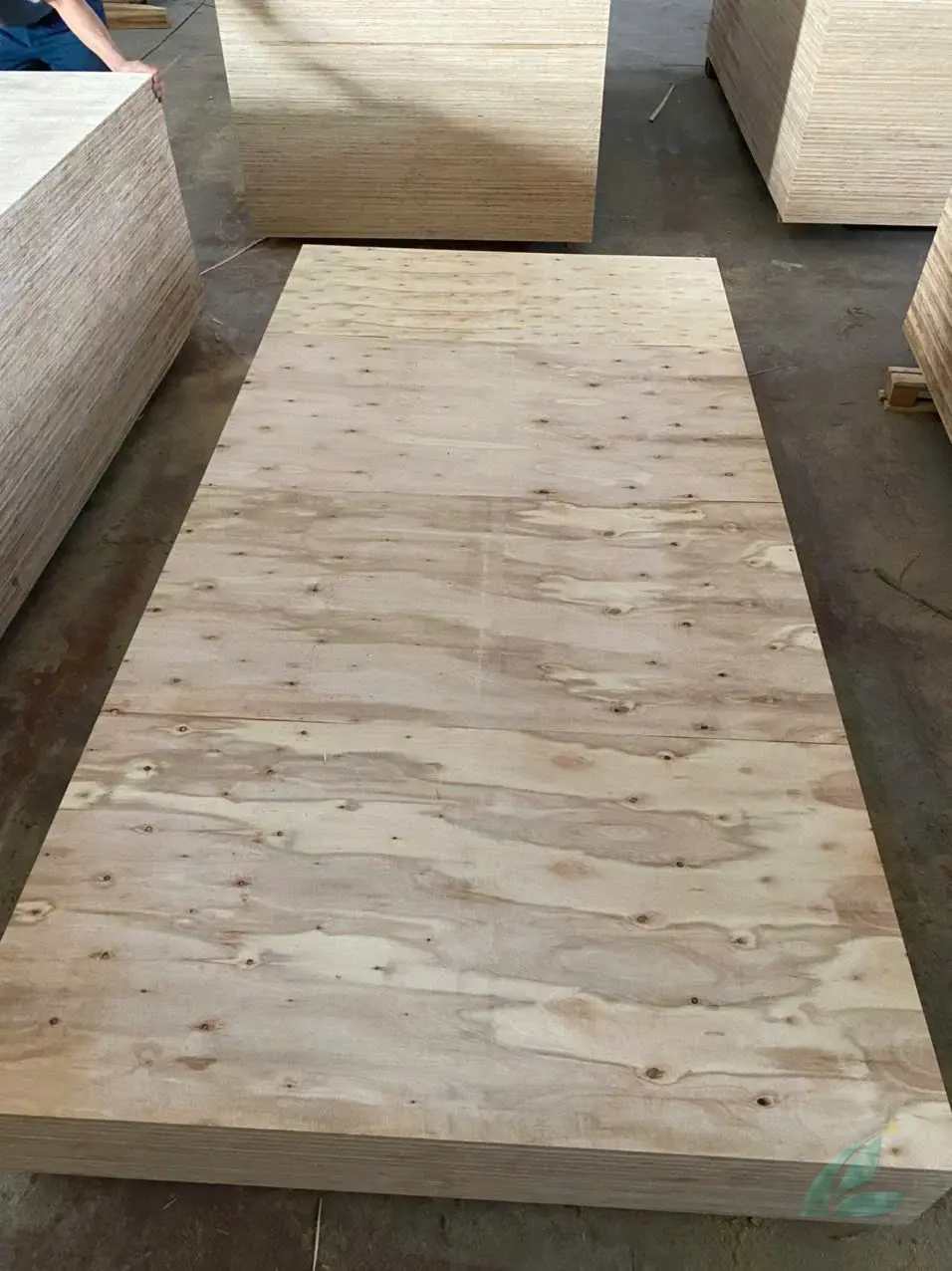
Furniture manufacturing is the largest market. Cabinet bodies, door panels, shelving, and bed frames assembled from flat-pack components typically use a laminated board where the structural panel is matt substrate and the visible surface is melamine paper or HPL bonded downstream.
Wall panel production. Interior wall systems using PVC panels, high-gloss laminate, or fabric-wrapped frames require a dimensionally stable substrate. Matt plywood (particularly styrax core, E0) is the preferred base in European and Australian markets.
Custom interior design. Architects and fit-out contractors specify natural wood veneer over plywood substrate for hospitality, retail, and residential projects. Matt boards provide the structural base; the veneer specifier handles the finish.
Industrial packaging substrate. Lower-grade acacia-core matt boards at E2 emission serve as base boards for packaging frames and wooden crating where appearance is irrelevant.
For a complete view of how matt plywood fits within the broader product range, see our types of plywood classification guide.
🔍 How to Specify Matt Plywood: Buyer’s Checklist
Sourcing from raw core plywood suppliers in Vietnam requires precise specification. Vague orders (“send me matt plywood 18mm”) will result in variations you did not intend. Here is what to lock in:
-
Core species. Styrax, acacia, or eucalyptus. This determines density, price, and weight per container.
-
Core construction. Full stitched (no gaps, premium), edge-jointed (mid-grade), or loose-laid (commercial/budget). Full stitched is mandatory for applications where delamination risk is zero-tolerance.
-
Glue type. Melamine (MR) for interior furniture. Phenolic (WBP) for moisture-exposed or outdoor-adjacent applications. State this explicitly.
-
Emission standard. E0 for US/EU/Japan furniture. E1 for general European commercial. E2 for budget export to price-sensitive markets.
-
Thickness and size. State nominal thickness plus tolerance requirement. If your lamination press needs oversized panels, specify the exact dimensions.
-
Moisture content. 8–14% is standard. For direct-to-press HPL lamination, 6–8% reduces risk of blister during pressing.
-
Surface preparation. Specify “calibrated” (consistent thickness, lightly sanded) if your lamination process requires tight ±0.2mm tolerance. Standard ±0.3mm is sufficient for most applications.
-
Edge treatment. Square-cut is standard. Glue-coated edges prevent core visibility on exposed edges after lamination. Scarf-jointed edges are available for smooth edge banding.
💡 Tip: “Mixed hardwood core” is not a valid specification for Mika Plywood orders. Vietnam’s export-grade matt plywood uses clearly identified species—styrax, acacia, or eucalyptus. Asking for “mixed core” typically results in lower-quality loose-laid acacia from commercial-segment mills.
“Buyers who specify core construction and moisture content upfront save 2–3 weeks of back-and-forth on samples,” notes Jay, International Sales Manager at Mika Plywood. “The single most common cause of quality disputes is receiving a board built to a different standard than intended—because the spec sheet only listed thickness and size.”
Get a free sample and quote for matt plywood
🏭 Why Source Matt Plywood from Vietnam vs. Other Origins
Vietnam’s position as a leading raw core board supplier comes from structural advantages that have compounded over two decades of plantation forestry investment (Vietnam Timber and Forest Products Association, 2024).
Plantation wood availability. Styrax, acacia, and eucalyptus are fast-growth plantation species managed on 5–7 year harvest cycles in Northern Vietnam’s provinces. This creates stable year-round supply without the seasonality that affects tropical hardwood origins.
Northern production cluster. Over 80% of Vietnam’s plywood export volume comes from factories in the northern provinces—Phú Thọ, Hà Nội, Bắc Ninh, Bắc Giang, Yên Bái, Tuyên Quang. This geographic concentration keeps logistics costs from forest to factory low and lead times predictable. For context on why location matters, read our Vietnam plywood regional map guide.
Certification depth. Furniture-grade matt plywood from Mika Plywood carries FSC, CARB P2, ISO 9001, and EUDR compliance documentation. This matters for buyers selling into North America, the EU, and Japan where chain-of-custody traceability is required.
📊 Matt Plywood vs. Other Plywood Types: When to Choose What
Buyers sometimes ask whether they should buy matt plywood or a finished product. The answer depends entirely on whether you have downstream lamination capacity.
| Buyer Type | Best Choice | Reason |
|---|---|---|
| Furniture factory with lamination line | Matt plywood | Apply your own surface; lower unit cost |
| Interior contractor without press | Birch/Okoume faced plywood | Ready-to-install, no processing needed |
| Wall panel system manufacturer | Matt plywood (styrax, E0) | Bond your own HPL or PVC film in-house |
| Packing/crating operation | Packing-grade plywood | Not matt—different product for different purpose |
| Cabinet hardware brand (flat-pack) | Matt plywood | Your brand’s laminate applied at your facility |
For buyers comparing all product options across the face veneer range, see our plywood face veneer types guide.
✅ Ordering Matt Plywood from Vietnam: What to Expect
Order process:
- Submit specification (thickness, size, core, glue, emission, surface, quantity)
- Receive FOB quotation within 24 hours
- Confirm production sample (lead time: 5–7 days for sample, 15–20 days production)
- Pre-shipment QC photos and measurement report
- Container loading with full export documentation (CO, FSC certificate, Phytosanitary, Fumigation, B/L)
MOQ: 1 × 40HC container. Mixed specifications accepted within one container (recalculated weight verified before loading).
Lead time: 15–20 working days from order confirmation.
For buyers building a regular supply relationship, Mika Plywood’s partner program offers priority production slots, dedicated export documentation, and direct factory-to-buyer communication with English-speaking staff.
Get a free quote for matt plywood from Mika Plywood
Disclosure: This article is published by Mika Plywood, a Vietnam-based plywood manufacturer and export operator. While we aim to provide objective industry guidance, readers should consider our perspective as a market participant when evaluating recommendations.
🔗 Related Resources
- Plywood core types — acacia vs eucalyptus vs styrax comparison
- Plywood glue types and emission standards: MR vs WBP, E0/E1/E2 explained
- Plywood face veneer types — complete buyer guide from Vietnam factory
- Plywood sizes and thickness specifications from Vietnam factory
- Matt plywood Vietnam — product page with full specs and photo gallery
✅ Conclusion
Matt plywood is not a compromise product. For any manufacturer running downstream lamination, it is the economically and technically correct choice over pre-finished panels. The key is specifying it precisely: core species, construction method, glue type, emission standard, moisture content, and surface preparation must all be stated.
Vietnam’s plantation wood supply, factory-direct export structure, and certification infrastructure make it the dominant global source for raw core boards. Mika Plywood’s dedicated furniture-grade facility produces matt plywood to specification for buyers in Europe, North America, India, and the Gulf—with full documentation for each shipment.
If you are ready to request pricing or need technical consultation on specifications, Mika Plywood’s export team responds within one business day.
Contact Mika Plywood for a free matt plywood quote
Frequently Asked Questions
What is matt plywood used for?Matt plywood is used as a substrate for lamination with HPL, melamine paper, PVC foil, or decorative wood veneers. Furniture manufacturers, cabinet factories, and wall panel producers buy it as a blank base board to apply their own surface finish.Is matt plywood the same as melamine-faced plywood?No. Matt plywood is unfaced raw core—no surface finish at all. Melamine-faced plywood has a melamine paper overlay already bonded on. Matt boards are the substrate BEFORE any lamination step.What core species are used in Vietnam matt plywood?Vietnam matt plywood uses three core species: styrax (480–500 kg/m³, lightest), acacia (~580 kg/m³, most cost-effective), and eucalyptus (650–750 kg/m³, heaviest and strongest). Core choice depends on your weight, strength, and price requirements.What thickness options does matt plywood come in?Standard thicknesses run from 3mm to 40mm. Common sizes for lamination use are 12mm, 15mm, 18mm, and 25mm. Oversized panels (1250×2460mm or 1300×2500mm) are available for factories that trim after laminating.What glue type should I specify for matt plywood?Specify Melamine (MR) glue for interior furniture use with E0 or E1 emission standard. For moisture-exposed environments, specify Phenolic (WBP) glue. Note: MR/WBP is the glue type. E0/E1/E2 is a separate emission standard—always specify both.
Ready to order?
Get a free quote for matt plywood from Mika Plywood

Written by
David
Export Project Leader
Content contributor at Vietnam Plywood.
On this page
- 📋 What Is Matt Plywood? Defining the Raw Core Board
- 🔧 Why Manufacturers Buy Matt Plywood Instead of Finished Panels
- 🌲 Core Species for Matt Plywood: Styrax, Acacia, Eucalyptus
- 📌 Styrax Core — Lightest, Premium Furniture Grade
- 📌 Acacia Core — Most Cost-Effective
- 📌 Eucalyptus Core — Strongest, Heaviest
- ⚙️ Technical Specifications: Matt Plywood from Vietnam
- 📦 Applications of Matt Plywood Vietnam
- 🔍 How to Specify Matt Plywood: Buyer’s Checklist
- 🏭 Why Source Matt Plywood from Vietnam vs. Other Origins
- 📊 Matt Plywood vs. Other Plywood Types: When to Choose What
- ✅ Ordering Matt Plywood from Vietnam: What to Expect
- 🔗 Related Resources
- ✅ Conclusion
On this page
- 📋 What Is Matt Plywood? Defining the Raw Core Board
- 🔧 Why Manufacturers Buy Matt Plywood Instead of Finished Panels
- 🌲 Core Species for Matt Plywood: Styrax, Acacia, Eucalyptus
- 📌 Styrax Core — Lightest, Premium Furniture Grade
- 📌 Acacia Core — Most Cost-Effective
- 📌 Eucalyptus Core — Strongest, Heaviest
- ⚙️ Technical Specifications: Matt Plywood from Vietnam
- 📦 Applications of Matt Plywood Vietnam
- 🔍 How to Specify Matt Plywood: Buyer’s Checklist
- 🏭 Why Source Matt Plywood from Vietnam vs. Other Origins
- 📊 Matt Plywood vs. Other Plywood Types: When to Choose What
- ✅ Ordering Matt Plywood from Vietnam: What to Expect
- 🔗 Related Resources
- ✅ Conclusion
Industry Newsletter
Stay Updated with
Plywood Industry Insights
Factory prices, spec guides, market trends and export tips — delivered weekly to B2B buyers and importers in 20+ countries.