
Vietnam plywood technical datasheet: what it must contain, international standards by market, sample format, and 5 common reading errors importers make.
Every delayed shipment and customs dispute we handle at Mika Plywood traces back to the same root cause: a missing or incomplete technical datasheet. When buyers skip this document, they give up their only measurable protection against specification mismatches — and specification mismatches are the #1 source of plywood import disputes worldwide.
A Vietnam plywood technical datasheet is not a marketing brochure. It is the binding specification document that defines every measurable property of the panels you are buying: thickness, density, glue type, emission class, face grade, core species, and test methods. For regulated markets like the US, EU, Japan, and Korea, customs authorities and end-use certifiers treat this document as an official product record.
This guide explains exactly what a complete datasheet contains, which international standards apply, how to read the core specifications correctly, and what Mika Plywood includes in every export order — as of 2026.
📋 What Is a Plywood Technical Datasheet?
Plywood technical datasheet: A structured product document that specifies all measurable properties of a plywood panel, the test methods used to verify them, and the international standards the product complies with.
Think of it as the product’s identity card — not a sales pitch, but a declaration of facts that can be independently verified. Every figure on the datasheet corresponds to a test method that any certified laboratory can reproduce.
For import buyers, the datasheet serves three practical functions:
- Pre-order alignment — confirms the supplier’s specifications match your application requirements before production begins.
- Receiving inspection reference — gives your warehouse QC team exact tolerances to check against incoming stock.
- Dispute documentation — if panels arrive off-spec, the datasheet is the contractual basis for a claim.
Without a datasheet, you are buying on trust. With one, you are buying on verifiable specifications.
⚠️ Important: A datasheet that lists “density: 580–750 kg/m³” is not useful. Density depends on core species. Require your supplier to specify density per core type — or the range is meaningless.
📦 Key Elements Every Datasheet Must Include
A complete Vietnam plywood technical datasheet must cover eight specification categories. Each category is explained below with the correct interpretation rules.
📌 1. Product Identity
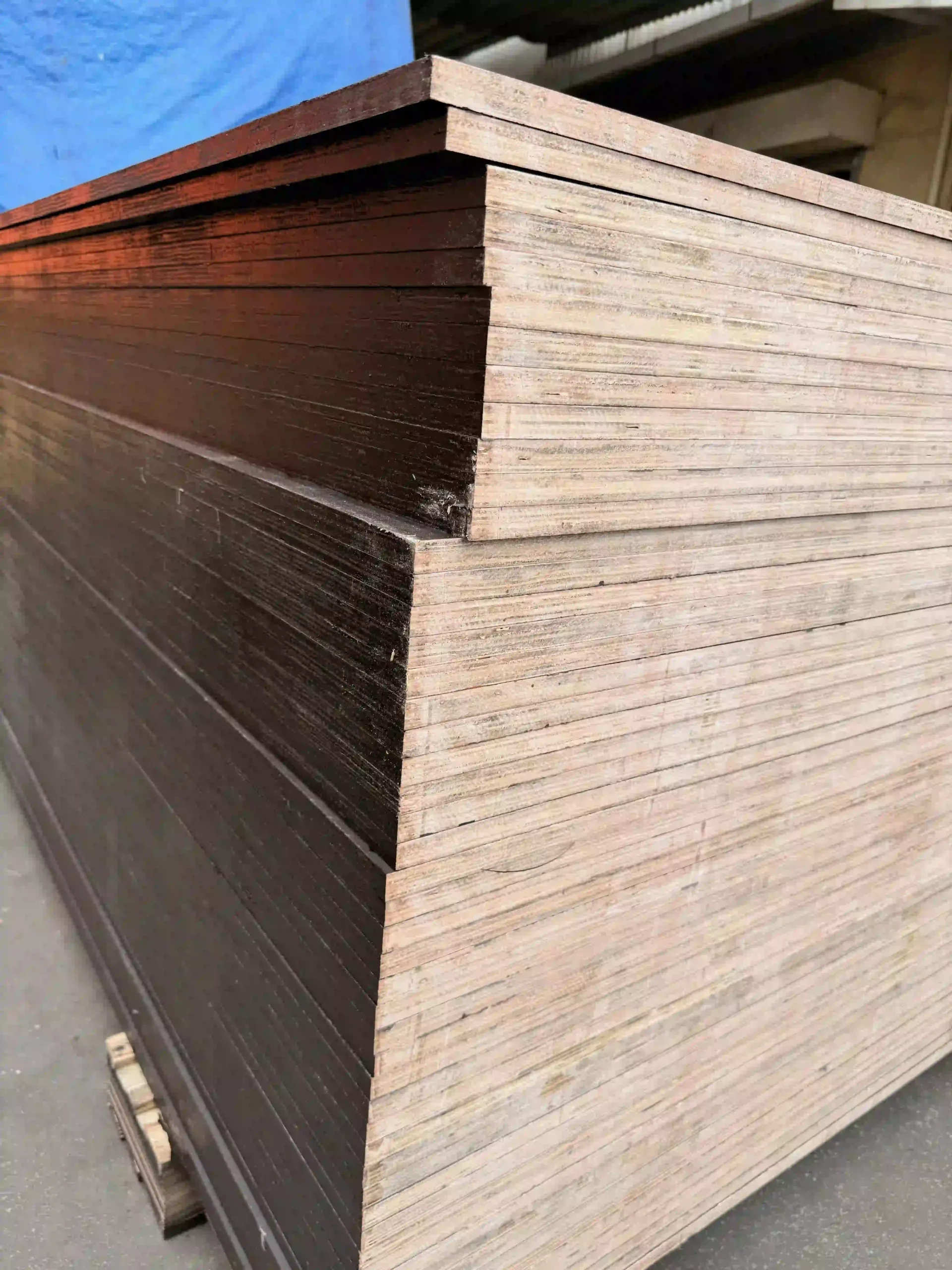
- Product name and category (e.g., Commercial Plywood, Film Faced Plywood, Marine Grade)
- Face veneer species and grade (e.g., Okoume A/B, Birch D/E, Bintangor A/B)
- Back veneer species and grade
- Core species — must name specifically: acacia, eucalyptus, or styrax. Not “mixed tropical hardwood”
- Core construction method: full stitched, edge-jointed, or loose-laid
📌 2. Dimensions and Tolerances
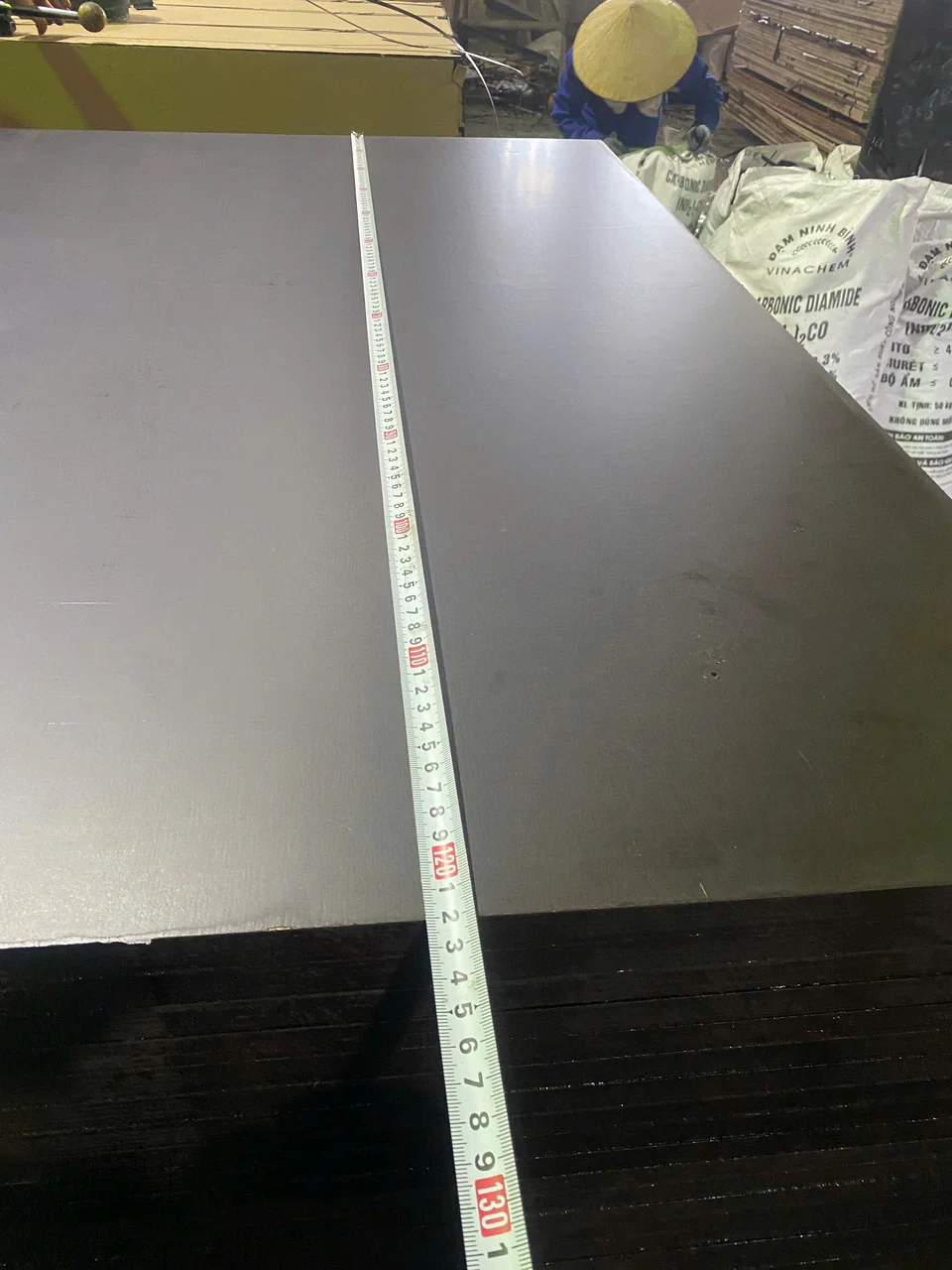
- Length × Width (standard: 1220 × 2440 mm or 1250 × 2500 mm)
- Nominal thickness and calibrated thickness range
- Thickness tolerance: ±0.3mm (standard export grade, per EN 315)
- Squareness tolerance: ±2mm per 1000mm edge
- Custom cutting: state if available
The ±0.3mm thickness tolerance matters for CNC machining and furniture assembly. Japanese buyers (JAS standard) and Korean importers often require tighter — verify before ordering.
📌 3. Glue Type and Bonding Strength
Two separate specifications that are frequently confused:
| Parameter | Options | Standard |
|---|---|---|
| Glue type | Melamine (MR) | EN 314 Class 1 — interior |
| Phenolic (WBP) | EN 314 Class 3 — exterior/marine | |
| Bonding strength | Dry test | ≥0.7 N/mm² |
| Wet test (MR) | 12h boiling water immersion | |
| Boil test (WBP) | 72h boiling water immersion |
⚠️ Note: Glue type (MR/WBP) and emission standard (E0/E1/E2) are two entirely different specifications. “MR E0” means melamine glue + E0 formaldehyde emission. “WBP” refers only to weather resistance, not emissions. A panel can be WBP phenolic + E1 — these are independent axes.
📌 4. Formaldehyde Emission Class
| Standard | Limit | Market |
|---|---|---|
| E0 / CARB P2 | ≤0.5 mg/L | US (mandatory), EU (premium), Japan, Korea |
| E1 | ≤1.5 mg/L | EU standard, most Asian markets |
| E2 | ≤5.0 mg/L | Packaging, exterior, non-interior use only |
CARB Phase 2 is the US benchmark. E0 is broadly equivalent. Both require third-party laboratory certification — factory self-declaration is not accepted by US Customs (TSCA Title VI).
📌 5. Density and Moisture Content
| Core Species | Density (kg/m³) | Source |
|---|---|---|
| Styrax | 480–500 | Mika Plywood production data, 2026 |
| Acacia | ~580 | Mika Plywood production data, 2026 |
| Eucalyptus | 650–750 | Mika Plywood production data, 2026 |
Moisture content at point of production: 8–12% (oven-dry method, ISO 638). Furniture-grade panels targeting Japan or the US target the lower end (8–10%) to meet JAS F4-star and CARB test conditions.
📌 6. Surface Finish and Sanding
| Product Type | Sanding | Surface |
|---|---|---|
| Furniture / cabinet plywood | Yes — both sides | Smooth, ready for finishing |
| Commercial plywood | Light or no sanding | Acceptable surface defects |
| Film-faced / anti-slip | No sanding | Film or mesh overlay |
| Packing plywood | No sanding | Functional surface only |
State sanded thickness and target calibration tolerance on the datasheet — this directly affects the panel’s actual delivered thickness after sanding.
7. Certifications Held
List only certifications with active certificate numbers, not aspirational compliance:
- FSC — Forest Stewardship Council chain-of-custody (certificate number required)
- CARB P2 — California Air Resources Board Phase 2 (TPC cert number required)
- CE — EN 636 and EN 314 conformity (for EU construction products)
- EUDR — EU Deforestation Regulation due diligence statement
- ISO 9001 — Quality management system
- JAS — Japan Agricultural Standard (if applicable)
- IS 303 / IS 710 — India standard (if applicable)
8. Test Methods Referenced
Every specification claim must reference the test method used. Common methods for Vietnam export plywood:
- Thickness: EN 315 or equivalent
- Moisture content: ISO 638 (oven-dry method)
- Bonding strength: EN 314
- Formaldehyde emission: EN 717-1 (gas analysis) or ASTM E1333 (large chamber, for CARB)
- Density: ISO 640 (weight ÷ volume calculation)
- Boil test (WBP): 72h immersion per EN 314 Class 3
📊 Sample Technical Datasheet — Vietnam Commercial Plywood
The table below represents a real-format Mika Plywood export datasheet for commercial furniture-grade plywood:
| Property | Specification |
|---|---|
| Product Name | Commercial Plywood — Furniture Grade |
| Face Veneer | Okoume A/B or Bintangor A/B (buyer’s choice) |
| Back Veneer | Bintangor B/C or Okoume B/C |
| Core Species | Styrax (or acacia per order) |
| Core Construction | Stitched outer layers + edge-jointed inner |
| Nominal Thickness | 3, 5, 9, 12, 15, 18, 21, 25mm (custom available) |
| Sheet Size | 1220 × 2440 mm (4 × 8 ft) or 1250 × 2500 mm |
| Thickness Tolerance | ±0.3mm (EN 315) |
| Glue Type | Melamine (MR) |
| Bonding Strength | EN 314 Class 2 (wet conditions) |
| Emission Standard | E0 (≤0.5 mg/L, EN 717-1) or E1 per buyer requirement |
| Density | 480–580 kg/m³ (styrax core) |
| Moisture Content | 8–12% (ISO 638, oven-dry method) |
| Surface Finish | Sanded both sides to calibration tolerance |
| Certifications | FSC, CARB P2, ISO 9001 |
| Test Reference | EN 315, EN 314, EN 717-1, ISO 638 |
How to use this sample: Take this format and fill in the exact specifications for your order. Send the completed datasheet back to your supplier before confirming the purchase order. Any line item left blank or described vaguely is a potential dispute point.
Request a customized datasheet for your order
🔧 Testing Methods in Detail
Moisture Content Test (ISO 638)
The oven-dry method is the industry standard: a sample is weighed, dried at 103°C until constant weight, then weighed again. Moisture content = (wet weight − dry weight) ÷ dry weight × 100%.
Vietnam export panels are produced to 8–12% MC. Higher moisture increases the risk of delamination, warping, and mold during shipping on long-haul routes (Vietnam → Europe, 25–35 days at sea).
Bonding Strength Test (EN 314)
EN 314 defines three classes based on the wet conditioning applied before testing:
- Class 1 — tested dry (indoor use only)
- Class 2 — soaked in water (humid interior conditions)
- Class 3 — boiled 72 hours (exterior/marine, equivalent to WBP requirement)
Minimum shear strength after wet treatment: 0.7 N/mm² for structural grades.
Formaldehyde Emission Test (EN 717-1 / ASTM E1333)
Two methods are in common use internationally:
- EN 717-1 (gas analysis method) — European standard, uses a perforator extraction measurement
- ASTM E1333 (large chamber method) — US CARB standard, measured as average concentration in a 22.3 m³ chamber over 16 days
CARB P2 requires the large chamber method with third-party certification from a CPSC-accepted TPC (Third Party Certifier). EU E0/E1 verification uses EN 717-1. These are not directly interchangeable — request the test certificate for the method required by your target market.
Boil Test (WBP Grade)
For phenolic WBP plywood — including film faced plywood vietnam and anti-slip plywood vietnam — the boil test involves immersing the panel for 72 continuous hours in boiling water. The panel must not delaminate. This simulates extreme outdoor exposure and is the benchmark for construction-grade panels used in concrete formwork and scaffolding.
💡 Tip: MR (melamine) plywood passes the 12-hour boil test — not 72 hours. Do not specify WBP on your datasheet if you are buying MR-grade panels. This is one of the most common specification mismatches on purchase orders from first-time buyers.
🔍 How to Read a Plywood Datasheet — 5 Common Errors
Even buyers with experience in plywood miss these five datasheet interpretation traps:
-
Density range too wide. A range of “580–750 kg/m³” means acacia to eucalyptus core. These are different panels, not size variation within a single panel type. Require density per core species.
-
Glue type and emission mixed. “MR E0” is correct. “MR, E0, E2” as a list of glue types is wrong — E0 and E2 are emission classes, not glue types. Confirm your supplier lists these on separate lines.
-
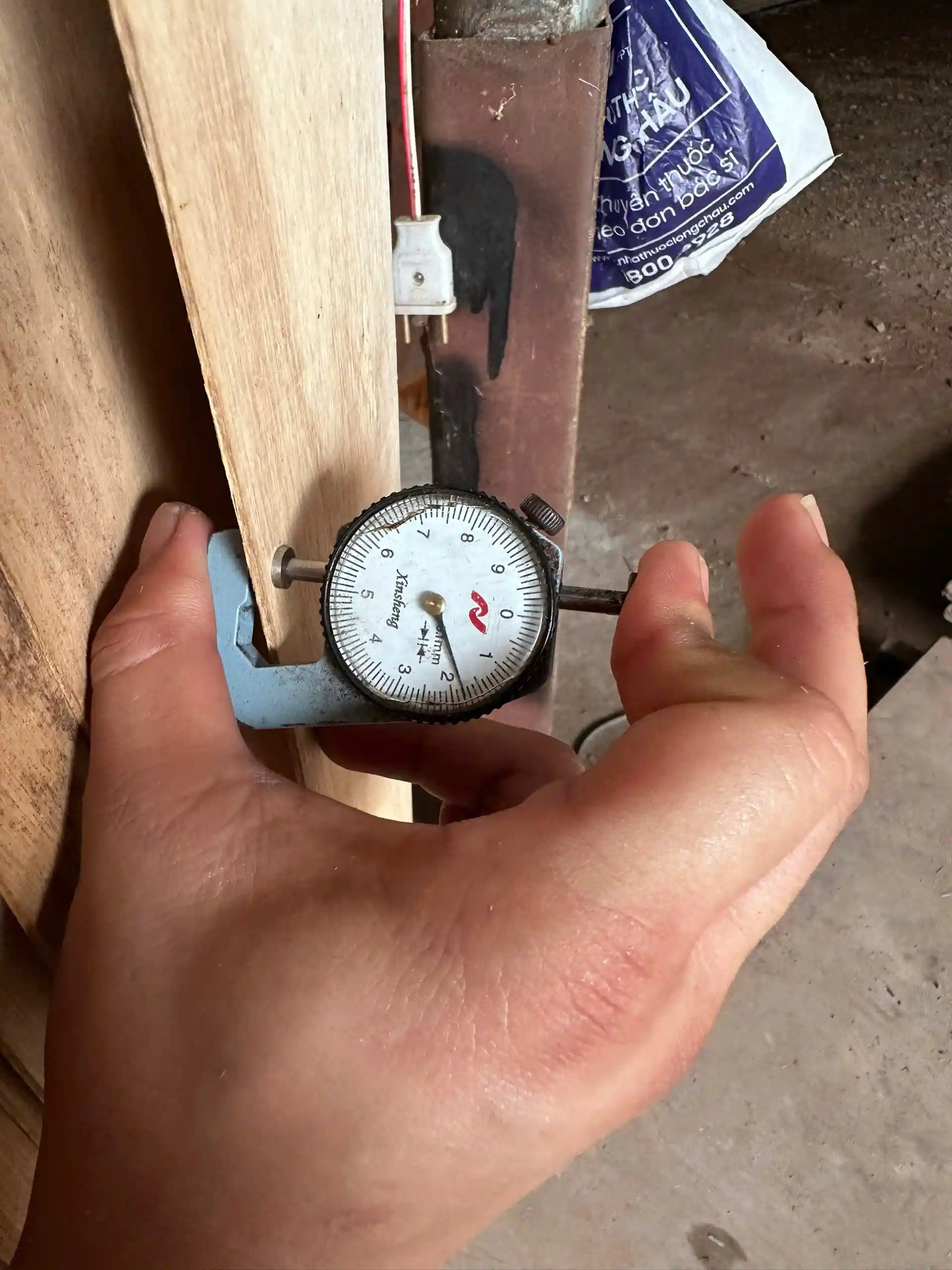
Sanded vs nominal thickness confusion. A 12mm nominal panel may calibrate to 11.5–12.3mm after sanding. The datasheet should state calibrated thickness range, not just nominal. This directly affects CNC cutting programs and edge banding specs.
-
Missing core construction method. Full stitched, edge-jointed, and loose-laid cores produce panels with very different void rates and uniformity. Furniture manufacturers should specify full stitched — and verify this in the datasheet.
-
Certification without certificate number. “FSC certified” without a valid certificate number is unverifiable. FSC certificates are publicly searchable on the FSC website. Require the certificate code (format: FSC-C######).
🏭 Why Buyers Need a Datasheet Before Every Order
Without a complete datasheet, these four failure modes become common:
- Grade substitution — supplier ships lower face grade than discussed. Without a documented grade specification, there is no contractual basis for a claim.
- Thickness tolerance rejection — buyer’s CNC line expects ±0.3mm; panels arrive at ±0.8mm. Without EN 315 tolerance specified, the supplier is not in breach.
- Certification mismatch at customs — CARB P2 required for US entry; panels carry only E0 test certificate. E0 ≠ CARB P2 for US Customs purposes.
- Delamination during storage — E2 glue panels specified for interior furniture application. Without emission standard documented, identifying liability is difficult.
“In 10 years of managing plywood exports, the orders that generate disputes are always the ones where the datasheet was skipped or kept vague. The paperwork seems like overhead — until something goes wrong.” — David, Export Project Leader, Mika Plywood
Get a complete technical datasheet for your specifications
📐 International Standards Reference
By Market
| Market | Primary Standard | Emission Requirement | Notes |
|---|---|---|---|
| United States | TSCA Title VI | CARB P2 mandatory | Lacey Act — legal timber sourcing also required |
| European Union | EN 636 / EN 314 | E1 minimum, E0 preferred | CE marking required for construction |
| Japan | JAS (Japan Agricultural Standard) | F4-star (≈E0) | Strictest thickness tolerance |
| South Korea | KS F 3110 | E0 | Anti-dumping duties may apply |
| India | IS 303 (commercial), IS 710 (marine) | Not formally mandated | BIS certification increasingly required |
| Australia | AS/NZS 2269 (structural) | E1 minimum | Growing FSC preference |
⚠️ Key point: Country standards evolve. EUDR took effect in June 2023 with enforcement phasing through 2025–2026, adding timber traceability requirements for all EU imports. CARB enforcement has been active since 2010. Always request the most recent test certificate — certificates older than 12 months may not satisfy current enforcement.
BS 1088 — Marine Plywood
BS 1088 is the UK/international standard for marine-grade plywood used in boatbuilding. Requirements include:
- Face: A-grade veneer (minimum), with only limited pin knots allowed
- Core: No voids permitted — full-glue bond required throughout
- Glue: Phenolic WBP (72-hour boil test)
- Veneer species: Specified approved hardwood species (okoume and gaboon most common)
Vietnam manufacturers can produce to BS 1088 specifications on request, but volume is limited — this is a specialty order, not standard production.
📈 Professional Technical Documentation Process
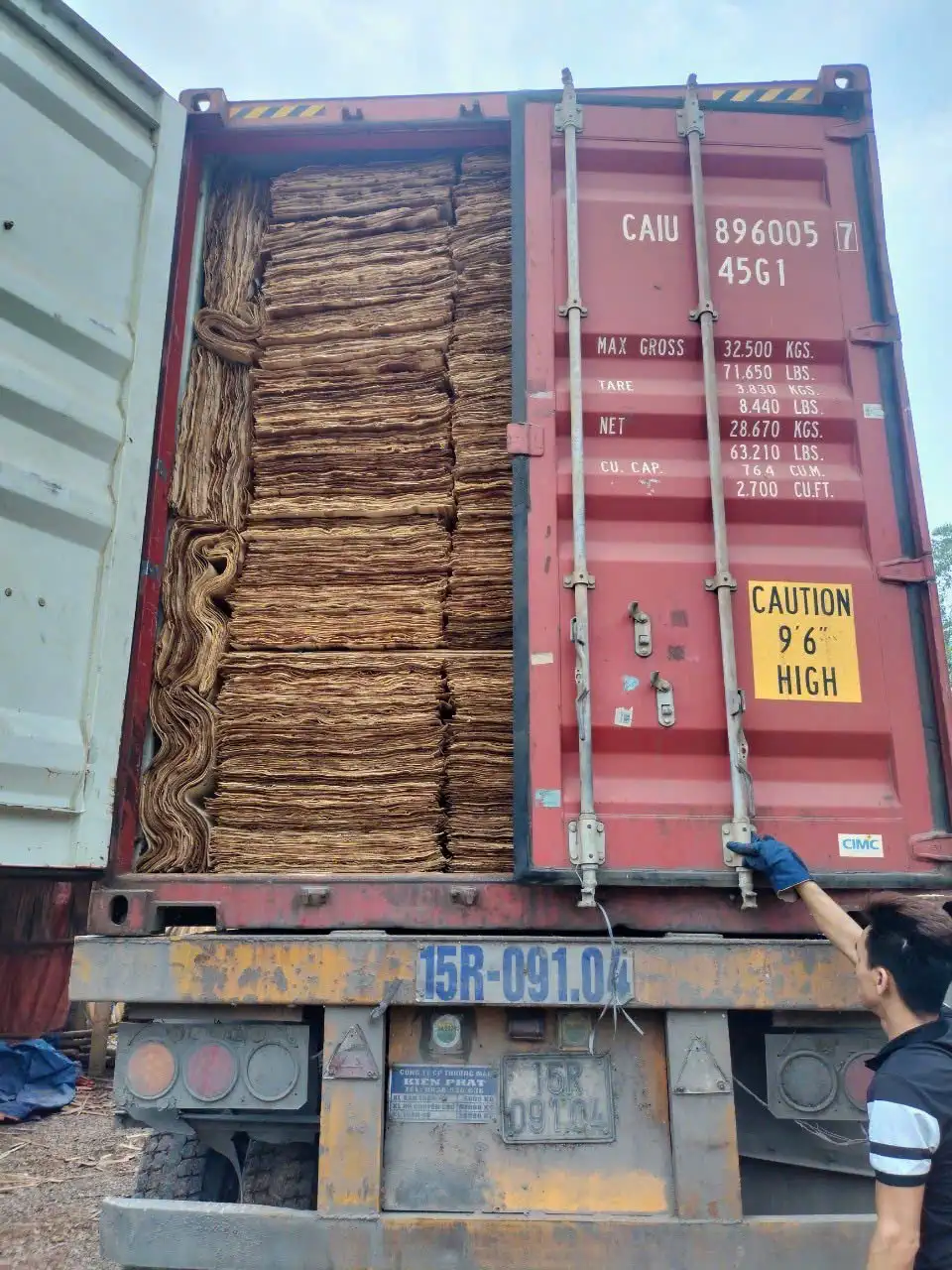
Every Mika Plywood export order includes a complete documentation package produced at the factory level:
Before production:
- Pre-production datasheet issued to buyer for approval — specifications locked before cutting begins
- Core and face veneer batch selected according to buyer’s country market requirements
During production:
- Inline moisture control: veneer dried to 6–8% before gluing to achieve final panel MC of 8–12%
- Thickness calibrated on wide-belt sander with ±0.3mm tolerance target
- Emission class tested on production batch via approved third-party laboratory
Before loading:
- Mika Plywood on-site QC team conducts three-stage inspection: after pressing, after sanding, before container loading
- Datasheet updated with batch-specific actual measurements (not just nominal targets)
- Full document set: Datasheet, Commercial Invoice, Packing List, Bill of Lading, CO, Phytosanitary Certificate, Fumigation Certificate, FSC Certificate, CARB TPC Certificate (where applicable)
For buyers requiring plywood certifications and export documentation, Mika Plywood provides all documents digitally within 24 hours of container loading — traceable to specific production batches.
✅ Conclusion: The Datasheet Is Your Specification Contract
A Vietnam plywood technical datasheet is the single document that converts a verbal or email-based specification discussion into a measurable, verifiable, contractually binding product definition.
The buyers who avoid quality disputes share one practice: they require a complete datasheet before confirming every purchase order — and they read it against the checklist covered in this guide.
Before your next order, confirm your datasheet covers all eight elements: product identity, dimensions and tolerances, glue type and bonding strength, emission class, density and moisture content, surface finish, certifications with certificate numbers, and test methods referenced.
For a complete picture of the specifications that affect your buying decision, also read our guides on plywood glue types and emission standards and plywood sizes and thickness specifications. For the full purchasing process, see our complete guide to buying plywood from Vietnam. Browse specifications on our product catalog.
Disclosure: This article is published by Mika Plywood, a Vietnam-based plywood manufacturer and export operator. While we aim to provide objective industry guidance, readers should consider our perspective as a market participant when evaluating recommendations.
Request a free technical datasheet tailored to your market requirements — Mika Plywood issues market-specific datasheets for US (CARB P2), EU (EN standards), Japan (JAS), and India (IS 303/710) in 24 hours.
Frequently Asked Questions
What should a Vietnam plywood technical datasheet contain?A complete datasheet must specify: product name, face/back veneer species and grade, core species, glue type (MR or WBP), emission standard (E0/E1/E2), thickness with tolerance (±0.3mm), sheet size, density by core type, moisture content (8–12%), surface finish, and all applicable certifications (FSC, CARB P2, CE). The datasheet becomes a contractual reference when attached to the purchase order.What is the standard moisture content for export plywood from Vietnam?Export-grade plywood from Vietnam is produced to 8–12% moisture content, tested using the oven-dry method per ISO 638 or equivalent. Furniture-grade panels targeting Japan or the US typically target 8–10%. Higher moisture accelerates delamination risk during shipping, especially in humid tropical shipping routes.How does core species affect the density value in a plywood datasheet?Density is determined by core species, not face veneer. Acacia core produces ~580 kg/m³, styrax core 480–500 kg/m³, and eucalyptus core 650–750 kg/m³ (Mika Plywood production data, 2026). Listing density without specifying the core species is meaningless — two panels with identical face veneer can differ by 200+ kg/m³.Is a plywood technical datasheet legally binding?Yes, when attached to a signed purchase contract. The datasheet defines the exact specifications being purchased and can be used in quality dispute resolution, customs clearance, and insurance claims. Mika Plywood issues batch-specific datasheets traceable to production records.Which international standards does Vietnam plywood comply with?Vietnam plywood manufacturers produce to multiple international standards: JAS (Japan), EN314 and EN636 (Europe), IS 303/IS 710 (India), BS 1088 (marine), CARB Phase 2 (US), and E0/E1/E2 emission standards. Mika Plywood holds FSC, CARB P2, CE marking, ISO 9001, and EUDR compliance documentation.
Ready to order?
Request a Free Technical Datasheet from Mika Plywood

Written by
David
Export Project Leader
Content contributor at Vietnam Plywood.
On this page
- 📋 What Is a Plywood Technical Datasheet?
- 📦 Key Elements Every Datasheet Must Include
- 📌 1. Product Identity
- 📌 2. Dimensions and Tolerances
- 📌 3. Glue Type and Bonding Strength
- 📌 4. Formaldehyde Emission Class
- 📌 5. Density and Moisture Content
- 📌 6. Surface Finish and Sanding
- 📊 Sample Technical Datasheet — Vietnam Commercial Plywood
- 🔧 Testing Methods in Detail
- 🔍 How to Read a Plywood Datasheet — 5 Common Errors
- 🏭 Why Buyers Need a Datasheet Before Every Order
- 📐 International Standards Reference
- 📈 Professional Technical Documentation Process
- ✅ Conclusion: The Datasheet Is Your Specification Contract
On this page
- 📋 What Is a Plywood Technical Datasheet?
- 📦 Key Elements Every Datasheet Must Include
- 📌 1. Product Identity
- 📌 2. Dimensions and Tolerances
- 📌 3. Glue Type and Bonding Strength
- 📌 4. Formaldehyde Emission Class
- 📌 5. Density and Moisture Content
- 📌 6. Surface Finish and Sanding
- 📊 Sample Technical Datasheet — Vietnam Commercial Plywood
- 🔧 Testing Methods in Detail
- 🔍 How to Read a Plywood Datasheet — 5 Common Errors
- 🏭 Why Buyers Need a Datasheet Before Every Order
- 📐 International Standards Reference
- 📈 Professional Technical Documentation Process
- ✅ Conclusion: The Datasheet Is Your Specification Contract
Industry Newsletter
Stay Updated with
Plywood Industry Insights
Factory prices, spec guides, market trends and export tips — delivered weekly to B2B buyers and importers in 20+ countries.