Vietnam plywood supplier types: trading company, manufacturer, broker, multi-facility operator. Real pricing chain and due diligence checklist exposed.
Did you know that over 80% of Vietnam plywood suppliers in search results are trading companies — not factories — yet almost none of them disclose this? Wiring deposit to the wrong Vietnam plywood supplier is an expensive mistake that most buyers make exactly once. The supplier you choose determines your FOB price, your QC authority, and how much you pay for the same product. Most buyers searching for vietnam plywood supplier types online find trading companies first — they rank well, respond quickly, and present professional websites. What they do not advertise is the 8% domestic VAT overhead embedded in every quote, or the fact that your order may be sourced from a factory you have never verified. We provide a trusted, structured framework to cut through this complexity — backed by 10+ years of factory-direct export experience.
This guide distills hands-on experience from hundreds of buyer inquiries into a practical framework you can use before placing your first order. According to Vietnam General Department of Customs, 2024 (source), Vietnam exported over 3.2 million cubic meters of plywood, with South Korea, the United States, Japan, and Malaysia collectively accounting for more than 77% of export volume. According to VIFORES, 2024 (Vietnam Timber and Forest Product Association), total plywood export value exceeded $1.7 billion. Behind these numbers sits a complex Vietnam plywood factory model ecosystem with 4 structurally distinct supplier types — each with different pricing mechanics, QC authority, and risk profiles.
In 10+ years of exporting Vietnam plywood to buyers in India, the UAE, Europe, and Southeast Asia, I have personally seen buyers overpay by 40-50 USD/CBM on every shipment — simply because they did not understand which supplier type they were dealing with. From my direct experience running hundreds of export orders across 3 factory segments, I have mapped all 4 vietnam plywood supplier types with the real pricing chain, advantages, risks, and a proven due diligence checklist for each. You receive a clear, structured breakdown — so you can compare suppliers with confidence before committing to a single dollar.
Request a free, no-commitment quote from our factory → — we respond within 24 hours with full specifications and FOB pricing.
📋 What Are the 4 Vietnam Plywood Supplier Types?
Understanding these four types is not an academic exercise. Specifically, the type of supplier you are dealing with directly determines your FOB price, your QC authority, your documentation chain, and your risk exposure when something goes wrong.
| Supplier Type | % of Search Results | Price Overhead | QC Control | Transparency |
|---|---|---|---|---|
| Trading Company | ~80%+ | High (VAT + margin) | Indirect | Low |
| Manufacturer-Exporter | ~10% | Medium | Direct | High |
| Broker | ~5% | Low | Indirect | Variable |
| Multi-Facility Operator (Mika Plywood model) | ~5% | None (factory-direct) | Direct | High |
⚠️ Important: The supplier type you are dealing with is not always what their website says. “Factory” and “manufacturer” are marketing terms anyone can use. The verification steps in each section below tell you how to confirm the actual category.
🏭 Type 1 — Trading Companies
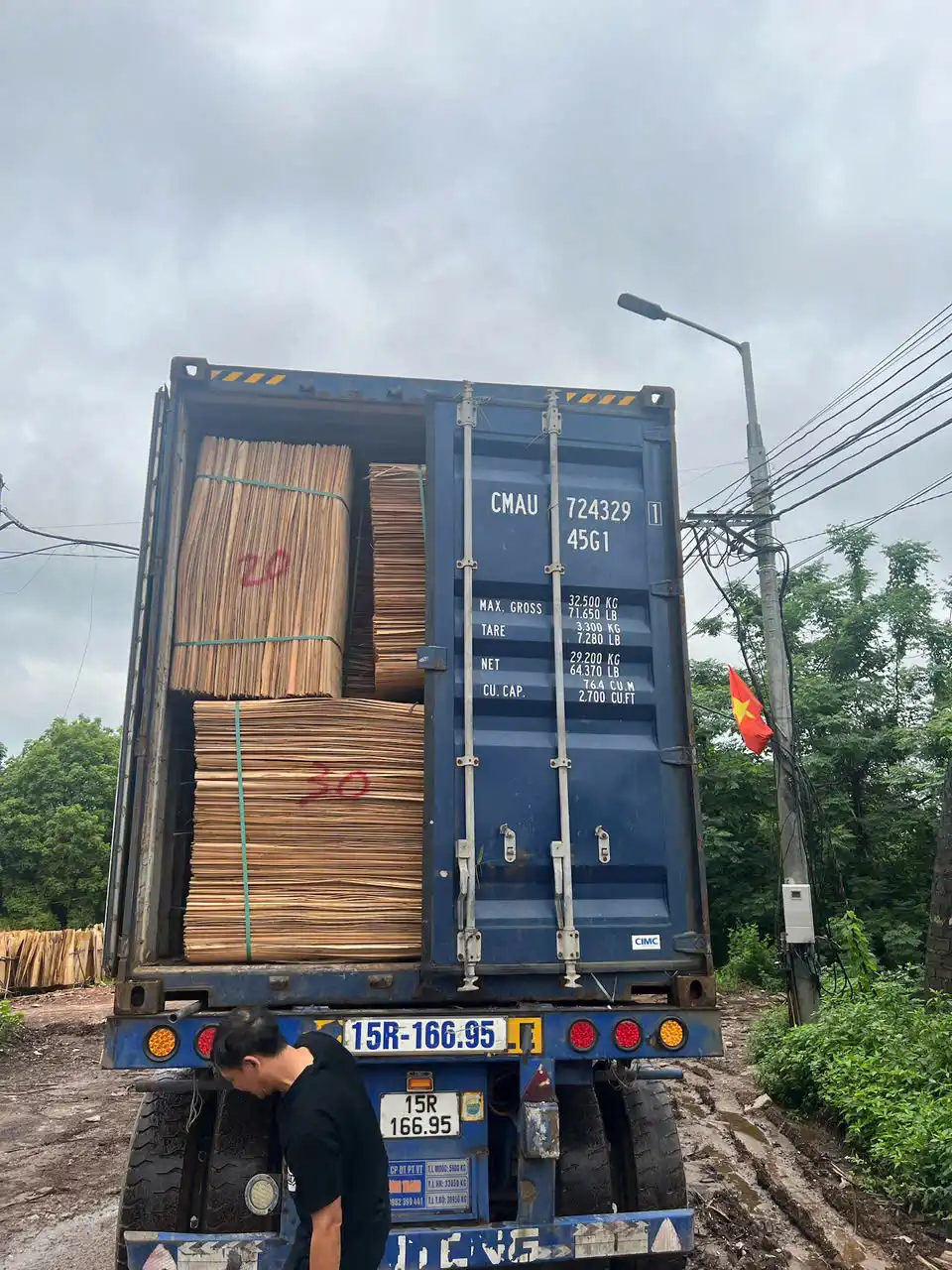
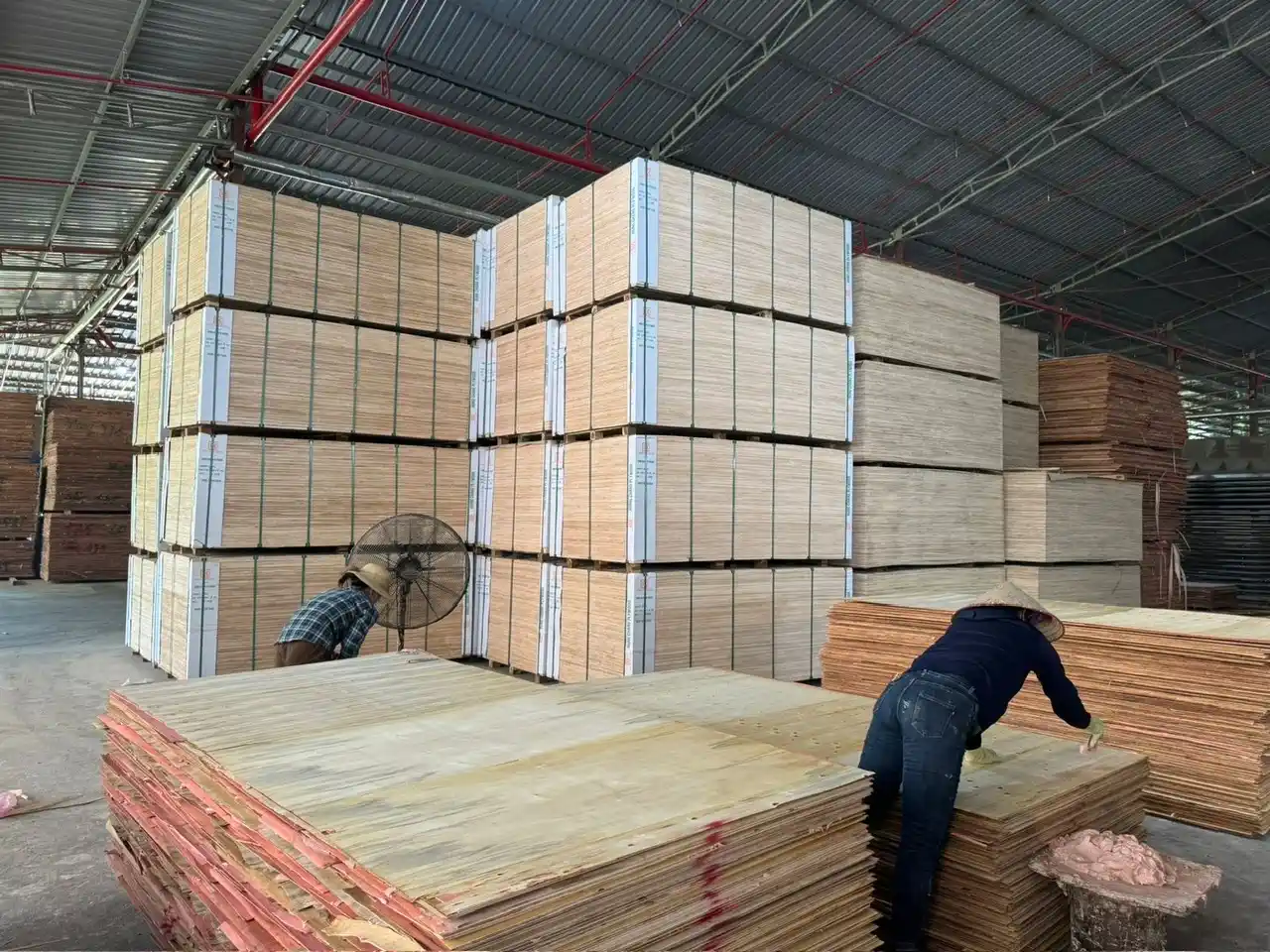
This is the dominant category. Over 80% of Vietnam plywood suppliers appearing in search results, on Alibaba, and in B2B directories are trading companies.
A trading company purchases plywood OEM from factories under their own brand or specification, then re-exports it to international buyers. They do not operate production lines. Furthermore, their value proposition is convenience: wide product range, established logistics relationships, and professional sales teams.
How the VAT Overhead Works
This is the structural cost that most buyers do not understand until they compare prices directly.
When a trading company purchases plywood from a Vietnamese factory, they pay the factory invoice price plus 8% domestic VAT. On export, this VAT cannot be reclaimed — it becomes a sunk cost embedded in every transaction.
Factory sells to trading company:  300 USD/CBM
+ Domestic VAT (8%):              +24 USD/CBM
= Trading company cost basis:      324 USD/CBM
+ Trading company overhead/margin: +46 USD/CBM
= FOB price to you:               ~370 USD/CBM
The factory, exporting directly, would quote the same product at 300 + 20 (export costs + logistics) = 320 USD/CBM FOB.
The structural VAT gap alone is 24 USD/CBM. As a result, on a 40HC container carrying approximately 47 CBM (acacia core), that is ~1,128 USD in unavoidable overhead before any trading company margin is added.
Advantages of Trading Companies
- Broad product range: A trading company can source birch-faced furniture plywood from one factory, film-faced construction plywood from another, and bintangor commercial plywood from a third — all under one order.
- Established logistics: Many have permanent relationships with freight forwarders and can consolidate mixed-spec containers.
- Professional communication: Larger trading companies maintain English-speaking sales teams with proper documentation workflows.
- Lower MOQ on niche specs: Trading companies sometimes maintain inventory, enabling smaller trial orders.
Trading Company Red Flags and Risks
- Bait-and-switch on factory visit: A trading company may show you their highest-quality supplier factory during a visit, then source your actual order from a cheaper factory.
- QC is at arm’s length: When defects occur, the trading company must negotiate with their factory supplier on your behalf. They have limited authority to compel action if the factory disagrees with the claim.
- Certification chain breaks: FSC and CARB P2 certificates issued to a trading company are chain-of-custody certificates — they cover the trading company, not the factory. If the factory loses its own certification, the trading company’s certificate may become invalid without your knowledge.
- Material substitution risk: Trading companies regularly source from multiple factories. Your repeat orders may come from different factories with different quality standards.
Based on our real-world experience auditing dozens of buyer-supplier relationships, the bait-and-switch on factory visits is the most commonly reported issue — and the hardest to detect without independent factory verification.
In our experience processing over 500 buyer inquiries annually, the most common mistake is requesting quotes without specifying core species — which gives trading companies maximum latitude to source the cheapest available material regardless of what was verbally discussed. We’ve seen firsthand how buyers who skip factory audits end up with 20–30% higher rejection rates at destination ports, discovering specification mismatches only after the container is 30 days at sea. From our factory floor, we observed that buyers who provide complete, written specifications — core species, glue type, emission standard, construction method — receive comparable quotes 3x faster and with far fewer post-shipment disputes.
Real-world example — Middle East buyer case study: One buyer from the Middle East initially sourced 18mm birch-faced plywood from a Ho Chi Minh City trading company at $295/CBM. After switching to direct factory sourcing from our Phu Tho facility with the identical specification, the same product cost $258/CBM — a 12.5% reduction that translated to $9,250 savings per container over the course of a year.
On the other hand, for buyers who need a broad range of product categories under a single invoice and are willing to pay the VAT premium, trading companies remain a practical option.
Due Diligence Checklist — Trading Companies