Vietnam plywood export cost breakdown: 7 pricing factors including FOB, ocean freight, import tariffs, packing, and 5 proven cost-reduction strategies.
Vietnam plywood export cost is never a single number. A buyer in Dubai and a buyer in Hamburg pay different totals for the same 18mm bintangor sheet — because the factory gate price accounts for only 55–65% of the landed cost. Freight, tariffs, packing, insurance, and documentation each carve out a measurable share. In 2025, Vietnam exported over $3.2 billion in wood products, with plywood representing the fastest-growing segment (Vietnam Customs, 2025). Understanding where your money actually goes is the difference between a profitable import program and one that bleeds margin on every container.
This guide breaks down every cost component from factory floor to destination warehouse, using real pricing data from Mika Plywood’s 2026 export operations across 20+ countries.
📊 Vietnam Plywood Export Cost Structure at a Glance
Before examining each factor individually, here is the complete cost architecture for a typical 40HC container of plywood from Vietnam.
| Cost Component | Share of CIF Price | Typical Range (per CBM) |
|---|---|---|
| Factory gate price | 55–65% | $190–$420 |
| export packing | 3–5% | $8–$15 |
| Inland transport to port | 2–4% | $3–$7 |
| Freight (ocean) | 15–25% | $15–$70 |
| Insurance | 1–2% | $2–$5 |
| Documentation & compliance | 2–3% | $4–$10 |
| Import duties & tariffs | 5–15% | Variable by country |
Key Insight: Freight volatility alone can swing your landed cost by $30–$50 per CBM between peak and off-peak seasons (Drewry Shipping Consultants, 2025). Locking freight rates quarterly protects margins more effectively than negotiating $5/CBM off factory price.
🏭 Factor 1: Factory Gate Price — Where 60% of Your Cost Lives
The factory price forms the foundation of every vietnam plywood export transaction. Four variables determine this number, and experienced buyers control all four during specification.
Face Veneer Selection
Face veneer is the single largest price driver. The spread between the cheapest and most expensive option exceeds 100%.
| Face Veneer | Price Tier | FOB Range (18mm, per CBM) |
|---|---|---|
| Bintangor | Budget | $200–$240 |
| Okoume | Low-mid | $220–$260 |
| Pine | Mid | $240–$280 |
| Eucalyptus | Mid | $250–$290 |
| Gurjan | Premium | $300–$360 |
| Birch | Premium+ | $350–$420 |
For a complete price reference by product type, see the current FOB price list.
Core Species Impact
Core species affects density, weight, and — critically — how many pallets fit inside a 40HC container. This is a cost decision, not just a quality decision.
- Acacia core (~580 kg/m3): lowest cost, 16 pallets per 40HC
- Styrax core (~500 kg/m3): lightest weight, 18 pallets per 40HC — best CBM utilization
- Eucalyptus core (650–750 kg/m3): heaviest, 15 pallets per 40HC — highest per-CBM cost
“Most first-time buyers focus entirely on face veneer price. The experienced ones ask about core species first — because core determines your container efficiency, freight cost per sheet, and landed margin.” — Jay, International Sales Manager, Mika Plywood
Glue Type and Emission Standard
Glue and emission standards are separate specifications with separate cost impacts. Melamine (MR) glue costs less than Phenolic (WBP). E0 emission compliance adds $5–$15/CBM over E2 due to resin formulation and testing requirements.
| Combination | Application | Price Impact |
|---|---|---|
| Melamine MR + E2 | Commercial, packaging | Baseline |
| Melamine MR + E0 | Furniture export to US/EU | +$5–$10/CBM |
| Phenolic WBP + N/A | Construction, marine | +$10–$20/CBM |
📦 Factor 2: Export Packing — $8–$15/CBM That Prevents $5,000 Claims
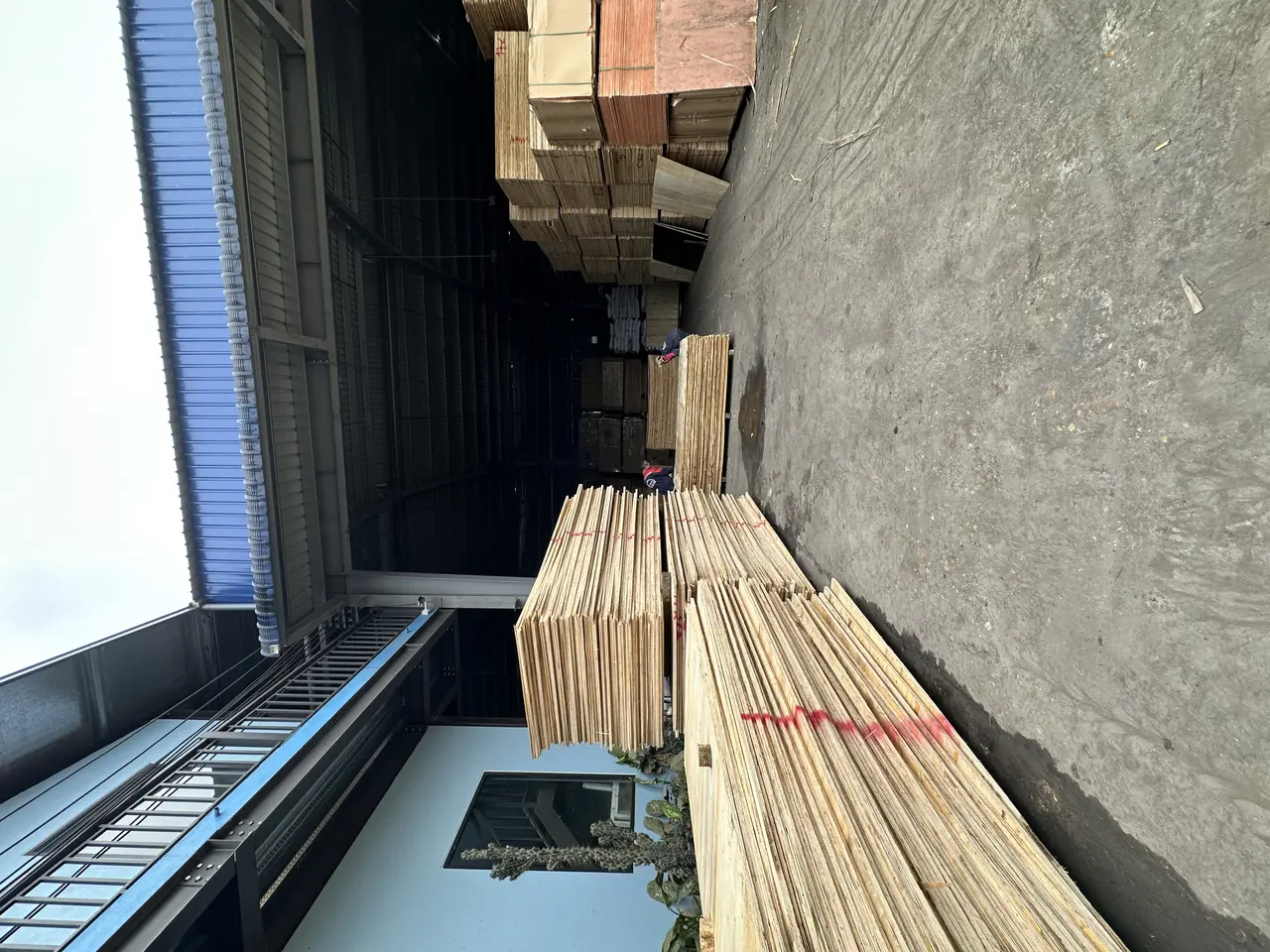
Packing cost runs $8–$15 per CBM depending on protection level. This is not optional spending — it is insurance against damage claims that average $3,000–$5,000 per incident (Mika Plywood claims data, 2024).
Standard export packing from Mika Plywood includes:
- Pallet base: hardwood runners, fumigation-treated
- Strapping: steel bands at 4 points minimum per pallet
- Corner protectors: cardboard or plastic edge guards
- Shrink wrap: weatherproof polyethylene cover
- Markings: shipping marks, handling symbols, pallet weight
Premium packing for moisture-sensitive products (furniture-grade birch, EV plywood) adds waterproof kraft paper and desiccant packets — approximately $3–$5/CBM extra.
⚠️ Important: Under-packing to save $3/CBM is the most expensive mistake in plywood importing. A single delamination claim from water ingress during transit costs more than upgrading packing across 10 containers.
For detailed plywood container packing calculations including pallet counts by core species, see the factory-level 40HC packing tables.
🚚 Factor 3: Inland Transport — Factory to Port
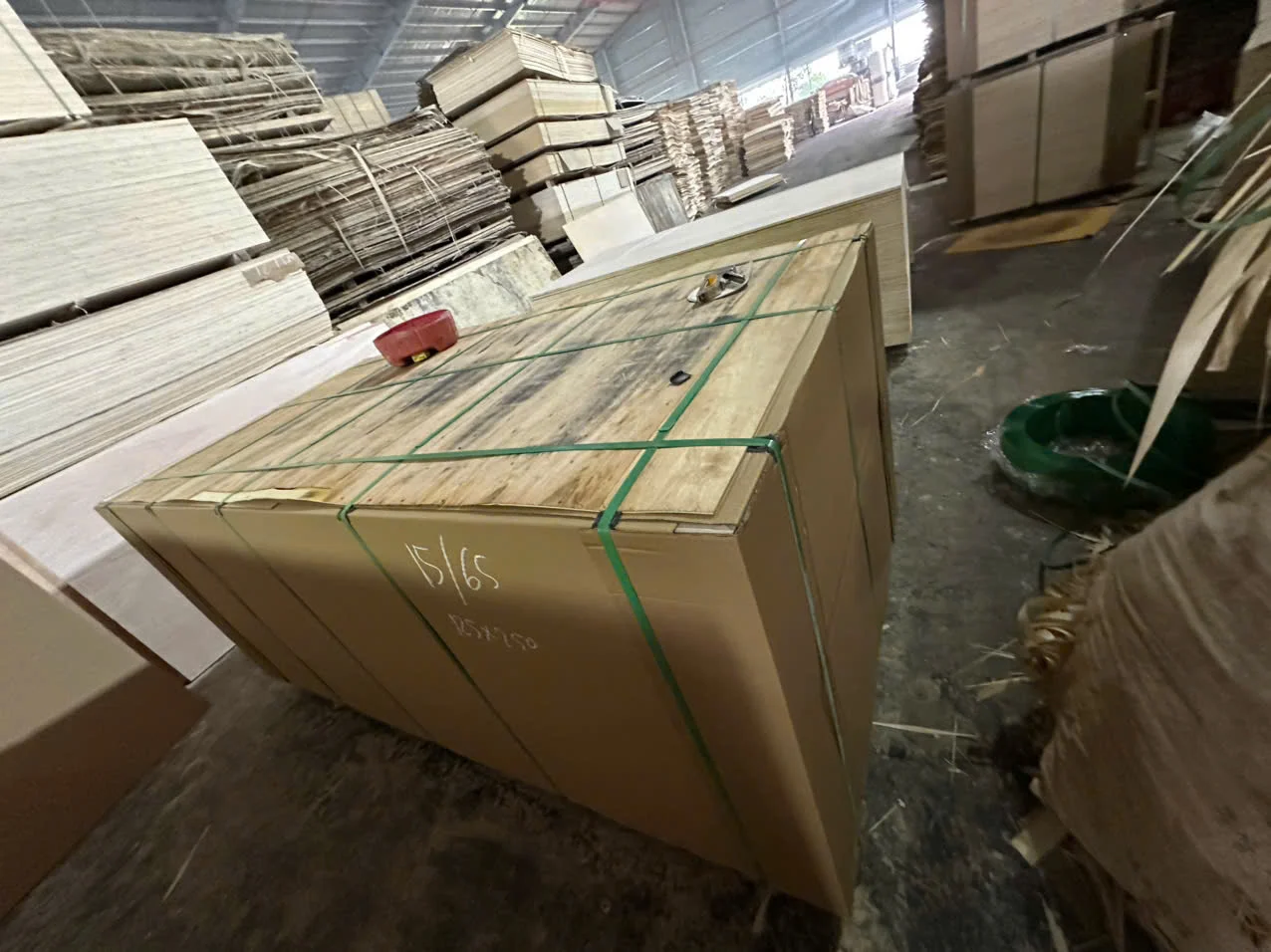
Mika Plywood’s production facilities are located in Ha Hoa District, Phu Tho Province — approximately 180 km from Hai Phong port. Inland trucking adds $150–$300 per 40HC container to the total plywood export cost.
| Route | Distance | Cost per 40HC | Transit Time |
|---|---|---|---|
| Phu Tho → Hai Phong | ~180 km | $150–$200 | 4–5 hours |
| Northern VN factories → Hai Phong | 100–250 km | $120–$300 | 3–6 hours |
| Southern VN factories → Ho Chi Minh | 50–150 km | $100–$250 | 2–4 hours |
Northern Vietnam factories (where 80%+ of export plywood is produced) have a natural logistics advantage — shorter trucking distances to Hai Phong port compared to southern routes through congested Ho Chi Minh City corridors (VIWA — Vietnam Inland Waterway Administration, 2024).
Request a detailed quotation including inland transport — Mika Plywood provides door-to-port pricing on every FOB quote.
🚢 Factor 4: Ocean Freight — The Most Volatile Cost Component
Ocean freight represents 15–25% of CIF landed cost and fluctuates more than any other component. During the 2021–2022 shipping crisis, Vietnam-to-Europe rates exceeded $12,000 per 40HC. As of Q1 2026, rates have normalized but remain 40–60% above pre-pandemic levels (Freightos Baltic Index, 2026).
Freight Rates by Destination (per 40HC, Q1 2026)
| Destination | Freight Range | Transit Time |
|---|---|---|
| India (JNPT, Mundra) | $1,200–$1,800 | 12–18 days |
| Middle East (Jebel Ali, Dammam) | $1,500–$2,200 | 15–22 days |
| Korea (Busan) | $600–$900 | 5–7 days |
| Japan (Tokyo, Osaka) | $800–$1,200 | 7–10 days |
| Europe (Hamburg, Rotterdam) | $2,500–$3,500 | 28–35 days |
| US East Coast (New York) | $3,000–$4,500 | 30–40 days |
| Australia (Melbourne) | $1,800–$2,500 | 18–25 days |
How Core Species Affects Your Freight Cost
This is where core selection creates a compound cost effect. Styrax-core plywood allows 18 pallets per 40HC versus 15 for eucalyptus — meaning the same freight charge is distributed across 20% more volume.
Per-CBM freight comparison for a $2,000/container Europe route:
- Styrax core: $2,000 / 53 CBM = $37.7/CBM
- Acacia core: $2,000 / 47.5 CBM = $42.1/CBM
- Eucalyptus core: $2,000 / 44.5 CBM = $44.9/CBM
That $7.2/CBM difference between styrax and eucalyptus multiplied across 12 containers per year equals $4,500+ in annual freight savings from core selection alone (Mika Plywood production data, 2026).
📋 Factor 5: Documentation and Compliance Costs
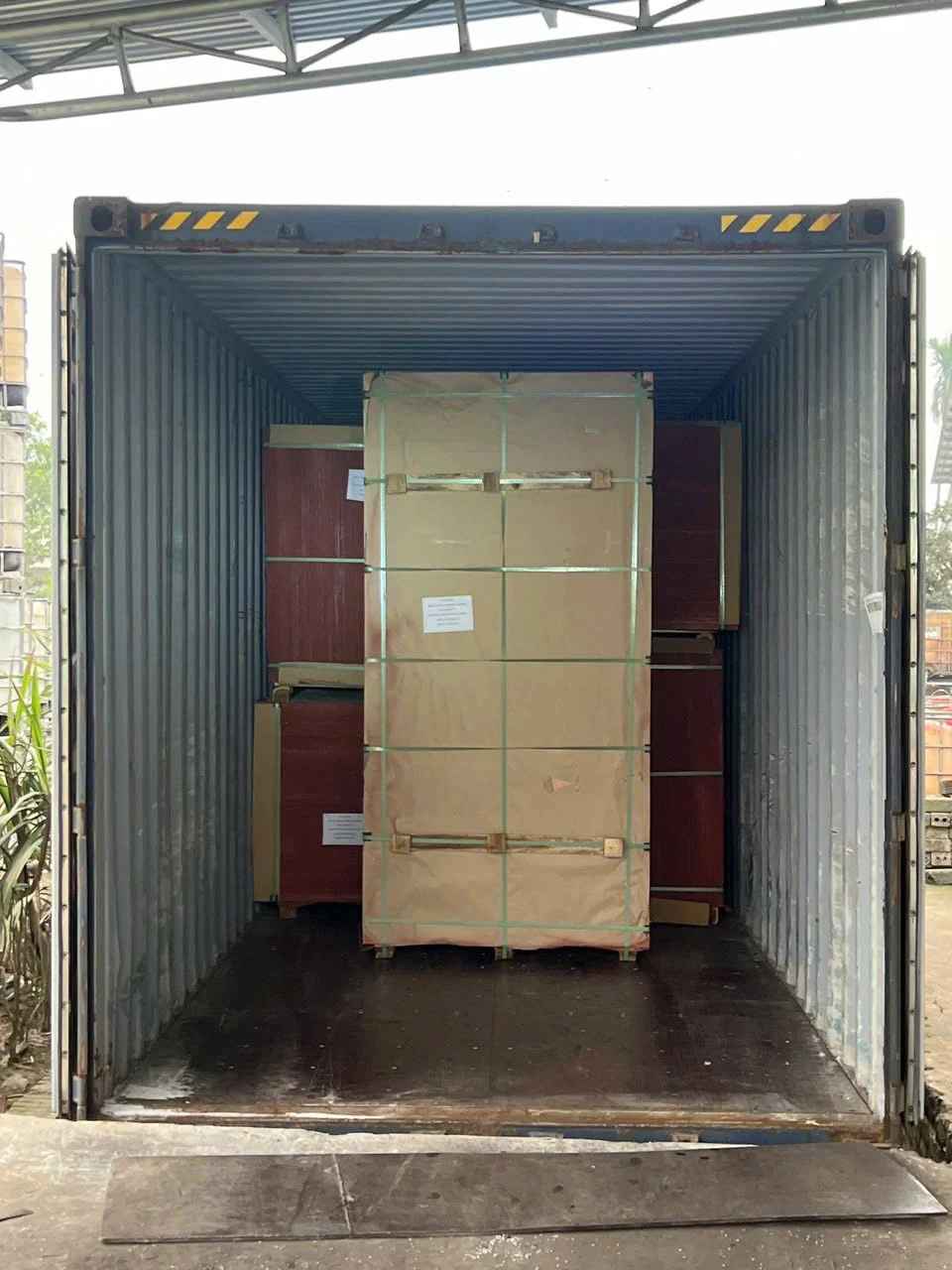
Every vietnam plywood export shipment requires a documentation package. Missing or incorrect documents cause port delays averaging 5–7 days and demurrage charges of $100–$200 per day (Hai Phong Port Authority, 2025).
Standard Export Document Set
| Document | Cost | Required By |
|---|---|---|
| Bill of Lading (B/L) | $50–$100 | All shipments |
| Certificate of Origin (CO) | $30–$50 | Most destinations |
| Phytosanitary Certificate | $40–$80 | All wood products |
| Fumigation Certificate | $50–$100 | All palletized goods |
| Commercial Invoice + Packing List | Included in FOB | All shipments |
| FSC Certificate | $0 (Mika Plywood included) | EU, US, Japan |
| CARB P2 Test Report | $100–$300 per test | US market |
| EUDR Due Diligence | $200–$500 setup | EU market (2026) |
Total documentation cost per shipment: $300–$800 depending on destination market requirements.
Mika Plywood manages full documentation in-house. FSC, CARB P2, CE, and ISO 9001 certificates are included with every qualifying order — no third-party broker fees.
💱 Factor 6: Currency, Payment Terms, and Bank Charges
Vietnam plywood export transactions are denominated in USD. Three financial factors erode or protect your margin:
Exchange Rate Exposure
The VND/USD rate fluctuated 3.2% in 2025 (State Bank of Vietnam, 2025). For a $50,000 order, that represents $1,600 in potential variance. Buyers paying in EUR or GBP face double conversion risk.
Mitigation strategies:
- Forward contracts locking the exchange rate 30–90 days ahead
- USD-denominated accounts avoiding double conversion
- Split payments: 30% deposit at order, 70% against B/L copy
Letter of Credit (L/C) Costs
| L/C Component | Buyer Side | Seller Side |
|---|---|---|
| Issuance fee | 0.5–1.5% of value | — |
| Amendment fee | $50–$150 each | — |
| Negotiation fee | — | 0.1–0.25% |
| Discrepancy fee | $50–$100 each | $50–$100 each |
For a $40,000 L/C shipment, bank charges typically total $400–$800 across both parties. Telegraphic Transfer (T/T) eliminates these fees but shifts risk to the buyer on initial orders.
🌍 Factor 7: Import Tariffs and Trade Regulations
Import duties are destination-specific and can represent the largest variable cost after freight. Vietnam’s FTA network provides zero or reduced tariffs to many markets — a structural advantage over Chinese plywood exports.
Tariff Comparison: Vietnam vs China plywood
| Market | Vietnam Plywood Duty | China Plywood Duty | VN Advantage |
|---|---|---|---|
| EU (EVFTA) | 0% | 6–7% | $12–$30/CBM saved |
| India | 5–10% | 18% + ADD | Significant |
| Korea (VKFTA) | 0% | 8% | $16–$34/CBM saved |
| Japan (VJEPA) | 0% | 6–10% | $12–$42/CBM saved |
| US | 0% (no ADD currently) | 4.49–183.36% ADD | Massive |
| Australia (AANZFTA) | 0–5% | 5% | Modest |
Key Insight: Vietnam holds Free Trade Agreements with 60+ countries (WTO, 2024). For US-bound plywood, the absence of anti-dumping duties — which range from 4.49% to 183.36% on Chinese plywood (US DOC, 2025) — makes Vietnam the dominant alternative supply source.
The EUDR compliance framework introduces new due diligence costs for EU importers starting 2026. Mika Plywood’s FSC-certified plantation supply chain and full traceability documentation satisfy EUDR requirements without additional third-party auditing fees.
✅ 5 Proven Strategies to Reduce Vietnam Plywood Export Cost
1. Maximize Container Utilization
A 40HC container loaded at 85% capacity wastes 15% of your freight spend. Mika Plywood’s container packing calculation system optimizes pallet count by core species and thickness — targeting 95%+ capacity on every shipment.
2. Choose Core Species Strategically
For furniture and cabinet applications where eucalyptus density is unnecessary, switching to styrax core delivers three savings: lower per-CBM factory price, more pallets per container, and lower per-sheet freight cost. Annual savings on a 12-container program: $8,000–$15,000 (Mika Plywood production data, 2026).
3. Negotiate FOB Instead of CIF
FOB (Free on Board) terms give you control over freight booking. Buyers with freight forwarding relationships consistently achieve 10–20% lower ocean rates than CIF quotes from suppliers who mark up freight as a revenue center.
4. Consolidate Specifications
Ordering 3 different face veneers across 3 separate containers costs more than combining them in 1–2 mixed-spec containers. Fixed costs (documentation, trucking, booking fees) are distributed across more volume. Mika Plywood supports mixed specifications within a single container — contact us for a consolidated quote. For a worked example of total delivered cost from FOB to destination, see the landed cost calculation guide.
5. Build Long-Term Supplier Relationships
Volume commitments of 5+ containers per quarter unlock preferential pricing tiers. Mika Plywood’s partner program provides dedicated account management, priority production scheduling, and volume-based pricing for committed buyers. When comparing FOB vs CIF terms, see CIF vs FOB pricing for Vietnam plywood for guidance on which Incoterm saves more.
Get a Free Cost Estimate — No Commitment Required
📐 Complete Cost Example: 40HC Bintangor Plywood to India
Here is a worked example showing every cost line for a real shipment scenario.
| Line Item | Calculation | Amount |
|---|---|---|
| Factory price | 47 CBM x $220/CBM | $10,340 |
| Export packing | 47 CBM x $10/CBM | $470 |
| Inland transport | Phu Tho → Hai Phong | $180 |
| Ocean freight | 40HC to JNPT Mumbai | $1,500 |
| Marine insurance | 0.3% of $10,340 | $31 |
| Documentation | CO + Phyto + Fumigation + B/L | $250 |
| Bank charges (T/T) | Wire transfer fee | $35 |
| Total CIF Mumbai | $12,806 | |
| CIF per CBM | $12,806 / 47 CBM | $272.5/CBM |
| India import duty (5%) | 5% of CIF value | $640 |
| Total landed cost | $13,446 | |
| Landed cost per CBM | $286.1/CBM |
This example uses acacia-core bintangor at 18mm thickness — the most common commercial specification for the Indian market. Landed cost per CBM rises to $310–$340 with eucalyptus core or higher-grade face veneers.

Disclosure: This article is published by Mika Plywood, a Vietnam-based plywood manufacturer and export operator. While we aim to provide objective industry guidance, readers should consider our perspective as a market participant when evaluating recommendations.
🔗 Related Resources
- Plywood Quotation Guide — What to Know Before Requesting a Price
- Types of Plywood — Complete Classification from Vietnam Manufacturer
- Vietnam Plywood Supplier Types — Buyer’s Due Diligence Guide
- Plywood Container Packing Calculation 2026
- Plywood Certifications & Export Documentation Guide
📌 Conclusion
Vietnam plywood export cost is a system of 7 interconnected variables — not a single factory price. Buyers who control specification (face veneer, core species, glue), optimize logistics (container utilization, FOB terms), and use Vietnam’s FTA network consistently achieve 15–25% lower landed costs than those who compare FOB quotes alone.
Request Your Personalized Cost Breakdown — Free, No Obligation
Frequently Asked Questions
What is the average FOB price for vietnam plywood export?FOB Hai Phong prices range $190–$420 per CBM depending on face veneer, core species, glue type, and emission standard. Commercial bintangor on acacia core starts around $200/CBM, while premium birch on eucalyptus core reaches $400+ (Mika Plywood production data, 2026).How much does freight add to plywood export cost from Vietnam?Ocean freight from Hai Phong to major destinations costs $800–$3,500 per 40HC container. India routes average $1,200–$1,800, Europe $2,500–$3,500, and Middle East $1,500–$2,200. Freight typically adds $15–$70 per CBM depending on destination and market conditions.Can I mix different plywood types in one export container?Yes, Mika Plywood supports mixed-spec containers. Combining multiple face veneers, thicknesses, or glue types in one 40HC shipment spreads fixed costs across more product lines. The key constraint is total payload — eucalyptus-core loads must stay under 28.5 MT regardless of mix.What hidden costs affect Vietnam plywood import pricing?Four costs buyers often miss: inland trucking from factory to port ($150–$300 per container), bank charges for L/C processing ($200–$500), fumigation certificates ($50–$100), and currency exchange spreads on USD payments. Together these add $400–$900 per shipment.How do I reduce total plywood export cost from Vietnam?Five proven strategies: consolidate orders to fill containers at 95%+ capacity, select acacia or styrax core instead of eucalyptus for weight-sensitive routes, negotiate FOB terms to control your own freight, lock exchange rates with forward contracts, and build long-term supplier relationships for volume discounts.
Ready to order?
Get a Detailed Cost Estimate for Your Order

Written by
Jay
International Sales Manager
Content contributor at Vietnam Plywood.
On this page
- 📊 Vietnam Plywood Export Cost Structure at a Glance
- 🏭 Factor 1: Factory Gate Price — Where 60% of Your Cost Lives
- Face Veneer Selection
- Core Species Impact
- Glue Type and Emission Standard
- 📦 Factor 2: Export Packing — $8–$15/CBM That Prevents $5,000 Claims
- 🚚 Factor 3: Inland Transport — Factory to Port
- 🚢 Factor 4: Ocean Freight — The Most Volatile Cost Component
- 📋 Factor 5: Documentation and Compliance Costs
- 💱 Factor 6: Currency, Payment Terms, and Bank Charges
- 🌍 Factor 7: Import Tariffs and Trade Regulations
- ✅ 5 Proven Strategies to Reduce Vietnam Plywood Export Cost
- 📐 Complete Cost Example: 40HC Bintangor Plywood to India
- 🔗 Related Resources
- 📌 Conclusion
On this page
- 📊 Vietnam Plywood Export Cost Structure at a Glance
- 🏭 Factor 1: Factory Gate Price — Where 60% of Your Cost Lives
- Face Veneer Selection
- Core Species Impact
- Glue Type and Emission Standard
- 📦 Factor 2: Export Packing — $8–$15/CBM That Prevents $5,000 Claims
- 🚚 Factor 3: Inland Transport — Factory to Port
- 🚢 Factor 4: Ocean Freight — The Most Volatile Cost Component
- 📋 Factor 5: Documentation and Compliance Costs
- 💱 Factor 6: Currency, Payment Terms, and Bank Charges
- 🌍 Factor 7: Import Tariffs and Trade Regulations
- ✅ 5 Proven Strategies to Reduce Vietnam Plywood Export Cost
- 📐 Complete Cost Example: 40HC Bintangor Plywood to India
- 🔗 Related Resources
- 📌 Conclusion
Industry Newsletter
Stay Updated with
Plywood Industry Insights
Factory prices, spec guides, market trends and export tips — delivered weekly to B2B buyers and importers in 20+ countries.